
Pixie device

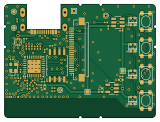
About the Pixie device PCB
Pixie device is an open source ESP32 PCB design by firefly, published on GitHub. It is a 4-layer board measuring 40 × 30 mm, with 49 components from 22 distinct parts.
Its main chip is the C2838500, from the ESP32 family. Other key parts include the C2827693, C5370980, C97521 and C168856. By type, the board carries 20 capacitors, 11 resistors, 5 ICs, 4 switches, 4 diodes and 2 connectors.
It belongs with the iot & wireless and displays & leds designs in this gallery.
From the project
Firefly Pixie hardware wallet design, schematics and PCB
Firefly Pixie: Hardware =======================
The hardware design, schematics and PCB layouts for the Firefly Pixie Hardware Wallet for Ethereum (and ilk).
See the CHANGELOG for high-level changes between board revisions.
- Processor: ESP32-C3 (32-bit RISC-V) - Speed: 160Mhz - Memory: 400kb RAM, 16Mb Flash, 4kb eFuse - Inputs: 4x tactile buttons - Outputs: - 240x240px IPS 1.3" display (16-bit color; RGB565) - 4x RGB LED (WS2812B; 24-bit color; GRB888) - Conectivity: - USB-C (power + JTAG/CDC-ACM) - BLE
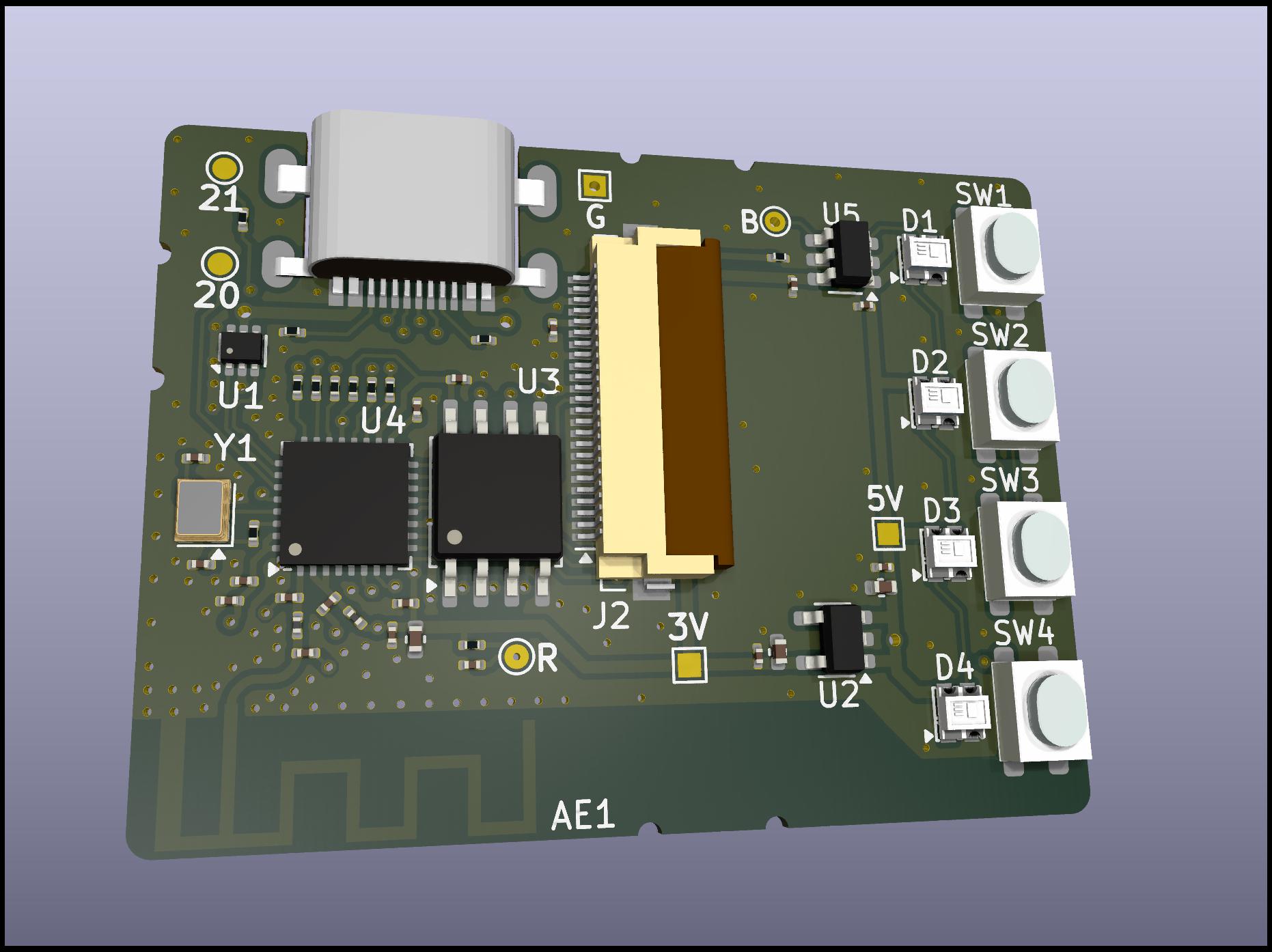
Main components on the Pixie device
Pixie device bill of materials (BOM)
49 components, 22 distinct parts — part numbers from the project's BOM.
| Qty | Part | Footprint | Refs |
|---|---|---|---|
| 1 | C2827693 USBLC6-2SC6 | SOT-563 | U1 |
| 1 | C5370980 SPX3819M5-L-3-3 | SOT-23-5 | U2 |
| 1 | C97521 W25Q128JVS | SOIC-8_5.23x5.23mm_P1.27mm | U3 |
| 1 | C2838500 ESP32-C3 | QFN-32-1EP_5x5mm_P0.5mm_EP3.45x3.45mm | U4 |
| 1 | C168856 SN74LVC1T45DBV | SOT-23-6 | U5 |
| 1 | C409424 40Mhz | crystal_2520 | Y1 |
| 1 | C2906289 ~ | USB_C_SINK | J1 |
| 1 | C262669 ~ | JUSHUO_FPC_24 | J2 |
| 4 | C720479 ~ | button-oval | SW1, SW2, SW3, SW4 |
| 4 | C2976072 WS2812B | WS2812B | D1, D2, D3, D4 |
| 2 | C98041 2n2 | L_0201_0603Metric | L1, L2 |
| 3 | C315248 10u | C_0402_1005Metric | C1, C4, C17 |
| 10 | C284966 100n | C_0201_0603Metric | C2, C3, C7, C11, C13, C15, C16, C18 +2 |
| 2 | C258460 3p3 | C_0201_0603Metric | C5, C8 |
| 2 | C272871 10p | C_0201_0603Metric | C6, C9 |
| 2 | C170153 1u | C_0201_0603Metric | C10, C12 |
| 1 | C76941 10n | C_0201_0603Metric | C14 |
| 3 | C274341 5k1 | R_0201_0603Metric | R1, R2, R3 |
| 1 | C270355 22R | R_0201_0603Metric | R4 |
| 5 | C77623 100R | R_0201_0603Metric | R6, R7, R8, R9, R10 |
Show 2 more
| Qty | Part | Footprint | Refs |
|---|---|---|---|
| 1 | C4354889 499R | R_0201_0603Metric | R11 |
| 1 | C304508 10R | R_0201_0603Metric | R12 |
Pixie device design files
The KiCad project lives in the firefly/pixie-device repository on GitHub; these links point at the commit this page was built from.
Pixie device: common questions
What microcontroller does the Pixie device use?
The Pixie device is built around the C2838500, from the ESP32 family.
How big is the Pixie device PCB?
The Pixie device measures 40 × 30 mm, has 4 copper layers and is 0.7912 mm thick.
How many components are on the Pixie device?
49 components, from 22 distinct parts, with part numbers taken from the project's own BOM. The full bill of materials is listed on this page.
Where can I download the Pixie device design files?
From the firefly/pixie-device repository on GitHub, which has the KiCad layout, the schematic and the BOM; the links under Design files point to each one.
Can I use the Pixie device design in my own project?
The repository has no license, so all rights stay with firefly. Use it as a reference, and ask the author before reusing the design.
Can I test firmware for the Pixie device without the hardware?
Yes. HardLabs builds a simulation of the board from its netlist and BOM, so you can run and debug ESP32 firmware against it before you order a PCB.
Similar boards
 ESP32
Open Book Abridged Edition
joeycastillo
85 × 115 mm65 parts2LCC-BY-SA-4.08.1k ESP32
Powertrain
byrantech
64 × 45.4 mm171 parts4LMIT4.3k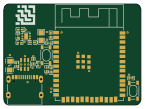 ESP32
Esp32 minimal
atopile
36.2 × 26.8 mm20 parts2LMIT4.0k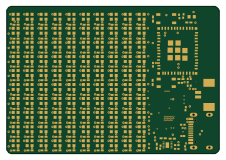 ESP32
Badge
56.3 × 39 mm239 parts4LMIT4.0k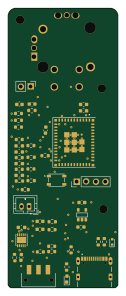 ESP32
Controller
StuckAtPrototype
29 × 74 mm58 parts4LApache-2.03.8k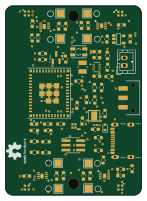 ESP32
Racer
36 × 50.2 mm70 parts4LApache-2.03.8k