
Batterymeter

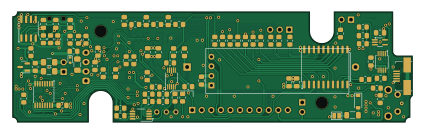
About the Batterymeter PCB
Batterymeter is an open source AVR/Arduino PCB design by hb020, published on GitHub. It is a 4-layer board measuring 106.1 × 29.2 mm, with 143 components from 64 distinct parts.
Its main chip is the ATTINY3226-SU, from the AVR/Arduino family. Other key parts include the I2C_OLED_128X32, MAX4636EUB+, DG4052EEQ-T1-GE3, OPA4388ID and MCP1642B-33I/MS. By type, the board carries 69 resistors, 35 capacitors, 14 ICs, 7 connectors, 6 diodes and 4 fuses.
It belongs with the power & battery and test & measurement designs in this gallery.
From the project
Handheld Battery AC and Time Domain characterization tool on Attiny series 2
This repository is about a "pen size" (handheld) tool for quick measurement of various types of battery resistances/impedances.
This tool uses 2 different methods for measuring impedance values:
- "standard" AC 1 kHz impedance, as used by many. - Direct Current Impedance Spectroscopy, extracting the bulk (solution) resistance and the SEI (Solid Electrolyte Interphase) resistance, allowing better insight in both battery ageing and battery safety. Normally this would require a lengthy procedure via EIS (Electrochemical Impedance Spectroscopy) and model fitting. This tool allows to do it fast…
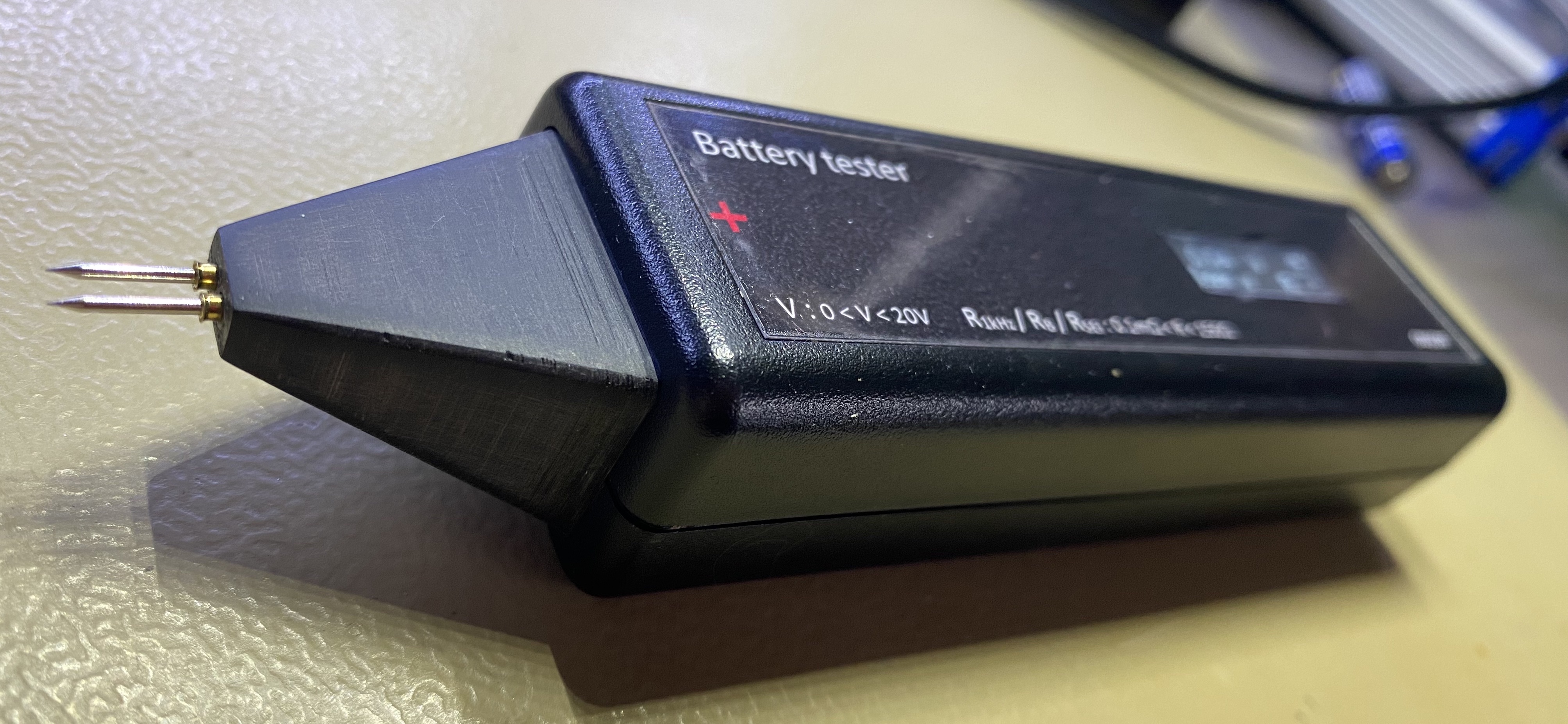
Main components on the Batterymeter
Batterymeter bill of materials (BOM)
143 components, 64 distinct parts — part numbers from the project's BOM.
| Qty | Part | Footprint | Refs |
|---|---|---|---|
| 1 | ATTINY3226-SU ATtiny3226-SU | SOIC-20W_7.5x12.8mm_P1.27mm | U1 |
| 1 | I2C_OLED_128X32 I2C_OLED_128x32 | I2C_OLED_128x32 | U2 |
| 2 | MAX4636EUB+ | VSSOP-10_3x3mm_P0.5mm | U3, U9 |
| 2 | DG4052EEQ-T1-GE3 | TSSOP-16_4.4x5mm_P0.65mm | U4, U5 |
| 1 | OPA4388ID | SOIC-14_3.9x8.7mm_P1.27mm | U6 |
| 1 | MCP1642B-33I/MS | MSOP-8_3x3mm_P0.65mm | U7 |
| 1 | 74AHC1G08 | SOT-23-5_HandSoldering | U8 |
| 1 | CH340E | MSOP-10_3x3mm_P0.5mm | U10 |
| 1 | TLV9062XD TLV9062xD | VSSOP-8_3.0x3.0mm_P0.65mm | U11 |
| 1 | PCA9536D | SOIC-8_3.9x4.9mm_P1.27mm | U12 |
| 2 | 74AUP1G02 | SOT-353_SC-70-5_Handsoldering | U13, U14 |
| 2 | DMN62D0UDW-13 | SOT-363_SC-70-6 | Q1, Q2 |
| 1 | CONN_01X02_FEMALE Conn_01x02_Female | PinSocket_1x02_P2.54mm_Horizontal | J1 |
| 1 | CONN_01X04_MALE Conn_01x04_Male | JST_XH_B4B-XH-A_1x04_P2.50mm_Vertical | J2 |
| 1 | USB_B_Micro | USB_Micro-B_mine | J3 |
| 1 | CONN_01X11_MALE Conn_01x11_Male | PinHeader_1x11_P2.54mm_Vertical | J4 |
| 2 | CONN_01X02_MALE Conn_01x02_Male | PinHeader_1x02_P2.54mm_Vertical | J5, J9 |
| 1 | CONN_01X03_MALE Conn_01x03_Male | PinHeader_1x03_P2.54mm_Vertical | J6 |
| 1 | Battery_Cell | BatteryHolder_Keystone_2466_1xAAA | BT1 |
| 3 | PTC 100mA | Fuse_1206_3216Metric_Pad1.42x1.75mm_HandSolder | F1, F2, F3 |
Show 44 more
| Qty | Part | Footprint | Refs |
|---|---|---|---|
| 1 | Polyfuse | Fuse_1206_3216Metric_Pad1.42x1.75mm_HandSolder | F4 |
| 1 | JUMPER_2_BRIDGED Jumper_2_Bridged | SolderJumper-2_P1.3mm_Bridged_Pad1.0x1.5mm | JP1 |
| 1 | 1M | Potentiometer_Bourns_PV36W_Vertical | RV1 |
| 1 | SW_Push | SW_Tactile_SPST_Angled_PTS645Vx83-2LFS | SW3 |
| 1 | SW_SLLB5 | SW_SLLB510100_handsolder | SW4 |
| 1 | MMBZ20VAL,215 | SOT-23 | D1 |
| 3 | VESD03C1-02V | D_SOD-523 | D2, D6, D7 |
| 1 | 1N4148 | D_SOD-123 | D4 |
| 1 | LED | LED_1206_3216Metric_Pad1.42x1.75mm_HandSolder | D5 |
| 1 | 4.7uH Shld | L_Coilcraft_LPS4018 | L1 |
| 13 | 100NF 100nF | C_0805_2012Metric_Pad1.18x1.45mm_HandSolder | C1, C8, C10, C12, C14, C15, C21, C22 +5 |
| 1 | 100uF 25V | KCM55WC71E107MH13 | C2 |
| 3 | 100uF 6.3V | C_1206_3216Metric_Pad1.33x1.80mm_HandSolder | C3, C4, C5 |
| 7 | 10UF 10uF | C_0805_2012Metric_Pad1.18x1.45mm_HandSolder | C6, C7, C9, C11, C25, C32, C35 |
| 1 | 100PF 100pF | C_0805_2012Metric_Pad1.18x1.45mm_HandSolder | C13 |
| 7 | 10NF 10nF | C_0805_2012Metric_Pad1.18x1.45mm_HandSolder | C16, C17, C18, C19, C28, C29, C30 |
| 2 | 1UF 1uF | C_0805_2012Metric_Pad1.18x1.45mm_HandSolder | C20, C24 |
| 1 | 33PF 33pF | C_0805_2012Metric_Pad1.18x1.45mm_HandSolder | C27 |
| 1 | 50mOhm precision | R_Shunt_Ohmite_LVK12_ALT | R1 |
| 1 | 0.5 Ohm precision | R_1206_3216Metric_4Wire | R2 |
| 1 | 5 Ohm precision | R_1206_3216Metric_4Wire | R3 |
| 1 | 45 Ohm precision | R_1206_3216Metric_4Wire | R4 |
| 5 | 10M | R_0805_2012Metric_Pad1.20x1.40mm_HandSolder | R5, R8, R18, R19, R69 |
| 10 | 100K 100k | R_0805_2012Metric_Pad1.20x1.40mm_HandSolder | R6, R9, R28, R29, R31, R41, R42, R45 +2 |
| 5 | 1k | R_0805_2012Metric_Pad1.20x1.40mm_HandSolder | R7, R34, R35, R38, R40 |
| 1 | 220 | R_0805_2012Metric_Pad1.20x1.40mm_HandSolder | R10 |
| 5 | 10K 10k | R_0805_2012Metric_Pad1.20x1.40mm_HandSolder | R11, R46, R47, R61, R65 |
| 1 | 470 | R_0805_2012Metric_Pad1.20x1.40mm_HandSolder | R12 |
| 2 | 4K7 4k7 | R_0805_2012Metric_Pad1.20x1.40mm_HandSolder | R13, R48 |
| 3 | 1M | R_0805_2012Metric_Pad1.20x1.40mm_HandSolder | R14, R15, R39 |
| 2 | 270 | R_0805_2012Metric_Pad1.20x1.40mm_HandSolder | R16, R17 |
| 2 | 47 | R_0805_2012Metric_Pad1.20x1.40mm_HandSolder | R20, R21 |
| 13 | 0 | R_0805_2012Metric_Pad1.20x1.40mm_HandSolder | R22, R23, R24, R49, R50, R51, R52, R54 +5 |
| 4 | 47K 47k | R_0805_2012Metric_Pad1.20x1.40mm_HandSolder | R25, R26, R27, R36 |
| 1 | 8K2 8k2 | R_0805_2012Metric_Pad1.20x1.40mm_HandSolder | R30 |
| 1 | 82K 82k | R_0805_2012Metric_Pad1.20x1.40mm_HandSolder | R32 |
| 1 | 15K 15k | R_0805_2012Metric_Pad1.20x1.40mm_HandSolder | R33 |
| 1 | 100 | R_1206_3216Metric_Pad1.30x1.75mm_HandSolder | R37 |
| 1 | 9M1 1% | R_0805_2012Metric_Pad1.20x1.40mm_HandSolder | R43 |
| 1 | 1M 1% | R_0805_2012Metric_Pad1.20x1.40mm_HandSolder | R44 |
| 2 | 68 | R_0805_2012Metric_Pad1.20x1.40mm_HandSolder | R53, R64 |
| 2 | 120 | R_0805_2012Metric_Pad1.20x1.40mm_HandSolder | R58, R62 |
| 1 | 330K 330k | R_0805_2012Metric_Pad1.20x1.40mm_HandSolder | R66 |
| 1 | 470K 470k | R_0805_2012Metric_Pad1.20x1.40mm_HandSolder | R67 |
Batterymeter design files
The KiCad project lives in the hb020/batterymeter repository on GitHub; these links point at the commit this page was built from.
Batterymeter: common questions
What microcontroller does the Batterymeter use?
The Batterymeter is built around the ATTINY3226-SU, from the AVR/Arduino family.
How big is the Batterymeter PCB?
The Batterymeter measures 106.1 × 29.2 mm, has 4 copper layers and is 1.6 mm thick.
How many components are on the Batterymeter?
143 components, from 64 distinct parts, with part numbers taken from the project's own BOM. The full bill of materials is listed on this page.
Where can I download the Batterymeter design files?
From the hb020/batterymeter repository on GitHub, which has the KiCad layout, the schematic and the BOM; the links under Design files point to each one.
Can I use the Batterymeter design in my own project?
The repository has no license, so all rights stay with hb020. Use it as a reference, and ask the author before reusing the design.
Can I test firmware for the Batterymeter without the hardware?
Yes. HardLabs builds a simulation of the board from its netlist and BOM, so you can run and debug AVR/Arduino firmware against it before you order a PCB.
More boards in batterymeter
Similar boards
 AVR/Arduino
Magspoof
samyk
35 × 29 mm11 parts2LNo license4.2k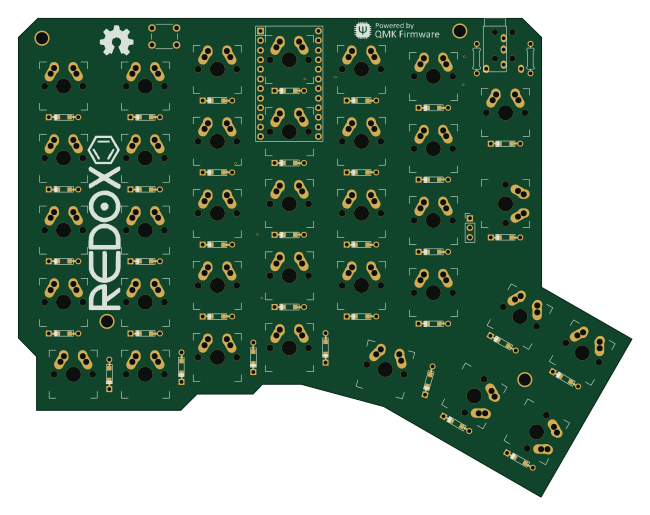 AVR/Arduino
Redox keyboard
mattdibi
162.2 × 126.5 mm77 parts2LMIT2.0k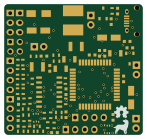 AVR/Arduino
Labrador
espotek-org
36.8 × 34.7 mm75 parts2LNo license1.2k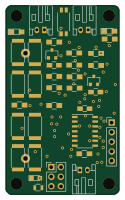 AVR/Arduino
V4
stuartpittaway
30 × 50 mm38 parts2LCC-BY-NC-4.01.1k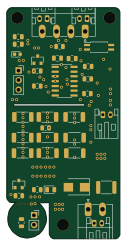 AVR/Arduino
ModuleV450
30 × 61.4 mm39 parts2LCC-BY-NC-4.01.1k AVR/Arduino
Discipline
coseyfannitutti
304.9 × 122.8 mm170 parts2LCC-BY-NC-4.01.0k