
Utter

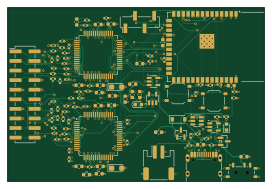
About the Utter PCB
Utter is an open source ESP32 PCB design by IFAKA, published on GitHub. It is a 4-layer board measuring 68 × 46 mm, with 107 components from 30 distinct parts.
Its main chip is the ESP32-S3-WROOM-1-N8, from the ESP32 family. Other key parts include the ADS1298IPAGR, USBLC6-2SC6, MCP73831T-2ACI/OT, AP2112K-3.3TRG1 and LP5907MFX-3.0/NOPB. By type, the board carries 53 capacitors, 34 resistors, 7 ICs, 4 connectors, 3 switches and 3 diodes.
From the project
Utter: covert silent-speech text input from surface EMG (open-source ALS voice)
Live demo: https://utter-nine.vercel.app · Goal: an open-source, non-invasive voice for people who cannot speak (for example ALS), measured in words per minute and word error rate on mimed speech.
Covert text input: silently articulate (lips closed, no sound) and text appears in any app. Surface EMG (chin/throat/behind ear) -> Utter (2x ADS1298 = 16 ch + ESP32-S3) -> ~8 silent tokens -> local LLM suggestions -> earbud feedback -> typed text.
Main components on the Utter
Utter bill of materials (BOM)
107 components, 30 distinct parts — part numbers from the project's BOM.
| Qty | Part | Footprint | Refs |
|---|---|---|---|
| 2 | ADS1298IPAGR | TQFP-64_10x10mm_P0.5mm | U1, U2 |
| 1 | ESP32-S3-WROOM-1-N8 | ESP32-S3-WROOM-1 | U3 |
| 1 | USBLC6-2SC6 | SOT-23-6 | U4 |
| 1 | MCP73831T-2ACI/OT | SOT-23-5 | U5 |
| 1 | AP2112K-3.3TRG1 | SOT-23-5 | U6 |
| 1 | LP5907MFX-3.0/NOPB | SOT-23-5 | U7 |
| 2 | AO3401A | SOT-23 | Q1, Q2 |
| 1 | C42372532 Electrodes | PinHeader_2x10_P2.54mm_Vertical_SMD | J1 |
| 1 | C46061677 IMU | PinHeader_1x04_P2.54mm_Vertical_SMD_Pin1Left | J2 |
| 1 | C165948 USB-C | USB_C_Receptacle_HRO_TYPE-C-31-M-12 | J3 |
| 1 | C295747 LiPo 1S | JST_PH_S2B-PH-SM4-TB_1x02-1MP_P2.00mm_Horizontal | J4 |
| 1 | C318884 RESET | SW_Push_1P1T_XKB_TS-1187A | SW1 |
| 1 | C318884 BOOT | SW_Push_1P1T_XKB_TS-1187A | SW2 |
| 1 | C431540 POWER | SW_SPDT_Shouhan_MSK12C02 | SW3 |
| 2 | C2286 red | LED_0603_1608Metric | D1, D2 |
| 1 | B5819W | D_SOD-123 | D3 |
| 1 | C1002 600R@100MHz | L_0603_1608Metric | FB1 |
| 17 | C75274 470p C0G | C_0402_1005Metric | C1, C2, C3, C4, C5, C6, C7, C8 +9 |
| 8 | 10U 10u | C_0603_1608Metric | C18, C30, C43, C46, C47, C48, C50, C53 |
| 12 | 100N 100n | C_0402_1005Metric | C19, C25, C26, C27, C29, C31, C37, C38 +4 |
Show 10 more
| Qty | Part | Footprint | Refs |
|---|---|---|---|
| 2 | 22U 22u | CP_EIA-3216-18_Kemet-A | C20, C32 |
| 13 | 1u | C_0603_1608Metric | C21, C22, C23, C24, C28, C33, C34, C35 +5 |
| 1 | 2.2N 2.2n | C_0603_1608Metric | C42 |
| 20 | 10K 10k | R_0402_1005Metric | R1, R2, R3, R4, R5, R6, R7, R8 +12 |
| 1 | 33 | R_0402_1005Metric | R18 |
| 1 | 1M | R_0402_1005Metric | R19 |
| 2 | 1k | R_0402_1005Metric | R23, R31 |
| 3 | 4.7K 4.7k | R_0402_1005Metric | R24, R25, R30 |
| 2 | 5.1K 5.1k | R_0402_1005Metric | R26, R27 |
| 5 | 100K 100k | R_0402_1005Metric | R28, R29, R32, R33, R34 |
Utter design files
The KiCad project lives in the IFAKA/utter repository on GitHub; these links point at the commit this page was built from.
Utter: common questions
What microcontroller does the Utter use?
The Utter is built around the ESP32-S3-WROOM-1-N8, from the ESP32 family.
How big is the Utter PCB?
The Utter measures 68 × 46 mm, has 4 copper layers and is 1.6 mm thick.
How many components are on the Utter?
107 components, from 30 distinct parts, with part numbers taken from the project's own BOM. The full bill of materials is listed on this page.
Where can I download the Utter design files?
From the IFAKA/utter repository on GitHub, which has the KiCad layout, the schematic and the BOM; the links under Design files point to each one.
Can I use the Utter design in my own project?
The repository has no license, so all rights stay with IFAKA. Use it as a reference, and ask the author before reusing the design.
Can I test firmware for the Utter without the hardware?
Yes. HardLabs builds a simulation of the board from its netlist and BOM, so you can run and debug ESP32 firmware against it before you order a PCB.
Similar boards
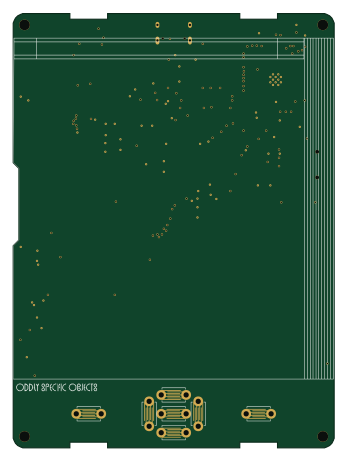 ESP32
OSO-BOOK-B1
joeycastillo
85 × 115 mm65 parts2LCC-BY-SA-4.08.1k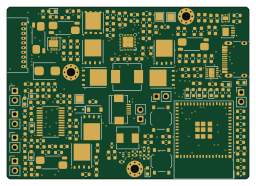 ESP32
Powertrain
byrantech
64 × 45.4 mm171 parts4LMIT4.3k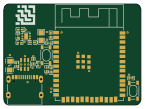 ESP32
Esp32 minimal
atopile
36.2 × 26.8 mm20 parts2LMIT4.0k ESP32
Badge
56.3 × 39 mm239 parts4LMIT4.0k ESP32
Racer
StuckAtPrototype
36 × 50.2 mm70 parts4LApache-2.03.8k ESP32
Controller
29 × 74 mm58 parts4LApache-2.03.8k