
InkCard

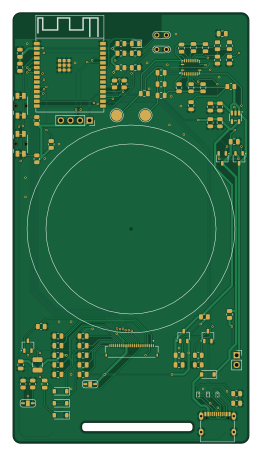
About the InkCard PCB
InkCard is an open source ESP32 PCB design by Irony95, published on GitHub under the MIT license. It is a 2-layer board measuring 62.4 × 113.8 mm, with 84 components from 40 distinct parts.
Its main chip is the ESP32-C6-WROOM-1-N8, from the ESP32 family. Other key parts include the BQ51013BRHLR and XC6220B331MR. By type, the board carries 34 capacitors, 23 resistors, 8 diodes, 5 transistors, 4 switches and 3 ICs.
It belongs with the displays & leds designs in this gallery.
From the project
An e-ink display that mirrors your phone/device
The project is made to be as cheap as possible, coming to a total cost of around $35USD for materials. This would be even lower if made/bought in bulk!
As this is a prototype and in heavy development, I would not recommend making this unless you're willing to tinker/is familiar with electronics and or app dev. Nevertheless, If you do want to make the project you are free to do so! I am open to answering any questions should you make the card. I am also open to the idea of making and selling the hardware itself, though this comes down to if there is interest in the project and when I feel the…
Main components on the InkCard
InkCard bill of materials (BOM)
84 components, 40 distinct parts — part numbers from the project's BOM.
| Qty | Part | Footprint | Refs |
|---|---|---|---|
| 1 | BQ51013BRHLR TI(德州仪器) | VQFN-20_L4.5-W3.5-P0.50-BL-EP_BQ24100RHLR | U1 |
| 1 | XC6220B331MR | SOT-23-5 | U2 |
| 1 | ESP32-C6-WROOM-1-N8 ESPRESSIF(乐鑫) | WIRELM-SMD_ESP32-C6-WROOM-1 | U3 |
| 1 | A03400 | TSOT-23 | Q1 |
| 3 | A03401 | TSOT-23 | Q2, Q4, Q5 |
| 1 | S8050 | TSOT-23 | Q3 |
| 1 | FH34SRJ-24S-0.5SH_50_ | HRS_FH34SRJ-24S-0.5SH_50_ | J3 |
| 1 | UART | PinSocket_1x04_P2.54mm_Vertical | J4 |
| 1 | 5VPWR | PinSocket_1x02_P2.54mm_Vertical | J5 |
| 1 | JumperEN | TestPoint_2Pads_Pitch2.54mm_Drill0.8mm | JP2 |
| 1 | JumperBOOT | TestPoint_2Pads_Pitch2.54mm_Drill0.8mm | JP4 |
| 2 | SW_Push | Panasonic_EVQPUL_EVQPUC | SW1, SW2 |
| 2 | SW_Push | KEY-SMD_L4.0-W3.0-LS4.9-1 | SW3, SW4 |
| 1 | TYPE-C 16PIN 2MD(073) TYPE-C 16PIN 2MD SHOU HAN(首韩) | USB-C-SMD_TYPE-C-16PIN-2MD-073 | USB1 |
| 3 | MBR0530 | D_SOD-123 | D1, D2, D3 |
| 1 | LED | LED_0805_2012Metric | D4 |
| 1 | 1N5819 | D_SOD-123 | D5 |
| 3 | ESD9B5.0ST5G | D_SOD-923 | D6, D7, D8 |
| 1 | 10UH 10uH | L_1210_3225Metric | L1 |
| 7 | 100NF 100nF | C_0805_2012Metric | C1, C16, C17, C18, C29, C31, C33 |
Show 20 more
| Qty | Part | Footprint | Refs |
|---|---|---|---|
| 11 | 1UF 1uF | C_0805_2012Metric | C2, C3, C4, C5, C6, C7, C8, C9 +3 |
| 3 | 4.7UF 4.7uF | C_0805_2012Metric | C12, C13, C27 |
| 4 | 10UF 10uF | C_0805_2012Metric | C14, C19, C28, C30 |
| 1 | 2.2NF 2.2nF | C_0805_2012Metric | C15 |
| 2 | 10NF 10nF | C_0805_2012Metric | C21, C22 |
| 2 | 470NF 470nF | C_0805_2012Metric | C23, C24 |
| 3 | 22NF 22nF | C_0805_2012Metric | C25, C26, C34 |
| 1 | 33NF 33nF | C_0805_2012Metric | C32 |
| 1 | NC/0.47R | R_0805_2012Metric | R1 |
| 1 | C17660 3R | R_0805_2012Metric | R2 |
| 10 | 10K | R_0805_2012Metric | R3, R5, R10, R11, R12, R15, R19, R20 +2 |
| 1 | 47K | R_0805_2012Metric | R4 |
| 2 | NC | R_0805_2012Metric | R6, R23 |
| 2 | 5.1K | R_0805_2012Metric | R7, R9 |
| 1 | 100K | R_0805_2012Metric | R8 |
| 1 | 200 | R_0805_2012Metric | R16 |
| 1 | 20K | R_0805_2012Metric | R17 |
| 1 | 560R | R_0805_2012Metric | R18 |
| 1 | 330R | R_0805_2012Metric | R21 |
| 1 | C17477 0R | R_0805_2012Metric | R22 |
InkCard design files
The KiCad project lives in the Irony95/InkCard repository on GitHub; these links point at the commit this page was built from.
InkCard: common questions
What microcontroller does the InkCard use?
The InkCard is built around the ESP32-C6-WROOM-1-N8, from the ESP32 family.
How big is the InkCard PCB?
The InkCard measures 62.4 × 113.8 mm, has 2 copper layers and is 1 mm thick.
How many components are on the InkCard?
84 components, from 40 distinct parts, with part numbers taken from the project's own BOM. The full bill of materials is listed on this page.
Where can I download the InkCard design files?
From the Irony95/InkCard repository on GitHub, which has the KiCad layout, the schematic and the BOM; the links under Design files point to each one.
Can I use the InkCard design in my own project?
Yes, under the terms of its MIT license, which Irony95 chose for the repository.
Can I test firmware for the InkCard without the hardware?
Yes. HardLabs builds a simulation of the board from its netlist and BOM, so you can run and debug ESP32 firmware against it before you order a PCB.
Similar boards
 ESP32
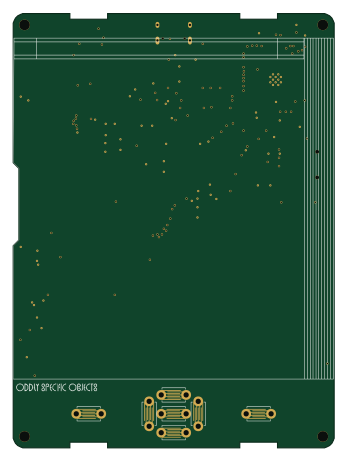
Open Book Abridged Edition
joeycastillo
85 × 115 mm65 parts2LCC-BY-SA-4.08.1k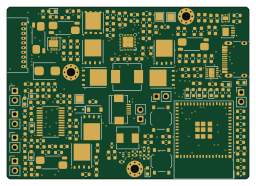 ESP32
Powertrain
byrantech
64 × 45.4 mm171 parts4LMIT4.3k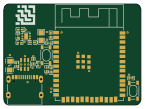 ESP32
Esp32 minimal
atopile
36.2 × 26.8 mm20 parts2LMIT4.0k ESP32
Badge
56.3 × 39 mm239 parts4LMIT4.0k ESP32
Controller
StuckAtPrototype
29 × 74 mm58 parts4LApache-2.03.8k ESP32
Racer
36 × 50.2 mm70 parts4LApache-2.03.8k