
Micro rusEFI

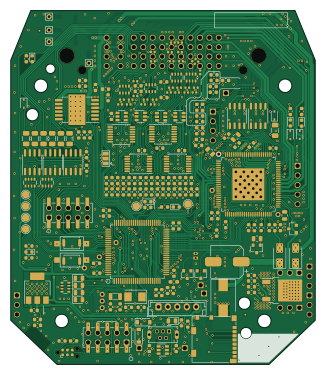
About the Micro rusEFI PCB
Micro rusEFI is an open source STM32 PCB design by rusefi, published on GitHub. It is a 2-layer board measuring 80.6 × 93.7 mm, with 238 components from 73 distinct parts.
Its main chip is the STM32F427VGT6, from the STM32 family. Other key parts include the TLE88882QKXUMA1, 500762-0481, TLE9201SG, LM1117-3.3 and XC6206P332MR. By type, the board carries 102 resistors, 63 capacitors, 34 diodes, 15 ICs, 12 connectors and 4 switches.
It belongs with the sensors designs in this gallery.
From the project
microRusEfi board for rusEfi ECU
microRusEFI is a small & cheap engine management system board designed for fully sequential 1, 2, 3 and 4 cylinder applications.
6 and 8 cylinders are possible with some limitations. 5 cylinder application not recommended. You would need at least two microRusEFI units to run a v12.
microRusEFI uses a waterproof connector and its aluminum enclosure could be sealed.
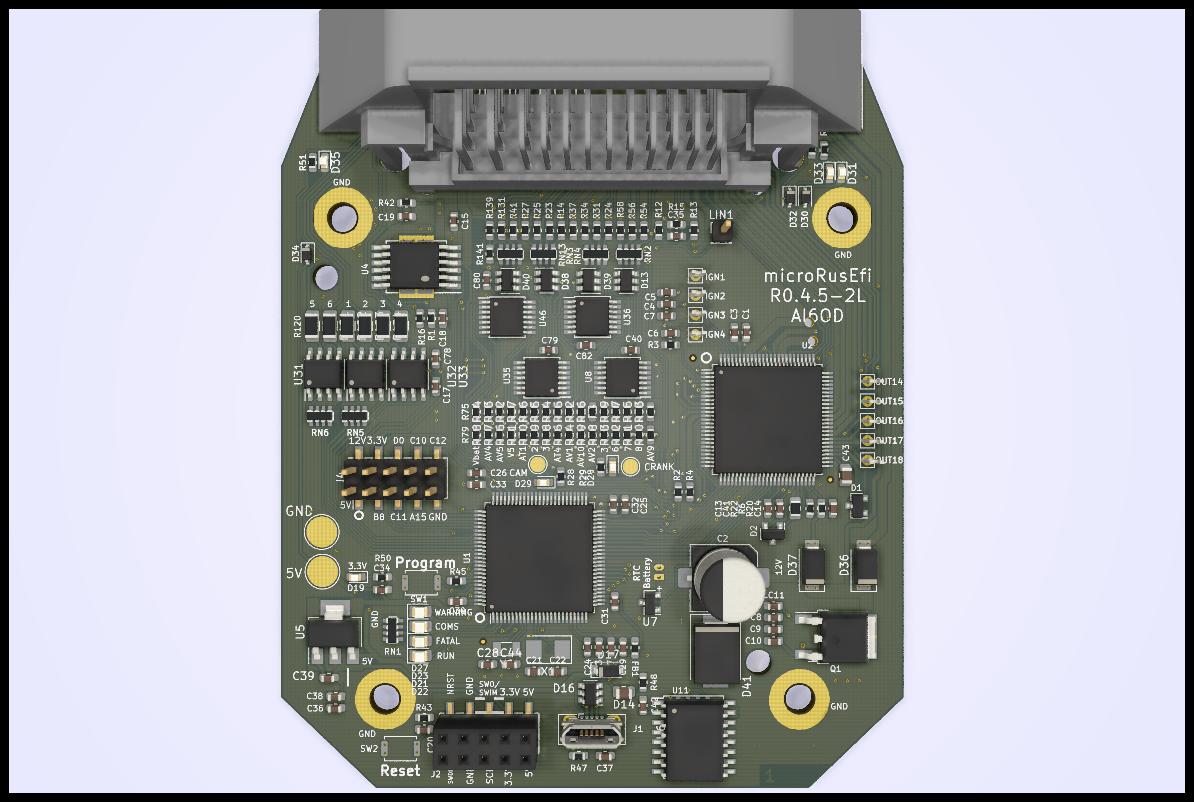
Main components on the Micro rusEFI
Micro rusEFI bill of materials (BOM)
238 components, 73 distinct parts — part numbers from the project's BOM.
| Qty | Part | Footprint | Refs |
|---|---|---|---|
| 1 | STM32F427VGT6 ST | LQFP-100_14x14mm_P0.5mm | U1 |
| 1 | TLE88882QKXUMA1 TLE8888QK Infineon | LQFP-100_14x14mm_P0.5mm_THERMAL | U2 |
| 1 | 500762-0481 molex_48pin_MRE MOLEX | Molex_48_MRE | U3 |
| 1 | TLE9201SG Infineon | Infineon_PG-DSO-12-11 | U4 |
| 1 | LM1117-3.3 | SOT-223-3_TabPin2 | U5 |
| 1 | XC6206P332MR XC6206 3.3V Torex | SOT-23 | U7 |
| 4 | MCP6004T-I/ST MCP6004 MicroChip | TSSOP-14_4.4x5mm_P0.65mm | U8, U35, U36, U46 |
| 2 | VNLD5090 | SO-8_3.9x4.9mm_P1.27mm | U9, U10 |
| 3 | MIC4427 | SOIC-8_3.9x4.9mm_P1.27mm | U31, U32, U33 |
| 1 | IPD30N06S2L23AT3 IPD30N06S2L-23 INFINEON | TO-252-2 | Q1 |
| 1 | 8MHz 20pF | Crystal_SMD_5032-2Pin_5.0x3.2mm | X1 |
| 1 | 32768 Hz | Crystal_SMD_3215-2Pin_3.2x1.5mm | Y2 |
| 1 | 1734753-1 USB_B_Mini TE | USB-MINI-B-VERTICAL | J1 |
| 1 | 95278-801B10LF Conn_02x05_Odd_Even Amphenol | PinSocket_2x05_P2.54mm_Vertical_SMD | J2 |
| 6 | CONN_01X01 Conn_01x01 | Pin_D0.7mm_L6.5mm_W1.8mm_FlatFork | J3, J5, J12, J13, J15, J17 |
| 1 | CONN_02X05_COUNTER_CLOCKWISE Conn_02x05_Counter_Clockwise | PinHeader_2x05_P2.54mm_Vertical_SMD | J4 |
| 1 | Micro_SD_Card_Det | microSD_HC_Molex_104031-0811 | J6 |
| 1 | TC2030 | Tag-Connect_TC2030-IDC-NL_2x03_P1.27mm_Vertical | J7 |
| 1 | CONN_01X06 Conn_01x06 | JST_EH_B5B-EH-A_1x05_P2.50mm_Vertical | J19 |
| 1 | Disclaimer | Off_Road_Disclaimer | G1 |
Show 53 more
| Qty | Part | Footprint | Refs |
|---|---|---|---|
| 1 | High side voltage 5V 12V | SolderJumper-3_P1.3mm_Open_Pad1.0x1.5mm | JP2 |
| 2 | NET-TIE_2 Net-Tie_2 | Net-Tie_2_8.5mil | NT1, NT2 |
| 2 | SW_Push | SW_SPST_CK_RS282G05A3 | SW1, SW2 |
| 2 | SW_Push | SW_Push_SPST_NO_Alps_SKRK | SW3, SW4 |
| 2 | BAV70 | SOT-23 | D1, D42 |
| 1 | PESD1CANUX PESD1CAN-UX Nexperia | SOT-23 | D2 |
| 8 | SS54 | D_SMA | D3, D4, D5, D6, D15, D20, D36, D37 |
| 2 | B5819W | D_SOD-123 | D7, D17 |
| 5 | SRV05-4 | SOT-23-6 | D13, D16, D38, D39, D40 |
| 2 | LED-GREEN | LED_0805_2012Metric | D14, D22 |
| 6 | LED-RED | LED_0603_1608Metric | D19, D28, D29, D31, D33, D35 |
| 1 | LED-RED | LED_0805_2012Metric | D21 |
| 1 | LED-BLUE | LED_0805_2012Metric | D23 |
| 1 | LED-YELLOW | LED_0805_2012Metric | D27 |
| 4 | NSR0530HT 1N4148WS ON-SEMI | D_SOD-323 | D30, D32, D34, D43 |
| 1 | SM15T33C | D_SMC | D41 |
| 1 | BLM21PG221SN1D FILTER Murata | R_0603_1608Metric_Pad1.05x0.95mm_HandSolder | FB1 |
| 18 | C0603C104J5RACTU 100nF KEMET | C_0603_1608Metric | C1, C6, C10, C13, C14, C15, C17, C18 +10 |
| 1 | UCD1H101MNL1GS 100UF 50V NICHICON | CP_Elec_8x10.5 | C2 |
| 2 | CGA3E2X7R1H472K080AA 4.7nF TDK | C_0603_1608Metric | C3, C11 |
| 2 | CGA3E3X7R1H474K080AE 470nF TDK | C_0603_1608Metric | C4, C5 |
| 3 | C1608X5R1E106M080AC 10uF TDK | C_0603_1608Metric | C7, C8, C9 |
| 2 | GRM1885C1H102FA01D 1nF MURATA | C_0603_1608Metric | C12, C35 |
| 16 | 100NF 100nF | C_0402_1005Metric | C16, C45, C46, C47, C48, C49, C50, C51 +8 |
| 7 | C0603C103K1RACTU 10nF KEMET | C_0603_1608Metric | C19, C20, C29, C40, C79, C80, C82 |
| 2 | CL10C180JB8NNNC 18pF | C_0603_1608Metric | C21, C22 |
| 3 | UMK107BJ105KA-T 1uF Taiyo Yuden | C_0603_1608Metric | C23, C27, C36 |
| 3 | GRM188R6YA225KA12D 2.2uF MURATA | C_0603_1608Metric | C25, C26, C41 |
| 2 | 6.8PF 6.8pF | C_0603_1608Metric | C28, C44 |
| 1 | 22UF 22uF | C_0603_1608Metric | C39 |
| 1 | CL21A226MAQNNNE 22uF 25V Samsung | C_0805_2012Metric | C43 |
| 25 | RMCF0603JT10K0 10K StackPole | R_0603_1608Metric | R1, R4, R6, R12, R13, R16, R38, R39 +17 |
| 1 | 0R DNP DNP | R_0603_1608Metric | R2 |
| 1 | 10K | R_0805_2012Metric | R3 |
| 16 | 6.8K | R_0603_1608Metric | R5, R26, R32, R35, R53, R55, R57, R59 +8 |
| 3 | DNP DNP | R_0402_1005Metric | R7, R11, R40 |
| 8 | 0603WAF0000T5E 0R Uniroyal Elec | R_0603_1608Metric | R8, R21, R30, R33, R80, R81, R84, R85 |
| 4 | RMCF0603JT4K70 4.7K StackPole | R_0603_1608Metric | R9, R42, R82, R83 |
| 1 | 1k | R_1206_3216Metric | R10 |
| 4 | 2.7K 2.7k StackPole | R_0603_1608Metric | R14, R23, R25, R27 |
| 1 | RMCF0603JG15K0 DNP DNP | R_0603_1608Metric | R15 |
| 3 | DNP DNP | R_0603_1608Metric | R17, R18, R19 |
| 1 | RMCF0603FT2K70 2.7k StackPole | R_0603_1608Metric | R20 |
| 1 | 120 | R_0805_2012Metric | R22 |
| 10 | 470K | R_0402_1005Metric | R24, R31, R34, R37, R41, R52, R54, R56 +2 |
| 2 | RMCF0603FT2K20 2.2k StackPole | R_0603_1608Metric | R28, R48 |
| 5 | RMCF0603JJ1K00 1k StackPole | R_0603_1608Metric | R29, R36, R49, R50, R51 |
| 1 | RMCF0603JT100K 100K StackPole | R_0603_1608Metric | R47 |
| 1 | 0R | R_0805_2012Metric | R86 |
| 6 | RMCF0603FT100R 100 StackPole | R_1206_3216Metric | R120, R121, R122, R123, R124, R125 |
| 1 | RC0603FR-0739KL 39k Yageo | R_0603_1608Metric | R139 |
| 1 | CAT16-1001F4LF 1k Bourns | R_Array_Convex_4x0603 | RN1 |
| 6 | YC164-JR-0710KL 10k Yageo | R_Array_Convex_4x0603 | RN2, RN3, RN4, RN5, RN6, RN13 |
Micro rusEFI design files
The KiCad project lives in the rusefi/hw_microRusEfi repository on GitHub; these links point at the commit this page was built from.
Micro rusEFI: common questions
What microcontroller does the Micro rusEFI use?
The Micro rusEFI is built around the STM32F427VGT6, from the STM32 family.
How big is the Micro rusEFI PCB?
The Micro rusEFI measures 80.6 × 93.7 mm, has 2 copper layers and is 1.6 mm thick.
How many components are on the Micro rusEFI?
238 components, from 73 distinct parts, with part numbers taken from the project's own BOM. The full bill of materials is listed on this page.
Where can I download the Micro rusEFI design files?
From the rusefi/hw_microRusEfi repository on GitHub, which has the KiCad layout, the schematic and the BOM; the links under Design files point to each one.
Can I use the Micro rusEFI design in my own project?
The repository has no license, so all rights stay with rusefi. Use it as a reference, and ask the author before reusing the design.
Can I test firmware for the Micro rusEFI without the hardware?
Yes. HardLabs builds a simulation of the board from its netlist and BOM, so you can run and debug STM32 firmware against it before you order a PCB.
More boards in hw_microRusEfi
 STM32
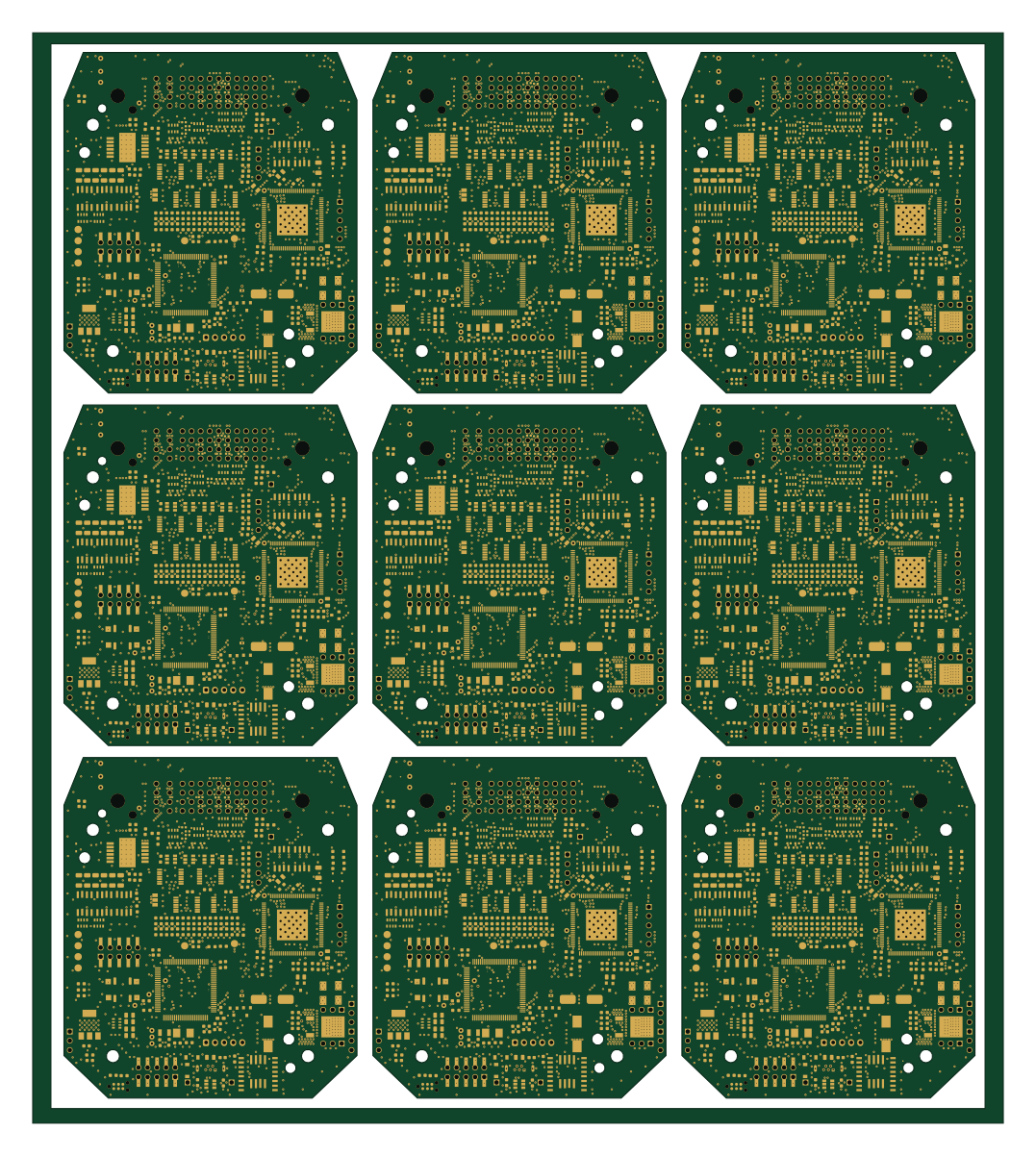
Panel R0.5.1 300x300 2layer step1
267 × 300 mm235 parts2LNo license98 STM32
Output.Panel R0.5.1 300x300 2layer step1 Modified 1and5 only
18.8 × 17.8 mm235 parts2LNo license98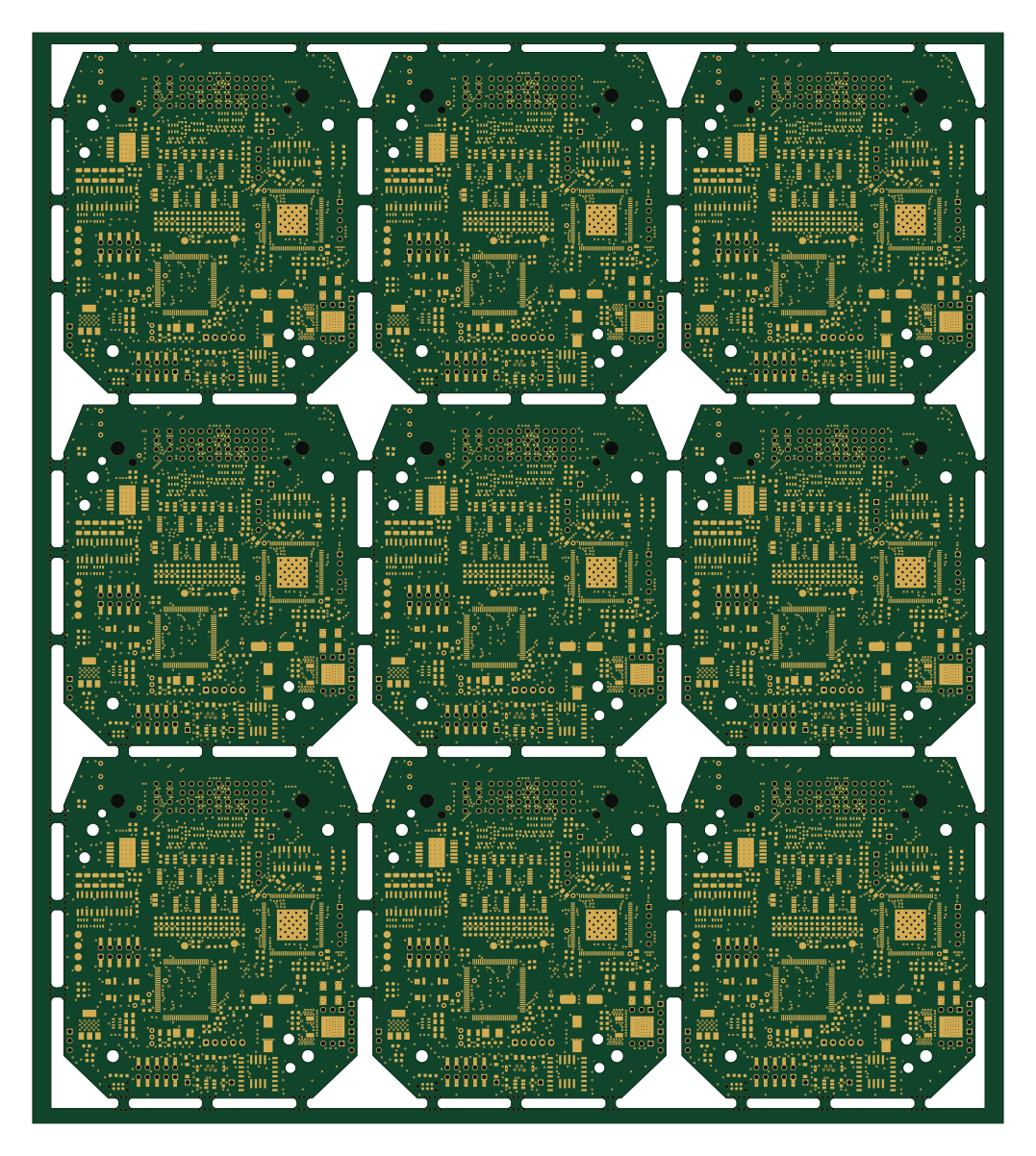 STM32
Output.Panel R0.5.1 300x300 2layer step1 Modified
267 × 300 mm235 parts2LNo license98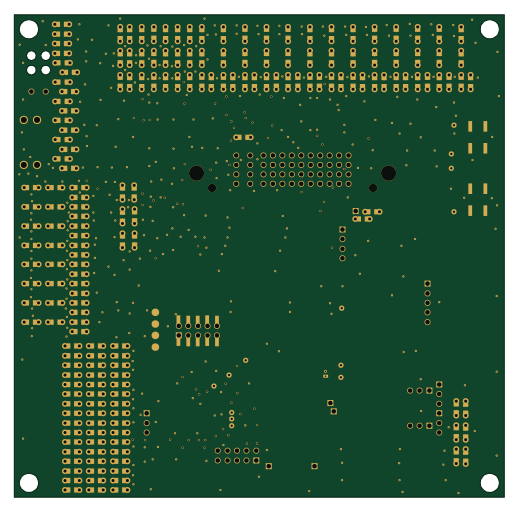 STM32
ZMRETestFixture
129.5 × 127.6 mm199 parts2LNo license98
Similar boards
 STM32
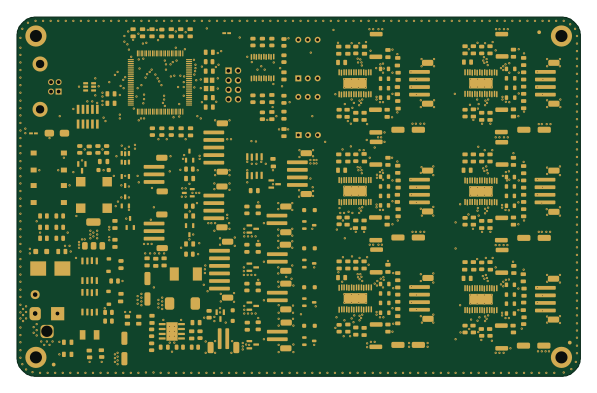
LumenPnP Motherboard
opulo-inc
149 × 95 mm296 parts4LCC-BY-SA-4.03.7k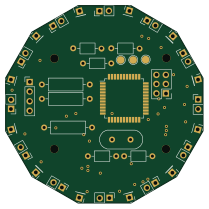 STM32
Base
google
52.3 × 52.3 mm36 parts2LApache-2.02.9k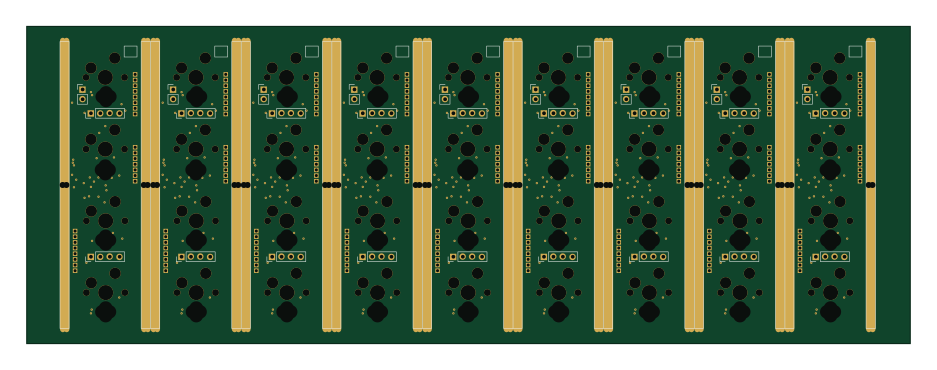 STM32
Main panel
234 × 84 mm26 parts4LApache-2.02.9k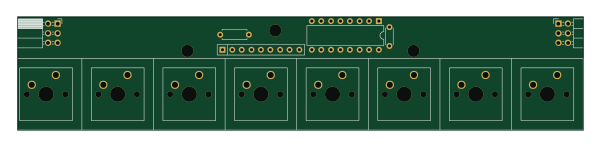 STM32
Type a
150 × 30 mm14 parts2LApache-2.02.9k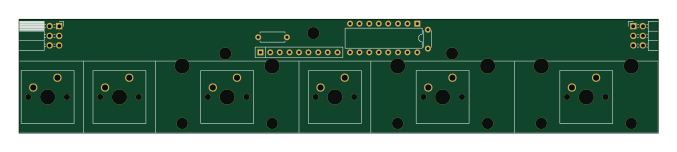 STM32
Type g
169 × 30 mm24 parts2LApache-2.02.9k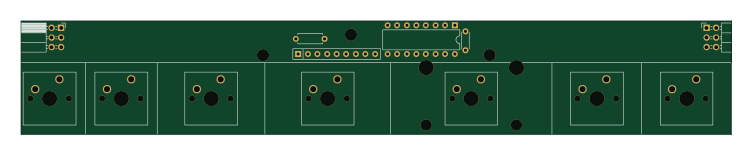 STM32
Type c
188 × 30 mm17 parts2LApache-2.02.9k