
Bottom

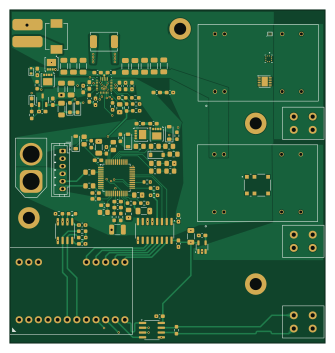
About the Bottom PCB
Bottom is an open source STM32 PCB design by StanZalewski, published on GitHub. It is a 4-layer board measuring 83.3 × 88.1 mm, with 115 components from 56 distinct parts.
Its main chip is the STM32G030, from the STM32 family. Other key parts include the BQ76952PFBR, BQ25798RQMR, SP3485EN, SCWN03A-12 and SCWN06A-05. By type, the board carries 47 capacitors, 38 resistors, 10 ICs, 9 diodes, 6 connectors and 4 transistors.
It belongs with the power & battery, iot & wireless and rf & radio designs in this gallery.
From the project
Solar-powered LoRaWAN weather station — 3 custom PCBs, bare-metal STM32, 4.3 km verified link
Solar-powered agricultural weather station built from scratch: three custom PCBs, three MCUs, Modbus RTU over RS-485 between boards, LoRaWAN uplink to a private ChirpStack network server. Verified 4.3 km link in suburban terrain.
Bachelor's thesis project, Poznan University of Technology, 2026.
A field station measures temperature, humidity, pressure and ambient light, runs entirely off a 30 W solar panel with a 3S LiFePO4 pack, and reports over LoRaWAN to a self-hosted network server. No GSM, no mains power, no cloud dependency.
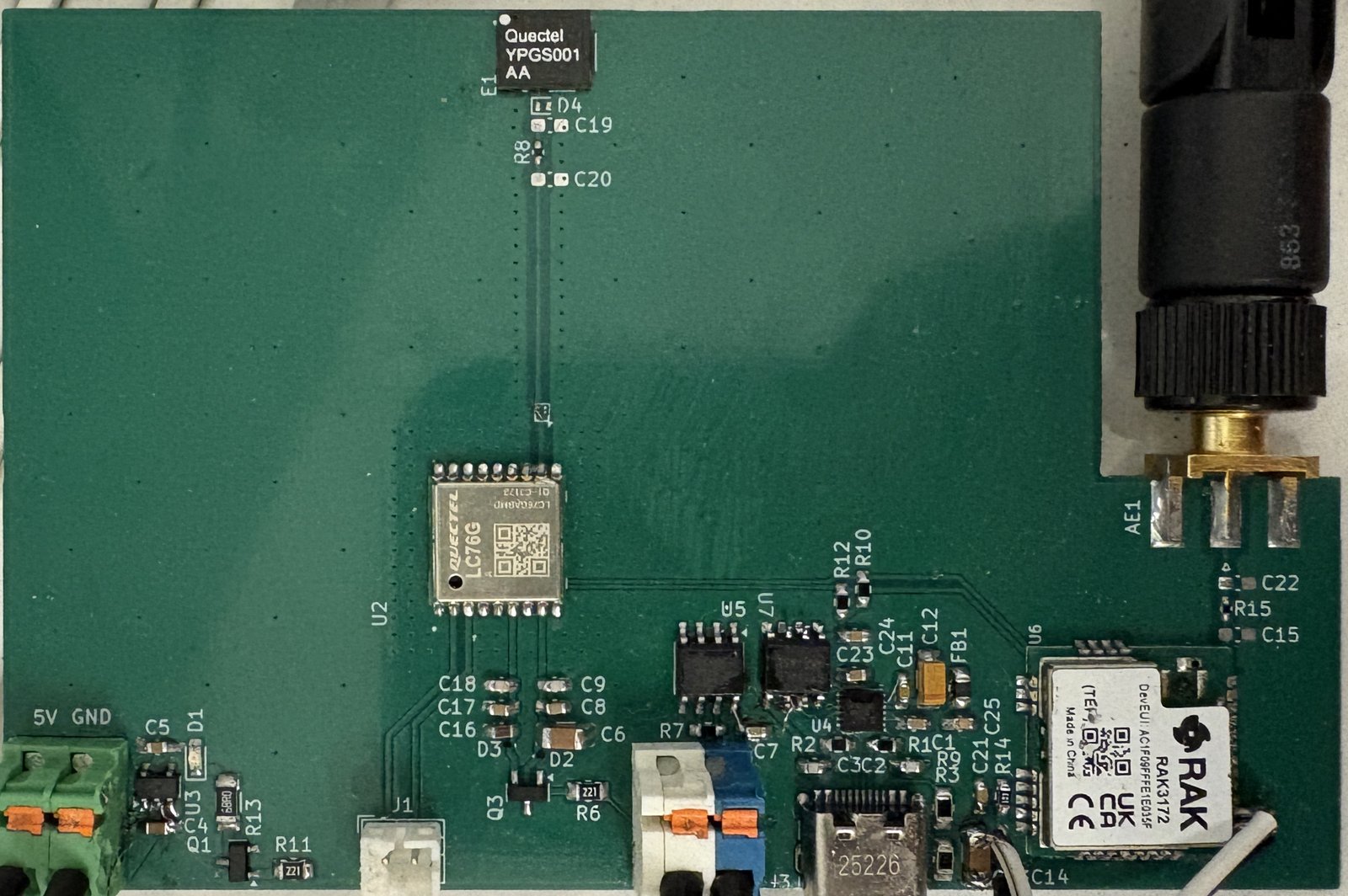
Main components on the Bottom
Bottom bill of materials (BOM)
115 components, 56 distinct parts.
| Qty | Part | Footprint | Refs |
|---|---|---|---|
| 1 | BQ76952PFBR | TQFP-48_7x7mm_P0.5mm | U1 |
| 1 | ~ | STM32G030 | U2 |
| 1 | BQ25798RQMR | IC_BQ25798RQMR | U3 |
| 1 | SP3485EN | SOIC-8_3.9x4.9mm_P1.27mm | U4 |
| 1 | SCWN03A-12 | DIP1524W50P254L3180H1020Q8B | U5 |
| 1 | SCWN06A-05 | DIP1524W50P254L3180H1020Q8B | U6 |
| 1 | MIC5205-3.3YM5 | SOT-23-5 | U7 |
| 1 | TLV76033DBZR | SOT-23-3 | U8 |
| 1 | ISO1640BDR | SOIC127P599X175-8N | U9 |
| 1 | Si8662BB-B-IS1 | SOIC-16_3.9x9.9mm_P1.27mm | U10 |
| 4 | CSD17581Q3A | VSON-8_3.3x3.3mm_P0.65mm_NexFET | Q1, Q3, Q5, Q6 |
| 3 | Conn_01x02_Pin | SPTAF 1_2-3,5-IL | J1, J6, J8 |
| 1 | JST_conn | JST_PH_B6B-PH-K_1x06_P2.00mm_Vertical | J2 |
| 1 | Conn_01x02_Pin | conn_SMD_wire_2x1_Power | J3 |
| 1 | Conn_01x02_Socket | AMASS_XT60-M_1x02_P7.20mm_Vertical | J4 |
| 1 | BZT52C12T-7 | D_SOD-523 | D1 |
| 2 | BAT54HT1G | D_SOD-323_HandSoldering | D2, D4 |
| 1 | LTST-C190GKT | LED_0603_1608Metric_Pad1.05x0.95mm_HandSolder | D3 |
| 1 | 5.0SMDJ75A | DIOM6859X262N | D5 |
| 2 | BAT46W-7-F | D_SOD-123 | D6, D8 |
Show 36 more
| Qty | Part | Footprint | Refs |
|---|---|---|---|
| 2 | MMSZ5246B-7-F | D_SOD-123 | D7, D9 |
| 1 | 2u2 | SPM6530T-2R2M | L1 |
| 17 | 0u1 | C_0603_1608Metric_Pad1.08x0.95mm_HandSolder | C1, C2, C7, C9, C10, C11, C31, C32 +9 |
| 10 | 10u | C_1206_3216Metric_Pad1.33x1.80mm_HandSolder | C3, C6, C8, C12, C13, C15, C16, C18 +2 |
| 2 | 47n | C_0603_1608Metric_Pad1.08x0.95mm_HandSolder | C4, C5 |
| 2 | 10u | C_0603_1608Metric_Pad1.08x0.95mm_HandSolder | C14, C17 |
| 1 | 4u7 | C_0603_1608Metric_Pad1.08x0.95mm_HandSolder | C20 |
| 1 | 1u | C_1206_3216Metric_Pad1.33x1.80mm_HandSolder | C22 |
| 4 | 0u22 | C_0603_1608Metric_Pad1.08x0.95mm_HandSolder | C23, C24, C25, C26 |
| 2 | 0n1 | C_0603_1608Metric_Pad1.08x0.95mm_HandSolder | C27, C30 |
| 1 | 0u47 | C_0805_2012Metric_Pad1.18x1.45mm_HandSolder | C28 |
| 1 | 2u2 | C_0805_2012Metric_Pad1.18x1.45mm_HandSolder | C29 |
| 1 | 2u2 | C_1206_3216Metric_Pad1.33x1.80mm_HandSolder | C34 |
| 1 | 0n47 | C_0603_1608Metric_Pad1.08x0.95mm_HandSolder | C35 |
| 2 | 10n | C_0805_2012Metric_Pad1.18x1.45mm_HandSolder | C38, C47 |
| 2 | 1n | C_0603_1608Metric_Pad1.08x0.95mm_HandSolder | C43, C44 |
| 2 | 4k7 | R_0603_1608Metric_Pad0.98x0.95mm_HandSolder | R1, R41 |
| 4 | 10k | R_0603_1608Metric_Pad0.98x0.95mm_HandSolder | R2, R38, R39, R40 |
| 1 | 294 | R_0603_1608Metric_Pad0.98x0.95mm_HandSolder | R3 |
| 1 | 10 | R_1206_3216Metric_Pad1.30x1.75mm_HandSolder | R4 |
| 1 | 2k21 | R_0603_1608Metric_Pad0.98x0.95mm_HandSolder | R6 |
| 4 | 100 | R_0603_1608Metric_Pad0.98x0.95mm_HandSolder | R7, R13, R22, R25 |
| 1 | 30k1 | R_0603_1608Metric_Pad0.98x0.95mm_HandSolder | R8 |
| 1 | 5k24 | R_0603_1608Metric_Pad0.98x0.95mm_HandSolder | R9 |
| 1 | 14k | R_0603_1608Metric_Pad0.98x0.95mm_HandSolder | R10 |
| 1 | 120k | R_0603_1608Metric_Pad0.98x0.95mm_HandSolder | R11 |
| 1 | 100k | R_0603_1608Metric_Pad0.98x0.95mm_HandSolder | R12 |
| 4 | 20 | R_0805_2012Metric_Pad1.20x1.40mm_HandSolder | R14, R15, R16, R17 |
| 2 | 0 | R_0603_1608Metric_Pad0.98x0.95mm_HandSolder | R18, R20 |
| 1 | 10k | R_1206_3216Metric_Pad1.30x1.75mm_HandSolder | R19 |
| 1 | 1k | R_0603_1608Metric | R21 |
| 1 | 1m | R_1210_3225Metric_Pad1.30x2.65mm_HandSolder | R23 |
| 2 | 10M | R_0603_1608Metric_Pad0.98x0.95mm_HandSolder | R24, R33 |
| 7 | 5k1 | R_0805_2012Metric_Pad1.20x1.40mm_HandSolder | R26, R27, R28, R29, R30, R31, R32 |
| 1 | 1k | R_0805_2012Metric_Pad1.20x1.40mm_HandSolder | R34 |
| 1 | 120 | R_0603_1608Metric_Pad0.98x0.95mm_HandSolder | R37 |
Bottom design files
The KiCad project lives in the StanZalewski/Autonomous-remote-monitoring-system-based-on-the-LoRaWAN-protocol repository on GitHub; these links point at the commit this page was built from.
Bottom: common questions
What microcontroller does the Bottom use?
The Bottom is built around the STM32G030, from the STM32 family.
How big is the Bottom PCB?
The Bottom measures 83.3 × 88.1 mm, has 4 copper layers and is 1.6 mm thick.
How many components are on the Bottom?
115 components, from 56 distinct parts. The full bill of materials is listed on this page.
Where can I download the Bottom design files?
From the StanZalewski/Autonomous-remote-monitoring-system-based-on-the-LoRaWAN-protocol repository on GitHub, which has the KiCad layout and the schematic; the links under Design files point to each one.
Can I use the Bottom design in my own project?
The repository has no license, so all rights stay with StanZalewski. Use it as a reference, and ask the author before reusing the design.
Can I test firmware for the Bottom without the hardware?
Yes. HardLabs builds a simulation of the board from its netlist and BOM, so you can run and debug STM32 firmware against it before you order a PCB.
More boards in Autonomous-remote-monitoring-system-based-on-the-LoRaWAN-protocol
Similar boards
 STM32
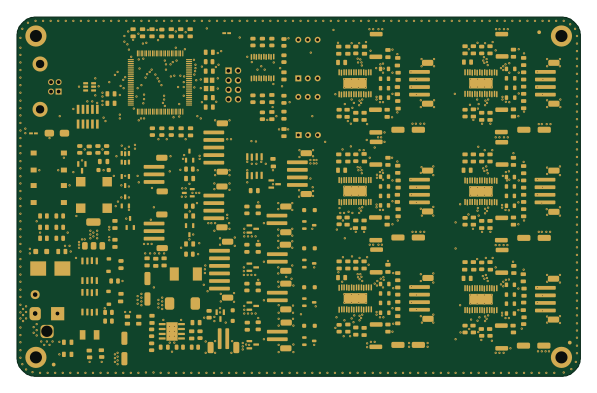
LumenPnP Motherboard
opulo-inc
149 × 95 mm296 parts4LCC-BY-SA-4.03.7k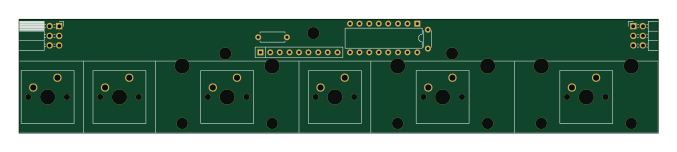 STM32
Type g
google
169 × 30 mm24 parts2LApache-2.02.9k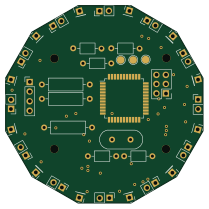 STM32
Base
52.3 × 52.3 mm36 parts2LApache-2.02.9k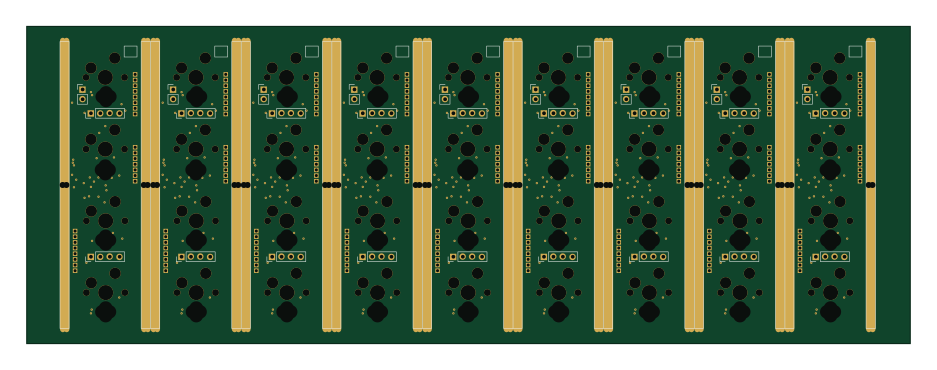 STM32
Main panel
234 × 84 mm26 parts4LApache-2.02.9k STM32
Type a
150 × 30 mm14 parts2LApache-2.02.9k STM32
Type c
188 × 30 mm17 parts2LApache-2.02.9k