
MD

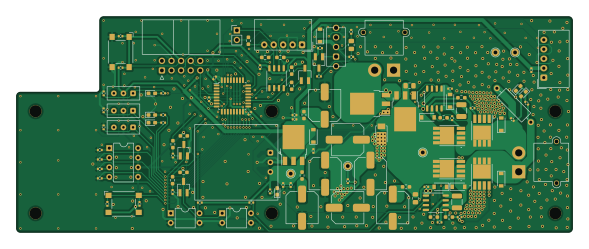
About the MD PCB
MD is an open source STM32 PCB design by Tomoshibi-technology, published on GitHub under the MIT license. It is a 2-layer board measuring 147 × 57 mm, with 126 components from 38 distinct parts.
Its main chip is the STM32F303K8TX, from the STM32 family. Other key parts include the LF50_TO220, AMS1117CD-3.3, TLP785, IR2302 and MAX3485. By type, the board carries 48 resistors, 26 capacitors, 16 diodes, 10 transistors, 8 ICs and 7 switches.
From the project
燈のプロダクト達を動かしている基板開発用リポジトリ
Main components on the MD
MD bill of materials (BOM)
126 components, 38 distinct parts — part numbers from the project's BOM.
| Qty | Part | Footprint | Refs |
|---|---|---|---|
| 1 | LF50_TO220 | BP5293 | U1 |
| 1 | STM32F303K8TX STM32F303K8Tx | LQFP-32_7x7mm_P0.8mm | U2 |
| 1 | AMS1117CD-3.3 | TO-252-3_TabPin2 | U3 |
| 2 | TLP785 | DIP-4_W7.62mm | U4, U5 |
| 2 | IR2302 | SOP-8_3.9x4.9mm_P1.27mm | U7, U8 |
| 1 | MAX3485 | SOP-8_3.9x4.9mm_P1.27mm | U10 |
| 2 | Q_PMOS_GDS | TO-252-3_TabPin2 | Q1, Q3 |
| 3 | C112239 Q_NMOS_GSD | SOT-23_Handsoldering | Q2, Q9, Q10 |
| 1 | Q_PNP_BEC | SC-59_Handsoldering | Q13 |
| 4 | FDMS8050 | SOP-Advance | Q14, Q15, Q16, Q17 |
| 2 | CONN_01X02_FEMALE Conn_01x02_Female | AMASS_XT30PW-M_1x02_P2.50mm_Horizontal | J1, J4 |
| 1 | CONN_01X10_FEMALE Conn_01x10_Female | IDC-Header_2x05_P2.54mm_Horizontal | J2 |
| 2 | CONN_01X05_FEMALE Conn_01x05_Female | Molex_SPOX_5268-05A_1x05_P2.50mm_Horizontal | J3, J5 |
| 1 | JUMPER_2_OPEN Jumper_2_Open | PinHeader_1x02_P2.54mm_Vertical | JP1 |
| 3 | SW_SPDT | 3P_SPDT_SlideSwitch | SW1, SW2, SW6 |
| 2 | SW_SPST | SW_SPST_Omron_B3FS-100xP | SW3, SW7 |
| 1 | SW_DIP_X04 SW_DIP_x04 | DIP-8_W7.62mm | SW4 |
| 1 | SW_SPDT | 3P_SPDT_5Pin_ToggleSwitch | SW5 |
| 5 | TestPoint | TestPoint_THTPad_D2.0mm_Drill1.0mm | TP1, TP2, TP3, TP4, TP5 |
| 3 | D | D_SOD-123 | D1, D5, D7 |
Show 18 more
| Qty | Part | Footprint | Refs |
|---|---|---|---|
| 1 | D_Schottky | DO-221BC | D2 |
| 6 | LED | LED_0603_1608Metric_Pad1.05x0.95mm_HandSolder | D3, D4, D6, D11, D21, D22 |
| 6 | D_Schottky | D_SOD-123 | D12, D13, D15, D16, D17, D18 |
| 8 | 0.1UF 0.1uF | C_0402_1005Metric | C1, C7, C8, C9, C20, C21, C26, C29 |
| 3 | 4.7UF 4.7uF | C_0805_2012Metric_Pad1.18x1.45mm_HandSolder | C2, C17, C18 |
| 7 | 470UF 470uF | C_Elec_8x10.2 | C4, C5, C13, C16, C30, C31, C32 |
| 1 | 10UF 10uF | C_0805_2012Metric_Pad1.18x1.45mm_HandSolder | C6 |
| 5 | 1UF 1uF | C_0402_1005Metric | C10, C11, C14, C15, C28 |
| 2 | C | C_1210_3225Metric_Pad1.33x2.70mm_HandSolder | C23, C24 |
| 22 | 10K 10k | R_0402_1005Metric | R1, R2, R3, R4, R5, R7, R10, R11 +14 |
| 7 | 1k | R_0402_1005Metric | R6, R8, R9, R16, R29, R40, R41 |
| 9 | R | R_0603_1608Metric_Pad0.98x0.95mm_HandSolder | R25, R44, R45, R46, R47, R63, R64, R65 +1 |
| 4 | 510 | R_0603_1608Metric_Pad0.98x0.95mm_HandSolder | R31, R32, R37, R38 |
| 1 | 7.5K 7.5k | R_0603_1608Metric_Pad0.98x0.95mm_HandSolder | R56 |
| 1 | 20K 20k | R_0603_1608Metric_Pad0.98x0.95mm_HandSolder | R57 |
| 2 | 2.2K 2.2k | R_0603_1608Metric_Pad0.98x0.95mm_HandSolder | R58, R59 |
| 1 | 120 | R_0603_1608Metric_Pad0.98x0.95mm_HandSolder | R60 |
| 1 | MPR | R_Axial_DIN0309_L9.0mm_D3.2mm_P12.70mm_Horizontal | R61 |
MD design files
The KiCad project lives in the Tomoshibi-technology/Tomoshibi_Circuit repository on GitHub; these links point at the commit this page was built from.
MD: common questions
What microcontroller does the MD use?
The MD is built around the STM32F303K8TX, from the STM32 family.
How big is the MD PCB?
The MD measures 147 × 57 mm, has 2 copper layers and is 1.6 mm thick.
How many components are on the MD?
126 components, from 38 distinct parts, with part numbers taken from the project's own BOM. The full bill of materials is listed on this page.
Where can I download the MD design files?
From the Tomoshibi-technology/Tomoshibi_Circuit repository on GitHub, which has the KiCad layout, the schematic and the BOM; the links under Design files point to each one.
Can I use the MD design in my own project?
Yes, under the terms of its MIT license, which Tomoshibi-technology chose for the repository.
Can I test firmware for the MD without the hardware?
Yes. HardLabs builds a simulation of the board from its netlist and BOM, so you can run and debug STM32 firmware against it before you order a PCB.
More boards in Tomoshibi_Circuit
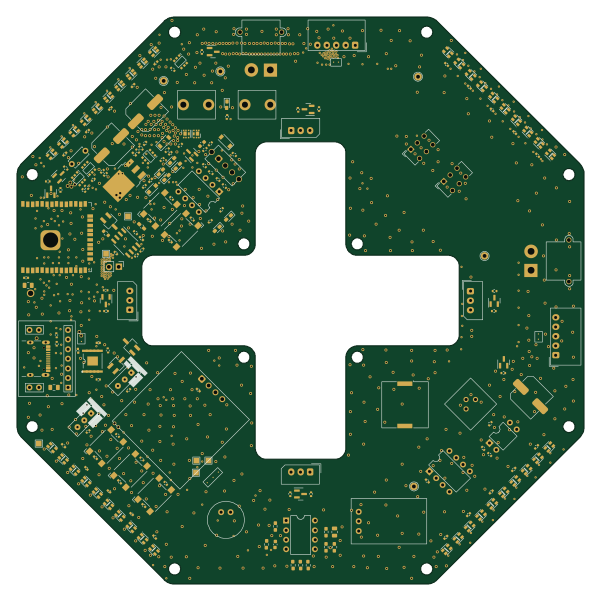 ESP32
ESP32ESP32
150 × 150 mm224 parts2LMIT0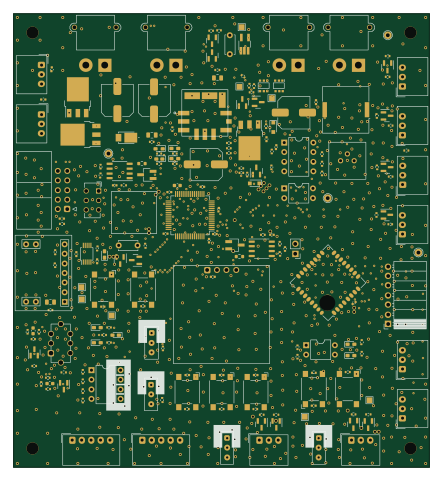 STM32
STM32Common Control
110 × 120 mm219 parts2LMIT0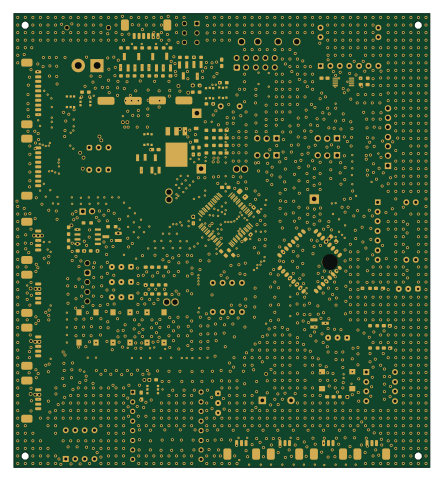 STM32
STM32Main
110 × 120 mm200 parts2LMIT0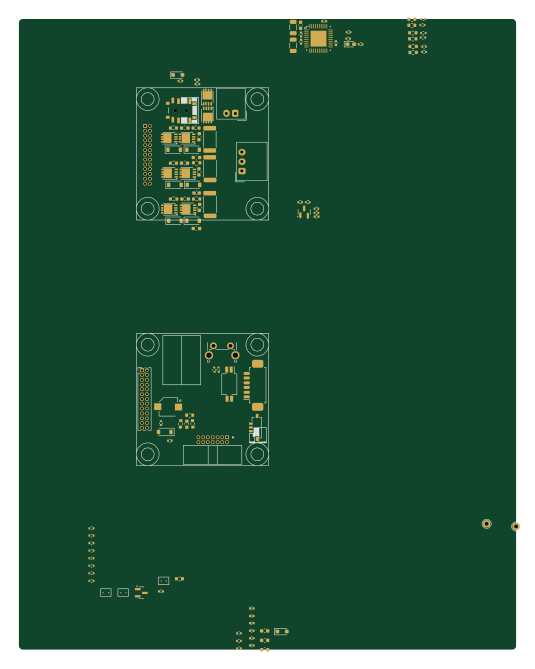 STM32
STM32BLDC Ver1
131.6 × 167 mm165 parts2LMIT0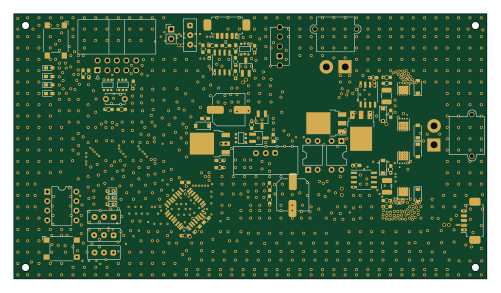 STM32
STM32Motordriver
125 × 70 mm131 parts2LMIT0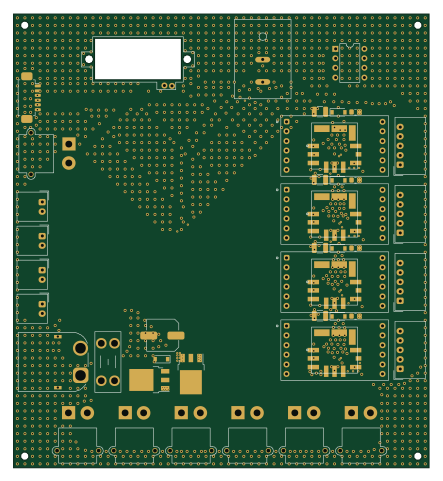
Power
110 × 120 mm91 parts2LMIT0
Control
35 × 35 mm68 parts4LMIT0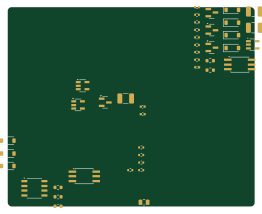
Ver1
65.3 × 52.7 mm42 parts2LMIT0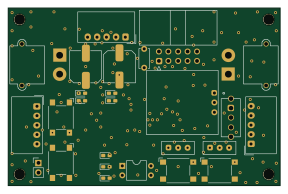
Odometry
72 × 47 mm41 parts2LMIT0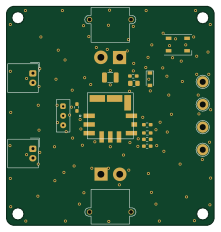
StepDown
55 × 58 mm20 parts2LMIT0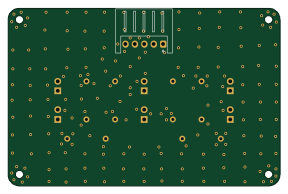
Line board
72 × 47 mm13 parts2LMIT0
Similar boards
 STM32
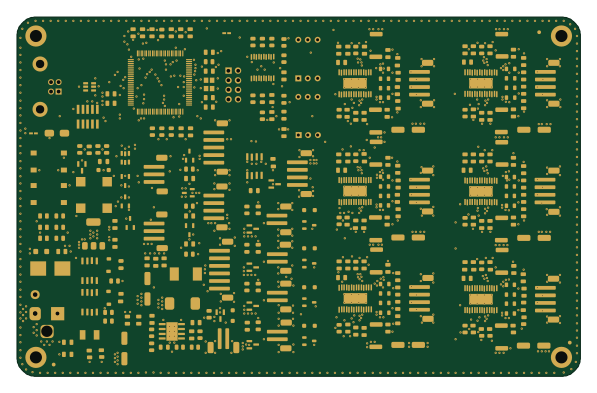
STM32LumenPnP Motherboard
opulo-inc
149 × 95 mm296 parts4LCC-BY-SA-4.03.7k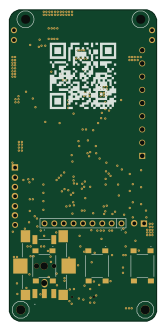 STM32
STM32AxxSolder
AxxAxx
39 × 82.5 mm122 parts2LGPL-3.01.7k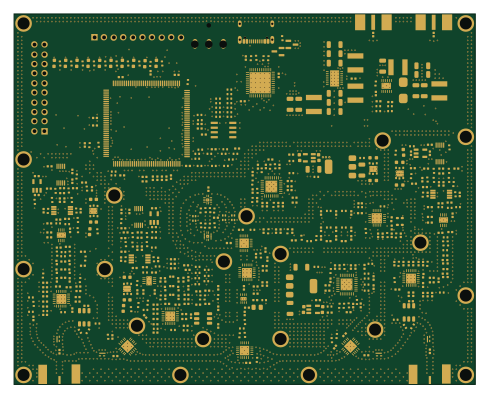 STM32
STM32LibreVNA
jankae
122 × 98 mm592 parts6LGPL-3.01.6k STM32
STM32AIOC
skuep
21 × 31.5 mm47 parts2LMIT1.4k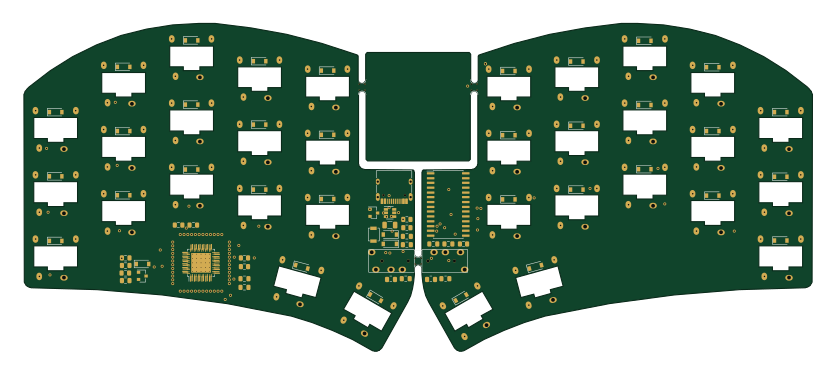 STM32
STM32Ferris
pierrechevalier83
208.8 × 86.8 mm102 parts2LSHL-2.11.3k STM32
STM32176 pin board
rusefi
61.8 × 73.2 mm76 parts2LGPL-3.01.2k