
PROC091F


About the PROC091F PCB
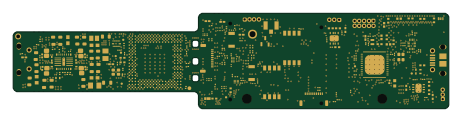
PROC091F is an open source TI MSP430/CC PCB design by um-kiho, published on GitHub. It is a 8-layer board measuring 1.9 × 1.9 mm, with 414 components from 89 distinct parts.
Its main chip is the CC2642R1FRGZR, from the TI MSP430/CC family. Other key parts include the LP87524JRNFRQ1, XI6843ARQGALP, CP2105-F01-GMR, TPS79330DBVR and TMP112AQDRLRQ1. By type, the board carries 160 resistors, 125 capacitors, 22 test points, 19 ICs, 14 inductors and 10 connectors.
It belongs with the iot & wireless and usb & debug tools designs in this gallery.
From the project
AWR6843AOP (Antenna-on-Package) 60GHz FMCW 레이더를 이용한 존재 감지(Presence Detection) 시스템입니다. 내장 ARM Cortex-R4F MCU + C674x DSP에서 신호 처리 및 존재 판정을 수행하고, UART로 결과를 출력합니다.
AWR6843AOP (Antenna-on-Package) 60GHz FMCW 레이더를 이용한 존재 감지(Presence Detection) 시스템입니다. 내장 ARM Cortex-R4F MCU + C674x DSP에서 신호 처리 및 존재 판정을 수행하고, UART로 결과를 출력합니다.
1. AWR6843AOP EVM (BOOST-AWR6843AOPEVM) - TI 공식 평가 보드 - USB 연결로 전원 공급 + UART 통신 - 구매: TI Store
2. MMWAVEICBOOST (캐리어 보드) (선택) - EVM과 함께 사용하는 인터페이스 보드 - JTAG 디버깅, 추가 UART 포트 제공
4. BLE 모듈 (선택, Wi-Fi/BLE 출력 시) - CC2642R SimpleLink BLE 모듈 권장 - UART로 AWR6843AOP와 연결
Main components on the PROC091F
PROC091F bill of materials (BOM)
414 components, 89 distinct parts.
| Qty | Part | Footprint | Refs |
|---|---|---|---|
| 1 | LP87524JRNFRQ1 | RNF0026C | U1 |
| 1 | XI6843ARQGALP | ALP0180A | U2 |
| 1 | CP2105-F01-GMR | FP-CP2105-F01-GMR_QFN24-EP-IPC_A | U3 |
| 1 | TPS79330DBVR | DBV0005A_N | U4 |
| 1 | TMP112AQDRLRQ1 | DRL0006A | U5 |
| 1 | CAT24C08TDI-GT3 | FP-CAT24C08TDI-GT3_TSOT-23-5-IPC_A | U6 |
| 1 | BNO085 | FP-BNO085_LGA28-MFG | U7 |
| 1 | CC2642R1FRGZR | RGZ0048A | U8 |
| 1 | MX25R1635FZUIH0 | USON-8L | U9 |
| 1 | TCA6408ARSVR | RSV0016A | U10 |
| 1 | SN74LVC1G3157DSFR | DSF0006A | U11 |
| 2 | TCAN1042HGVDRBRQ1 | DRB0008F | U12, U17 |
| 1 | TS3A5018RSVR | RSV0016A | U13 |
| 1 | TXB0104QRUTRQ1 | RUT0012A | U14 |
| 2 | TS5A23157RSER | RSE0010A | U15, U18 |
| 1 | SN74LVC1G11DSFR | DSF0006A-MFG | U16 |
| 1 | TPS2115ADRBR | DRB0008B | U19 |
| 1 | ANT016008LCS2442MA2 | FP-ANT016008LCS2442MA2_SMT_ANT-0 | A1 |
| 1 | BSS123-7-F | FP-BSS123-7-F_SOT23-IPC_C | Q1 |
| 1 | CX2016DB40000D0FLJCC | FP-CX2016DB40000D0FLJCC_SMT_2MM0_1MM6-MFG | Y1 |
Show 69 more
| Qty | Part | Footprint | Refs |
|---|---|---|---|
| 1 | CX2016DB48000C0WPLA2 | FP-CX2016DB48000C0WPLA2_SMD4-MFG | Y2 |
| 2 | ABS05W-32.768KHZ-D-2-T | FP-ABS05W-32.768KHZ-D-2-T_XTAL_SMT_1MM6_1MM0-MFG | Y3, Y4 |
| 2 | 105017-0001 | CONN_105017-0001 | J1, J5 |
| 1 | QSH-030-01-L-D-A | Samtec_QSH-030-01-X-D-A | J2 |
| 1 | M50-3930442 | FP-M50-3930442_HDR4-RECOMMENDED_LAND_PATTERN | J3 |
| 2 | 51441-1093 | FP-51441-1093_CONN_SMD_FFC-0 | J4, J6 |
| 1 | GRPB052MWCN-RC | FP-GRPB052MWCN-RC_HDR10-MFG | J7 |
| 2 | M50-3930342 | FP-M50-3930342_HDR3-MFG | J8, J10 |
| 1 | U.FL-R-SMT-1(01) | CONN_UFL-R-SMT-1 | J9 |
| 4 | Comment | MHNP_M2_PANHEAD_PHILLIPS | Designator1, Designator6, Designator7, Designator8 |
| 11 | BRAKE_WAY_HOLES1X2 | BRAKE_WAY_HOLES1X2 | Designator1_1, Designator2, Designator2_1, Designator3, Designator3_1, Designator4, Designator4_1, Designator5 +3 |
| 2 | Comment | MHNP_2-5 | Designator22_1, Designator23 |
| 13 | BLM15PD300SZ1D | 0402L | FL1, FL2, FL3, FL6, FL7, FL8, FL9, FL10 +5 |
| 6 | APHHS1005CGCK | APHHS1005_Green | LD1, LD2, LD3, LD4, LD5, LD6 |
| 9 | EXB-18VR000X | FP-EXB-18VR000X_0502-MFG | RA1, RA2, RA3, RA4, RA5, RA6, RA7, RA8 +1 |
| 2 | 218-4LPST | SW_218-4LPST | S1, S2 |
| 1 | CHS-01TA | FP-CHS-01TA_SMT_SW_5MM4_2MM5-MFG | S3 |
| 2 | B3U-1000P | SW_B3U-1000P | SW2, SW3 |
| 20 | N/A TESTPOINT | TP_25MIL-SMT | TP2, TP3, TP4, TP5, TP6, TP7, TP8, TP9 +12 |
| 1 | N/A TESTPOINT | TP_VIA_060RND040 | TP12 |
| 1 | 4953 | FP-4953_HDR1-MFG | TP20 |
| 1 | This Assembly Note is for PCB labels only | AssemblyNoteLabel | ZZ1 |
| 1 | These assemblies are ESD sensitive, ESD precautions shall be observed. | AssemblyNote | ZZ2 |
| 1 | These assemblies must be clean and free from flux and all contaminants. Use of no clean flux is not acceptable. | AssemblyNote | ZZ3 |
| 1 | These assemblies must comply with workmanship standards IPC-A-610 Class 2, unless otherwise specified. | AssemblyNote | ZZ4 |
| 1 | Cut the thermal pad(Part Number#GPVOUS-0.125-AC-0816) for the shape and size of the inner surface of the heatsink(Part Number#MCH054) and paste it on the inner surface of the heatsink; | AssemblyNote | ZZ5.1 |
| 1 | Bring the heatsink onto the PCB bottom side (Opposite side of AOP device). Match the teeth in the heatsink with break-away area in the PCB and press the heatsink onto the PCB slightly so as thermal pad is spread all over the area | AssemblyNote | ZZ5.2 |
| 2 | NSR20F30NXT5G | DSN2_0603 | D1, D2 |
| 2 | LQG15HS2N4S02D | IND_LQG15H | L1, L6 |
| 4 | MCKK2012TR47M | FP-MCKK2012TR47M_0805 (2012 Metric)-IPC_C | L2, L3, L4, L5 |
| 1 | MLZ2012N6R8LT000 | 0805_HV | L7 |
| 1 | BLM18HE152SN1D | 0603L | L8 |
| 2 | LQG15HS2N0S02D | IND_LQG15H | L9, L10 |
| 4 | BLM18SG260TN1D | 0603L | L11, L12, L13, L14 |
| 17 | CL05A106MP5NUNC | 0402_070 | C1, C4, C7, C42, C50, C51, C52, C53 +9 |
| 34 | GRM033R6YA104KE14D | FP-GRM033R6YA104KE14D_0201 (0603 Metric)-IPC_C | C2, C3, C6, C9, C10, C12, C13, C25 +26 |
| 9 | CL03A105MO3NRNH | FP-CL03A105MO3NRNH_0201-IPC_C | C5, C11, C15, C16, C24, C100, C115, C116 +1 |
| 2 | CL03A103KA3NNNC | FP-CL03A103KA3NNNC_0201-IPC_C | C8, C125 |
| 2 | GRM0335C1H4R7BA01D | 0201_033L | C14, C71 |
| 2 | GRM0335C1H8R0BA01D | FP-GRM0335C1H8R0BA01D_0201 (0603 metric)-IPC_C | C17, C18 |
| 4 | 250R05L120JV4T | FP-250R05L120JV4T_0201-IPC_C | C19, C20, C38, C39 |
| 2 | CL05C120JB5NNNC | 0402L | C21, C93 |
| 3 | GCM1555C1H1R0CA16D | 0402L | C22, C23, C41 |
| 10 | CL05A226MQ5N6J8 | FP-CL05A226MQ5N6J8_0402-IPC_C | C28, C29, C44, C45, C46, C47, C48, C49 +2 |
| 24 | LMK063BJ224MP-F | 0201_033L | C30, C56, C57, C58, C60, C61, C63, C64 +16 |
| 4 | TMK063CG391JT-F | FP-TMK063CG391JT-F_0201 (0603 Metric)-IPC_C | C31, C32, C33, C34 |
| 1 | GRM033R61C473KE84D | 0201_033L | C69 |
| 5 | CL03A225MQ3CRNC | 0201L | C74, C79, C83, C102, C103 |
| 2 | CGB2A1X6S0J105K033BC | 0402L | C89, C90 |
| 2 | GJM1555C1H1R8BB01D | 0402L | C99, C104 |
| 2 | GRM155R71H472KA01D | 0402L | C106, C110 |
| 39 | RR0306P-103-D | FP-RR0306P-103-D_0201-IPC_C | R1, R3, R7, R8, R18, R19, R20, R21 +31 |
| 20 | RC0201JR-070RL | FP-RC0201JR-070RL_0201 (0603 Metric)-MFG | R2, R12, R14, R28, R30, R31, R32, R41 +12 |
| 7 | CRCW0201100KFKED | 0201L | R4, R5, R9, R29, R37, R89, R92 |
| 5 | CRCW020133R2FNED | 0201L | R6, R46, R47, R48, R49 |
| 10 | AC0201FR-0720RL | FP-AC0201FR-0720RL_0201-IPC_C | R10, R11, R88, R130, R132, R133, R135, R137 +2 |
| 5 | RC0201JR-07220RL | 0201L | R13, R15, R17, R42, R111 |
| 3 | RC0201FR-077K87L | 0201L | R16, R174, R176 |
| 1 | CRCW0402200RFKEDHP | FP-CRCW0402200RFKEDHP_0402-IPC_C | R24 |
| 9 | RC0201FR-074K99L | 0201L | R25, R26, R33, R34, R38, R40, R64, R69 +1 |
| 4 | RC0201JR-07510RL | 0201L | R27, R39, R107, R108 |
| 2 | RC0201JR-071KL | 0201L | R50, R75 |
| 1 | RC0201FR-071K96L | 0201L | R52 |
| 4 | RC0402FR-073R83L | FP-RC0402FR-073R83L_0402 (1005 Metric)-IPC_C | R53, R54, R55, R56 |
| 38 | RC0201JR-070RL | FP-RC0201JR-070RL_0201 (0603 Metric)-IPC_C | R66, R72, R73, R74, R76, R86, R87, R90 +30 |
| 3 | ERJ-1GNF4701C | FP-ERJ-1GNF4701C_0201-IPC_C | R79, R180, R181 |
| 4 | CRCW040261R9FKED | 0402L | R114, R117, R119, R126 |
| 3 | RC0201FR-0782K5L | 0201L | R158, R170, R172 |
| 2 | RC0201JR-07750RL | 0201L | R159, R171 |
PROC091F design files
The KiCad project lives in the um-kiho/ti_radar repository on GitHub; these links point at the commit this page was built from.
PROC091F: common questions
What microcontroller does the PROC091F use?
The PROC091F is built around the CC2642R1FRGZR, from the TI MSP430/CC family.
How big is the PROC091F PCB?
The PROC091F measures 1.9 × 1.9 mm, has 8 copper layers and is 1.6239 mm thick.
How many components are on the PROC091F?
414 components, from 89 distinct parts. The full bill of materials is listed on this page.
Where can I download the PROC091F design files?
From the um-kiho/ti_radar repository on GitHub, which has the KiCad layout and the schematic; the links under Design files point to each one.
Can I use the PROC091F design in my own project?
The repository has no license, so all rights stay with um-kiho. Use it as a reference, and ask the author before reusing the design.
Can I test firmware for the PROC091F without the hardware?
Yes. HardLabs builds a simulation of the board from its netlist and BOM, so you can run and debug TI MSP430/CC firmware against it before you order a PCB.
More boards in ti_radar
Similar boards
 TI MSP430/CC
Pluto
carrotIndustries
24.4 × 24.4 mm36 parts2LGPL-3.0536 TI MSP430/CC
Apimote
riverloopsec
83.3 × 33.4 mm80 parts4LTAPR-OHL-1.089 TI MSP430/CC
Toniebox
toniebox-reverse-engineering
88 × 102 mm11 parts2LNo license36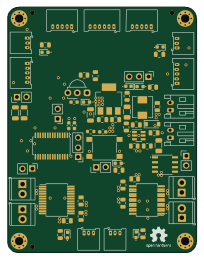 TI MSP430/CC
Nsumo hardware
artfulbytes
50 × 65 mm73 parts2LMIT33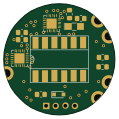 TI MSP430/CC
Elektronika-1
BenjaminSoelberg
29.5 × 29.5 mm14 parts4LGPL-3.029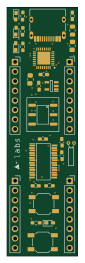 TI MSP430/CC
MSP430 Breadstick - Apple Sauce
upsidedownlabs
18.5 × 65.8 mm31 parts2LCERN-OHL-S-2.021