
Pyramid of brightness

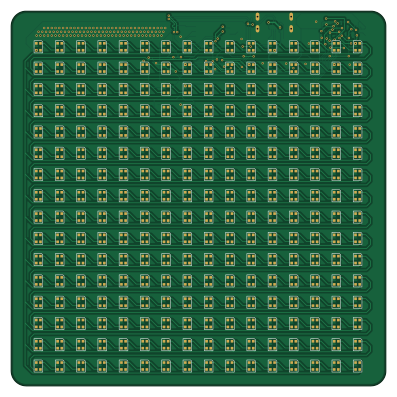
About the Pyramid of brightness PCB
Pyramid of brightness is an open source RP2040/RP2350 PCB design by WilmervH, published on GitHub under the AGPL-3.0 license. It is a 2-layer board measuring 99 × 99 mm, with 290 components from 22 distinct parts.
Its main chip is the RP2040, from the RP2040/RP2350 family. Other key parts include the BMP388, ICM-42688-P, TXB0108RGY, W25Q128JVS and NCP1117-3.3_SOT223. By type, the board carries 256 inductors, 18 capacitors, 7 resistors, 6 ICs, 2 connectors and 1 crystal.
From the project
Wokwi link: https://wokwi.com/projects/428436537148664833
Wokwi link: https://wokwi.com/projects/428436537148664833
This was supposed to be a pyramid (or more of a triagle) but I thought I'd be too difficult to arrange the pixels in a neat way. So I made it a square. The name stuck. So Introducing the Pyramid of brightness featuring: USB C connection, sleek design with rounded corners, a whopping 16mb of storage for your precious animations, the power of a pure RP2040, a barometer and a gyroscope.
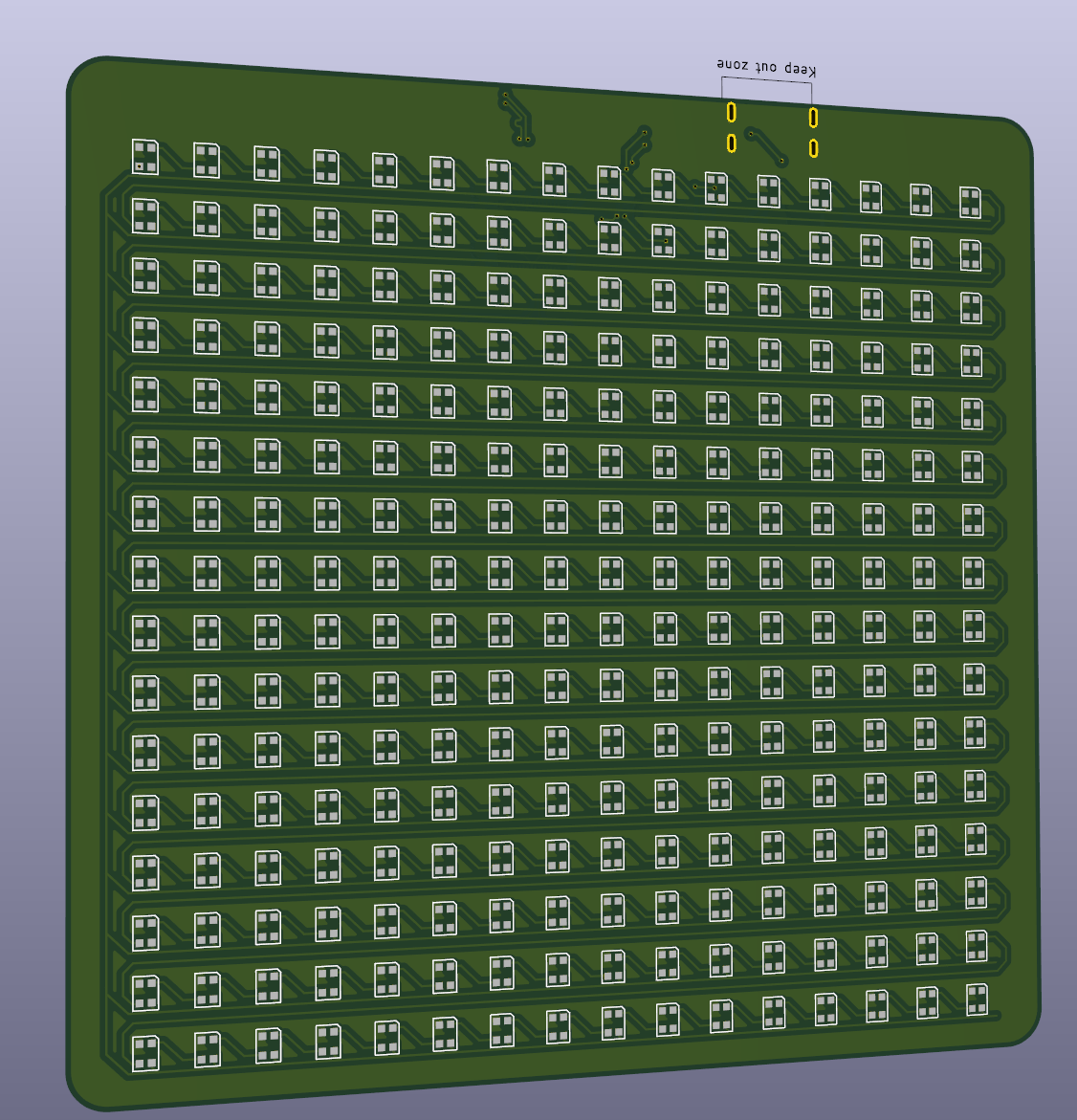
Main components on the Pyramid of brightness
Pyramid of brightness bill of materials (BOM)
290 components, 22 distinct parts — part numbers from the project's BOM.
| Qty | Part | Footprint | Refs |
|---|---|---|---|
| 1 | BMP388 | PQFN50P200X200X80-10N | U1 |
| 1 | ICM-42688-P | PQFN50P300X250X97-14N | U2 |
| 1 | TXB0108RGY | Texas_RGY_R-PVQFN-N20_EP2.05x3.05mm | U3 |
| 1 | W25Q128JVS | SOIC-8_5.3x5.3mm_P1.27mm | U4 |
| 1 | NCP1117-3.3_SOT223 | SOT-223-3_TabPin2 | U5 |
| 1 | RP2040 | QFN-56-1EP_7x7mm_P0.4mm_EP3.2x3.2mm | U6 |
| 1 | ABM8-272-T3 | ABM8-272-T3_ABR | X2 |
| 1 | USB_C_RECEPTACLE_USB2.0_14P USB_C_Receptacle_USB2.0_14P | USB_C_Receptacle_Amphenol_124019772112A | J3 |
| 1 | CONN_01X02 Conn_01x02 | SolderJumper-2_P1.3mm_Open_RoundedPad1.0x1.5mm | J4 |
| 256 | WS2812B-2020 | LED_WS2812B-2020_PLCC4_2.0x2.0mm | L1001, L1002, L1003, L1004, L1005, L1006, L1007, L1008 +248 |
| 2 | 100NF 100nF | C_0805_2012Metric | C1, C2 |
| 1 | 2.2UF 2.2uF | C_0805_2012Metric | C3 |
| 1 | 0.1UF 0.1uF | C_0805_2012Metric | C4 |
| 1 | 10NF 10nF | C_0805_2012Metric | C5 |
| 2 | 15P 15p | C_0805_2012Metric | C14, C15 |
| 2 | 10U 10u | C_0805_2012Metric | C16, C18 |
| 7 | 100N 100n | C_0805_2012Metric | C17, C19, C21, C22, C24, C25, C26 |
| 2 | 1u | C_0805_2012Metric | C20, C23 |
| 1 | 50K | R_0603_1608Metric | R1 |
| 2 | 5K1 | R_0603_1608Metric | R7, R9 |
Show 2 more
| Qty | Part | Footprint | Refs |
|---|---|---|---|
| 2 | 1K | R_0603_1608Metric | R8, R10 |
| 2 | 27 | R_0603_1608Metric | R11, R12 |
Pyramid of brightness design files
The KiCad project lives in the WilmervH/pyramid-of-brightness repository on GitHub; these links point at the commit this page was built from.
Pyramid of brightness: common questions
What microcontroller does the Pyramid of brightness use?
The Pyramid of brightness is built around the RP2040, from the RP2040/RP2350 family.
How big is the Pyramid of brightness PCB?
The Pyramid of brightness measures 99 × 99 mm, has 2 copper layers and is 1.6 mm thick.
How many components are on the Pyramid of brightness?
290 components, from 22 distinct parts, with part numbers taken from the project's own BOM. The full bill of materials is listed on this page.
Where can I download the Pyramid of brightness design files?
From the WilmervH/pyramid-of-brightness repository on GitHub, which has the KiCad layout, the schematic and the BOM; the links under Design files point to each one.
Can I use the Pyramid of brightness design in my own project?
Yes, under the terms of its AGPL-3.0 license, which WilmervH chose for the repository.
Can I test firmware for the Pyramid of brightness without the hardware?
Yes. HardLabs builds a simulation of the board from its netlist and BOM, so you can run and debug RP2040/RP2350 firmware against it before you order a PCB.
Similar boards
 RP2040/RP2350
OSO-BOOK-C1
joeycastillo
85 × 115 mm29 parts2LCC-BY-SA-4.08.1k RP2040/RP2350
Corne cherry
foostan
277.2 × 107.5 mm164 parts2LCC-BY-4.07.7k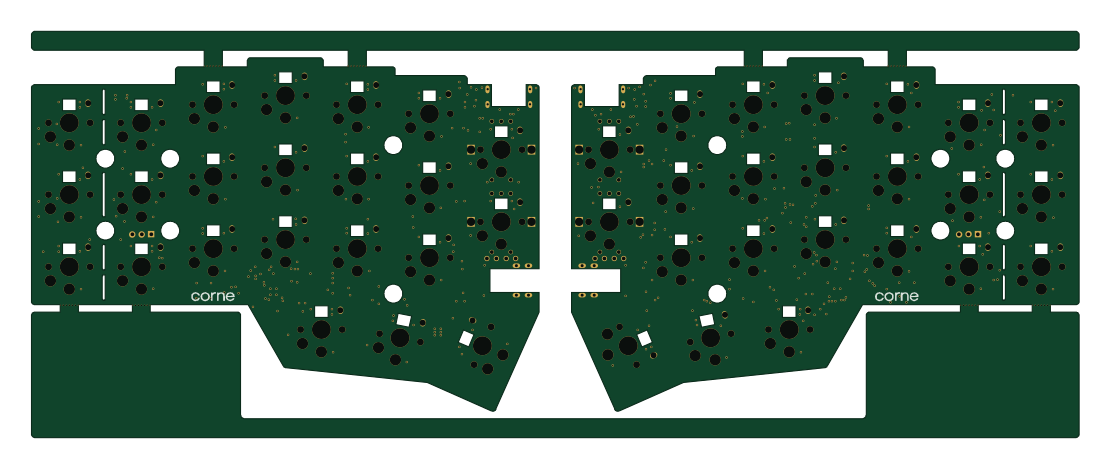 RP2040/RP2350
Corne chocolate
277.2 × 107.5 mm164 parts2LCC-BY-4.07.7k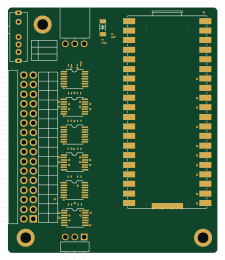 RP2040/RP2350
Jitx design
gusmanb
55.5 × 65 mm26 parts4LGPL-3.05.0k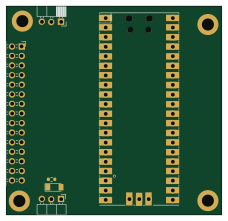 RP2040/RP2350
LogicAnalyzer
57 × 55.2 mm6 parts2LGPL-3.05.0k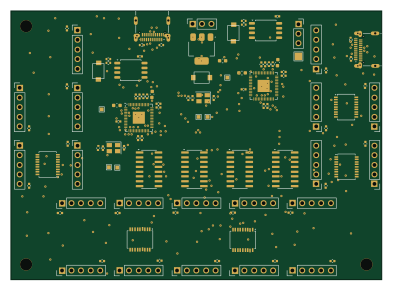 RP2040/RP2350
Main
google
98 × 71 mm102 parts2LApache-2.02.9k