
TRS-IO++

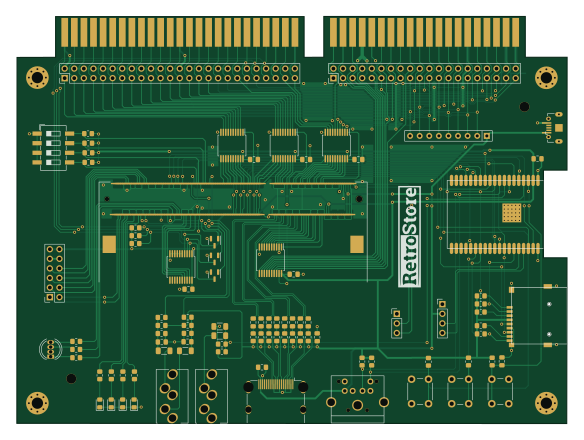
About the TRS-IO++ PCB
TRS-IO++ is an open source ESP32 PCB design by apuder, published on GitHub under the GPL-3.0 license. It is a 2-layer board measuring 145.7 × 107.8 mm, with 94 components from 32 distinct parts.
Its main chip is the ESP32-WROVER-B-N16R8, from the ESP32 family. Other key parts include the SN74LVC245ADBR. By type, the board carries 41 resistors, 23 capacitors, 11 connectors, 6 ICs, 5 diodes and 4 switches.
It belongs with the audio, iot & wireless and power & battery designs in this gallery.
From the project
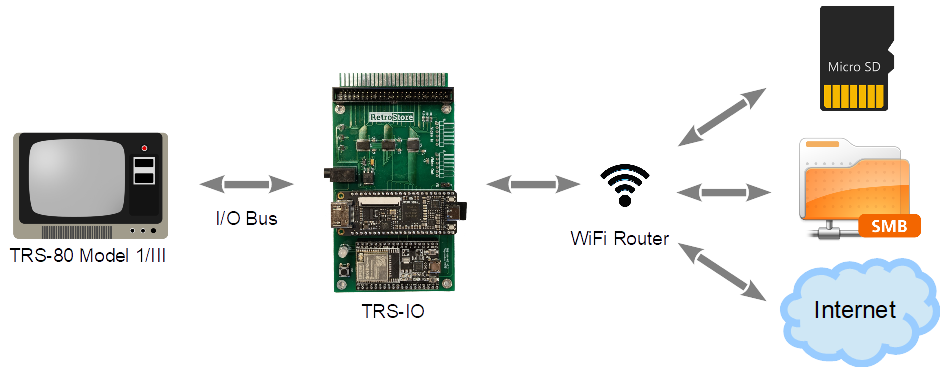
TRS-IO gives a TRS-80 Model 1/III online capabilities and provides access to a variety of services. TRS-IO currently features the following capabilities:
TRS-IO gives a TRS-80 Model 1/III online capabilities and provides access to a variety of services. TRS-IO currently features the following capabilities:
1. Access to the RetroStore 2. FreHD emulation 3. Access to files mounted on a SMB share or located on a micro-SD card 4. Access to remote servers via TCP 5. Virtual printer support
The TRS-IO versions for the Model 1 and Model III have some additional features that are explained below. The following sections give an overview of TRS-IO as well as setup instructions. This Github repository contains the complete source code as well as the…
Main components on the TRS-IO++
TRS-IO++ bill of materials (BOM)
94 components, 32 distinct parts — part numbers from the project's BOM.
| Qty | Part | Footprint | Refs |
|---|---|---|---|
| 1 | ESP32-WROVER-B-N16R8 ESP32-WROVER-B | ESP32-WROVER | U1 |
| 5 | SN74LVC245ADBR 74LVC245 | SSOP-20_5.3x7.2mm_P0.65mm_slim | U2, U3, U4, U5, U6 |
| 3 | 2N7002 | SOT-23 | Q3, Q4, Q5 |
| 1 | B-3000S50P-0110 TRS-80 M3 Pin Header | PinHeader_2x25_P2.54mm_Vertical | J1 |
| 1 | B-3000S40P-0110 TRS-80 M1 Pin Header | PinHeader_2x20_P2.54mm_Vertical | J2 |
| 1 | BX-PM2.54-2-6PY Conn_02x06_Odd_Even | PinSocket_2x06_P2.54mm_Vertical | J5 |
| 1 | PJ-325C5-B Cassette Output | Jack_3.5mm_CUI_SJ1-3535NG_Horizontal_CircularHoles | J6 |
| 1 | HX HDMI 19PIN HDMI_A | HDMI_A_Molex_208658-1001_Horizontal | J7 |
| 1 | PZ254V-11-04P Programmer | PinHeader_1x04_P2.54mm_Vertical | J8 |
| 1 | TF-01A SD_Card | TFP09-2-12B | J9 |
| 1 | PJ-325C5-B Cassette Input | Jack_3.5mm_CUI_SJ1-3535NG_Horizontal_CircularHoles | J10 |
| 1 | DIN-603 Mini-DIN-6 | minidin_6_ps2_pcb_mount | J11 |
| 1 | MICRO-09-G2P1-A2T2 USB_B_Micro | USBmicro-B | J12 |
| 1 | PZ254V-11-03P UART | PinHeader_1x03_P2.54mm_Vertical | J13 |
| 1 | 2-2013289-1 Conn_DDR3_Socket | DDR3_socket | Conn1 |
| 1 | TSW061G50-250 ESP_RESET | SW_PUSH_6mm | SW1 |
| 1 | 1825910-6 PTRS_RESET | SW_PUSH_6mm | SW2 |
| 1 | KH-10027B-SMT2.54-4P SW_DIP_x04 | SW_DIP_SPSTx04_Slide_6.7x11.72mm_W8.61mm_P2.54mm_LowProfile | SW3 |
| 1 | TRS_IO_STATUS | SW_PUSH_6mm | SW4 |
| 1 | XL-A504RGBC LED_RKBG | LED_D5.0mm-4_RGB | D1 |
Show 12 more
| Qty | Part | Footprint | Refs |
|---|---|---|---|
| 4 | NCD0805R1 LED | LED_0805_2012Metric_Pad1.15x1.40mm_HandSolder | D2, D3, D4, D5 |
| 19 | CC0805KRX7R9BB104 100n | C_0805_2012Metric_Pad1.18x1.45mm_HandSolder | C1, C2, C3, C4, C5, C6, C7, C8 +11 |
| 1 | CL31B105KBHNNNE 1u | C_1206_3216Metric_Pad1.33x1.80mm_HandSolder | C12 |
| 3 | CL31A106KBHNNNE 10U | C_1206_3216Metric_Pad1.33x1.80mm_HandSolder | C14, C17, C20 |
| 7 | 0805W8F2200T5E 220 | R_0805_2012Metric_Pad1.20x1.40mm_HandSolder | R1, R2, R3, R37, R38, R39, R40 |
| 8 | TD05G50R0BT 50 | R_0805_2012Metric_Pad1.20x1.40mm_HandSolder | R4, R5, R6, R7, R8, R9, R10, R11 |
| 6 | 0805W8F1002T5E 10K | R_0805_2012Metric_Pad1.20x1.40mm_HandSolder | R12, R15, R16, R17, R18, R19 |
| 2 | 0805W8F2700T5E 270R | R_0805_2012Metric_Pad1.20x1.40mm_HandSolder | R13, R24 |
| 11 | 0805W8F4701T5E 4K7 | R_0805_2012Metric_Pad1.20x1.40mm_HandSolder | R14, R21, R22, R26, R28, R29, R30, R33 +3 |
| 4 | 0805W8F3000T5E 300R | R_0805_2012Metric_Pad1.20x1.40mm_HandSolder | R20, R23, R25, R27 |
| 2 | 0805W8F2001T5E 2K | R_0805_2012Metric_Pad1.20x1.40mm_HandSolder | R31, R32 |
| 1 | A09-473JP 47K | R_Array_SIP9 | RN1 |
TRS-IO++ design files
The KiCad project lives in the apuder/TRS-IO repository on GitHub; these links point at the commit this page was built from.
TRS-IO++: common questions
What microcontroller does the TRS-IO++ use?
The TRS-IO++ is built around the ESP32-WROVER-B-N16R8, from the ESP32 family.
How big is the TRS-IO++ PCB?
The TRS-IO++ measures 145.7 × 107.8 mm, has 2 copper layers and is 1.6 mm thick.
How many components are on the TRS-IO++?
94 components, from 32 distinct parts, with part numbers taken from the project's own BOM. The full bill of materials is listed on this page.
Where can I download the TRS-IO++ design files?
From the apuder/TRS-IO repository on GitHub, which has the KiCad layout, the schematic and the BOM; the links under Design files point to each one.
Can I use the TRS-IO++ design in my own project?
Yes, under the terms of its GPL-3.0 license, which apuder chose for the repository.
Can I test firmware for the TRS-IO++ without the hardware?
Yes. HardLabs builds a simulation of the board from its netlist and BOM, so you can run and debug ESP32 firmware against it before you order a PCB.
More boards in TRS-IO
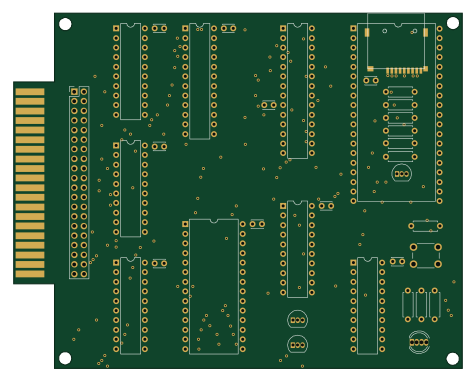
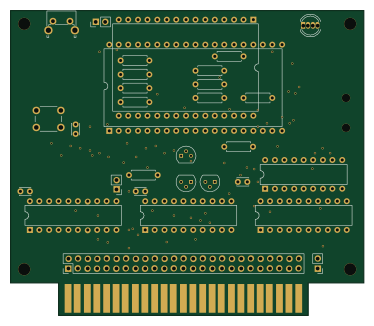
Similar boards
 ESP32
OSO-BOOK-B1
joeycastillo
85 × 115 mm65 parts2LCC-BY-SA-4.08.1k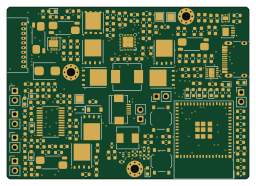 ESP32
Powertrain
byrantech
64 × 45.4 mm171 parts4LMIT4.3k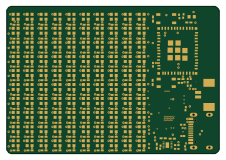 ESP32
Badge
atopile
56.3 × 39 mm239 parts4LMIT4.0k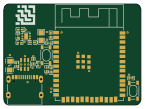 ESP32
Esp32 minimal
36.2 × 26.8 mm20 parts2LMIT4.0k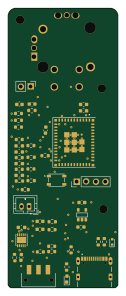 ESP32
Controller
StuckAtPrototype
29 × 74 mm58 parts4LApache-2.03.8k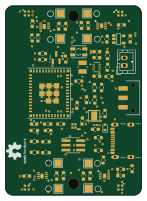 ESP32
Racer
36 × 50.2 mm70 parts4LApache-2.03.8k