
Pico numpad

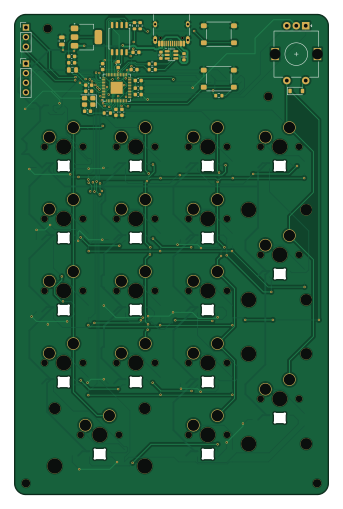
About the Pico numpad PCB
Pico numpad is an open source RP2040/RP2350 PCB design by blafr103, published on GitHub under the MIT license. It is a 2-layer board measuring 83 × 127 mm, with 113 components from 43 distinct parts.
Its main chip is the RP2040, from the RP2040/RP2350 family. Other key parts include the NCP1117-3.3_SOT223, USBLC6-2SC6, W25Q128JVS and 74AHCT1G125. By type, the board carries 36 capacitors, 18 diodes, 17 LEDs, 11 resistors, 5 ICs and 3 connectors.
It belongs with the keyboards and displays & leds designs in this gallery.
From the project
Hand-wired 17-key USB numpad on Pi Pico W. CircuitPython, diode matrix, event-driven scanning.
Custom two-layer PCB for a 17-key USB numpad with per-key RGB, a rotary encoder, and a 16x2 character LCD. This is the custom-board successor to the hand-wired CircuitPython numpad documented in the repository root, rebuilt around a bare RP2040 with hot-swap switches.
Status - Rev A. Design complete, DRC clean, full design review passed. Boards fabricated by PCBWay (ENIG) and hand-assembled. Electrical bring-up is in progress and incomplete - the board does not yet enumerate over USB and the 3.3 V rail is under investigation. The C firmware targeting this board has been started but is not…
Main components on the Pico numpad
Pico numpad bill of materials (BOM)
113 components, 43 distinct parts.
| Qty | Part | Footprint | Refs |
|---|---|---|---|
| 1 | NCP1117-3.3_SOT223 | SOT-223-3_TabPin2 | U1 |
| 1 | USBLC6-2SC6 | SOT-23-6 | U2 |
| 1 | RP2040 | QFN-56-1EP_7x7mm_P0.4mm_EP3.2x3.2mm | U3 |
| 1 | W25Q128JVS | SOIC-8_5.3x5.3mm_P1.27mm | U4 |
| 1 | 74AHCT1G125 | SOT-23-5 | U5 |
| 2 | BSS138 | SOT-23 | Q1, Q2 |
| 1 | 12MHz | Crystal_SMD_3225-4Pin_3.2x2.5mm | Y1 |
| 1 | USB_C_Receptacle_USB2.0_16P | USB_C_Receptacle_HRO_TYPE-C-31-M-12 | J1 |
| 1 | Conn_01x03 | PinHeader_1x03_P2.54mm_Vertical | J2 |
| 1 | Conn_01x04 | PinHeader_1x04_P2.54mm_Vertical | J3 |
| 1 | NUM | SW_MX_HS_CPG151101S11_1u | MX1 |
| 1 | DIV | SW_MX_HS_CPG151101S11_1u | MX2 |
| 1 | MULT | SW_MX_HS_CPG151101S11_1u | MX3 |
| 1 | MIN | SW_MX_HS_CPG151101S11_1u | MX4 |
| 1 | 7 | SW_MX_HS_CPG151101S11_1u | MX5 |
| 1 | 8 | SW_MX_HS_CPG151101S11_1u | MX6 |
| 1 | 9 | SW_MX_HS_CPG151101S11_1u | MX7 |
| 1 | PLUS | SW_MX_HS_CPG151101S11_1u | MX8 |
| 1 | 4 | SW_MX_HS_CPG151101S11_1u | MX9 |
| 1 | 5 | SW_MX_HS_CPG151101S11_1u | MX10 |
Show 23 more
| Qty | Part | Footprint | Refs |
|---|---|---|---|
| 1 | 6 | SW_MX_HS_CPG151101S11_1u | MX11 |
| 1 | 1 | SW_MX_HS_CPG151101S11_1u | MX12 |
| 1 | 2 | SW_MX_HS_CPG151101S11_1u | MX13 |
| 1 | 3 | SW_MX_HS_CPG151101S11_1u | MX14 |
| 1 | 0 | SW_MX_HS_CPG151101S11_1u | MX15 |
| 1 | PERIOD | SW_MX_HS_CPG151101S11_1u | MX16 |
| 1 | ENTER | SW_MX_HS_CPG151101S11_1u | MX17 |
| 1 | BOOTSEL | SW_SPST_PTS645Sx43SMTR92 | SW1 |
| 1 | RESET | SW_SPST_PTS645Sx43SMTR92 | SW2 |
| 1 | RotaryEncoder_Switch | RotaryEncoder_Alps_EC11E-Switch_Vertical_H20mm | SW3 |
| 17 | MX_SK6812MINI-E | LED_MX_6028R | LED1, LED2, LED3, LED4, LED5, LED6, LED7, LED8 +9 |
| 18 | 1N4148W | D_SOD-123 | D1, D2, D3, D4, D5, D6, D7, D8 +10 |
| 2 | 10u | C_0805_2012Metric | C1, C2 |
| 3 | 1u | C_0603_1608Metric | C3, C5, C11 |
| 27 | 100n | C_0603_1608Metric | C4, C6, C7, C8, C9, C10, C12, C13 +19 |
| 2 | 27p | C_0603_1608Metric | C15, C16 |
| 2 | 22u | C_0805_2012Metric | C35, C36 |
| 2 | 5k1 | R_0603_1608Metric | R1, R2 |
| 2 | 10k | R_0603_1608Metric | R3, R4 |
| 2 | 1k | R_0603_1608Metric | R5, R8 |
| 2 | 27 | R_0603_1608Metric | R6, R7 |
| 1 | 470 | R_0603_1608Metric | R9 |
| 2 | 4k7 | R_0603_1608Metric | R10, R11 |
Pico numpad design files
The KiCad project lives in the blafr103/pico-numpad repository on GitHub; these links point at the commit this page was built from.
Pico numpad: common questions
What microcontroller does the Pico numpad use?
The Pico numpad is built around the RP2040, from the RP2040/RP2350 family.
How big is the Pico numpad PCB?
The Pico numpad measures 83 × 127 mm, has 2 copper layers and is 1.6 mm thick.
How many components are on the Pico numpad?
113 components, from 43 distinct parts. The full bill of materials is listed on this page.
Where can I download the Pico numpad design files?
From the blafr103/pico-numpad repository on GitHub, which has the KiCad layout and the schematic; the links under Design files point to each one.
Can I use the Pico numpad design in my own project?
Yes, under the terms of its MIT license, which blafr103 chose for the repository.
Can I test firmware for the Pico numpad without the hardware?
Yes. HardLabs builds a simulation of the board from its netlist and BOM, so you can run and debug RP2040/RP2350 firmware against it before you order a PCB.
Similar boards
 RP2040/RP2350
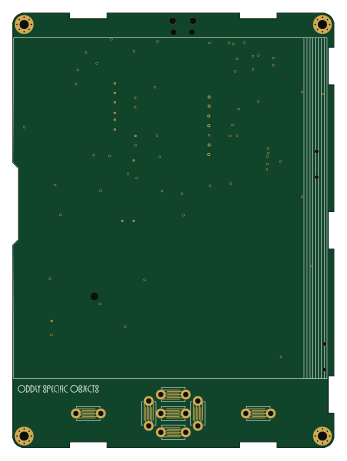
Open Book Abridged Edition
joeycastillo
85 × 115 mm29 parts2LCC-BY-SA-4.08.1k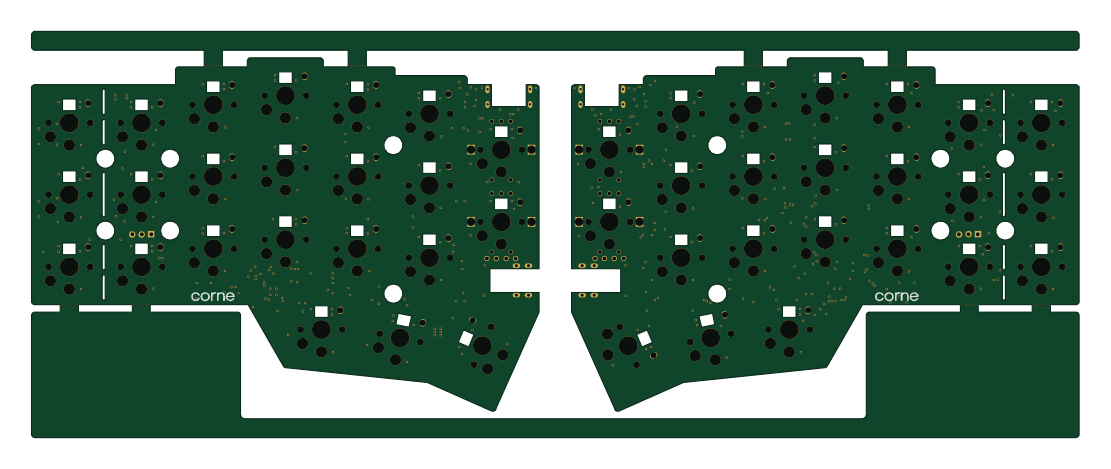 RP2040/RP2350
Corne
foostan
277.2 × 107.5 mm164 parts2LCC-BY-4.07.7k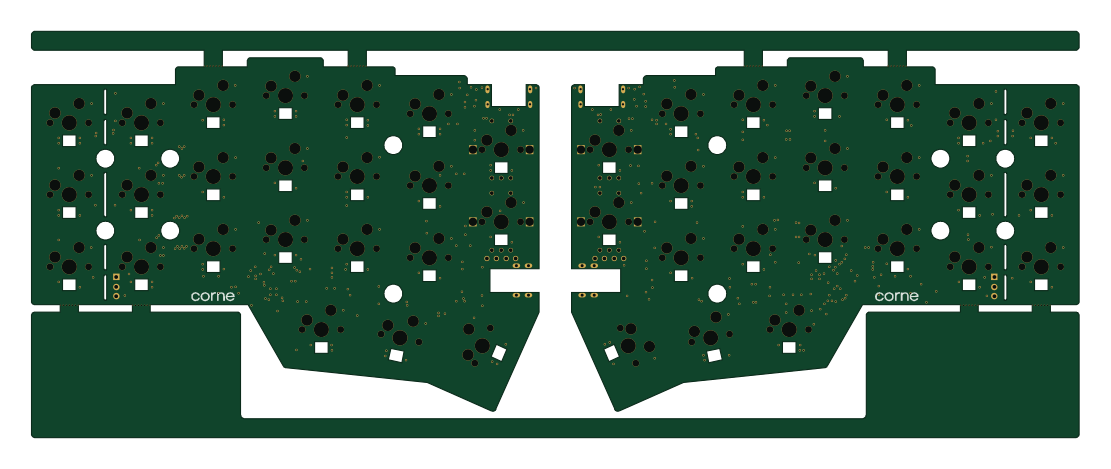 RP2040/RP2350
Corne
277.2 × 107.5 mm164 parts2LCC-BY-4.07.7k RP2040/RP2350
LogicAnalyzer
gusmanb
57 × 55.2 mm6 parts2LGPL-3.05.0k RP2040/RP2350
Jitx design
55.5 × 65 mm26 parts4LGPL-3.05.0k RP2040/RP2350
Pro V2
kata0510
290.1 × 130 mm270 parts2LMIT2.3k