
Melbourne-Live-Train-Map

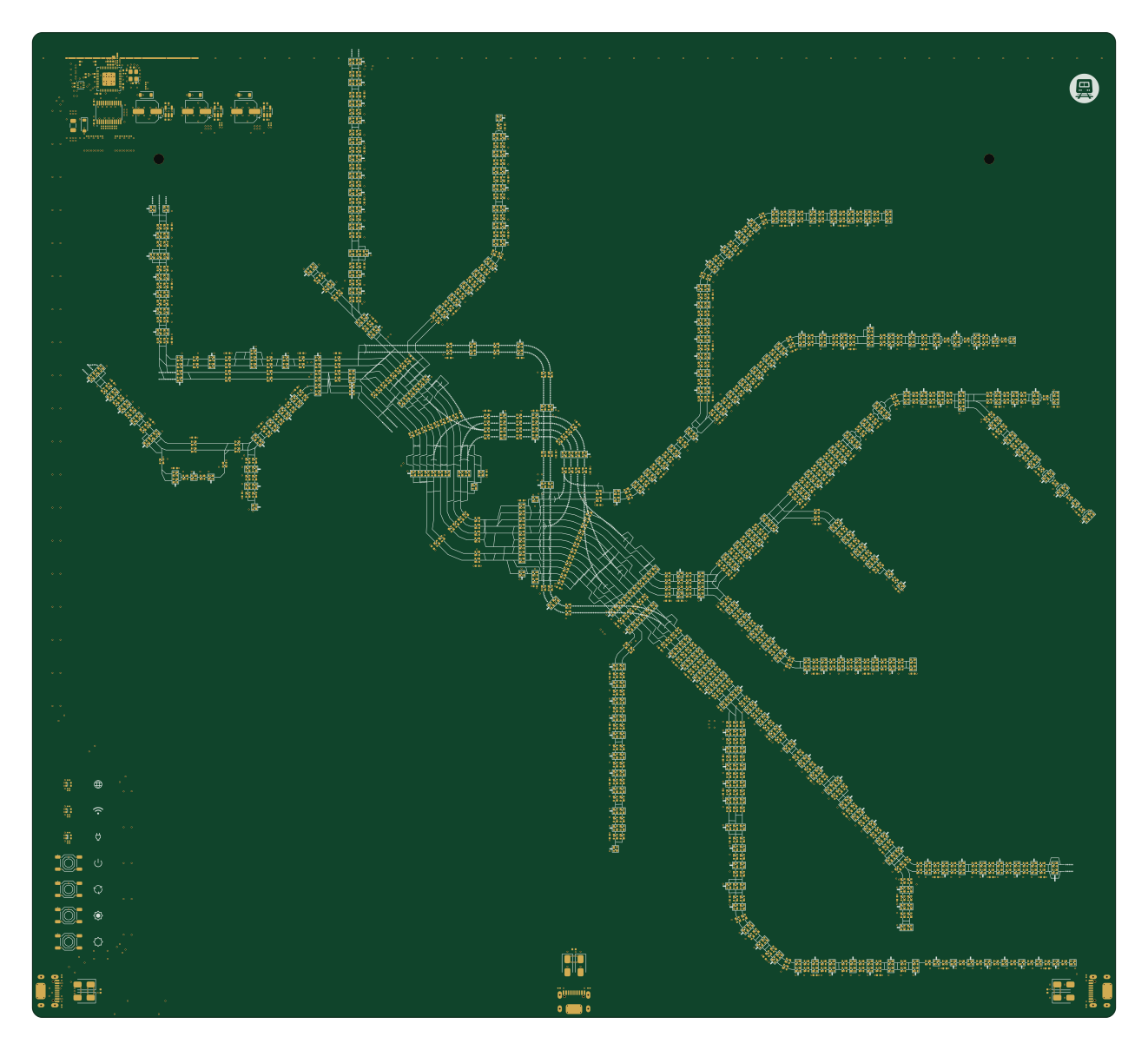
About the Melbourne-Live-Train-Map PCB
Melbourne-Live-Train-Map is an open source ESP32 PCB design by CDFER, published on GitHub under the GPL-3.0 license. It is a 2-layer board measuring 330 × 300 mm, with 1240 components from 24 distinct parts.
Its main chip is the ESP32-S3, from the ESP32 family. Other key parts include the RT9080-33GJ5, LTR-303ALS-01, Connector, USB-TYPE-C-16P, MT9700-N and SN74LVC4245APWR. By type, the board carries 1055 diodes, 130 capacitors, 38 resistors, 9 ICs, 4 switches and 2 inductors.
It belongs with the displays & leds and iot & wireless designs in this gallery.
From the project
A curcuit board with RGB leds to show the live position of trains in Melbourne!
You can support my work by buying this train map through my store: https://keastudios.co.nz/store/
A physical, real-time LED map of the Melbourne train network, powered by an ESP32-S3 microcontroller. Train movements are displayed using addressable RGB LEDs, with live data fetched over Wi-Fi.
- Real-time Train Tracking: Displays the locations of trains on the Melbourne network. - Addressable LEDs: WS2812B-compatible RGB LEDs for a vibrant display. - Wi-Fi Connectivity: ESP32-S3's built-in Wi-Fi fetches live train data. - Adjustable Brightness: You can use the buttons to adjust the…
Main components on the Melbourne-Live-Train-Map
Melbourne-Live-Train-Map bill of materials (BOM)
1240 components, 24 distinct parts — part numbers from the project's BOM.
| Qty | Part | Footprint | Refs |
|---|---|---|---|
| 1 | ESP32-S3 Espressif | QFN-56-1EP_7x7mm_P0.4mm_EP4x4mm_ThermalVias | U1 |
| 1 | RT9080-33GJ5 Richtek Tech | TSOT-23-5 | U2 |
| 1 | LTR-303ALS-01 Lite-On | Lite-On_LTR-303ALS-01 | U3 |
| 3 | Connector, USB-TYPE-C-16P DEALON | TYPE-C-SMD_HX-TYPE-C-16PIN | U4, U6, U7 |
| 2 | MT9700-N XI'AN Aerosemi Tech | SOT-23-5 | U5, U9 |
| 1 | SN74LVC4245APWR Texas Instruments | TSSOP-24_4.4x7.8mm_P0.65mm | U8 |
| 1 | 40MHz, 15pF YXC Crystal Oscillators | OSC-SMD_4P-L3.2-W2.5-BL_SIT8008BI | X2 |
| 1 | Resettable Fuse LUTE | Fuse_1206_3216Metric | F1 |
| 4 | Tactile Button, 160gf XKB Connectivity | SW-SMD_4P-L5.1-W5.1-P3.70-LS6.5-TL-2 | S1, S2, S3, S4 |
| 1 | MMSZ5227B hongjiacheng | D_SOD-123 | D1 |
| 3 | MM1W5V6 hongjiacheng | D_SOD-123 | D2, D4, D5 |
| 6 | SS33 hongjiacheng | D_SMA | D3, D6, D7, D14, D15, D16 |
| 3 | LED_Dual,19-223/R7G6C-A01/2T Everlight Elec | LED-SMD-4P,1.6x1.5mm | D9, D13, D17 |
| 1042 | XL-1615RGBC-WS2812B-S XINGLIGHT | LED-SMD_4P-L1.6-W1.5_XL-1615RGBC-WS2812B | D100, D101, D102, D103, D104, D105, D106, D107 +1034 |
| 1 | 2.7NH 2.7nH Murata Electronics | L_0201_0603Metric | L1 |
| 1 | 24NH 24nH Murata Electronics | L_0201_0603Metric | L2 |
| 117 | 10UF 10uF Samsung Electro-Mechanics | C_0402 | C1, C2, C3, C4, C6, C7, C8, C9 +109 |
| 3 | 220UF 220uF APAQ Tech | CP_Elec_6.3x4.5 | C5, C12, C33 |
| 2 | 27PF 27pF FH(Guangdong Fenghua Advanced Tech) | C_0402 | C23, C24 |
| 2 | 1.4PF 1.4pF Murata Electronics | C_0201_0603Metric | C36, C37 |
Show 4 more
| Qty | Part | Footprint | Refs |
|---|---|---|---|
| 6 | 10uF Samsung Electro-Mechanics | C_0402 | C193, C196, C197, C198, C199, C200 |
| 20 | 5.1kΩ UNI-ROYAL(Uniroyal Elec) | R_0201_0603Metric | R1, R2, R3, R4, R6, R8, R9, R10 +12 |
| 8 | 330Ω UNI-ROYAL(Uniroyal Elec) | R_0201_0603Metric | R7, R15, R26, R28, R30, R32, R34, R36 |
| 10 | 100kΩ UNI-ROYAL(Uniroyal Elec) | R_0201_0603Metric | R12, R23, R24, R25, R27, R29, R31, R33 +2 |
Melbourne-Live-Train-Map design files
The KiCad project lives in the CDFER/Melbourne-Live-Train-Map repository on GitHub; these links point at the commit this page was built from.
Melbourne-Live-Train-Map: common questions
What microcontroller does the Melbourne-Live-Train-Map use?
The Melbourne-Live-Train-Map is built around the ESP32-S3, from the ESP32 family.
How big is the Melbourne-Live-Train-Map PCB?
The Melbourne-Live-Train-Map measures 330 × 300 mm, has 2 copper layers and is 0.9154 mm thick.
How many components are on the Melbourne-Live-Train-Map?
1240 components, from 24 distinct parts, with part numbers taken from the project's own BOM. The full bill of materials is listed on this page.
Where can I download the Melbourne-Live-Train-Map design files?
From the CDFER/Melbourne-Live-Train-Map repository on GitHub, which has the KiCad layout, the schematic and the BOM; the links under Design files point to each one.
Can I use the Melbourne-Live-Train-Map design in my own project?
Yes, under the terms of its GPL-3.0 license, which CDFER chose for the repository.
Can I test firmware for the Melbourne-Live-Train-Map without the hardware?
Yes. HardLabs builds a simulation of the board from its netlist and BOM, so you can run and debug ESP32 firmware against it before you order a PCB.
Similar boards
 ESP32
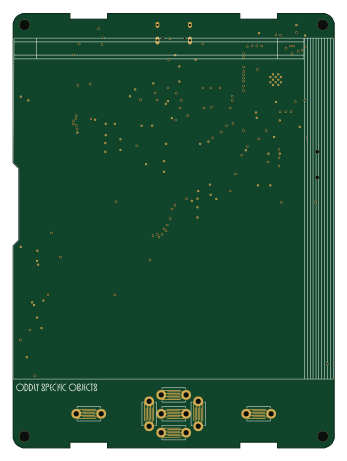
ESP32Open Book Abridged Edition
joeycastillo
85 × 115 mm65 parts2LCC-BY-SA-4.08.1k ESP32
ESP32Esp32 minimal
atopile
36.2 × 26.8 mm20 parts2LMIT4.0k ESP32
ESP32Badge
56.3 × 39 mm239 parts4LMIT4.0k ESP32
ESP32Controller
StuckAtPrototype
29 × 74 mm58 parts4LApache-2.03.8k ESP32
ESP32Racer
36 × 50.2 mm70 parts4LApache-2.03.8k ESP32
ESP32Bitaxe
skot
56.5 × 99.8 mm86 parts4LCERN-OHL-S-2.01.4k