
Matrix6

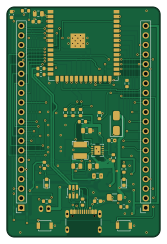
About the Matrix6 PCB
Matrix6 is an open source ESP32 PCB design by FaBoAI, published on GitHub. It is a 2-layer board measuring 40.6 × 61 mm, with 48 components from 31 distinct parts.
Its main chip is the ESP32-S3-WROOM-1-N8R8, from the ESP32 family. Other key parts include the TPS63001DRCR, USBLC6-2SC6 and MCP73831T-2ACI/OT. By type, the board carries 19 resistors, 12 capacitors, 4 ICs, 3 connectors, 3 diodes and 2 switches.
It belongs with the power & battery designs in this gallery.
From the project
ESP32-S3-WROOM-1-N8R8を使った、Matrix5シールド向けのKiCad 10開発基板です。現行設計は v0.8(2層・四隅R2 mm)。内層配線を表裏へ移し、USBとGNDを再設計しました。オートルーターは使わず、部品配置と配線を個別に指定しています。
ESP32-S3-WROOM-1-N8R8を使った、Matrix5シールド向けのKiCad 10開発基板です。現行設計は v0.8(2層・四隅R2 mm)。内層配線を表裏へ移し、USBとGNDを再設計しました。オートルーターは使わず、部品配置と配線を個別に指定しています。
Matrix6.kicadproをKiCad 10で開いてください。KiCad標準のシンボル・フットプリント・3Dモデルライブラリをインストールし、同じフォルダーの DevBoard.pretty と fp-lib-table` を一緒に保管します。動作確認版はKiCad 10.0.6です。
- ESP32-S3-WROOM-1-N8R8、ネイティブUSB-C、TPS63001によるUSB/LiPo両対応3.3 V電源。 - 裏面microSD(CS=10、MOSI=11、CLK=12、MISO=13)。口はアンテナ側へ向け、15.8 × 22.5 mmの抜き差し空間を確保。 - 裏面JST-PH 2ピンLiPo端子、MCP73831で公称100 mA充電、AO3401AによるUSB/電池自動切替。 - USBの左にRESET、右にBOOT。基板下部の赤LEDは POWER、青LEDはGPIO48の PIN 48。 - 40.64 × 61.00 mm、四隅R2 mm、2層FR4・公称1.6 mm・両面1…
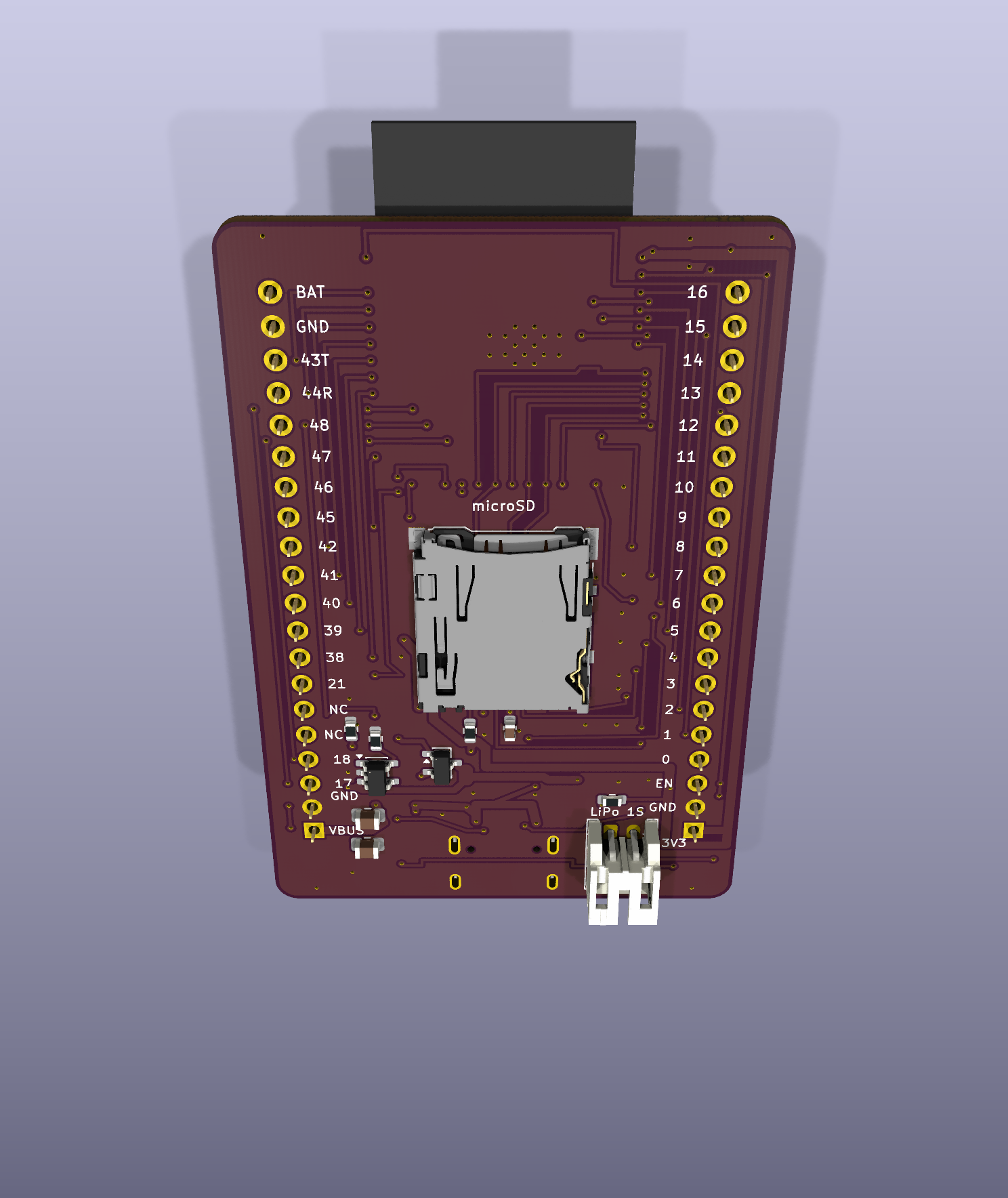
Main components on the Matrix6
Matrix6 bill of materials (BOM)
48 components, 31 distinct parts — part numbers from the project's BOM.
| Qty | Part | Footprint | Refs |
|---|---|---|---|
| 1 | ESP32-S3-WROOM-1-N8R8 | ESP32-S3-WROOM-1_Edge | U1 |
| 1 | TPS63001DRCR TPS63001 (3.3V) | Texas_DRC0010J | U2 |
| 1 | USBLC6-2SC6 | SOT-23-6 | U3 |
| 1 | MCP73831T-2ACI/OT MCP73831 / 100mA | SOT-23-5 | U4 |
| 1 | AO3401A | SOT-23 | Q1 |
| 1 | USB4105-GF-A-120 | USB4105_NoUnderbodyCopper | J1 |
| 1 | DM3AT-SF-PEJM5 microSD (rear) | microSD_HC_Hirose_DM3AT-SF-PEJM5 | J2 |
| 1 | S2B-PH-K-S(LF)(SN) LiPo 1S / PH2 | JST_PH_S2B-PH-K_1x02_P2.00mm_Horizontal | J3 |
| 1 | MF-NSMF110/16X-2 1.1A hold Bourns | Fuse_1206_3216Metric | F1 |
| 1 | Matrix5 H1 | PinSocket_1x20_P2.54mm_Vertical | H1 |
| 1 | Matrix5 H2 | PinSocket_1x20_P2.54mm_Vertical | H2 |
| 1 | RESET | SW_SPST_B3U-1000P | SW1 |
| 1 | BOOT | SW_SPST_B3U-1000P | SW2 |
| 1 | SS14-E3/61T SS14 Vishay | D_SMA | D1 |
| 1 | POWER red | LED_0603_1608Metric | D2 |
| 1 | PIN 48 blue | LED_0603_1608Metric | D3 |
| 1 | SRN4018-2R2M 2.2uH / 3A | L_Bourns-SRN4018 | L1 |
| 6 | CL21A226MAQNNNE 22uF 25V X5R | C_0805_2012Metric | C1, C2, C8, C9, C10, C11 |
| 1 | 10uF 16V X5R | C_0805_2012Metric | C3 |
| 2 | 100nF 50V X7R | C_0603_1608Metric | C4, C6 |
Show 11 more
| Qty | Part | Footprint | Refs |
|---|---|---|---|
| 1 | 1uF 16V X7R | C_0603_1608Metric | C5 |
| 2 | 100NF 100nF | C_0603_1608Metric | C7, C12 |
| 2 | 5.1k 1% | R_0603_1608Metric | R1, R2 |
| 2 | 22R 1% | R_0603_1608Metric | R3, R4 |
| 3 | 10k 1% | R_0603_1608Metric | R5, R6, R8 |
| 6 | 0603WAF1002T5E 10k | R_0603_1608Metric | R7, R15, R16, R17, R18, R19 |
| 2 | 1k 1% | R_0603_1608Metric | R9, R10 |
| 1 | CRCW06030000Z0EA 0R crossover Vishay | R_0603_1608Metric | R11 |
| 1 | 0603WAF1000T5E 100R | R_0603_1608Metric | R12 |
| 1 | 0603WAF1002T5E 10k / 100mA | R_0603_1608Metric | R13 |
| 1 | 0603WAF1003T5E 100k | R_0603_1608Metric | R14 |
Matrix6 design files
The KiCad project lives in the FaBoAI/Matrix6 repository on GitHub; these links point at the commit this page was built from.
Matrix6: common questions
What microcontroller does the Matrix6 use?
The Matrix6 is built around the ESP32-S3-WROOM-1-N8R8, from the ESP32 family.
How big is the Matrix6 PCB?
The Matrix6 measures 40.6 × 61 mm, has 2 copper layers and is 1.6254 mm thick.
How many components are on the Matrix6?
48 components, from 31 distinct parts, with part numbers taken from the project's own BOM. The full bill of materials is listed on this page.
Where can I download the Matrix6 design files?
From the FaBoAI/Matrix6 repository on GitHub, which has the KiCad layout, the schematic and the BOM; the links under Design files point to each one.
Can I use the Matrix6 design in my own project?
The repository has no license, so all rights stay with FaBoAI. Use it as a reference, and ask the author before reusing the design.
Can I test firmware for the Matrix6 without the hardware?
Yes. HardLabs builds a simulation of the board from its netlist and BOM, so you can run and debug ESP32 firmware against it before you order a PCB.
Similar boards
 ESP32
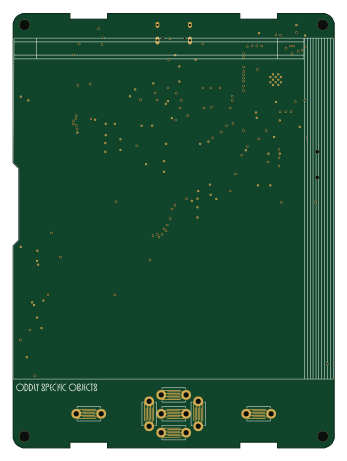
ESP32Open Book Abridged Edition
joeycastillo
85 × 115 mm65 parts2LCC-BY-SA-4.08.1k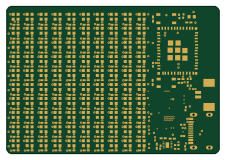 ESP32
ESP32Badge
atopile
56.3 × 39 mm239 parts4LMIT4.0k ESP32
ESP32Esp32 minimal
36.2 × 26.8 mm20 parts2LMIT4.0k ESP32
ESP32Racer
StuckAtPrototype
36 × 50.2 mm70 parts4LApache-2.03.8k ESP32
ESP32Controller
29 × 74 mm58 parts4LApache-2.03.8k ESP32
ESP32Bitaxe
skot
56.5 × 99.8 mm86 parts4LCERN-OHL-S-2.01.4k