
IO Board

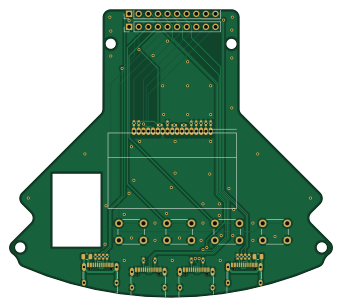
About the IO Board
IO Board is an open source AVR/Arduino PCB design by MUNAKATA-EPC, published on GitHub. It is a 2-layer board measuring 85.4 × 76 mm, with 32 components from 8 distinct parts.
Its main chip is the Ferrite_Bead, from the AVR/Arduino family. By type, the board carries 14 resistors, 9 capacitors, 7 connectors and 2 inductors.
From the project
アルテミス2023シーズンのリポジトリです。詳しくはwikiで。
このReadmeでは軽く自チームの紹介がてら結果報告やロボット概要をまとめておきます。 詳しくはいつか出る全国大会の記事で。
IO Board bill of materials (BOM)
32 components, 8 distinct parts.
| Qty | Part | Footprint | Refs |
|---|---|---|---|
| 4 | USB_C_Receptacle_USB2.0 | USB_C_Receptacle_XKB_U262-16XN-4BVC11 | J1, J2, J4, J7 |
| 2 | Conn_01x10_Female | PinHeader_1x10_P2.54mm_Vertical | J3, J5 |
| 1 | Conn_01x17_Female | LCDmodule_aqm1248a | J6 |
| 2 | Ferrite_Bead | Fuse_0805_2012Metric | FB1, FB2 |
| 9 | C_Small | C_0402_1005Metric | C3, C4, C5, C6, C7, C8, C10, C11 +1 |
| 2 | 10K | R_0402_1005Metric | R1, R4 |
| 8 | R | R_0402_1005Metric | R2, R3, R6, R7, R8, R9, R12, R13 |
| 4 | 22R | R_0402_1005Metric | R5, R10, R11, R14 |
IO Board design files
The KiCad project lives in the MUNAKATA-EPC/Artemis_2023 repository on GitHub; these links point at the commit this page was built from.
IO Board: common questions
What microcontroller does the IO Board use?
The IO Board is built around the Ferrite_Bead, from the AVR/Arduino family.
How big is the IO Board?
The IO Board measures 85.4 × 76 mm, has 2 copper layers and is 1.6 mm thick.
How many components are on the IO Board?
32 components, from 8 distinct parts. The full bill of materials is listed on this page.
Where can I download the IO Board design files?
From the MUNAKATA-EPC/Artemis_2023 repository on GitHub, which has the KiCad layout and the schematic; the links under Design files point to each one.
Can I use the IO Board design in my own project?
The repository has no license, so all rights stay with MUNAKATA-EPC. Use it as a reference, and ask the author before reusing the design.
Can I test firmware for the IO Board without the hardware?
Yes. HardLabs builds a simulation of the board from its netlist and BOM, so you can run and debug AVR/Arduino firmware against it before you order a PCB.
More boards in Artemis_2023
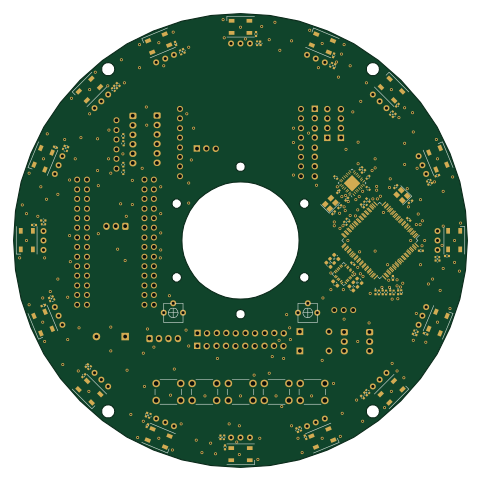 AVR/Arduino
Mainboard
120 × 120 mm151 parts2LNo license2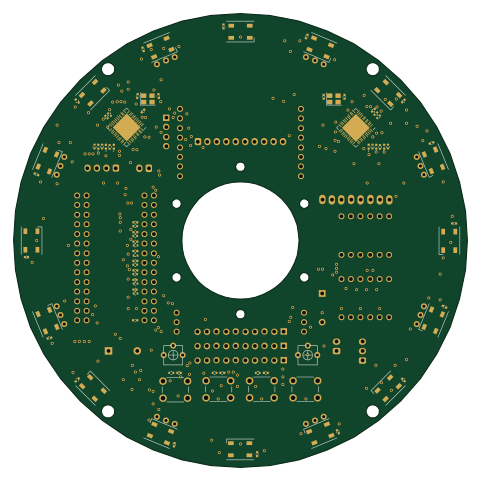 AVR/Arduino
Main board Teensy
120 × 120 mm110 parts2LNo license2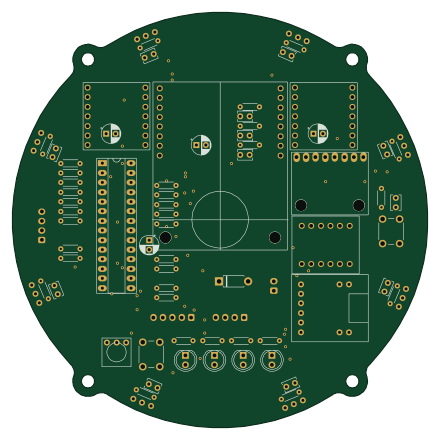 PIC
PICMain board
109.9 × 109.9 mm75 parts2LNo license2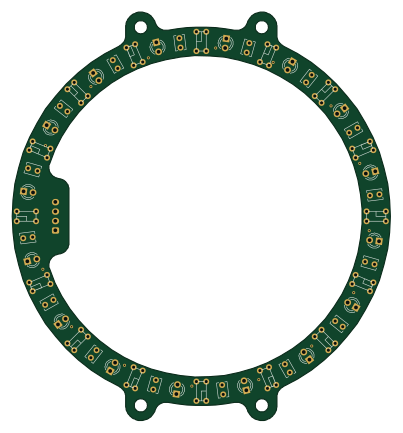
Line sensor
100 × 108 mm49 parts2LNo license2
TJ3B
44 parts2LNo license2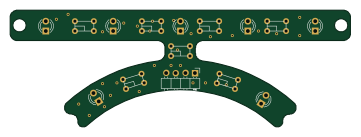
Line sensor front
90 × 30.9 mm22 parts2LNo license2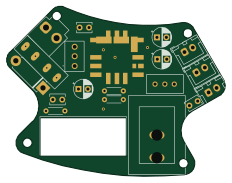
Psu board
57.9 × 45 mm20 parts2LNo license2
AT
15 × 20 mm15 parts2LNo license2
LSM6DS3 Gyro
9.4 × 11.2 mm9 parts2LNo license2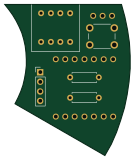
ジャイロ
33.2 × 40 mm7 parts2LNo license2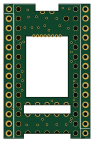 NXP
NXPTeensy4 header breakout
22.9 × 35.6 mm3 parts2LNo license2
Earlier revisions in the repo: io_board
Similar boards
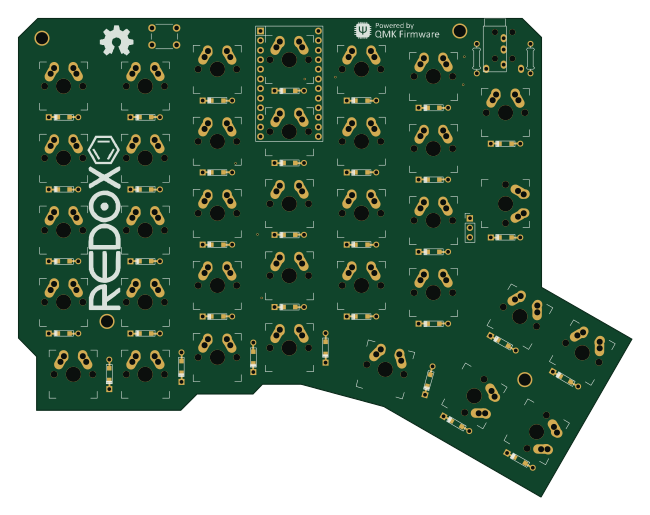 AVR/Arduino
Redox keyboard
mattdibi
162.2 × 126.5 mm77 parts2LMIT2.0k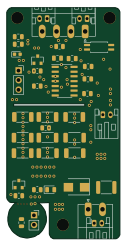 AVR/Arduino
ModuleV450
stuartpittaway
30 × 61.4 mm39 parts2LCC-BY-NC-4.01.1k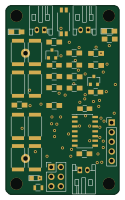 AVR/Arduino
V4
30 × 50 mm38 parts2LCC-BY-NC-4.01.1k AVR/Arduino
Discipline
coseyfannitutti
304.9 × 122.8 mm170 parts2LCC-BY-NC-4.01.0k AVR/Arduino
Megadesk
gcormier
41.7 × 32.2 mm23 parts2LGPL-3.0818 AVR/Arduino
Easyduino Atmega Nano
Hanqaqa
43.4 × 18 mm30 parts4LCERN-OHL-P-2.0746