
Reverb

About the Reverb PCB
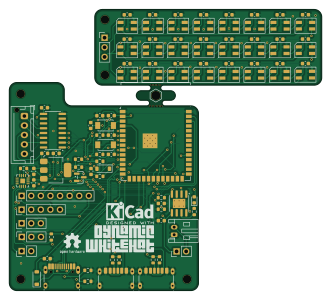
Reverb is an open source ESP32 PCB design by DynamicWhiteHat, published on GitHub. It is a 2-layer board measuring 82.6 × 74.3 mm, with 102 components from 35 distinct parts.
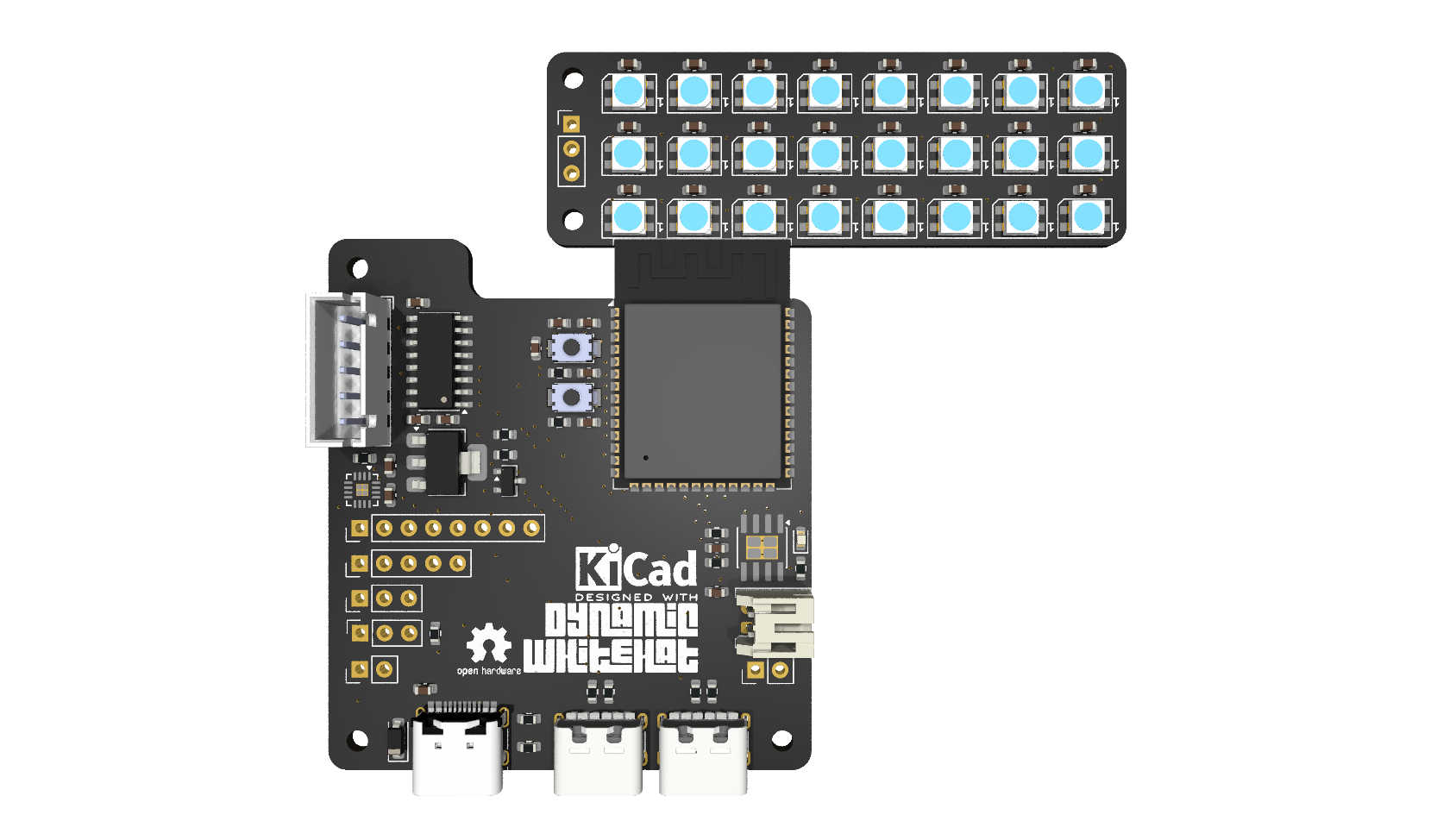
Its main chip is the ESP32-S3-WROOM-1, from the ESP32 family. Other key parts include the MAX98357A, ULN2003, TP4056-42-ESOP8 and AP7361C-33E. By type, the board carries 38 capacitors, 28 diodes, 17 resistors, 11 connectors, 5 ICs and 3 switches.
It belongs with the audio, iot & wireless and displays & leds designs in this gallery.
From the project
A custom Spotify record player
I saw this video on YouTube one day, and I wanted to make my own version. He used an RPi Zero with other modules. I decided that I wanted to improve on this design by making a custom ESP32-based PCB, a built in speaker, and other small features. I also found another video about an ESP32 speaker with an audio visualizer, so I decided to add that through a 3x8 neopixel array. I have gotten better at routing PCBs as a result of this project, and I have also gained a sense of how to make good-looking PCB layouts.
Main components on the Reverb
Reverb bill of materials (BOM)
102 components, 35 distinct parts — part numbers from the project's BOM.
| Qty | Part | Footprint | Refs |
|---|---|---|---|
| 1 | ESP32-S3-WROOM-1 | ESP32-S3-WROOM-1 | U1 |
| 1 | MAX98357A | TQFN-16-1EP_3x3mm_P0.5mm_EP1.23x1.23mm | U2 |
| 1 | ULN2003 | SOIC-16_3.9x9.9mm_P1.27mm | U3 |
| 1 | TP4056-42-ESOP8 | SOIC-8-1EP_3.9x4.9mm_P1.27mm_EP2.41x3.3mm_ThermalVias | U6 |
| 1 | AP7361C-33E | SOT-223-3_TabPin2 | U7 |
| 2 | USB_C_RECEPTACLE_POWERONLY_6P USB_C_Receptacle_PowerOnly_6P | USB_C_Receptacle_HRO_TYPE-C-31-M-17 | J1, J2 |
| 2 | CONN_01X03 Conn_01x03 | PinHeader_1x03_P2.54mm_Vertical | J3, J5 |
| 1 | CONN_01X05 Conn_01x05 | PinHeader_1x05_P2.54mm_Vertical | J4 |
| 1 | CONN_01X02 Conn_01x02 | PinHeader_1x02_P2.54mm_Vertical | J6 |
| 1 | USB_C_RECEPTACLE_USB2.0_16P USB_C_Receptacle_USB2.0_16P | USB_C_Receptacle_HRO_TYPE-C-31-M-12 | J7 |
| 1 | CONN_01X02 Conn_01x02 | JST_PH_S2B-PH-K_1x02_P2.00mm_Horizontal | J8 |
| 1 | CONN_01X05 Conn_01x05 | JST_XH_B5B-XH-AM_1x05_P2.50mm_Vertical | J9 |
| 1 | CONN_01X08 Conn_01x08 | PinHeader_1x08_P2.54mm_Vertical | J10 |
| 1 | CONN_01X03 Conn_01x03 | PinSocket_1x03_P2.54mm_Vertical | J11 |
| 1 | SW_SPST | PinHeader_1x02_P2.54mm_Vertical | SW1 |
| 2 | SW_Push | SW_TS-1088-AR02016 | SW3, SW4 |
| 24 | SK6812MINI | LED_SK6812MINI_PLCC4_3.5x3.5mm_P1.75mm | D1, D2, D3, D4, D6, D7, D8, D11 +16 |
| 1 | 1N5819HW-7-F | D_SOD-123 | D5 |
| 1 | LED | LED_0603_1608Metric | D9 |
| 1 | BAT54C | SOT-23 | D10 |
Show 15 more
| Qty | Part | Footprint | Refs |
|---|---|---|---|
| 1 | 1N4148W | D_SOD-123 | D28 |
| 2 | 1UF 1uF | C_0603_1608Metric | C1, C33 |
| 4 | 0.1UF 0.1uF | C_0603_1608Metric | C2, C4, C5, C27 |
| 5 | 10UF 10uF | C_0603_1608Metric | C3, C13, C14, C15, C29 |
| 24 | 100NF 100nF | C_0603_1608Metric | C6, C7, C8, C9, C10, C11, C12, C18 +16 |
| 2 | 4.7UF 4.7uF | C_0603_1608Metric | C16, C17 |
| 1 | 22UF 22uF | C_0603_1608Metric | C31 |
| 4 | 4.7K 4.7k | R_0603_1608Metric | R1, R2, R3, R4 |
| 2 | 1M | R_0603_1608Metric | R5, R6 |
| 5 | 10K 10k | R_0603_1608Metric | R7, R8, R10, R11, R12 |
| 1 | 634K 634k | R_0603_1608Metric | R9 |
| 2 | 5.1K 5.1k | R_0603_1608Metric | R14, R15 |
| 1 | 0.4R | R_0603_1608Metric | R16 |
| 1 | 1k | R_0603_1608Metric | R17 |
| 1 | 5k | R_0603_1608Metric | R19 |
Reverb design files
The KiCad project lives in the DynamicWhiteHat/Reverb repository on GitHub; these links point at the commit this page was built from.
Reverb: common questions
What microcontroller does the Reverb use?
The Reverb is built around the ESP32-S3-WROOM-1, from the ESP32 family.
How big is the Reverb PCB?
The Reverb measures 82.6 × 74.3 mm, has 2 copper layers and is 1.6 mm thick.
How many components are on the Reverb?
102 components, from 35 distinct parts, with part numbers taken from the project's own BOM. The full bill of materials is listed on this page.
Where can I download the Reverb design files?
From the DynamicWhiteHat/Reverb repository on GitHub, which has the KiCad layout, the schematic and the BOM; the links under Design files point to each one.
Can I use the Reverb design in my own project?
The repository has no license, so all rights stay with DynamicWhiteHat. Use it as a reference, and ask the author before reusing the design.
Can I test firmware for the Reverb without the hardware?
Yes. HardLabs builds a simulation of the board from its netlist and BOM, so you can run and debug ESP32 firmware against it before you order a PCB.
Similar boards
 ESP32
ESP32Open Book Abridged Edition
joeycastillo
85 × 115 mm65 parts2LCC-BY-SA-4.08.1k ESP32
ESP32Esp32 minimal
atopile
36.2 × 26.8 mm20 parts2LMIT4.0k ESP32
ESP32Badge
56.3 × 39 mm239 parts4LMIT4.0k ESP32
ESP32Controller
StuckAtPrototype
29 × 74 mm58 parts4LApache-2.03.8k ESP32
ESP32Racer
36 × 50.2 mm70 parts4LApache-2.03.8k ESP32
ESP32Bitaxe
skot
56.5 × 99.8 mm86 parts4LCERN-OHL-S-2.01.4k