
Open lasertag

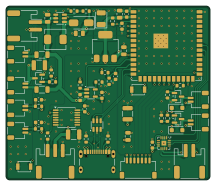
About the Open lasertag PCB
Open lasertag is an open source ESP32 PCB design by G5K-org, published on GitHub. It is a 4-layer board measuring 54 × 46 mm, with 65 components from 36 distinct parts.
Its main chip is the ESP32-S3-WROOM-1-N16R8, from the ESP32 family. Other key parts include the MT3608, AMS1117-3.3, MCP73831, 74HCT125 and MAX98357A. By type, the board carries 20 resistors, 18 capacitors, 7 ICs, 4 switches, 3 transistors and 3 connectors.
It belongs with the usb & debug tools designs in this gallery.
From the project
Schaltplan und Platine für die zentrale Elektronik der Waffe (einziger ESP32-S3-Chip), passend zu ../../pinbelegung.md und ../../readme.md. KiCad 10, ERC 0 Fehler, DRC 0 Fehler.
Schaltplan und Platine für die zentrale Elektronik der Waffe (einziger ESP32-S3-Chip), passend zu ../../pinbelegung.md und ../../readme.md. KiCad 10, ERC 0 Fehler, DRC 0 Fehler.
waffeelektronik.kicadpro in KiCad öffnen, dann Schaltplan- bzw. Platinen-Editor starten. Die Bibliotheken sind über die mitgelieferte projekteigene sym-lib-table eingebunden (nur Standard-KiCad-Bibliotheken, z. B. Device, Diode, TransistorFET, 74xx, power`).

Main components on the Open lasertag
Open lasertag bill of materials (BOM)
65 components, 36 distinct parts — part numbers from the project's BOM.
| Qty | Part | Footprint | Refs |
|---|---|---|---|
| 1 | MT3608 | SOT-23-6 | U1 |
| 1 | AMS1117-3.3 | SOT-223-3_TabPin2 | U2 |
| 1 | MCP73831 | SOT-23-5 | U3 |
| 1 | ESP32-S3-WROOM-1-N16R8 | ESP32-S3-WROOM-1 | U4 |
| 1 | 74HCT125 | TSSOP-14_4.4x5mm_P0.65mm | U5 |
| 1 | MAX98357A | TQFN-16-1EP_3x3mm_P0.5mm_EP1.23x1.23mm | U6 |
| 1 | USBLC6-2SC6 | SOT-23-6 | U12 |
| 1 | C160402 Vibromotor Rückstoss | JST_SH_SM02B-SRSS-TB_1x02-1MP_P1.00mm_Horizontal | M1 |
| 1 | C160402 Vibromotor Treffer | JST_SH_SM02B-SRSS-TB_1x02-1MP_P1.00mm_Horizontal | M2 |
| 3 | AO3400A | SOT-23 | Q1, Q2, Q3 |
| 1 | C265101 WS2812 HP-Streifen | JST_PH_S3B-PH-SM4-TB_1x03-1MP_P2.00mm_Horizontal | J1 |
| 1 | C160406 GX16 7-polig | JST_SH_SM07B-SRSS-TB_1x07-1MP_P1.00mm_Horizontal | J2 |
| 1 | C5184243 USB-C (Flashen + Laden) | USB_C_Receptacle_GCT_USB4105-xx-A_16P_TopMnt_Horizontal | J3 |
| 1 | C225233 1S LiPo 3,7 V | JST_PH_S2B-PH-SM4-TB_1x02-1MP_P2.00mm_Horizontal | BT1 |
| 1 | C225233 Lautsprecher | JST_PH_S2B-PH-SM4-TB_1x02-1MP_P2.00mm_Horizontal | SP1 |
| 2 | C160402 Taster | JST_SH_SM02B-SRSS-TB_1x02-1MP_P1.00mm_Horizontal | SW1, SW2 |
| 1 | C231329 RESET | SW_SPST_B3U-1000P | SW3 |
| 1 | C231329 BOOT | SW_SPST_B3U-1000P | SW4 |
| 2 | C160402 TSAL6100 | JST_SH_SM02B-SRSS-TB_1x02-1MP_P1.00mm_Horizontal | LED1, LED2 |
| 2 | SS14 | D_SOD-123F | D1, D2 |
Show 16 more
| Qty | Part | Footprint | Refs |
|---|---|---|---|
| 1 | SS34 | D_SMA | D3 |
| 1 | 10U 10u | L_Sunlord_MWSA0503S | L1 |
| 3 | 100U 100u | C_1210_3225Metric | C1, C7, C10 |
| 3 | 10U 10u | C_0805_2012Metric | C2, C18, C22 |
| 1 | 10U 10u | CP_EIA-3528-21_Kemet-B | C3 |
| 3 | 1u | C_0603_1608Metric | C4, C5, C16 |
| 6 | 100N 100n | C_0603_1608Metric | C6, C8, C9, C17, C21, C23 |
| 2 | 22U 22u | C_0805_2012Metric | C19, C20 |
| 1 | 2k | R_0603_1608Metric | R1 |
| 5 | 10K 10k | R_0603_1608Metric | R2, R9, R10, R21, R25 |
| 5 | 100K 100k | R_0603_1608Metric | R3, R4, R6, R12, R14 |
| 3 | 100 | R_0603_1608Metric | R5, R11, R13 |
| 2 | 10 | R_1206_3216Metric | R7, R8 |
| 1 | 330 | R_0603_1608Metric | R15 |
| 2 | 5.1K 5.1k | R_0603_1608Metric | R22, R23 |
| 1 | 75K 75k | R_0603_1608Metric | R24 |
Open lasertag design files
The KiCad project lives in the G5K-org/open-lasertag repository on GitHub; these links point at the commit this page was built from.
Open lasertag: common questions
What microcontroller does the Open lasertag use?
The Open lasertag is built around the ESP32-S3-WROOM-1-N16R8, from the ESP32 family.
How big is the Open lasertag PCB?
The Open lasertag measures 54 × 46 mm, has 4 copper layers and is 1.6 mm thick.
How many components are on the Open lasertag?
65 components, from 36 distinct parts, with part numbers taken from the project's own BOM. The full bill of materials is listed on this page.
Where can I download the Open lasertag design files?
From the G5K-org/open-lasertag repository on GitHub, which has the KiCad layout, the schematic and the BOM; the links under Design files point to each one.
Can I use the Open lasertag design in my own project?
The repository has no license, so all rights stay with G5K-org. Use it as a reference, and ask the author before reusing the design.
Can I test firmware for the Open lasertag without the hardware?
Yes. HardLabs builds a simulation of the board from its netlist and BOM, so you can run and debug ESP32 firmware against it before you order a PCB.
Similar boards
 ESP32
OSO-BOOK-B1
joeycastillo
85 × 115 mm65 parts2LCC-BY-SA-4.08.1k ESP32
Powertrain
byrantech
64 × 45.4 mm171 parts4LMIT4.3k ESP32
Esp32 minimal
atopile
36.2 × 26.8 mm20 parts2LMIT4.0k ESP32
Badge
56.3 × 39 mm239 parts4LMIT4.0k ESP32
Racer
StuckAtPrototype
36 × 50.2 mm70 parts4LApache-2.03.8k ESP32
Controller
29 × 74 mm58 parts4LApache-2.03.8k