
Windsensor

About the Windsensor PCB
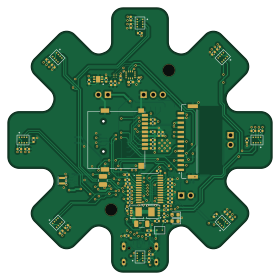
Windsensor is an open source ESP32 PCB design by kristofkatzenberger, published on GitHub under the MIT license. It is a 4-layer board measuring 70 × 70 mm, with 123 components from 44 distinct parts.
Its main chip is the ESP32-S3-WROOM-1, from the ESP32 family. Other key parts include the AP33772SDKZ-13-FA01, LP5910-1.8DRVR, BMI270, BQ25628ERYKR and TPS63805YFFR. By type, the board carries 47 capacitors, 43 resistors, 17 ICs, 6 connectors, 4 diodes and 2 transistors.
It belongs with the sensors designs in this gallery.
From the project
This repository contains the design files for a portable wind sensor developed in 2025/26 at the University of Applied Sciences Technikum Wien. This project was completed as part of the Bachelor's Thesis:
This repository contains the design files for a portable wind sensor developed in 2025/26 at the University of Applied Sciences Technikum Wien. This project was completed as part of the Bachelor's Thesis:
"Entwicklung eines tragbaren Windsensors auf Basis von MEMS-Drucksensoren" (Development of a Portable Wind Sensor Based on MEMS Pressure Sensors)
Main components on the Windsensor
Windsensor bill of materials (BOM)
123 components, 44 distinct parts — part numbers from the project's BOM.
| Qty | Part | Footprint | Refs |
|---|---|---|---|
| 1 | AP33772SDKZ-13-FA01 | AP33772SDKZ13FA01 | IC1 |
| 1 | LP5910-1.8DRVR | SON65P200X200X80-7N | IC2 |
| 1 | BMI270 | BMI270 | IC3 |
| 1 | BQ25628ERYKR | WQFN-HR18__RYK_TEX | U1 |
| 1 | TPS63805YFFR | YFF0015AHAN | U2 |
| 1 | ESP32-S3-WROOM-1 | ESP32-S3-WROOM-1 | U3 |
| 9 | DPS368 | LGA8S145X65P2X4_200X250X110-V | U4, U5, U6, U7, U8, U9, U10, U11 +1 |
| 1 | BMM350 | BGA9_BMM350_BOS | U13 |
| 1 | TCA9548APWR | TSSOP-24_4.4x7.8mm_P0.65mm | U14 |
| 2 | DMN3008SFG | Diodes_PowerDI3333-8 | Q1, Q2 |
| 1 | USB_C_RECEPTACLE_USB2.0_16P USB_C_Receptacle_USB2.0_16P | USB_C_Receptacle_GCT_USB4105-xx-A_16P_TopMnt_Horizontal | J1 |
| 1 | CONN_01X02_PIN Conn_01x02_Pin | JST_ZH_B2B-ZR-SM4-TF_1x02-1MP_P1.50mm_Vertical | J3 |
| 1 | Conn_01x03_Pin | PinHeader_1x03_P2.54mm_Vertical | J4 |
| 2 | Conn_01x02_Pin | PinHeader_1x02_P2.54mm_Vertical | J5, J6 |
| 1 | SM13B-GHS-TB | JST_SM13B-GHS-TB | J7 |
| 1 | TF-012 HANBO(汉博) | TF-SMD_TF-012 | TF1 |
| 1 | SDNT1608X103F3950FTF | R_0603_1608Metric | TH1 |
| 1 | LED WHITE | LED_0603_1608Metric | D1 |
| 1 | LED RED | LED_0603_1608Metric | D2 |
| 2 | LESD5D5.0CT1G | LESD5D50CT1G | D3, D4 |
Show 24 more
| Qty | Part | Footprint | Refs |
|---|---|---|---|
| 1 | 470NH 470nH | L_Murata_DFE201610P | L1 |
| 1 | 1UH 1uH | L_1008_2520Metric | L2 |
| 5 | 10UF 10uF | C_0402_1005Metric | C1, C4, C7, C9, C12 |
| 29 | 100NF 100nF | C_0402_1005Metric | C2, C5, C6, C11, C19, C21, C22, C23 +21 |
| 6 | 1UF 1uF | C_0402_1005Metric | C3, C15, C16, C17, C20, C46 |
| 2 | 22UF 22uF | C_0402_1005Metric | C8, C18 |
| 1 | 47NF 47nF | C_0402_1005Metric | C10 |
| 1 | 4.7UF 4.7uF | C_0402_1005Metric | C13 |
| 1 | 20UF 20uF | C_0402_1005Metric | C14 |
| 1 | 2.2UF 2.2uF | C_0402_1005Metric | C42 |
| 1 | 100NF 100nF | C_0402_1005Metric_Pad0.74x0.62mm_HandSolder | C44 |
| 1 | 6,2k | R_0402_1005Metric | R1 |
| 1 | 100 | R_0402_1005Metric | R2 |
| 1 | 5m | R_1206_3216Metric | R3 |
| 2 | 5.1K 5.1k | R_0402_1005Metric | R4, R5 |
| 11 | 10K 10k | R_0402_1005Metric | R6, R7, R10, R17, R32, R39, R40, R41 +3 |
| 1 | 30.1K 30.1k | R_0402_1005Metric | R8 |
| 1 | 5.23K 5.23k | R_0402_1005Metric | R9 |
| 1 | 511K 511k | R_0402_1005Metric | R11 |
| 1 | 1.5K 1.5k | R_0402_1005Metric | R12 |
| 1 | 91K 91k | R_0402_1005Metric | R14 |
| 12 | 4.7K 4.7k | R_0402_1005Metric | R15, R16, R22, R23, R24, R25, R26, R27 +4 |
| 4 | 100K 100k | R_0402_1005Metric | R18, R19, R20, R21 |
| 6 | 50 | R_0402_1005Metric | R33, R34, R35, R36, R37, R38 |
Windsensor design files
The KiCad project lives in the kristofkatzenberger/windsensor repository on GitHub; these links point at the commit this page was built from.
Windsensor: common questions
What microcontroller does the Windsensor use?
The Windsensor is built around the ESP32-S3-WROOM-1, from the ESP32 family.
How big is the Windsensor PCB?
The Windsensor measures 70 × 70 mm, has 4 copper layers and is 1.6 mm thick.
How many components are on the Windsensor?
123 components, from 44 distinct parts, with part numbers taken from the project's own BOM. The full bill of materials is listed on this page.
Where can I download the Windsensor design files?
From the kristofkatzenberger/windsensor repository on GitHub, which has the KiCad layout, the schematic and the BOM; the links under Design files point to each one.
Can I use the Windsensor design in my own project?
Yes, under the terms of its MIT license, which kristofkatzenberger chose for the repository.
Can I test firmware for the Windsensor without the hardware?
Yes. HardLabs builds a simulation of the board from its netlist and BOM, so you can run and debug ESP32 firmware against it before you order a PCB.
Similar boards
 ESP32
Open Book Abridged Edition
joeycastillo
85 × 115 mm65 parts2LCC-BY-SA-4.08.1k ESP32
Powertrain
byrantech
64 × 45.4 mm171 parts4LMIT4.3k ESP32
Badge
atopile
56.3 × 39 mm239 parts4LMIT4.0k ESP32
Esp32 minimal
36.2 × 26.8 mm20 parts2LMIT4.0k ESP32
Controller
StuckAtPrototype
29 × 74 mm58 parts4LApache-2.03.8k ESP32
Racer
36 × 50.2 mm70 parts4LApache-2.03.8k