
O2 breakout

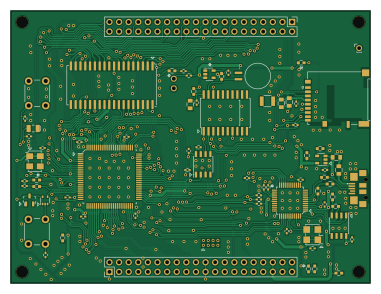
About the O2 breakout
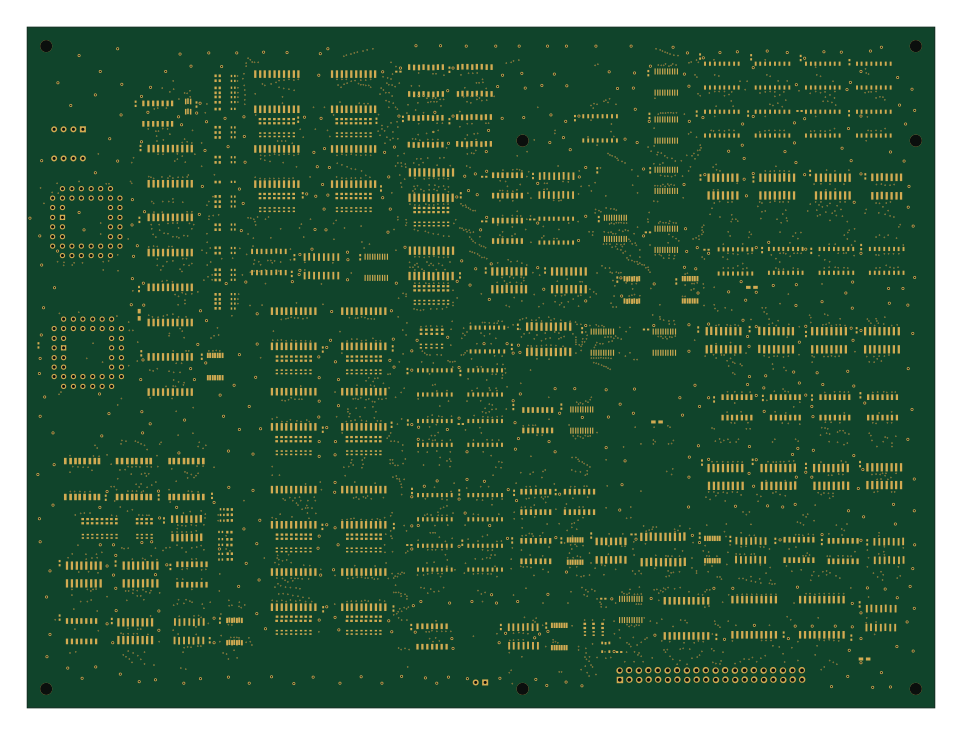
O2 breakout is an open source FPGA PCB design by m-okada, published on GitHub. It is a 2-layer board measuring 95 × 72 mm, with 101 components from 46 distinct parts.
Its main chip is the LCMXO2-2000HC-4TG100C, from the FPGA family. Other key parts include the FT2232D, TCM809, 93C56, CY7C1010 and MAX40200AUK. By type, the board carries 39 capacitors, 31 resistors, 9 ICs, 7 diodes, 4 connectors and 3 switches.
It belongs with the dev boards & breakouts designs in this gallery.
From the project
Open source home brew 8-bit CPU. ---- CPU2908は、74HCシリーズ標準ロジックとROMで作る8ビットCPUです。
Open source home brew 8-bit CPU. ---- CPU2908は、74HCシリーズ標準ロジックとROMで作る8ビットCPUです。
FPGAにもインプリメントしてあります。 ターゲットデバイスはLattice MachXO2-1200HC、又は2000HCです。 FPGA版は既にプロトタイプ基版まで出来ているので、不具合を修正してリリース版を作ります。
アーキテクチャ ---- - 8ビットCPU、リトルエンディアン - 4つの汎用8ビットレジスタ。2つまとめて16ビットレジスタとして使う命令があります - 4つの16ビットアドレスレジスタ。うち1つはスタックポインタ、1つはプログラムカウンタです - 命令は全て8ビット長で、後ろにイミディエイト値が1~2バイトつく場合があります - μCode方式です - ロード/ストア命令、データ移動命令、算術/論理演算、条件ジャンプ、CALL/RET命令などがあります - CALL/JUMP命令は8/16ビットオフセット(プログラムカウンタ相対)です
Main components on the O2 breakout
O2 breakout bill of materials (BOM)
101 components, 46 distinct parts.
| Qty | Part | Footprint | Refs |
|---|---|---|---|
| 1 | LCMXO2-2000HC-4TG100C | TQFP-100_14x14mm | U1 |
| 1 | FT2232D | TQFP-48_7x7mm | U2 |
| 1 | TCM809 | SOT-23-3 | U3 |
| 1 | 93C56 | SOIC-8_3.9x4.9mm_Pitch1.27mm | U4 |
| 1 | CY7C1010 | SOJ-36_10.16x23.49mm_P1.27mm | U5 |
| 1 | MAX40200AUK | SOT-23-5 | U6 |
| 1 | PCF2129AT | SOIC-20W_7.5x12.8mm_Pitch1.27mm | U7 |
| 1 | 74AHC1G08 | SOT-353_SC-70-5 | U8 |
| 1 | AT25xxx | SOIC-8_3.9x4.9mm_Pitch1.27mm | U9 |
| 1 | 19.6608MHz | Oscillator_SMD_EuroQuartz_XO53-4pin_5.0x3.2mm_HandSoldering | X1 |
| 1 | 6.00MHz | Oscillator_SMD_SeikoEpson_SG8002LB-4pin_5.0x3.2mm_HandSoldering | X2 |
| 2 | Conn_02x20_Odd_Even | Pin_Header_Straight_2x20_Pitch2.54mm | J1, J2 |
| 1 | USB_B_Micro | HRS_ZX62R-B-5P | J3 |
| 1 | DM3AT-SF-PEJM5 | HRS_DM3AT-SF-PEJM5 | J4 |
| 2 | Polyfuse | C_0805 | F1, F2 |
| 1 | GND | Pin_Header_Straight_1x01_Pitch1.00mm | H5 |
| 1 | Jumper_2_Open | WireConnection_1.00mmDrill | JP2 |
| 1 | USER | SW_PUSH_6mm | SW1 |
| 1 | Reset | SW_PUSH_6mm | SW2 |
| 1 | SW_Push | SMD-2_3.2x1.5mm | SW3 |
Show 26 more
| Qty | Part | Footprint | Refs |
|---|---|---|---|
| 1 | NJM12888 | SOT-23-5 | VR1 |
| 5 | LED | C_0603 | D2, D3, D5, D9, D10 |
| 2 | LED | C_0402 | D7, D8 |
| 1 | Ferrite_Bead | C_0805 | FB1 |
| 29 | 0.1uF | C_0402 | C1, C2, C3, C4, C5, C6, C7, C8 +21 |
| 2 | 10uF | C_0603 | C15, C36 |
| 1 | 47uF | C_0805_HandSoldering | C19 |
| 1 | 0.01uF | C_0402 | C22 |
| 1 | 47uF | C_1210 | C23 |
| 1 | 6.8uF | C_0805 | C25 |
| 1 | 0.01uF | C_0603 | C27 |
| 1 | DCK-3R3E224-E | DCK-3R3E224-E | C30 |
| 1 | 10uF | C_0805_HandSoldering | C32 |
| 1 | 1uF | C_0603 | C33 |
| 1 | 470 | C_0603 | R1 |
| 1 | 10K | C_0603 | R2 |
| 1 | 2.2k | C_0603 | R3 |
| 2 | 27 | C_0603 | R4, R5 |
| 1 | 1.5K | C_0603 | R6 |
| 1 | 33 | C_0805 | R7 |
| 15 | 10K | C_0402 | R8, R10, R11, R12, R13, R14, R18, R21 +7 |
| 1 | 330 | C_0603 | R9 |
| 1 | 33 | C_0603 | R15 |
| 1 | 47K | C_0603 | R16 |
| 4 | 47K | C_0402 | R17, R19, R31, R32 |
| 2 | 22K | C_0402 | R27, R28 |
O2 breakout design files
The KiCad project lives in the m-okada/CPU2908 repository on GitHub; these links point at the commit this page was built from.
O2 breakout: common questions
What microcontroller does the O2 breakout use?
The O2 breakout is built around the LCMXO2-2000HC-4TG100C, from the FPGA family.
How big is the O2 breakout?
The O2 breakout measures 95 × 72 mm, has 2 copper layers and is 1.6 mm thick.
How many components are on the O2 breakout?
101 components, from 46 distinct parts. The full bill of materials is listed on this page.
Where can I download the O2 breakout design files?
From the m-okada/CPU2908 repository on GitHub, which has the KiCad layout; the links under Design files point to each one.
Can I use the O2 breakout design in my own project?
The repository has no license, so all rights stay with m-okada. Use it as a reference, and ask the author before reusing the design.
Can I test firmware for the O2 breakout without the hardware?
Yes. HardLabs builds a simulation of the board from its netlist and BOM, so you can run and debug FPGA firmware against it before you order a PCB.
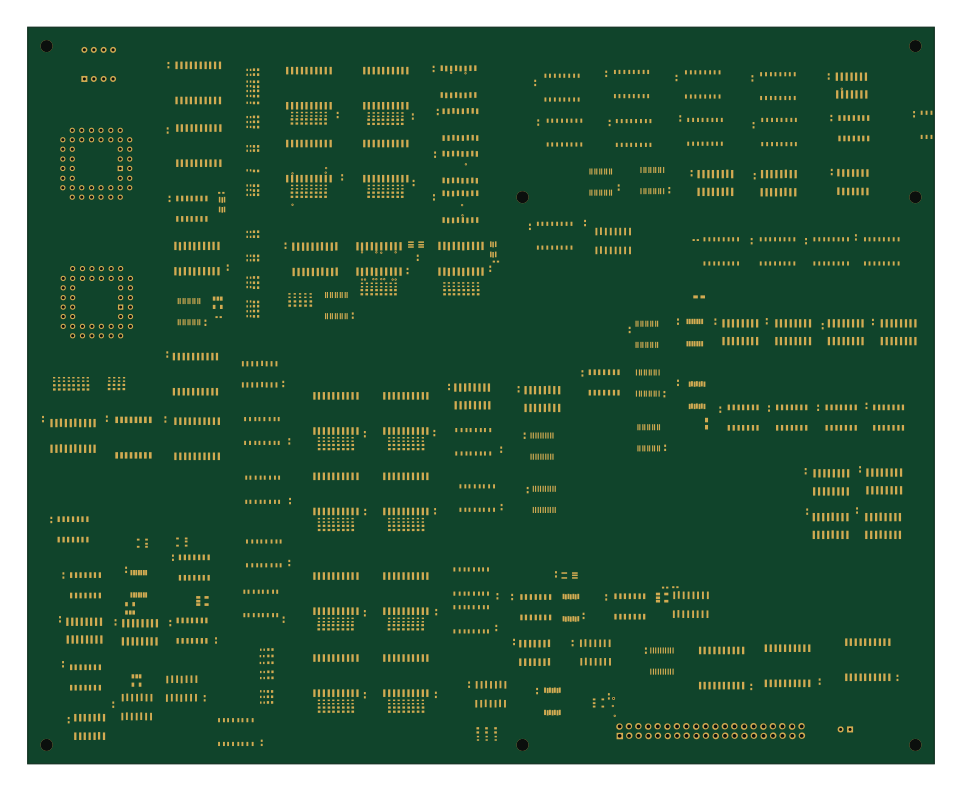
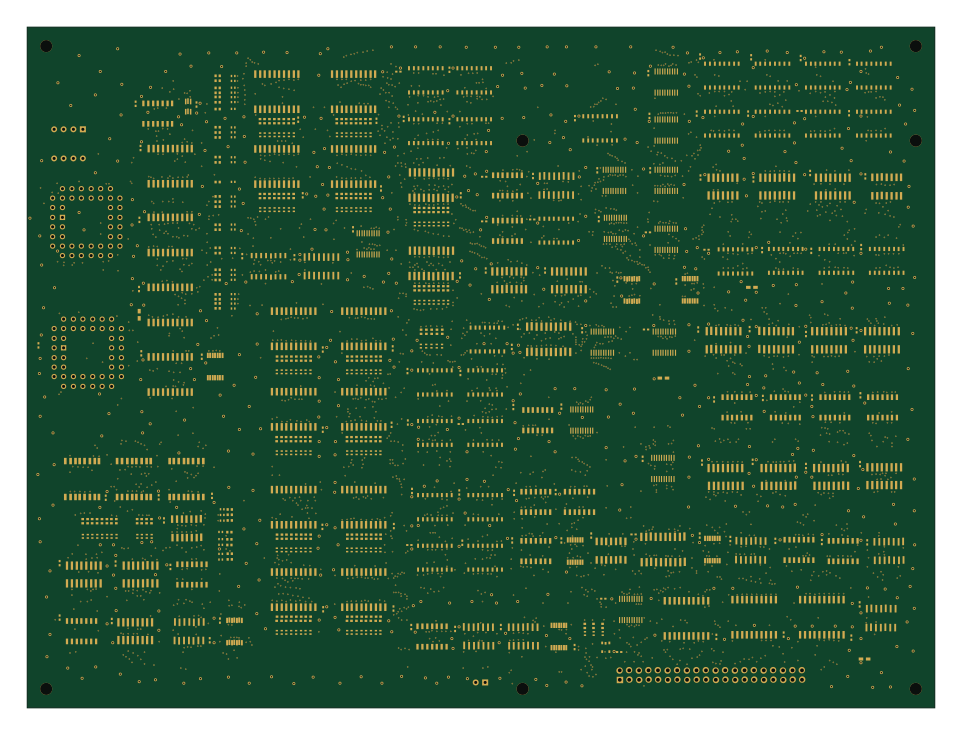
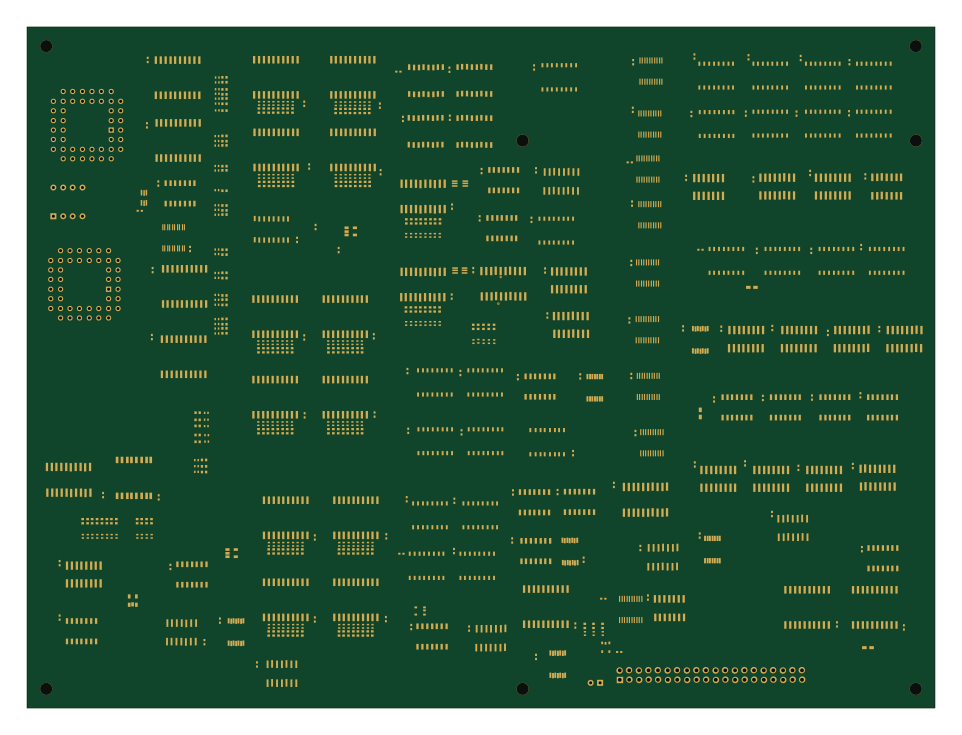
More boards in CPU2908
Similar boards
 FPGA
FPGABase board
GlasgowEmbedded
80 × 49 mm222 parts4L0BSD2.2k FPGA
FPGAThunderscope Rev5.3
EEVengers
122.5 × 103.5 mm817 parts6LMIT1.3k FPGA
FPGAUsb sniffer
ataradov
58.2 × 38.1 mm86 parts2LBSD-3-Clause1.3k FPGA
FPGATomu, I'm
theacodes
13 × 9.4 mm40 parts4LMIT1.1k FPGA
FPGAIcepi zero
cheyao
65 × 30 mm143 parts4LSHL-2.1828 FPGA
FPGASd2snes
mrehkopf
101.5 × 83 mm147 partsGPL-2.0717