
I2C to 1-Wire Click

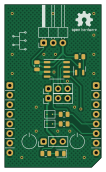
About the I2C to 1-Wire Click PCB
I2C to 1-Wire Click is an open source PCB design by michpro, published on GitHub under the CERN-OHL-P-2.0 license. It is a 2-layer board measuring 25.4 × 42.9 mm, with 12 components from 10 distinct parts.
Other key parts include the DS2482-100. By type, the board carries 4 resistors, 3 jumpers, 1 IC, 1 transistor, 1 connector and 1 diode.
From the project
Collection of add-on boards in mikroBUS™ standard
- I²C to 1-Wire Click - Overview - Features - Schematic diagram - Module visualisation - Assembly - Production files - Configuration - Note - Reporting bugs - License - Support
This project is released under CERN Open Hardware Licence Version 2 - Permissive.
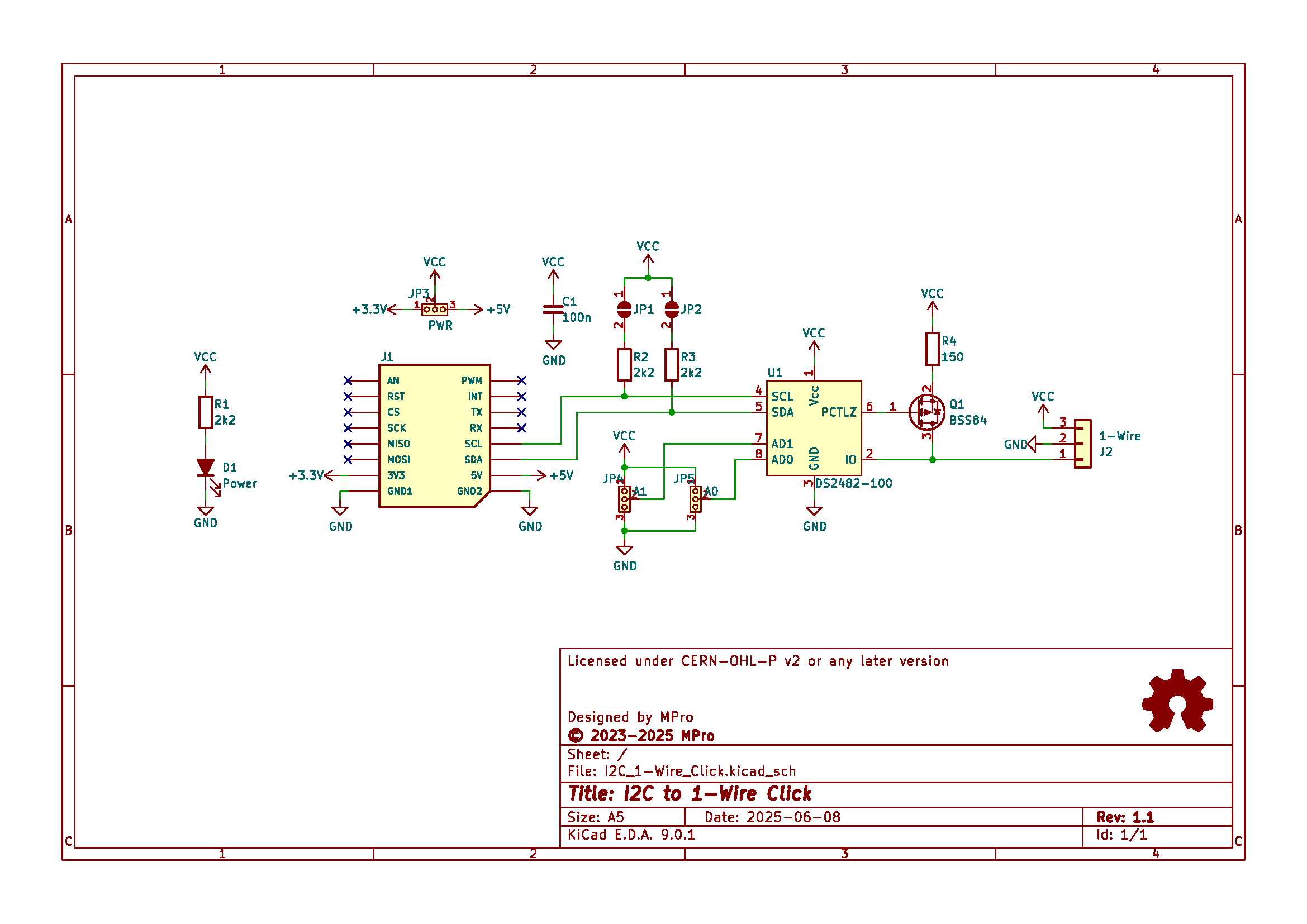
Main components on the I2C to 1-Wire Click
I2C to 1-Wire Click bill of materials (BOM)
12 components, 10 distinct parts — part numbers from the project's BOM.
| Qty | Part | Footprint | Refs |
|---|---|---|---|
| 1 | DS2482-100 | SO-8_3.9x4.9mm_P1.27mm | U1 |
| 1 | BSS84 | SOT-23 | Q1 |
| 1 | 1-Wire | PinHeader_1x03_P2.54mm_Horizontal | J2 |
| 1 | PWR | PinHeader_1x03_P2.54mm_Vertical | JP3 |
| 1 | A1 | PinHeader_1x03_P2.54mm_Vertical | JP4 |
| 1 | A0 | PinHeader_1x03_P2.54mm_Vertical | JP5 |
| 1 | C2296 Power | LED_0805_2012Metric | D1 |
| 1 | 100N 100n | C_0805_2012Metric | C1 |
| 3 | 2K2 2k2 | R_0805_2012Metric | R1, R2, R3 |
| 1 | 150 | R_0805_2012Metric | R4 |
I2C to 1-Wire Click design files
The KiCad project lives in the michpro/mikroBUS repository on GitHub; these links point at the commit this page was built from.
I2C to 1-Wire Click: common questions
How big is the I2C to 1-Wire Click PCB?
The I2C to 1-Wire Click measures 25.4 × 42.9 mm, has 2 copper layers and is 1.6 mm thick.
How many components are on the I2C to 1-Wire Click?
12 components, from 10 distinct parts, with part numbers taken from the project's own BOM. The full bill of materials is listed on this page.
Where can I download the I2C to 1-Wire Click design files?
From the michpro/mikroBUS repository on GitHub, which has the KiCad layout, the schematic and the BOM; the links under Design files point to each one.
Can I use the I2C to 1-Wire Click design in my own project?
Yes, under the terms of its CERN-OHL-P-2.0 license, which michpro chose for the repository.
More boards in mikroBUS
OpenTherm Click
25.4 × 57.2 mm47 parts2LCERN-OHL-P-2.03
BluePill base board with 3 MikroBUS sockets
96.5 × 81.3 mm40 parts2LCERN-OHL-P-2.03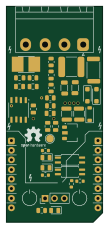
HLW8032 Click
25.4 × 57.2 mm37 parts2LCERN-OHL-P-2.03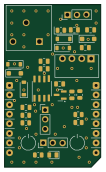
LIN Click
25.4 × 42.9 mm29 parts2LCERN-OHL-P-2.03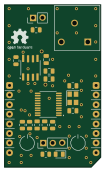
CAN Click
25.4 × 42.9 mm20 parts2LCERN-OHL-P-2.03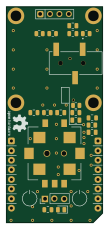
SCT-013 & UI Click
25.4 × 57.2 mm20 parts2LCERN-OHL-P-2.03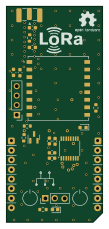
LoRa Click
25.4 × 57.2 mm19 parts2LCERN-OHL-P-2.03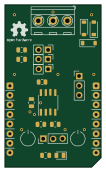
RS485 Click
25.4 × 42.9 mm18 parts2LCERN-OHL-P-2.03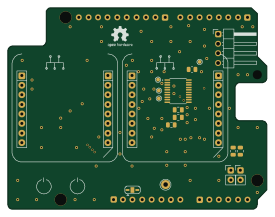
Arduino UNO Click shield
68.6 × 53.3 mm12 parts2LCERN-OHL-P-2.03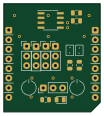
I^{2}C EEPROM Click
25.4 × 28.6 mm12 parts2LCERN-OHL-P-2.03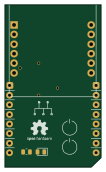
Ethernet W5500 mini Click
25.4 × 42.9 mm3 parts2LCERN-OHL-P-2.03