
Cyclic

About the Cyclic PCB
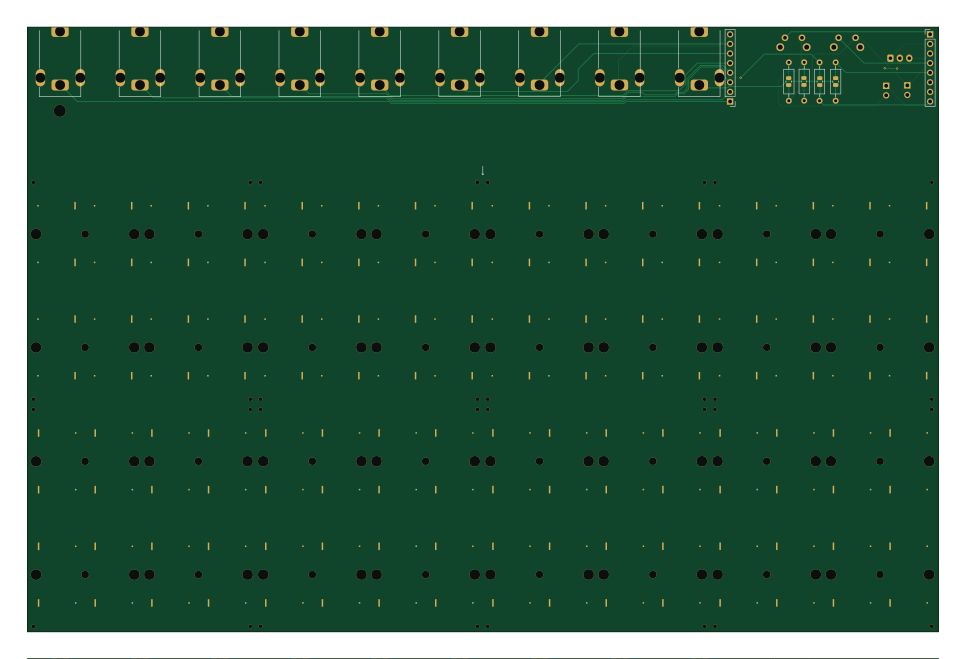
Cyclic is an open source RP2040/RP2350 PCB design by tpcarlson, published on GitHub. It is a 4-layer board measuring 241.2 × 160 mm, with 437 components from 40 distinct parts.
Its main chip is the RP2350_80QFN, from the RP2040/RP2350 family. Other key parts include the NCP1117-3.3_SOT223, 74AHCT1G125, MCP23S17_SO and 6N137. By type, the board carries 165 capacitors, 139 diodes, 50 resistors, 27 connectors, 20 ICs and 18 switches.
It belongs with the audio designs in this gallery.
From the project
Mostly Eurorack projects
Cyclic is a stand-alone, 8-channel, 16-step trigger sequencer. It has 8 clock inputs to allow for independent clocking of each channel, and 8 individual trigger outputs. Trigger inputs are normalled, so if you want to, you can clock Cyclic with just one trigger. Additionally, it has a pair of TRS-A MIDI ports for input and output.
Cyclic is designed to be driven externally and thrives on clocks that are a bit ... weird. Because Cyclic has no real concept of time, you can throw whatever wonky clocks you want at it and it'll do its best to keep advancing the clock. This goes all the way up to…
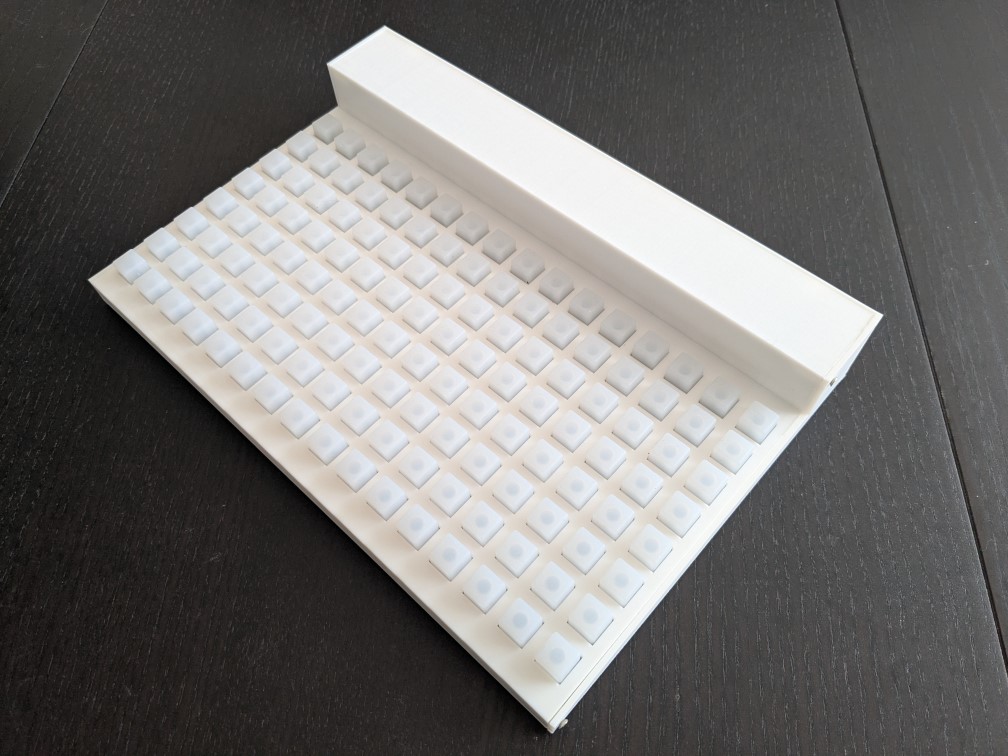
Main components on the Cyclic
Cyclic bill of materials (BOM)
437 components, 40 distinct parts.
| Qty | Part | Footprint | Refs |
|---|---|---|---|
| 1 | NCP1117-3.3_SOT223 | SOT-223-3_TabPin2 | U1 |
| 1 | RP2350_80QFN | QFN-80-1EP_10x10mm_P0.4mm_EP3.4x3.4mm_ThermalVias | U2 |
| 9 | 74AHCT1G125 | SOT-23-5 | U3, U12, U13, U14, U15, U16, U17, U18 +1 |
| 8 | MCP23S17_SO | SSOP-28_5.3x10.2mm_P0.65mm | U4, U5, U6, U7, U8, U9, U10, U11 |
| 1 | 6N137 | DIP-8_W7.62mm | U20 |
| 8 | MMBT3904 | SOT-23 | Q1, Q2, Q3, Q4, Q5, Q6, Q7, Q8 |
| 1 | ABM8-272-T3 | Crystal_SMD_3225-4Pin_3.2x2.5mm | Y1 |
| 1 | USB_C_Receptacle_USB2.0_16P | USB-C-SMD_G-SWITCH_GT-USB-9010AB | J1 |
| 1 | Conn_01x03 | JST_XH_S3B-XH-A-1_1x03_P2.50mm_Horizontal | J2 |
| 1 | Barrel_Jack | BarrelJack_Horizontal | J3 |
| 2 | AudioJack3 | Jack_3.5mm_QingPu_WQP729JH-B-STEREO | J4, J21 |
| 16 | AudioJack2 | Jack_3.5mm_QingPu_WQP729JH-R-MONO | J5, J6, J7, J8, J9, J10, J11, J12 +8 |
| 2 | Conn_01x08_Pin | PinHeader_1x08_P2.54mm_Vertical | J22, J24 |
| 2 | Conn_01x08_Socket | PinSocket_1x08_P2.54mm_Vertical | J23, J25 |
| 2 | Conn_01x02_Pin | PinHeader_1x02_P2.54mm_Vertical | J26, J27 |
| 2 | SW_Push | SW_Tactile_SPST_Angled_PTS645Vx39-2LFS | SW1, SW2 |
| 16 | ~ | ELAST_PAD_SQUARE_10MM_5.4MM_4X4GRID | SW3, SW4, SW5, SW6, SW7, SW8, SW9, SW10 +8 |
| 8 | TestPoint | TestPoint_Plated_Hole_D2.0mm | TP1, TP2, TP3, TP4, TP5, TP6, TP7, TP8 |
| 2 | ESD | D_0603_1608Metric_Pad1.05x0.95mm_HandSolder | D1, D2 |
| 1 | 1N4148W | D_SOD-323 | D3 |
Show 20 more
| Qty | Part | Footprint | Refs |
|---|---|---|---|
| 128 | SK6812MINI-e (Reverse-mount) | SK6812-MINI-E (From github) | D5, D6, D7, D8, D9, D10, D11, D12 +120 |
| 8 | 1N4148 | D_SOD-323 | D133, D134, D135, D136, D137, D138, D139, D140 |
| 1 | 3.3u | L_Cenker_CKCS201610 | L1 |
| 4 | 4.7u | C_0805_2012Metric | C1, C4, C7, C8 |
| 2 | 15p | C_0402_1005Metric | C2, C3 |
| 11 | 10u | C_0805_2012Metric | C5, C9, C21, C22, C40, C58, C76, C94 +3 |
| 148 | 100n | C_0402_1005Metric | C6, C10, C11, C12, C13, C14, C15, C16 +140 |
| 2 | 5.1k | R_0402_1005Metric | R1, R4 |
| 2 | 1k | R_0805_2012Metric | R2, R3 |
| 1 | 33 | R_0402_1005Metric | R5 |
| 1 | 1k | R_0402_1005Metric | R6 |
| 2 | 27 | R_0402_1005Metric | R7, R8 |
| 2 | 500R | R_0402_1005Metric | R9, R10 |
| 17 | 10k | R_0402_1005Metric | R11, R12, R13, R14, R15, R16, R17, R18 +9 |
| 8 | 100k | R_0603_1608Metric | R19, R22, R25, R28, R31, R34, R37, R40 |
| 8 | 100R | R_0402_1005Metric | R20, R23, R26, R29, R32, R35, R38, R41 |
| 2 | 1k | R_Axial_DIN0207_L6.3mm_D2.5mm_P10.16mm_Horizontal | R43, R44 |
| 1 | 220R | R_0402_1005Metric | R45 |
| 2 | 51R | R_0805_2012Metric | R47, R48 |
| 2 | 51R | R_Axial_DIN0207_L6.3mm_D2.5mm_P10.16mm_Horizontal | R49, R50 |
Cyclic design files
The KiCad project lives in the tpcarlson/synth-diy repository on GitHub; these links point at the commit this page was built from.
- Layoutcyclic/cyclic.kicad_pcb
- Schematiccyclic/cyclic.kicad_sch
Cyclic: common questions
What microcontroller does the Cyclic use?
The Cyclic is built around the RP2350_80QFN, from the RP2040/RP2350 family.
How big is the Cyclic PCB?
The Cyclic measures 241.2 × 160 mm, has 4 copper layers and is 1.6 mm thick.
How many components are on the Cyclic?
437 components, from 40 distinct parts. The full bill of materials is listed on this page.
Where can I download the Cyclic design files?
From the tpcarlson/synth-diy repository on GitHub, which has the KiCad layout and the schematic; the links under Design files point to each one.
Can I use the Cyclic design in my own project?
The repository has no license, so all rights stay with tpcarlson. Use it as a reference, and ask the author before reusing the design.
Can I test firmware for the Cyclic without the hardware?
Yes. HardLabs builds a simulation of the board from its netlist and BOM, so you can run and debug RP2040/RP2350 firmware against it before you order a PCB.
More boards in synth-diy
Twoshot
70.8 × 128.5 mm185 parts2LNo license106 NXP
NXPImpact pal
40.3 × 128.5 mm175 parts2LNo license106 RP2040/RP2350
Sycamore
60.1 × 128.5 mm145 parts2LNo license106
Oneshot
141.9 × 39.7 mm136 parts4LNo license106 RP2040/RP2350
D6
80.5 × 128.5 mm133 parts4LNo license106
Kinky lynx
40.3 × 128.5 mm129 parts2LNo license106
Leaky bucket
20 × 128.5 mm110 parts2LNo license106
Vcvco
50.1 × 128.5 mm104 parts2LNo license106 RP2040/RP2350
Oak
35 × 128.5 mm99 parts2LNo license106 RP2040/RP2350
Rowan
60 × 39.6 mm93 parts2LNo license106
3-phase lfo
30 × 128.5 mm70 parts2LNo license106
Similar boards
 RP2040/RP2350
Open Book Abridged Edition
joeycastillo
85 × 115 mm29 parts2LCC-BY-SA-4.08.1k RP2040/RP2350
Corne
foostan
277.2 × 107.5 mm164 parts2LCC-BY-4.07.7k RP2040/RP2350
Corne
277.2 × 107.5 mm164 parts2LCC-BY-4.07.7k RP2040/RP2350
LogicAnalyzer
gusmanb
57 × 55.2 mm6 parts2LGPL-3.05.0k RP2040/RP2350
Jitx design
55.5 × 65 mm26 parts4LGPL-3.05.0k RP2040/RP2350
Pro V2
kata0510
290.1 × 130 mm270 parts2LMIT2.3k