
OpenStylophone-RP2040

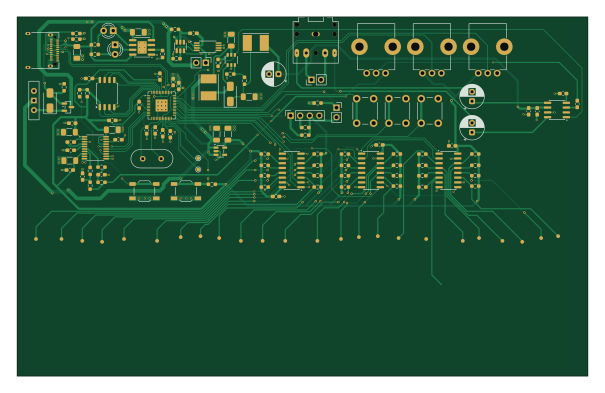
About the OpenStylophone-RP2040 PCB
OpenStylophone-RP2040 is an open source RP2040/RP2350 PCB design by g210101021, published on GitHub under the CERN-OHL-P-2.0 license. It is a 2-layer board measuring 151 × 95 mm, with 117 components from 47 distinct parts.
Its main chip is the RP2040, from the RP2040/RP2350 family. Other key parts include the TP4056, DW01A, TPFP6291LR-G1, AP2112K-3.3 and W25Q32JVSS. By type, the board carries 48 resistors, 37 capacitors, 11 ICs, 6 switches, 5 connectors and 4 diodes.
It belongs with the audio and power & battery designs in this gallery.
From the project
A Modern Open-Source Hardware Reimagining of the Iconic 1968 Stylophone Synthesizer. Powered by Raspberry Pi RP2040 Dual-Core Silicon, High-Fidelity 32-Bit I2S DAC, Integrated Battery Management, and a 24-Key Touch Keyboard Matrix.
A Modern Open-Source Hardware Reimagining of the Iconic 1968 Stylophone Synthesizer. Powered by Raspberry Pi RP2040 Dual-Core Silicon, High-Fidelity 32-Bit I2S DAC, Integrated Battery Management, and a 24-Key Touch Keyboard Matrix.
Overview • Key Features • System Architecture • Schematic & Subsystems • Automated Verification Workflow • Firmware Roadmap • Bill of Materials • Author
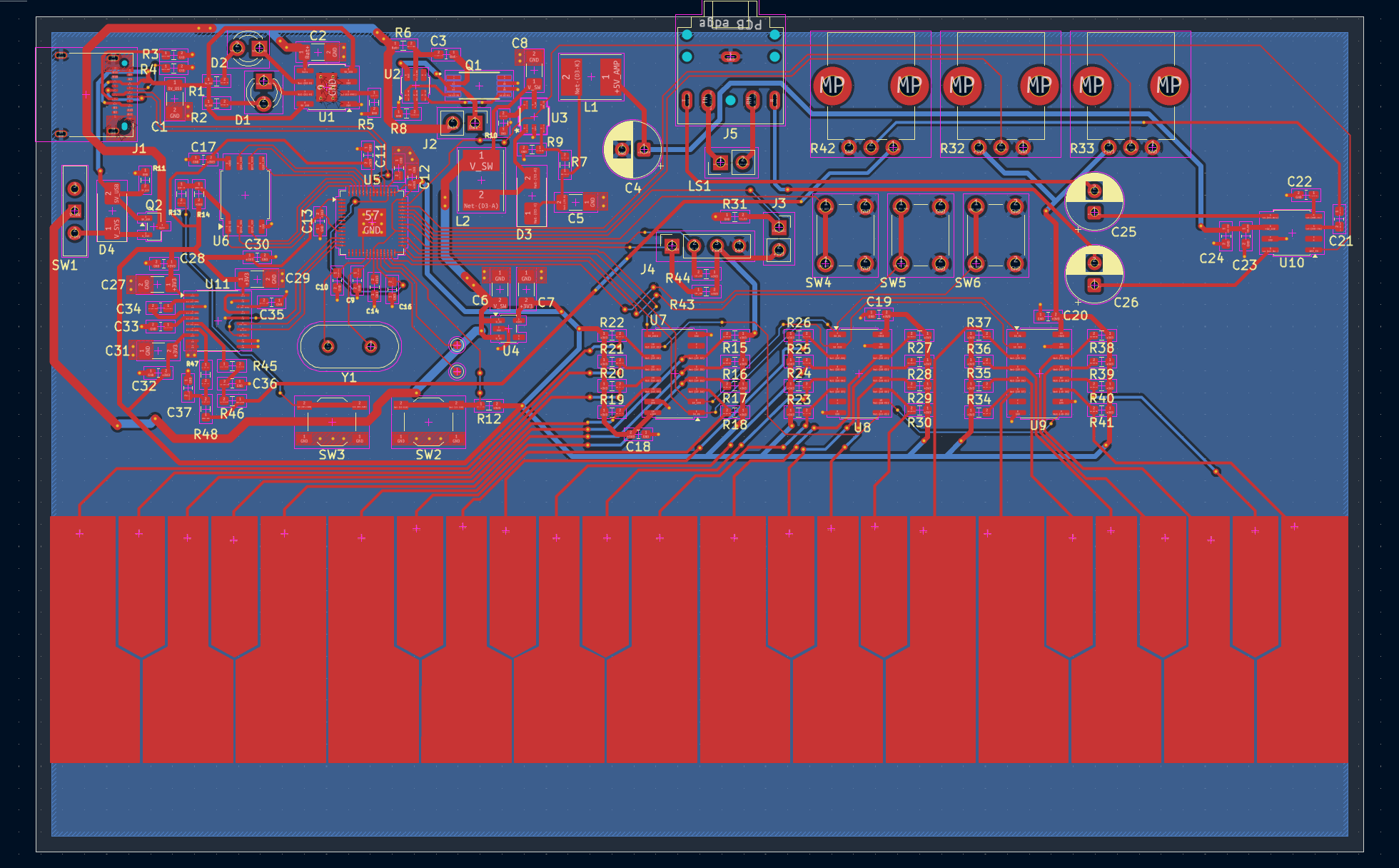
Main components on the OpenStylophone-RP2040
OpenStylophone-RP2040 bill of materials (BOM)
117 components, 47 distinct parts.
| Qty | Part | Footprint | Refs |
|---|---|---|---|
| 1 | TP4056 | SOIC-8-1EP_3.9x4.9mm_P1.27mm_EP2.41x3.3mm_ThermalVias | U1 |
| 1 | DW01A | SOT-23-6 | U2 |
| 1 | TPFP6291LR-G1 | SOT-23-6L_TCP | U3 |
| 1 | AP2112K-3.3 | SOT-23-5 | U4 |
| 1 | RP2040 | QFN-56-1EP_7x7mm_P0.4mm_EP3.2x3.2mm | U5 |
| 1 | W25Q32JVSS | SOIC-8_5.3x5.3mm_P1.27mm | U6 |
| 3 | 74HC165 | SOIC-16_3.9x9.9mm_P1.27mm | U7, U8, U9 |
| 1 | PAM8302AAD | SOIC-8_3.9x4.9mm_P1.27mm | U10 |
| 1 | PCM5102A | TSSOP-20_4.4x6.5mm_P0.65mm | U11 |
| 1 | FS8205A | SOP65P640X120-8N | Q1 |
| 1 | AO3401A | SOT-23 | Q2 |
| 1 | 12Mhz | Crystal_HC49-U_Vertical | Y1 |
| 1 | USB_C | USB_C_Receptacle_Amphenol_12401610E4-2A | J1 |
| 1 | bat | PinHeader_1x02_P2.54mm_Vertical | J2 |
| 1 | FSR | PinSocket_1x02_P2.54mm_Vertical | J3 |
| 1 | OLED | PinSocket_1x04_P2.54mm_Vertical | J4 |
| 1 | AudioJack3_SwitchTR | Jack_3.5mm_CUI_SJ1-3525N_Horizontal | J5 |
| 1 | Speaker | PinHeader_1x02_P2.54mm_Vertical | LS1 |
| 1 | SW_SPDT | SW_Slide-03_Wuerth-WS-SLTV_10x2.5x6.4_P2.54mm | SW1 |
| 2 | SW_Push | SW_SPST_TL3342 | SW2, SW3 |
Show 27 more
| Qty | Part | Footprint | Refs |
|---|---|---|---|
| 3 | SW_Push | SW_PUSH_6mm | SW4, SW5, SW6 |
| 2 | LED | LED_D3.0mm | D1, D2 |
| 2 | SS34 | D_SMA | D3, D4 |
| 1 | 10uH | L_Taiyo-Yuden_NR-50xx_HandSoldering | L1 |
| 1 | 4.7uH | L_Taiyo-Yuden_NR-50xx_HandSoldering | L2 |
| 9 | 10uF | C_1206_3216Metric_Pad1.33x1.80mm_HandSolder | C1, C2, C5, C6, C7, C8, C27, C29 +1 |
| 5 | 0.1uF | C_0603_1608Metric_Pad1.08x0.95mm_HandSolder | C3, C28, C30, C32, C35 |
| 3 | 100uF | CP_Radial_D6.3mm_P2.50mm | C4, C25, C26 |
| 2 | 22pF | C_0603_1608Metric_Pad1.08x0.95mm_HandSolder | C9, C10 |
| 11 | 100nF | C_0603_1608Metric_Pad1.08x0.95mm_HandSolder | C11, C12, C13, C14, C17, C18, C19, C20 +3 |
| 2 | 1uF | C_0603_1608Metric_Pad1.08x0.95mm_HandSolder | C15, C16 |
| 1 | 10uF | C_0603_1608Metric_Pad1.08x0.95mm_HandSolder | C23 |
| 2 | 2.2uF | C_0603_1608Metric_Pad1.08x0.95mm_HandSolder | C33, C34 |
| 2 | 2.2nF | C_0603_1608Metric_Pad1.08x0.95mm_HandSolder | C36, C37 |
| 3 | 1k | R_0603_1608Metric_Pad0.98x0.95mm_HandSolder | R1, R2, R13 |
| 2 | 5k1 | R_0603_1608Metric_Pad0.98x0.95mm_HandSolder | R3, R4 |
| 1 | 2k | R_0603_1608Metric_Pad0.98x0.95mm_HandSolder | R5 |
| 1 | 100R | R_0603_1608Metric_Pad0.98x0.95mm_HandSolder | R6 |
| 1 | 220k | R_0603_1608Metric_Pad0.98x0.95mm_HandSolder | R7 |
| 1 | 470R | R_0603_1608Metric_Pad0.98x0.95mm_HandSolder | R8 |
| 1 | 30k | R_0603_1608Metric_Pad0.98x0.95mm_HandSolder | R9 |
| 1 | 56k | R_0603_1608Metric_Pad0.98x0.95mm_HandSolder | R10 |
| 30 | 10k | R_0603_1608Metric_Pad0.98x0.95mm_HandSolder | R11, R12, R14, R15, R16, R17, R18, R19 +22 |
| 2 | 10k Lin | Potentiometer_Bourns_PTV09A-1_Single_Vertical | R32, R33 |
| 1 | 10k Log | Potentiometer_Bourns_PTV09A-1_Single_Vertical | R42 |
| 2 | 4k7 | R_0603_1608Metric_Pad0.98x0.95mm_HandSolder | R43, R44 |
| 2 | 470 | R_0603_1608Metric_Pad0.98x0.95mm_HandSolder | R45, R47 |
OpenStylophone-RP2040 design files
The KiCad project lives in the g210101021/OpenStylophone-RP2040 repository on GitHub; these links point at the commit this page was built from.
- Layouthardware/Deneme.kicad_pcb
- Schematichardware/Deneme.kicad_sch
OpenStylophone-RP2040: common questions
What microcontroller does the OpenStylophone-RP2040 use?
The OpenStylophone-RP2040 is built around the RP2040, from the RP2040/RP2350 family.
How big is the OpenStylophone-RP2040 PCB?
The OpenStylophone-RP2040 measures 151 × 95 mm, has 2 copper layers and is 1.6 mm thick.
How many components are on the OpenStylophone-RP2040?
117 components, from 47 distinct parts. The full bill of materials is listed on this page.
Where can I download the OpenStylophone-RP2040 design files?
From the g210101021/OpenStylophone-RP2040 repository on GitHub, which has the KiCad layout and the schematic; the links under Design files point to each one.
Can I use the OpenStylophone-RP2040 design in my own project?
Yes, under the terms of its CERN-OHL-P-2.0 license, which g210101021 chose for the repository.
Can I test firmware for the OpenStylophone-RP2040 without the hardware?
Yes. HardLabs builds a simulation of the board from its netlist and BOM, so you can run and debug RP2040/RP2350 firmware against it before you order a PCB.
Similar boards
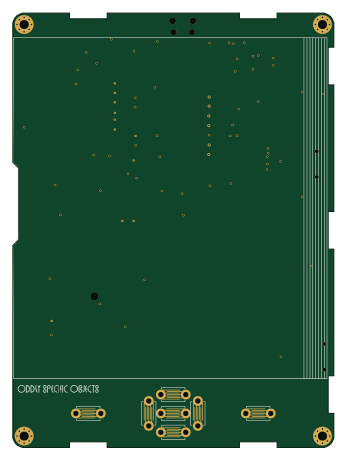 RP2040/RP2350
Open Book Abridged Edition
joeycastillo
85 × 115 mm29 parts2LCC-BY-SA-4.08.1k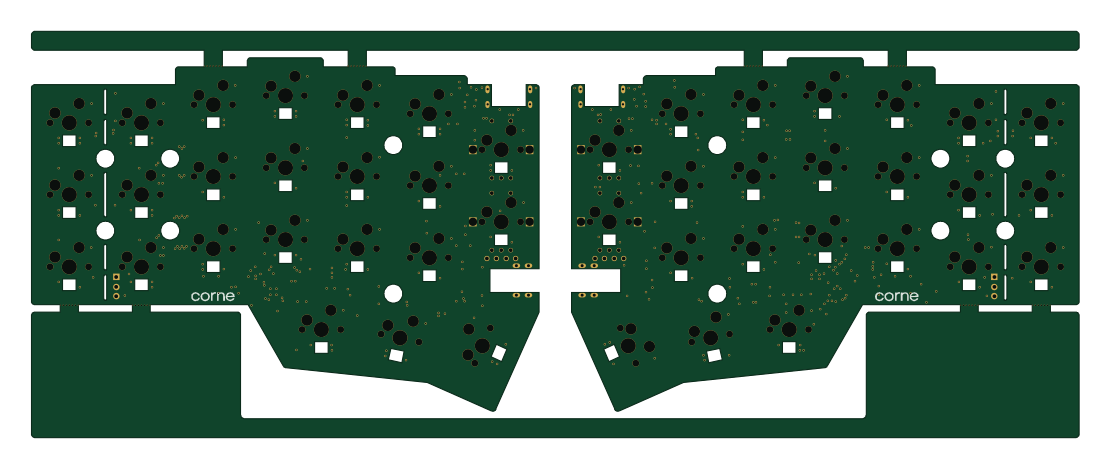 RP2040/RP2350
Corne
foostan
277.2 × 107.5 mm164 parts2LCC-BY-4.07.7k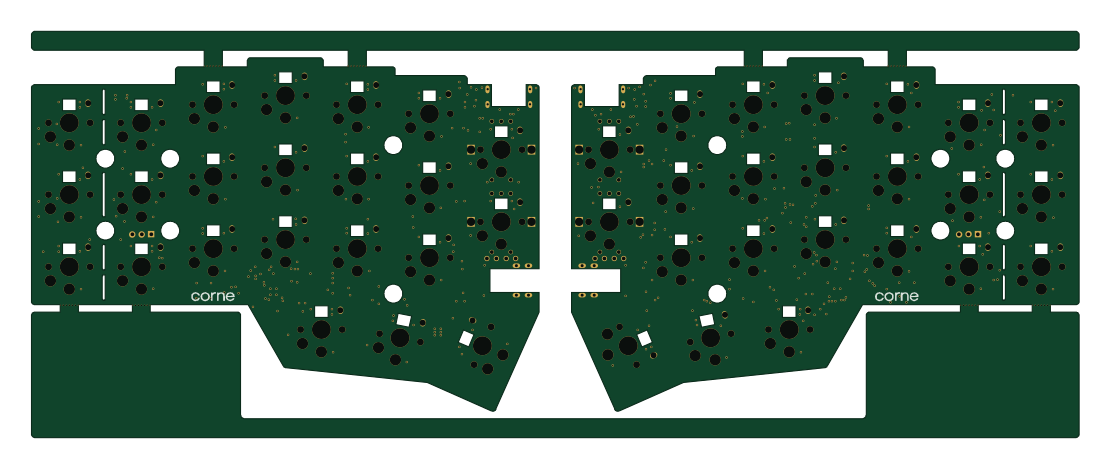 RP2040/RP2350
Corne
277.2 × 107.5 mm164 parts2LCC-BY-4.07.7k RP2040/RP2350
Jitx design
gusmanb
55.5 × 65 mm26 parts4LGPL-3.05.0k RP2040/RP2350
LogicAnalyzer
57 × 55.2 mm6 parts2LGPL-3.05.0k RP2040/RP2350
Main
google
98 × 71 mm102 parts2LApache-2.02.9k