
OBC-Flight

About the OBC-Flight PCB
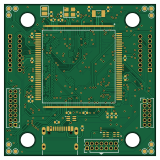
OBC-Flight is an open source STM32 PCB design by Kmshanley, published on GitHub under the GPL-3.0 license. It is a 8-layer board measuring 40 × 40 mm, with 78 components from 33 distinct parts.
Its main chip is the TMP117MAIDRVR, from the STM32 family. Other key parts include the STM32H723ZGT6, PCA9846PWJ, ICM-20948, W25N01GVZEIG TR and APS12808L-OBMX-BA. By type, the board carries 33 capacitors, 20 resistors, 13 ICs, 7 connectors, 2 crystals and 2 jumpers.
It belongs with the sensors designs in this gallery.
From the project
The pocket cube standard requires satellites to be 5x5x5cm and under 250 grams. Upon completion of this Wentworth PicoSat it will become one of the smallest satellites capable of high resolution imagery from LEO.
The pocket cube standard requires satellites to be 5x5x5cm and under 250 grams. Upon completion of this Wentworth PicoSat it will become one of the smallest satellites capable of high resolution imagery from LEO.
Organization ------------------------ This repository is divided into two primary sections: ### Test > Contains all firmware related to testing boards or individual components. ### Flight > Contains the development for the main flight firmware that will be deployed in space.
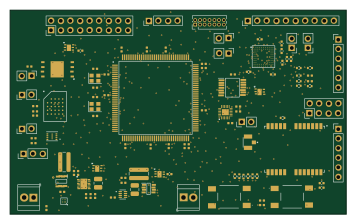
Main components on the OBC-Flight
OBC-Flight bill of materials (BOM)
78 components, 33 distinct parts.
| Qty | Part | Footprint | Refs |
|---|---|---|---|
| 1 | TMP117MAIDRVR | SON65P200X200X80-7N | IC1 |
| 1 | STM32H723ZGT6 | QFP50P2200X2200X160-144N | IC2 |
| 1 | PCA9846PWJ | SOP65P640X110-16N | IC3 |
| 1 | ICM-20948 | QFN40P300X300X105-25N-D | IC4 |
| 2 | W25N01GVZEIG TR W25N01GVZEIG_TR | SON127P800X600X80-9N-D | IC5, IC7 |
| 1 | APS12808L-OBMX-BA | BGA24C100P5X5_600X800X120 | IC6 |
| 2 | TLV76701DRVR | SON65P200X200X80-7N | IC8, IC10 |
| 1 | TPS628610YCHR | BGA8C35P2X4_66X136X40 | IC9 |
| 2 | ESDALC6V1-5M6 | ESDALC6V15M6 | IC11, IC12 |
| 1 | USBLC6-2P6 | USBLC62P6 | IC13 |
| 1 | 48Mhz Quartz Crystal | Crystal_SMD_2520-4Pin_2.5x2.0mm | Y1 |
| 1 | 32.768kHz Quartz Crystal | Crystal_SMD_3215-2Pin_3.2x1.5mm | Y3 |
| 1 | SS4-20-3.00-L-D-K-TR | SS420350LDKTR | J1 |
| 1 | STLink | PinHeader_2x07_P1.27mm_Vertical | J2 |
| 1 | COMMS 1 | PinHeader_2x06_P1.27mm_Vertical | J3 |
| 1 | COMMS 2 | PinHeader_2x08_P1.27mm_Vertical | J4 |
| 2 | SLM-108-01-L-D | SAMTEC_SLM-108-01-L-D | J5, J8 |
| 1 | USB_C_Receptacle_USB2.0 | USB_C_Receptacle_GCT_USB4105-xx-A_16P_TopMnt_Horizontal | J7 |
| 1 | LDO Bypass | SolderJumper-2_P1.3mm_Open_Pad1.0x1.5mm | JP1 |
| 1 | RESET | SolderJumper-2_P1.3mm_Open_Pad1.0x1.5mm | JP2 |
Show 13 more
| Qty | Part | Footprint | Refs |
|---|---|---|---|
| 1 | 0.47uH | L_0603_1608Metric | L1 |
| 17 | 100nF | C_0402_1005Metric | C1, C2, C3, C4, C5, C8, C12, C13 +9 |
| 6 | 4.7uF | C_0402_1005Metric | C6, C7, C11, C28, C29, C33 |
| 2 | 2.2uF | C_0402_1005Metric | C9, C10 |
| 2 | 10pF | C_0402_1005Metric | C22, C23 |
| 2 | 4pF | C_0402_1005Metric | C24, C25 |
| 3 | 1uF | C_0402_1005Metric | C27, C30, C32 |
| 1 | 10uF | C_0603_1608Metric | C31 |
| 11 | 2.2k | R_0402_1005Metric | R1, R2, R3, R4, R11, R12, R13, R14 +3 |
| 2 | 5.1k | R_0402_1005Metric | R5, R6 |
| 1 | 200k | R_0402_1005Metric | R7 |
| 2 | 160k | R_0402_1005Metric | R8, R10 |
| 4 | 500k | R_0402_1005Metric | R9, R17, R19, R20 |
OBC-Flight design files
The KiCad project lives in the Kmshanley/PicoSat-Initiative repository on GitHub; these links point at the commit this page was built from.
OBC-Flight: common questions
What microcontroller does the OBC-Flight use?
The OBC-Flight is built around the TMP117MAIDRVR, from the STM32 family.
How big is the OBC-Flight PCB?
The OBC-Flight measures 40 × 40 mm, has 8 copper layers and is 1 mm thick.
How many components are on the OBC-Flight?
78 components, from 33 distinct parts. The full bill of materials is listed on this page.
Where can I download the OBC-Flight design files?
From the Kmshanley/PicoSat-Initiative repository on GitHub, which has the KiCad layout and the schematic; the links under Design files point to each one.
Can I use the OBC-Flight design in my own project?
Yes, under the terms of its GPL-3.0 license, which Kmshanley chose for the repository.
Can I test firmware for the OBC-Flight without the hardware?
Yes. HardLabs builds a simulation of the board from its netlist and BOM, so you can run and debug STM32 firmware against it before you order a PCB.
More boards in PicoSat-Initiative
 STM32
OBCProto
89 × 54 mm110 parts4LGPL-3.03
PassthroughBoardRev0 B
40 × 40 mm43 parts4LGPL-3.03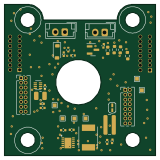
Pass through board
40 × 40 mm43 parts4LGPL-3.03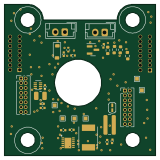
PassthroughBoardRev0 C
40 × 40 mm43 parts4LGPL-3.03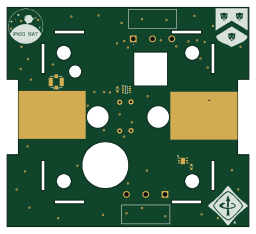
BaseplateBackup
64 × 58 mm38 parts4LGPL-3.03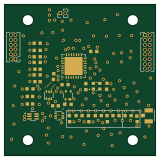
CommsRev0
40 × 40 mm32 parts4LGPL-3.03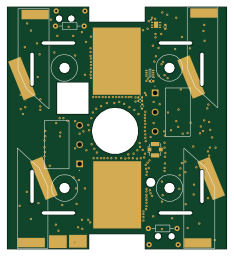 RP2040/RP2350
BaseplateRev1
58 × 64 mm30 parts4LGPL-3.03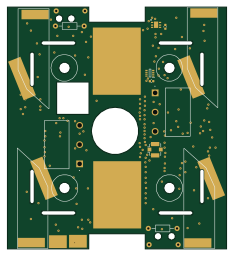
BaseplateRev1 B
58 × 64 mm29 parts4LGPL-3.03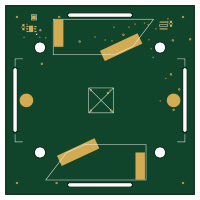
TopExternalFaceRev1
50 × 50 mm28 parts4LGPL-3.03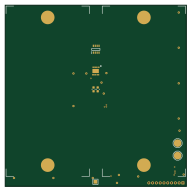
ExternalFaces
47.8 × 47.8 mm26 parts8LGPL-3.03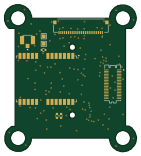
CameraBoard
35 × 39 mm23 parts4LGPL-3.03
Similar boards
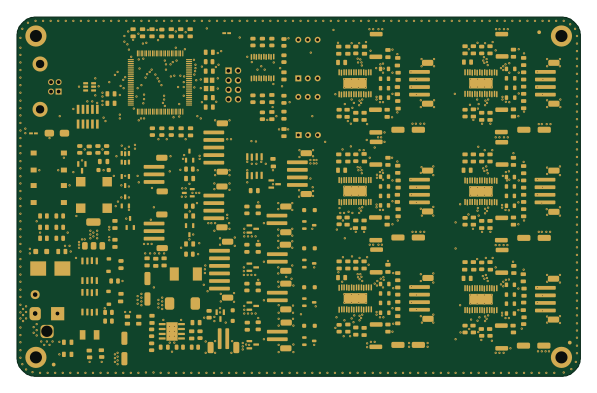 STM32
LumenPnP Motherboard
opulo-inc
149 × 95 mm296 parts4LCC-BY-SA-4.03.7k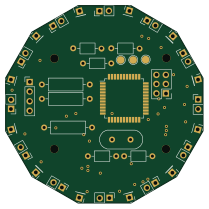 STM32
Base
google
52.3 × 52.3 mm36 parts2LApache-2.02.9k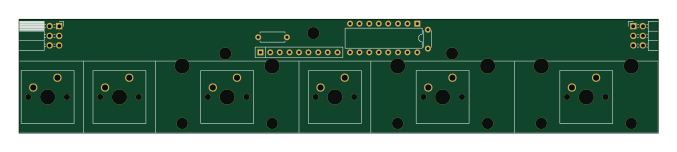 STM32
Type g
169 × 30 mm24 parts2LApache-2.02.9k STM32
Main panel
234 × 84 mm26 parts4LApache-2.02.9k STM32
Type a
150 × 30 mm14 parts2LApache-2.02.9k STM32
Type c
188 × 30 mm17 parts2LApache-2.02.9k