
12 open source boards using the STM32H723ZGT6
Real designs built with the STM32H723ZGT6, from public GitHub projects: a quick way to see how others power, decouple and connect it. Each board comes with its KiCad files, full parts list and a render — and you can simulate its firmware on HardLabs.
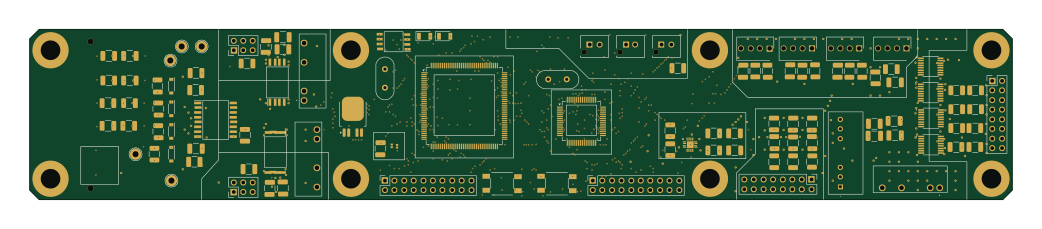 STM32
ControlBoard
OpenVVVF
260 × 45 mm239 parts8LCERN-OHL-W-2.015 STM32
KiCad
dirktjantele
172 parts6LGPL-3.09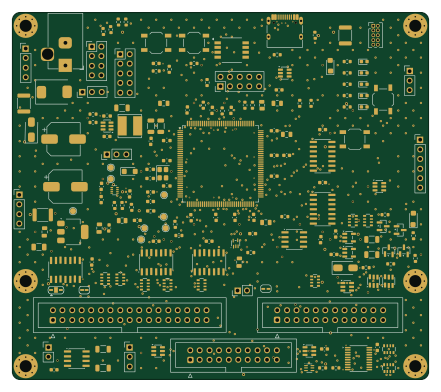 STM32
UniversalFluxInterface
Axel051171
110 × 97 mm173 parts4LMIT3 STM32
OBCProto
Kmshanley
89 × 54 mm110 parts4LGPL-3.03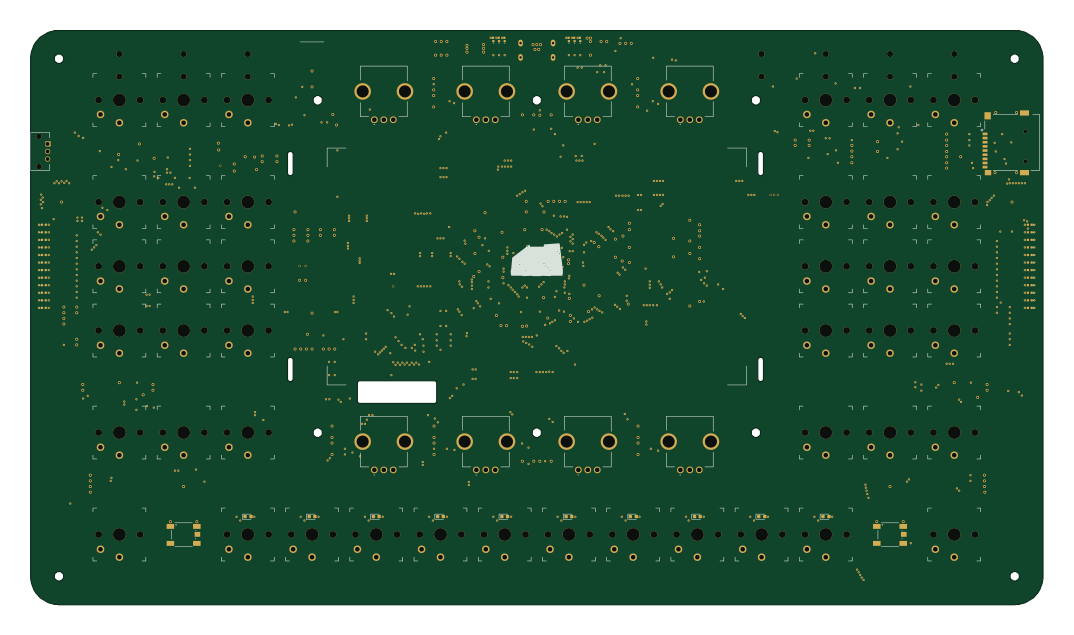 STM32
Drumboy Main
Randomwaves
268 × 152 mm345 parts4LMIT1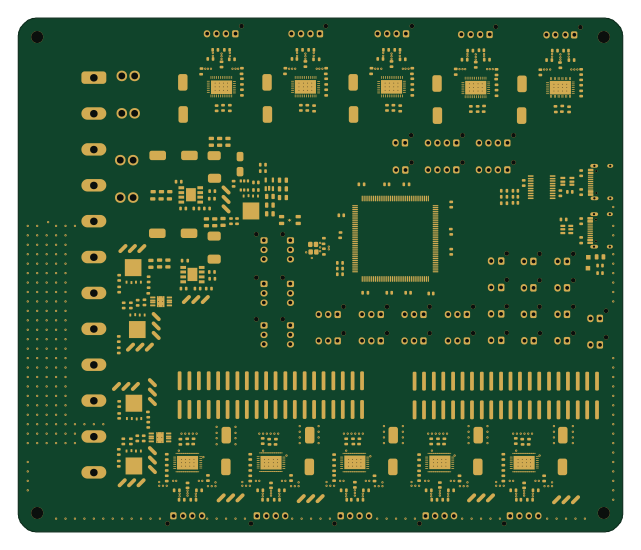 STM32
Serie
npgo22
160 × 136 mm512 parts6LNo license0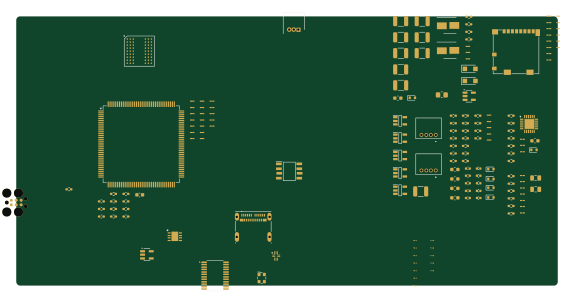 STM32
DSP V0 1
CoderCallender
143.4 × 71.3 mm169 parts2LNo license0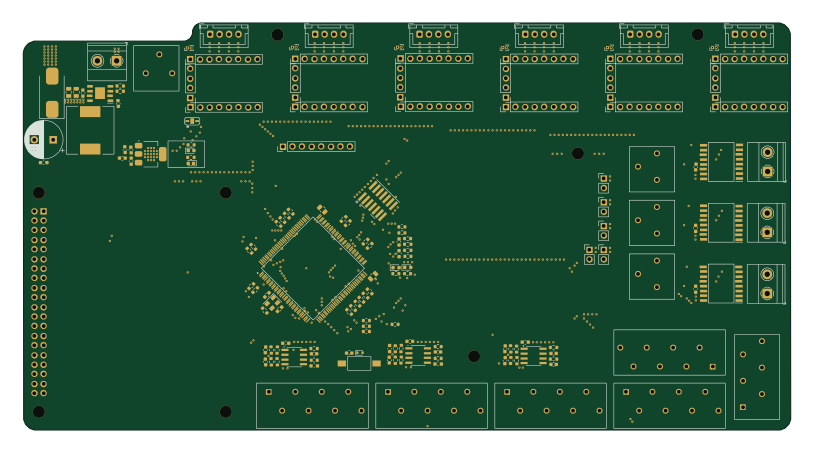 STM32
Axes controller board
DEDALUS-5x
203.1 × 107.7 mm103 parts4LCERN-OHL-S-2.00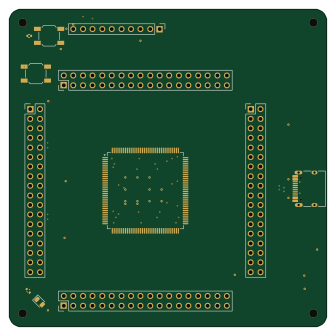 STM32
STM32H723ZG-CoreBoard
gravitymir
84 × 84 mm44 parts4LMIT0- schematic only · 239 partsSTM32
MCU Board
239 parts6LGPL-3.09 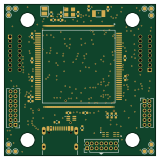 STM32
OBC-Flight
40 × 40 mm78 parts8LGPL-3.03 STM32
AxleTap — Automotive Ethernet Tap
jayis1
120 × 125 mm8 parts4LNo license3
How designs wire the STM32H723ZGT6
Read from the KiCad layouts of 9 open source designs, one per repository: what each pin of the STM32H723ZGT6 connects to, and the resistors, capacitors and other passives placed on it.
- The VCAP_1 pin has a capacitor to GND on 8 of 8 designs, most often 2.2 µF.
- The VCAP_2 pin has a capacitor to GND on 8 of 8 designs, most often 2.2 µF.
- The VBAT pin has a decoupling capacitor on 7 of 9 designs, most often 100 nF (then 4.7 µF).
- The VDD_1 pin has a decoupling capacitor on 7 of 9 designs, most often 100 nF (then 1 µF).
| Pin | Connected to | Parts on the pin |
|---|---|---|
| PE3pin 2 | Connected to: Signal 89% |
|
| PE4pin 3 | Connected to: A connector 33% · not connected 22% |
|
| VBATpin 6 | Connected to: 3.3V 89% |
|
| PC14-OSC32_INpin 8 | Connected to: Signal 67% · not connected 33% |
|
| PC15-OSC32_OUTpin 9 | Connected to: Signal 67% · not connected 33% |
|
| VSS_1pin 16 | Connected to: GND 78% | — |
| VDD_1pin 17 | Connected to: 3.3V 89% |
|
| PH0-OSC_INpin 23 | Connected to: Signal 89% |
|
| PH1-OSC_OUTpin 24 | Connected to: Signal 89% |
|
| NRSTpin 25 | Connected to: A connector 67%, the microcontroller 33% |
|
| PC1pin 27 | Connected to: The microcontroller 22% · not connected 22% |
|
| PC2_Cpin 28 | Connected to: Signal 67% · not connected 33% |
|
| PC3_Cpin 29 | Connected to: Signal 67% · not connected 33% |
|
| VDD_2pin 30 | Connected to: 3.3V 89% |
|
| VSSApin 31 | Connected to: GND 78% · not connected 22% | — |
| VREF+pin 32 | Connected to: 3.3V 89% |
|
| VDDApin 33 | Connected to: 3.3V 89% |
|
| VSS_2pin 38 | Connected to: GND 78% · not connected 22% | — |
| VDD_3pin 39 | Connected to: 3.3V 89% |
|
| PA6pin 42 | Connected to: A connector 25% · not connected 25% |
|
| PA7pin 43 | Connected to: A connector 25% |
|
| VSS_3pin 51 | Connected to: GND 88% | — |
| VDD_4pin 52 | Connected to: 3.3V 100% |
|
| VSS_4pin 61 | Connected to: GND 88% | — |
| VDD_5pin 62 | Connected to: 3.3V 100% |
|
| VCAP_1pin 71 | Connected to: Signal 100% |
|
| VDD_6pin 72 | Connected to: 3.3V 100% |
|
| VSS_5pin 83 | Connected to: GND 88% | — |
| VDD_7pin 84 | Connected to: 3.3V 100% |
|
| VSS_6pin 94 | Connected to: GND 88% | — |
| VDD33USBpin 95 | Connected to: 3.3V 100% |
|
| PC8pin 98 | Connected to: Not connected 63% · a signal 38% | — |
| PC9pin 99 | Connected to: Not connected 63% · a signal 38% | — |
| PA8pin 100 | Connected to: Not connected 63% · a signal 38% | — |
| PA10pin 102 | Connected to: Not connected 63% · a signal 38% | — |
| VCAP_2pin 106 | Connected to: Signal 100% |
|
| VSS_7pin 107 | Connected to: GND 88% | — |
| VDD_8pin 108 | Connected to: 3.3V 100% |
|
| VSS_8pin 120 | Connected to: GND 88% | — |
| VDD_9pin 121 | Connected to: 3.3V 100% |
|
104 more pins vary from design to design. Connections count pins, parts count designs; values in brackets are how many parts had that value. Designs read include ControlBoard by OpenVVVF, UniversalFluxInterface by Axel051171, AxleTap — Automotive Ethernet Tap by jayis1 and OBC-Flight by Kmshanley.
The STM32H723ZGT6 in open source designs
The gallery holds 12 open source boards using the STM32H723ZGT6 from 10 GitHub repositories; a typical one measures about 131.7 × 90.5 mm and carries around 171 components.
92% use four copper layers or more, and 75% carry an open source license.
The most starred is ControlBoard by OpenVVVF.
Parts used alongside the STM32H723ZGT6
Microcontrollers on boards using the STM32H723ZGT6
What boards using the STM32H723ZGT6 are built for
STM32H723ZGT6: common questions
Where can I find a STM32H723ZGT6 reference design?
Each of the 12 boards on this page is a real design using the STM32H723ZGT6. Open one to see how it is wired up, with the full BOM, a render of the layout and links to its KiCad files.
How is the STM32H723ZGT6 VCAP_1 pin connected?
The VCAP_1 pin has a capacitor to GND on 8 of 8 designs, most often 2.2 µF. Counted from the KiCad layouts of 9 open source designs using the STM32H723ZGT6.
How is the STM32H723ZGT6 VCAP_2 pin connected?
The VCAP_2 pin has a capacitor to GND on 8 of 8 designs, most often 2.2 µF. Counted from the KiCad layouts of 9 open source designs using the STM32H723ZGT6.
What decoupling capacitors do designs use on the STM32H723ZGT6 VBAT pin?
The VBAT pin has a decoupling capacitor on 7 of 9 designs, most often 100 nF (then 4.7 µF). Counted from the KiCad layouts of 9 open source designs using the STM32H723ZGT6.
What parts are used alongside the STM32H723ZGT6?
The APS6404L-3SQR-SN, CS4270 and USBLC6-2SC6 appear in the most repositories here.
Which microcontrollers do boards using the STM32H723ZGT6 use?
Most are built on STM32 (12).
How big is a typical board using the STM32H723ZGT6?
The median is 131.7 × 90.5 mm, and 8% are two-layer designs.
What is the most popular open source board using the STM32H723ZGT6?
By GitHub stars, ControlBoard by OpenVVVF, with 15 stars.
Can I simulate one of these boards using the STM32H723ZGT6 before building it?
Yes. HardLabs turns a board's netlist and BOM into a working simulation, so you can boot and test firmware against it with no hardware on your desk.