
Obd32

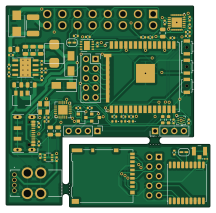
About the Obd32 PCB
Obd32 is an open source ESP32 PCB design by mkrasselt1, published on GitHub. It is a 2-layer board measuring 53.9 × 53.1 mm, with 76 components from 53 distinct parts.
Its main chip is the ESP32-WROOM-32, from the ESP32 family. Other key parts include the LMR33630BDDA, AZ1117C-3.3, CP2102N-A01-GQFN24, ICM-20689 and BMP388. By type, the board carries 23 capacitors, 20 resistors, 9 ICs, 9 connectors, 8 diodes and 3 switches.
It belongs with the iot & wireless designs in this gallery.
From the project
Anyone is free to join our goal to make the hardware reliable and affordable.
Anyone is free to join our goal to make the hardware reliable and affordable.
current plan conatins the featureset of:
- esp32 based microprocessor - direct canbus via tranciever chip MCP2562-e - db9 for obd2 connection - wifi connection to hotsport or - onboard switchable usb port for lte-wifi-router - ~~bluetooth connection compatible with elm327ds~~ - micro sd card slot for configuration, logging and cache - ota updates via github releases - build in webfrontend - low power sleep mode (canbus activity and battery voltage) - gps for location and altitude sync - communication protocolls…
Main components on the Obd32
Obd32 bill of materials (BOM)
76 components, 53 distinct parts — part numbers from the project's BOM.
| Qty | Part | Footprint | Refs |
|---|---|---|---|
| 1 | LMR33630BDDA FT231XQ | QFN-20-1EP_4x4mm_P0.5mm_EP2.5x2.5mm | U1 |
| 1 | ESP32-WROOM-32 | ESP32-WROOM-32U | U2 |
| 1 | AZ1117C-3.3 | SOT-89-3 | U3 |
| 1 | CP2102N-A01-GQFN24 LMR33640DDDA | Texas_HSOP-8-1EP_3.9x4.9mm_P1.27mm_ThermalVias | U4 |
| 1 | ICM-20689 | QFN50P400X400X95-25N-D | U5 |
| 1 | BMP388 | BMP388 | U6 |
| 1 | MCP2562-E-MF MCP2562FD-E-MF | DFN-8-1EP_3x3mm_P0.65mm_EP1.55x2.4mm | U7 |
| 1 | SIP32431DR3 SiP32431DR3 | SOT-363_SC-70-6 | U8 |
| 1 | MAX-M8W | ublox_MAX | U9 |
| 2 | BC817 | SOT-23 | Q1, Q2 |
| 1 | 67329-8040 | 673298040 | J1 |
| 1 | USB_C_RECEPTACLE_USB2.0 USB_C_Receptacle_USB2.0 | USB_C_Receptacle_JAE_DX07S016JA1 | J2 |
| 1 | OBD2 | OBD2 | J3 |
| 1 | Conn_02x05_Odd_Even | PinSocket_2x05_P2.54mm_Vertical | J4 |
| 1 | Conn_02x05_Odd_Even | PinHeader_2x05_P2.54mm_Vertical | J5 |
| 1 | Micro_SD_Card | microSD_HC_Hirose_DM3AT-SF-PEJM5 | J6 |
| 1 | U.FL-R-SMT-101 | U.FL-R-SMT-101 | J7 |
| 2 | Conn_01x04_Male | PinHeader_1x04_P2.54mm_Vertical | J8, J9 |
| 1 | Polyfuse | Fuse_1812_4532Metric_Castellated | F1 |
| 3 | SW_Push | SW_SPST_B3U-3000P-B | SW1, SW2, SW3 |
Show 33 more
| Qty | Part | Footprint | Refs |
|---|---|---|---|
| 3 | LED | LED_0402_1005Metric | D1, D2, D3 |
| 1 | SM6T18A | D_SMB | D4 |
| 2 | D_Schottky | D_SMA | D5, D8 |
| 1 | SP0503BAHT | SOT-143 | D6 |
| 1 | D_Zener | D_0201_0603Metric | D7 |
| 1 | 3.3uH 4A 16mR | TDK_SPM5030 | L2 |
| 1 | 100nF | C_0805_2012Metric | C1 |
| 2 | 1uF | C_0402_1005Metric | C2, C10 |
| 1 | 220NF 100nF | C_0805_2012Metric | C3 |
| 2 | 10uF | C_0805_2012Metric | C4, C6 |
| 4 | 22uF | C_0805_2012Metric | C5, C12, C13, C25 |
| 1 | 10uF 20V | C_0805_2012Metric | C7 |
| 1 | 220nF 20V | C_0402_1005Metric | C8 |
| 7 | 0.1uF | C_0402_1005Metric | C9, C11, C16, C18, C19, C20, C21 |
| 1 | 10NF 10nF | C_0402_1005Metric | C14 |
| 1 | 0.47uF | C_0402_1005Metric | C15 |
| 2 | 100NF 100nF | C_0402_1005Metric | C17, C22 |
| 2 | 4K7 | R_0603_1608Metric | R1, R2 |
| 1 | 10K | R_0402_1005Metric | R3 |
| 2 | 65R 64.9R | R_0402_1005Metric | R4, R5 |
| 1 | 4.99R | R_0402_1005Metric | R6 |
| 2 | 100K | R_0402_1005Metric | R10, R21 |
| 1 | 27K | R_0402_1005Metric | R11 |
| 1 | 100K 200K | R_0402_1005Metric | R12 |
| 1 | 24.9K 22K | R_0402_1005Metric | R13 |
| 1 | 5.1K | R_0402_1005Metric | R14 |
| 1 | 5.1K | R_0402_1005Metric | R15 |
| 1 | 5.1K 27R | R_0402_1005Metric | R16 |
| 1 | 120R | R_0402_1005Metric | R17 |
| 1 | 10R | R_0402_1005Metric | R18 |
| 1 | 27R | R_0402_1005Metric | R19 |
| 1 | 24.9K | R_0402_1005Metric | R22 |
| 2 | 10K | R_0402_1005Metric | R23, R24 |
Obd32 design files
The KiCad project lives in the mkrasselt1/obd32 repository on GitHub; these links point at the commit this page was built from.
Obd32: common questions
What microcontroller does the Obd32 use?
The Obd32 is built around the ESP32-WROOM-32, from the ESP32 family.
How big is the Obd32 PCB?
The Obd32 measures 53.9 × 53.1 mm, has 2 copper layers and is 1.6 mm thick.
How many components are on the Obd32?
76 components, from 53 distinct parts, with part numbers taken from the project's own BOM. The full bill of materials is listed on this page.
Where can I download the Obd32 design files?
From the mkrasselt1/obd32 repository on GitHub, which has the KiCad layout and the BOM; the links under Design files point to each one.
Can I use the Obd32 design in my own project?
The repository has no license, so all rights stay with mkrasselt1. Use it as a reference, and ask the author before reusing the design.
Can I test firmware for the Obd32 without the hardware?
Yes. HardLabs builds a simulation of the board from its netlist and BOM, so you can run and debug ESP32 firmware against it before you order a PCB.
Similar boards
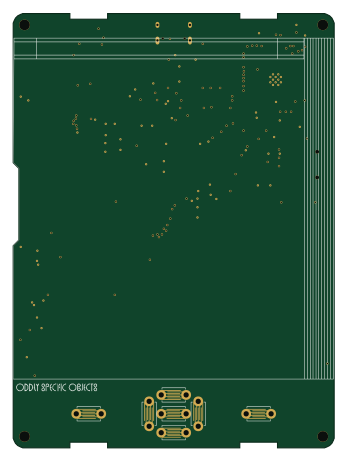 ESP32
OSO-BOOK-B1
joeycastillo
85 × 115 mm65 parts2LCC-BY-SA-4.08.1k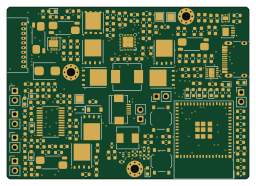 ESP32
Powertrain
byrantech
64 × 45.4 mm171 parts4LMIT4.3k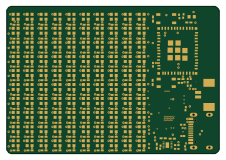 ESP32
Badge
atopile
56.3 × 39 mm239 parts4LMIT4.0k ESP32
Esp32 minimal
36.2 × 26.8 mm20 parts2LMIT4.0k ESP32
Controller
StuckAtPrototype
29 × 74 mm58 parts4LApache-2.03.8k ESP32
Racer
36 × 50.2 mm70 parts4LApache-2.03.8k