
ProgrammaGull Sandpiper

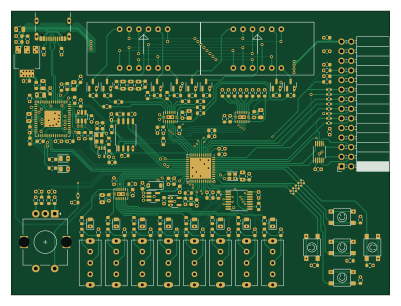
About the ProgrammaGull Sandpiper PCB
ProgrammaGull Sandpiper is an open source FPGA PCB design by 4n3m4i1, published on GitHub under the MIT license. It is a 4-layer board measuring 100 × 75 mm, with 213 components from 37 distinct parts.
Its main chip is the ICE40UP5K-SG48ITR, from the FPGA family. Other key parts include the C88039, C3303720, C81462, MIC5504-2.5YM5 and C190271. By type, the board carries 98 resistors, 61 capacitors, 15 ICs, 14 switches, 12 diodes and 8 transistors.
It belongs with the dev boards & breakouts and displays & leds designs in this gallery.
From the project
Open Source FPGA Development Boards for Education and Deeply Embedded Applications
As the UP5k has limited GPIO pins for a general purpose development board serial -> parallel and in the future parallel to serial interfaces are implemented for the low speed high pin count I/O (7 segment displays, LED banks, etc..), this is notated by (serial access) next to a feature.
Standard icestick workflows may also be supported, though this has yet to be seen.
Main components on the ProgrammaGull Sandpiper
ProgrammaGull Sandpiper bill of materials (BOM)
213 components, 37 distinct parts — part numbers from the project's BOM.
| Qty | Part | Footprint | Refs |
|---|---|---|---|
| 1 | ICE40UP5K-SG48ITR | QFN-48-1EP_7x7mm_P0.5mm_EP5.6x5.6mm | U1 |
| 1 | C88039 SN74LVC1G126DCKR | SC70 | U2 |
| 3 | C3303720 74HCT595 | DHVQFN-16-1EP_2.5x3.5mm_P0.5mm_EP1x2mm | U3, U12, U13 |
| 1 | C81462 MIC5504-1.2YM5 | SOT-23-5 | U4 |
| 1 | MIC5504-2.5YM5 | SOT-23-5 | U5 |
| 1 | C190271 93LCxxAxxOT | SOT-23-6 | U6 |
| 1 | C193662 FT2232HQ | QFN-64-1EP_9x9mm_P0.5mm_EP4.35x4.35mm | U7 |
| 2 | C401125 ~ | MHDA3641SRBW | U8, U10 |
| 1 | C43420 74HC165 | TSSOP-16_4.4x5mm_P0.65mm | U9 |
| 1 | ADC084S051CIMM/NOPB | VSSOP-10_3x3mm_P0.5mm | U11 |
| 1 | C179173 W25Q32JVSS | SOIC-8_5.23x5.23mm_P1.27mm | U14 |
| 1 | C6186 AMS1117-3.3 | SOT-223-3_TabPin2 | U15 |
| 8 | C8543 S9012 2T1 | SOT-23 | Q1, Q2, Q3, Q4, Q5, Q6, Q7, Q8 |
| 1 | C2831468 SG-210STF | Oscillator_SMD_SeikoEpson_SG210-4Pin_2.5x2.0mm | X1 |
| 1 | C2897434 Conn_02x14_Odd_Even | PinSocket_2x14_P2.54mm_Horizontal | J1 |
| 1 | C963411 USB_C_Plug_USB2.0 | USB_C_Receptacle_GCT_USB4105-xx-A_16P_TopMnt_Horizontal | P1 |
| 8 | C2887261 ~ | SLW-121586-5A-D | SW0, SW1, SW2, SW3, SW4, SW5, SW6, SW7 |
| 1 | C2991196 RotaryEncoder_Switch | RotaryEncoder_Alps_EC11E-Switch_Vertical_H20mm | SW8 |
| 5 | C2888975 SW_Push | TSC015A05518A | SW9, SW10, SW11, SW12, SW13 |
| 1 | C81598 1N4148W | D_SOD-123 | D1 |
Show 17 more
| Qty | Part | Footprint | Refs |
|---|---|---|---|
| 10 | C2297 LED | LED_0805_2012Metric | D2, D3, D4, D5, D6, D7, D8, D9 +2 |
| 1 | C2874119 LED_ABGR | LED_Cree-PLCC4_2x2mm_CW | D10 |
| 2 | C1002 FerriteBead_Small | L_0603_1608Metric | FB1, FB2 |
| 13 | C15849 1u | C_0603_1608Metric | C1, C2, C3, C4, C5, C6, C19, C21 +5 |
| 29 | C14663 100n | C_0603_1608Metric | C7, C8, C9, C11, C13, C14, C16, C18 +21 |
| 12 | C1779 4u7 | C_0805_2012Metric | C10, C12, C15, C17, C25, C27, C30, C33 +4 |
| 7 | C57112 10n | C_0603_1608Metric | C38, C39, C42, C45, C49, C51, C53 |
| 43 | C25804 10k | R_0603_1608Metric | R1, R7, R8, R10, R12, R14, R16, R18 +35 |
| 9 | C4190 2k2 | R_0603_1608Metric | R2, R33, R35, R54, R87, R88, R89, R90 +1 |
| 2 | C23206 56k | R_0603_1608Metric | R3, R4 |
| 3 | C22775 100R | R_0603_1608Metric | R5, R83, R84 |
| 8 | C22962 220R | R_0603_1608Metric | R6, R9, R11, R13, R15, R17, R19, R21 |
| 14 | C25091 220R | R_0402_1005Metric | R23, R25, R27, R29, R64, R80, R92, R93 +6 |
| 1 | C22790 12k 1% | R_0603_1608Metric | R38 |
| 8 | C23151 390R | R_0603_1608Metric | R43, R44, R45, R46, R47, R48, R49, R50 |
| 8 | C23151 400R | R_0603_1608Metric | R55, R56, R57, R58, R59, R60, R61, R62 |
| 2 | C23151 330R | R_0603_1608Metric | R85, R86 |
ProgrammaGull Sandpiper design files
The KiCad project lives in the 4n3m4i1/PG_Logic repository on GitHub; these links point at the commit this page was built from.
ProgrammaGull Sandpiper: common questions
What microcontroller does the ProgrammaGull Sandpiper use?
The ProgrammaGull Sandpiper is built around the ICE40UP5K-SG48ITR, from the FPGA family.
How big is the ProgrammaGull Sandpiper PCB?
The ProgrammaGull Sandpiper measures 100 × 75 mm, has 4 copper layers and is 1.6 mm thick.
How many components are on the ProgrammaGull Sandpiper?
213 components, from 37 distinct parts, with part numbers taken from the project's own BOM. The full bill of materials is listed on this page.
Where can I download the ProgrammaGull Sandpiper design files?
From the 4n3m4i1/PG_Logic repository on GitHub, which has the KiCad layout, the schematic and the BOM; the links under Design files point to each one.
Can I use the ProgrammaGull Sandpiper design in my own project?
Yes, under the terms of its MIT license, which 4n3m4i1 chose for the repository.
Can I test firmware for the ProgrammaGull Sandpiper without the hardware?
Yes. HardLabs builds a simulation of the board from its netlist and BOM, so you can run and debug FPGA firmware against it before you order a PCB.
More boards in PG_Logic
Similar boards
 FPGA
Base board
GlasgowEmbedded
80 × 49 mm222 parts4L0BSD2.2k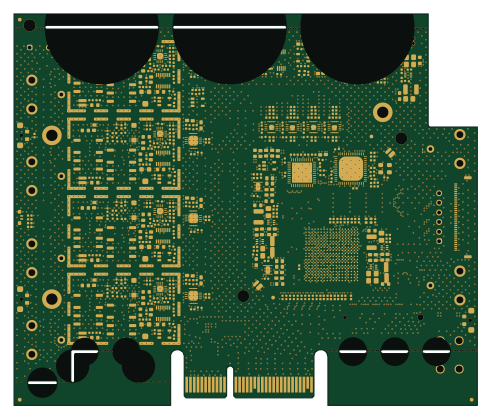 FPGA
Thunderscope Rev5.3
EEVengers
122.5 × 103.5 mm817 parts6LMIT1.3k FPGA
Usb sniffer
ataradov
58.2 × 38.1 mm86 parts2LBSD-3-Clause1.3k FPGA
Tomu, I'm
theacodes
13 × 9.4 mm40 parts4LMIT1.1k FPGA
Icepi zero
cheyao
65 × 30 mm143 parts4LSHL-2.1865 FPGA
Gcvideo
ikorb
49 × 30 mm44 parts4LNo license765