
ESP32-MultiFunction

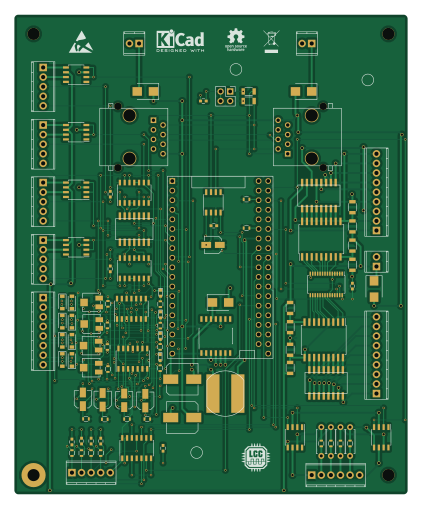
About the ESP32-MultiFunction PCB
ESP32-MultiFunction is an open source ESP32 PCB design by RobertPHeller, published on GitHub under the CC-BY-4.0 license. It is a 2-layer board measuring 104.1 × 127 mm, with 109 components from 48 distinct parts.
Its main chip is the ESP32_DEVKIT_C, from the ESP32 family. Other key parts include the TCAN332DR, 74HCT00, LM2574N-5.0, TC4428 and LM339. By type, the board carries 28 resistors, 17 ICs, 17 capacitors, 16 diodes, 9 jumpers and 4 connectors.
From the project
ESP32 based LCC Boards
This is a circuit board that supports an ESP32 Dev Kit board or TTGO-T1 board to manage a range of possible interlocking plants or other model railroad situations. It contains four stall motor drivers with point sense, four CT Coil type occupancy detectors, four Schmitt-Trigger inputs (for push buttons), four driver outputs, and 16 PWM LED drivers.
- Four occupancy detectors. These are current transformer based for DCC. - Four stall-motor with point sense. - Four Schmitt-Trigger inputs, typically for facia push buttons - Four driver outputs, typically for facia lamps (LEDs). - Sixteen PWM…
Main components on the ESP32-MultiFunction
ESP32-MultiFunction bill of materials (BOM)
109 components, 48 distinct parts.
| Qty | Part | Footprint | Refs |
|---|---|---|---|
| 1 | ESP32_DEVKIT_C | ESP32-Combo | U0 |
| 1 | TCAN332DR | SOIC-8_3.9x4.9mm_Pitch1.27mm | U1 |
| 2 | 74HCT00 | SOIC-14_3.9x8.7mm_Pitch1.27mm | U2, U4 |
| 1 | LM2574N-5.0 | SOIC-14_7.4x8.7mm_Pitch1.27mm | U3 |
| 4 | TC4428 | SOIC-8_3.9x4.9mm_Pitch1.27mm | U5, U6, U7, U8 |
| 2 | LM339 | SOIC-14_3.9x8.7mm_Pitch1.27mm | U9, U10 |
| 2 | TC4426 | SOIC-8_3.9x4.9mm_Pitch1.27mm | U11, U12 |
| 1 | 74HCT14 | SOIC-14_3.9x8.7mm_Pitch1.27mm | U13 |
| 1 | PCA9685 | TSSOP-28_4.4x9.7mm_Pitch0.65mm | U601 |
| 2 | TBD62X83A | SOIC-18W_7.5x11.6mm_Pitch1.27mm | U602, U603 |
| 2 | RJ45 | RJ45_8N-S | J1, J2 |
| 1 | A7 A6 A5 A4 A3 A2 A1 A0 C | TerminalBlock_Pheonix_MPT-2.54mm_9pol | P601 |
| 1 | B7 B6 B5 B4 B3 B2 B1 B0 C | TerminalBlock_Pheonix_MPT-2.54mm_9pol | P602 |
| 1 | Termination | Pin_Header_Straight_2x02_Pitch2.54mm | JP1 |
| 8 | 0 | R_1206 | JP4, JP5, JP6, JP7, JP8, JP9, JP10, JP11 |
| 2 | 1.5K Ohms | 4816P | RP601, RP602 |
| 1 | 10K Ohms | 4814P | RR1 |
| 4 | 25K Ohms | Potentiometer_Trimmer_Bourns_3214J | RV1, RV2, RV3, RV4 |
| 1 | - 15 in + | TerminalBlock_Pheonix_MPT-2.54mm_2pol | T1 |
| 1 | - 15 out + | TerminalBlock_Pheonix_MPT-2.54mm_2pol | T2 |
Show 28 more
| Qty | Part | Footprint | Refs |
|---|---|---|---|
| 1 | + 12V - | TerminalBlock_Pheonix_MPT-2.54mm_2pol | T601 |
| 1 | Motor 1 | TerminalBlock_Pheonix_MPT-2.54mm_5pol | Term1 |
| 1 | Motor 2 | TerminalBlock_Pheonix_MPT-2.54mm_5pol | Term2 |
| 1 | Motor 3 | TerminalBlock_Pheonix_MPT-2.54mm_5pol | Term3 |
| 1 | Motor 4 | TerminalBlock_Pheonix_MPT-2.54mm_5pol | Term4 |
| 1 | 4B 4A 3B 3A 2B 2A 1B 1A | TerminalBlock_Pheonix_MPT-2.54mm_8pol | Term5 |
| 1 | +V 1 2 3 4 GND | TerminalBlock_Pheonix_MPT-2.54mm_6pol | Term6 |
| 1 | 1 2 3 4 GND | TerminalBlock_Pheonix_MPT-2.54mm_5pol | Term7 |
| 3 | DFLS240-7 | D_SMB | D1, D2, D601 |
| 1 | CMSH1-60 TR13 | D_SMB | D3 |
| 8 | 1N4148 | D_SOD-123 | D4, D5, D6, D7, D8, D9, D10, D11 |
| 4 | LED | LED_0603 | D12, D13, D14, D15 |
| 1 | 330 uh | SRN1060 | L1 |
| 5 | .1 uf | C_0603 | C1, C6, C7, C12, C601 |
| 1 | 15 uf 15V | CP_Elec_4x5.7 | C2 |
| 1 | 47 nf | C_0603 | C3 |
| 1 | 220 uf 25V | CP_Elec_8x10 | C4 |
| 1 | 22 uf 100V | CP_Elec_8x10 | C5 |
| 4 | 2.2uf 50V | CP_Elec_4x5.7 | C8, C9, C10, C11 |
| 4 | 10 nf | C_0603 | C13, C14, C15, C16 |
| 2 | 60 Ohms | R_1206 | R1, R2 |
| 4 | 22K Ohms | R_0603 | R3, R4, R5, R6 |
| 4 | 1M Ohms | R_0603 | R7, R8, R9, R10 |
| 4 | 2.7K Ohms | R_0603 | R11, R12, R13, R14 |
| 4 | R | R_Axial_DIN0207_L6.3mm_D2.5mm_P7.62mm_Horizontal | R15, R17, R19, R21 |
| 4 | 1.5K Ohms | R_0603 | R16, R18, R20, R22 |
| 4 | 10K Ohms | R_0603 | R23, R24, R25, R26 |
| 2 | 2.4K | R_0603 | R27, R28 |
ESP32-MultiFunction design files
The KiCad project lives in the RobertPHeller/ESP32-LCC repository on GitHub; these links point at the commit this page was built from.
ESP32-MultiFunction: common questions
What microcontroller does the ESP32-MultiFunction use?
The ESP32-MultiFunction is built around the ESP32_DEVKIT_C, from the ESP32 family.
How big is the ESP32-MultiFunction PCB?
The ESP32-MultiFunction measures 104.1 × 127 mm, has 2 copper layers and is 1.6 mm thick.
How many components are on the ESP32-MultiFunction?
109 components, from 48 distinct parts. The full bill of materials is listed on this page.
Where can I download the ESP32-MultiFunction design files?
From the RobertPHeller/ESP32-LCC repository on GitHub, which has the KiCad layout; the links under Design files point to each one.
Can I use the ESP32-MultiFunction design in my own project?
Yes, under the terms of its CC-BY-4.0 license, which RobertPHeller chose for the repository.
Can I test firmware for the ESP32-MultiFunction without the hardware?
Yes. HardLabs builds a simulation of the board from its netlist and BOM, so you can run and debug ESP32 firmware against it before you order a PCB.
More boards in ESP32-LCC
 ESP32
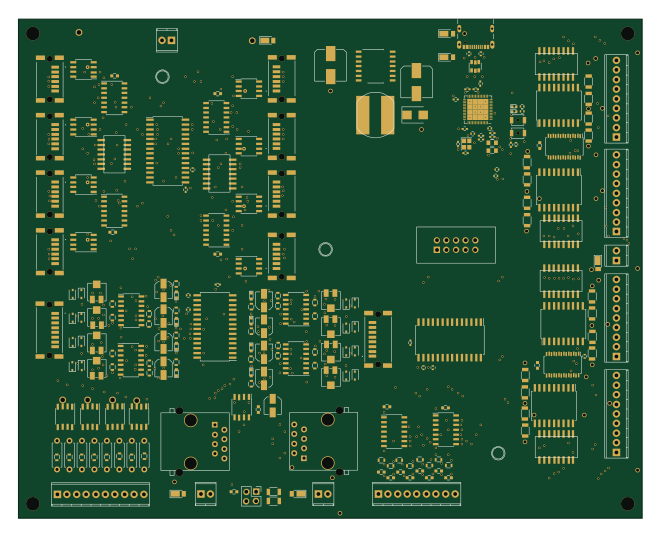
ESP32ESP32-S3-MegaMultiFunction
165.1 × 132.1 mm238 parts2LCC-BY-4.03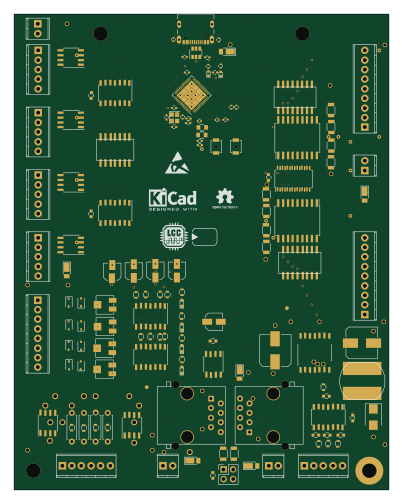 ESP32
ESP32ESP32-S3-MultiFunction
99.1 × 125.7 mm141 parts2LCC-BY-4.03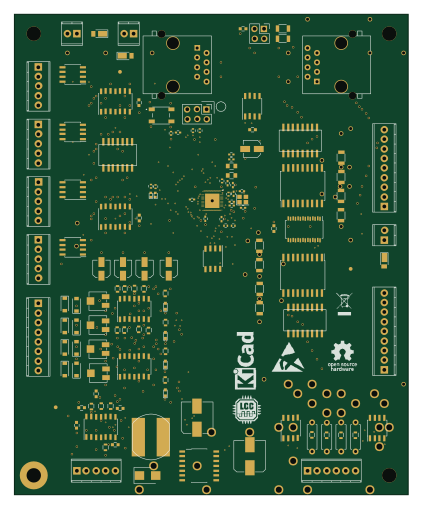 ESP32
ESP32ESP32-D0WD-V3-MultiFunction
104.1 × 127 mm137 parts2LCC-BY-4.03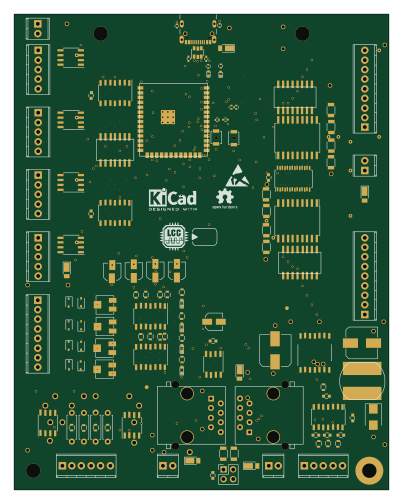 ESP32
ESP32ESP32-S3-MultiFunction wroom
99.1 × 125.7 mm127 parts2LCC-BY-4.03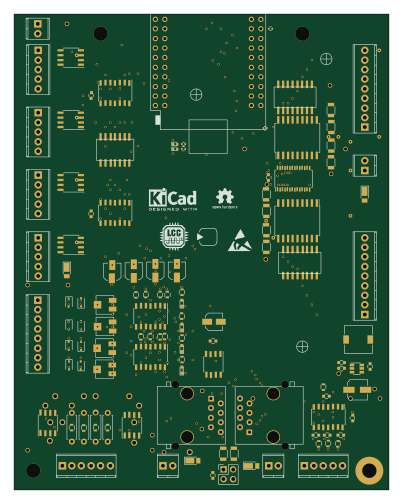 ESP32
ESP32ESP32-T7S3-MultiFunction
99.1 × 125.7 mm116 parts2LCC-BY-4.03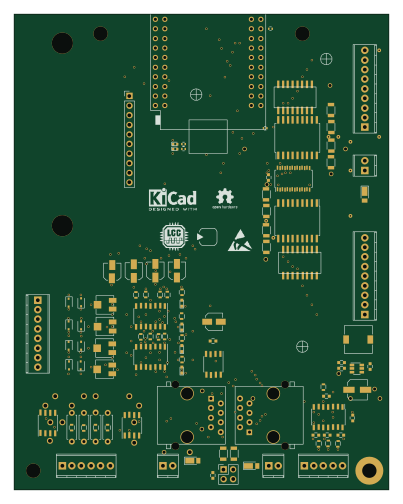 ESP32
ESP32ESP32-T7S3-MultiFunctionUniversalTurnout
99.1 × 125.7 mm102 parts2LCC-BY-4.03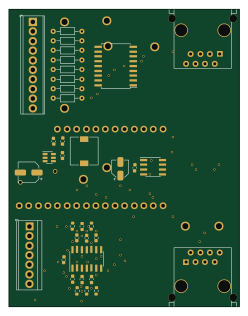 ESP32
ESP32ESP32-Feather-6B6L-SMD
61 × 78.7 mm37 parts2LCC-BY-4.03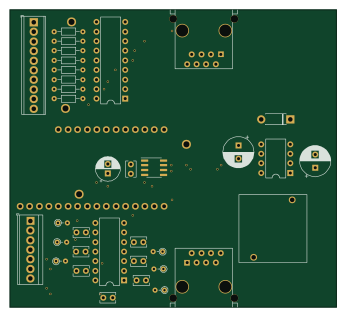 ESP32
ESP32ESP32-Feather-6B6L
86.4 × 78.7 mm36 parts2LCC-BY-4.03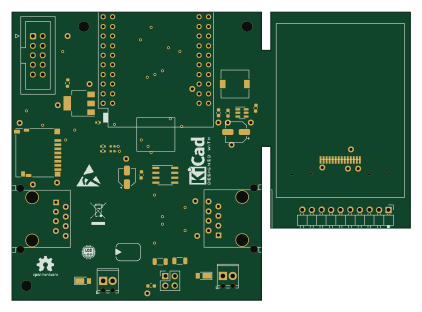 ESP32
ESP32ESP32-T7S3-TextDisplaySign
105.4 × 76.2 mm32 parts2LCC-BY-4.03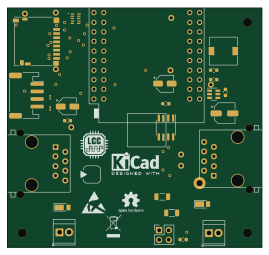 ESP32
ESP32T7S3-MiniDisplay
67.3 × 63.5 mm21 parts2LCC-BY-4.03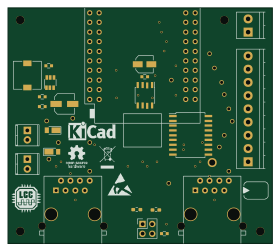 ESP32
ESP32ESP32-Mini32-OctalBuffer
69.9 × 62.2 mm15 parts2LCC-BY-4.03
Similar boards
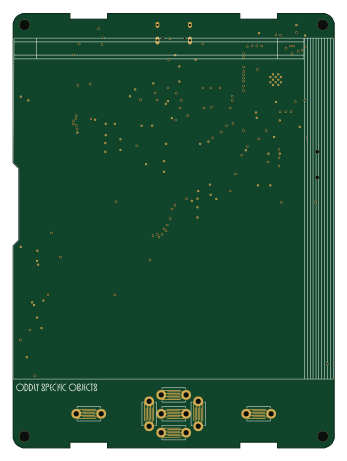 ESP32
ESP32Open Book Abridged Edition
joeycastillo
85 × 115 mm65 parts2LCC-BY-SA-4.08.1k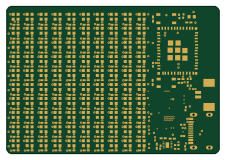 ESP32
ESP32Badge
atopile
56.3 × 39 mm239 parts4LMIT4.0k ESP32
ESP32Esp32 minimal
36.2 × 26.8 mm20 parts2LMIT4.0k ESP32
ESP32Racer
StuckAtPrototype
36 × 50.2 mm70 parts4LApache-2.03.8k ESP32
ESP32Controller
29 × 74 mm58 parts4LApache-2.03.8k ESP32
ESP32Bitaxe
skot
56.5 × 99.8 mm86 parts4LCERN-OHL-S-2.01.4k