
Econopet

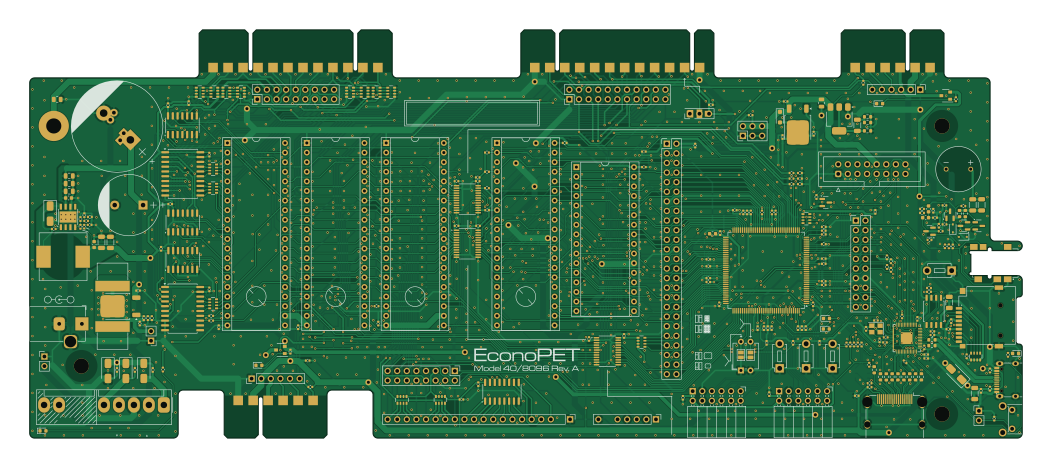
About the Econopet PCB
Econopet is an open source RP2040/RP2350 PCB design by DLehenbauer, published on GitHub under the CC0-1.0 license. It is a 2-layer board measuring 262.5 × 108 mm, with 284 components from 113 distinct parts.
Its main chip is the RP2040, from the RP2040/RP2350 family. Other key parts include the W65C02S, AS6C1008, TLV1117LV33, LM317AG-TN3-R and TPS5430DDA. By type, the board carries 105 capacitors, 90 resistors, 27 connectors, 21 ICs, 14 diodes and 9 jumpers.
It belongs with the retro computing designs in this gallery.
From the project
Mainboard replacement for Commodore PET/CBM series machines
Open hardware mainboard replacement for Commodore PET/CBM 2001/30xx/40xx/80xx machines. The EconoPET can also run standalone with HDMI display and USB keyboard.
See the project page for user manual and firmware updates.
Rev. A has been released. For manufacturing and assembly instructions, go here.
This project uses a Dev Container for a consistent development environment on Windows, macOS, and Linux.

Main components on the Econopet
Econopet bill of materials (BOM)
284 components, 113 distinct parts — part numbers from the project's BOM.
| Qty | Part | Footprint | Refs |
|---|---|---|---|
| 1 | W65C02S | DIP-40_W15.24mm_Socket | U1 |
| 1 | AS6C1008 | DIP-32_W15.24mm_Socket | U2 |
| 1 | TLV1117LV33 | SOT-223-3_TabPin2 | U3 |
| 2 | LM317AG-TN3-R | TO-252-2 | U4, U5 |
| 1 | TPS5430DDA | TI_SO-PowerPAD-8_ThermalVias | U6 |
| 3 | SN74LVC4245APWR | TSSOP-24_4.4x7.8mm_P0.65mm | U7, U8, U9 |
| 1 | T20Q144C3 | LQFP-144_20x20mm_P0.5mm | U10 |
| 2 | W65C21N | DIP-40_W15.24mm_Socket | U11, U12 |
| 1 | W65C22N | DIP-40_W15.24mm_Socket | U13 |
| 3 | SN74LS07 | SOIC-14_3.9x8.7mm_P1.27mm | U14, U15, U16 |
| 2 | 74LS245 | SOIC-20W_7.5x12.8mm_P1.27mm | U17, U18 |
| 1 | 74LS145 | SOIC-16_3.9x9.9mm_P1.27mm | U19 |
| 1 | RP2040 | LQFN-56_L7.0-W7.0-P0.4-EP | U21 |
| 1 | W25Q128JVS | SOIC-8_5.23x5.23mm_P1.27mm | U22 |
| 1 | MMBT3904 | SOT-23 | Q1 |
| 2 | AO3401A | SOT-23_L2.9-W1.3-P1.90-LS2.4-BR | Q2, Q3 |
| 3 | SS8050 | SOT-23 | Q4, Q5, Q6 |
| 1 | SS8550 | SOT-23 | Q7 |
| 1 | C9002 12 MHz | Crystal_SMD_3225-4Pin_3.2x2.5mm | Y1 |
| 1 | IEEE_EDGE | CBM_PET_IEEE_EDGE_CON_24P | J1 |
Show 93 more
| Qty | Part | Footprint | Refs |
|---|---|---|---|
| 1 | USER_EDGE | CBM_PET_USER_EDGE_CON_24P | J2 |
| 1 | CASS_A_EDGE | CBM_PET_CASS_EDGE_CON_12P | J3 |
| 1 | BUS_EXPANSION | PinHeader_2x25_P2.54mm_Vertical | J4 |
| 1 | KEYBOARD | CBM_PET_KEYBOARD_KEYED_20P | J5 |
| 1 | CASS_B_EDGE | CBM_PET_CASS_EDGE_CON_12P | J6 |
| 1 | VIDEO | PET_Video | J7 |
| 1 | PET POWER | PET_POWER_Molex_KK-396_A-41791-0009_1x09_P3.96mm_Vertical | J8 |
| 1 | FPGA_MCU | PinHeader_2x10_P2.54mm_Vertical | J9 |
| 1 | 5V PWR | PinHeader_2x03_P2.54mm_Vertical | J10 |
| 1 | 9V POWER | PinHeader_1x02_P2.54mm_Vertical | J11 |
| 1 | VIDEO_OR_5V | PinHeader_1x03_P2.54mm_Vertical_or_SolderJumper | J12 |
| 1 | 9V POWER JACK | BarrelJack_Horizontal | J13 |
| 1 | USER_HEADER | PinHeader_2x11_P2.54mm_Vertical | J14 |
| 1 | CASS_A_HEADER | PinHeader_1x06_P2.54mm_Vertical | J15 |
| 1 | CASS_B_HEADER | PinHeader_1x06_P2.54mm_Vertical | J16 |
| 1 | PMOD1 | PMOD_Socket_2x06_P2.54mm_Horizontal | J17 |
| 1 | PMOD2 | PMOD_Socket_2x06_P2.54mm_Horizontal | J18 |
| 1 | KEYBOARD_EX | PinHeader_2x08_P2.54mm_Vertical | J19 |
| 1 | IEEE_HEADER | PinHeader_2x09_P2.54mm_Vertical | J20 |
| 1 | AUDIO | CUI_SJ-43504-SMT-TR | J21 |
| 1 | PROG | IDC-Header_2x08_P2.54mm_Vertical | J22 |
| 1 | MENU_HDR | PinHeader_1x02_P2.54mm_Vertical | J23 |
| 1 | C138388 NOT_HDMI_A | HDMI_A_Molex_208658-1001_Horizontal | J24 |
| 1 | C393941 MICRO_SD | TF-SMD_TF-PUSH | J25 |
| 1 | USB1.1_HOST_TYPE_C | USB-C_SMD-TYPE-C-31-M-12 | J26 |
| 1 | 6V POWER | PinHeader_1x02_P2.54mm_Vertical | J27 |
| 1 | Heatsink_Pad | V1100SMDBL_or_573100D00000G | HS1 |
| 1 | CASS A ~{SWITCH} | SolderJumper-3_P1.3mm_Open_RoundedPad1.0x1.5mm | JP1 |
| 1 | CASS B ~{SWITCH} | SolderJumper-3_P1.3mm_Open_RoundedPad1.0x1.5mm | JP2 |
| 1 | CASS A READ | SolderJumper-3_P1.3mm_Open_RoundedPad1.0x1.5mm | JP3 |
| 1 | CASS B READ | SolderJumper-3_P1.3mm_Open_RoundedPad1.0x1.5mm | JP4 |
| 1 | CASS A ~{MOTOR} | SolderJumper-3_P1.3mm_Open_RoundedPad1.0x1.5mm | JP5 |
| 1 | CASS B ~{MOTOR} | SolderJumper-3_P1.3mm_Open_RoundedPad1.0x1.5mm | JP6 |
| 1 | DVI_CEC | SolderJumper-2_P1.3mm_Open_RoundedPad1.0x1.5mm | JP7 |
| 1 | DVI_SDA | SolderJumper-3_P1.3mm_Open_RoundedPad1.0x1.5mm | JP8 |
| 1 | DVI_SCL | SolderJumper-3_P1.3mm_Open_RoundedPad1.0x1.5mm | JP9 |
| 1 | 42Ω SPK | AT1220TT9R | LS1 |
| 1 | RESET | SW_PUSH_1P1T_6x3.5mm_H4.3_APEM_MJTP1243 | SW1 |
| 1 | NMI | SW_PUSH_1P1T_6x3.5mm_H4.3_APEM_MJTP1243 | SW2 |
| 1 | CONFIG | SW_DIP_SPSTx02_Slide_6.7x6.64mm_W7.62mm_P2.54mm_LowProfile_or_SolderJumper | SW3 |
| 1 | RUN | SW_PUSH_1P1T_6x3.5mm_H4.3_APEM_MJTP1243 | SW4 |
| 1 | MENU_BTN | APEM_MJTP1117 | SW5 |
| 1 | BOOTSEL | SW_PUSH_1P1T_6x3.5mm_H4.3_APEM_MJTP1243 | SW6 |
| 5 | SS54 | D_SMA | D1, D2, D3, D5, D12 |
| 1 | SM4007 | D_SOD-123F | D4 |
| 4 | C2286 LED_RED | LED_0603_1608Metric | D6, D8, D9, D10 |
| 2 | C2986059 LED_GRN | LED_0603_1608Metric | D7, D11 |
| 2 | 1N4148WS | D_SOD-323 | D13, D14 |
| 1 | C1002 600 200ma | L_0603_1608Metric | FB1 |
| 1 | 22UH 22uH | IND-SMD_L12.5-W12.5 | L1 |
| 48 | 100N 100n | C_0402_1005Metric | C1, C2, C3, C13, C14, C25, C27, C33 +40 |
| 1 | DNP | C_0402_1005Metric | C6 |
| 1 | 11000u | CP_Radial_D16.0mm_P7.50mm | C7 |
| 7 | C96123 47u 10V | C_1206_3216Metric | C8, C16, C28, C30, C84, C101, C102 |
| 4 | 22N 22n | C_0402_1005Metric | C9, C10, C81, C85 |
| 4 | 22U 22u | C_0805_2012Metric | C11, C12, C15, C17 |
| 2 | 10U 10u | C_0603_1608Metric | C18, C26 |
| 8 | 1u | C_0402_1005Metric | C19, C20, C39, C41, C42, C43, C80, C103 |
| 1 | 150P 150p | C_0402_1005Metric | C21 |
| 6 | 10N 10n | C_0402_1005Metric | C22, C54, C56, C58, C60, C61 |
| 13 | C23733 4u7 10V | C_0402_1005Metric | C23, C31, C32, C62, C63, C64, C65, C66 +5 |
| 1 | C16772 220n 16V | C_0402_1005Metric | C24 |
| 1 | 1n | C_0402_1005Metric | C29 |
| 1 | 68N 68n | C_0603_1608Metric | C82 |
| 2 | 33P 33p | C_0402_1005Metric | C86, C87 |
| 3 | C12530 2u2 6.3V | C_0402_1005Metric | C88, C91, C92 |
| 1 | 120UF 330uF | CP_Radial_D24.0mm_P5.00mm_P7.50mm_P10.00mm_SnapIn | C89 |
| 1 | 47N 47n | C_0603_1608Metric | C105 |
| 6 | 4K7 4k7 | R_0402_1005Metric | R1, R2, R3, R4, R15, R40 |
| 1 | 68 | R_0805_2012Metric | R5 |
| 2 | 0 | R_0603_1608Metric | R6, R8 |
| 6 | 1K5 1k5 | R_0402_1005Metric | R7, R17, R34, R35, R67, R69 |
| 1 | 5K1 5k1 | R_0402_1005Metric | R9 |
| 1 | 330 | R_0603_1608Metric | R10 |
| 1 | 300 | R_0402_1005Metric | R11 |
| 1 | 120 | R_0402_1005Metric | R12 |
| 1 | 220 | R_0402_1005Metric | R13 |
| 12 | 10K 10k | R_0402_1005Metric | R14, R16, R18, R19, R20, R25, R32, R33 +4 |
| 3 | 5K6 5k6 | R_0402_1005Metric | R21, R22, R23 |
| 3 | 100K 100k | R_0402_1005Metric | R24, R28, R71 |
| 2 | 12K 12k | R_0402_1005Metric | R26, R36 |
| 7 | 1k | R_0402_1005Metric | R27, R29, R41, R42, R43, R65, R74 |
| 3 | 470 | R_0402_1005Metric | R30, R31, R38 |
| 1 | 22K 22k | R_0402_1005Metric | R37 |
| 7 | 2K2 2k2 | R_0402_1005Metric | R44, R45, R48, R49, R50, R51, R52 |
| 2 | 27 | R_0603_1608Metric | R46, R47 |
| 9 | 270 | R_0603_1608Metric | R53, R54, R55, R56, R57, R58, R59, R60 +1 |
| 2 | 56K 56k | R_0402_1005Metric | R63, R64 |
| 1 | 680 | R_0402_1005Metric | R68 |
| 2 | 1 | R_0603_1608Metric | R72, R73 |
| 9 | 10KX4 10kx4 | R_Array_Convex_4x0603 | RN1, RN4, RN5, RN8, RN9, RN10, RN14, RN15 +1 |
| 4 | 4K7X4 4k7x4 | R_Array_Convex_4x0603 | RN2, RN3, RN6, RN7 |
| 3 | 470X4 470x4 | R_Array_Convex_4x0603 | RN11, RN12, RN13 |
Econopet design files
The KiCad project lives in the DLehenbauer/econopet repository on GitHub; these links point at the commit this page was built from.
Econopet: common questions
What microcontroller does the Econopet use?
The Econopet is built around the RP2040, from the RP2040/RP2350 family.
How big is the Econopet PCB?
The Econopet measures 262.5 × 108 mm, has 2 copper layers and is 0.57 mm thick.
How many components are on the Econopet?
284 components, from 113 distinct parts, with part numbers taken from the project's own BOM. The full bill of materials is listed on this page.
Where can I download the Econopet design files?
From the DLehenbauer/econopet repository on GitHub, which has the KiCad layout, the schematic and the BOM; the links under Design files point to each one.
Can I use the Econopet design in my own project?
Yes, under the terms of its CC0-1.0 license, which DLehenbauer chose for the repository.
Can I test firmware for the Econopet without the hardware?
Yes. HardLabs builds a simulation of the board from its netlist and BOM, so you can run and debug RP2040/RP2350 firmware against it before you order a PCB.
Similar boards
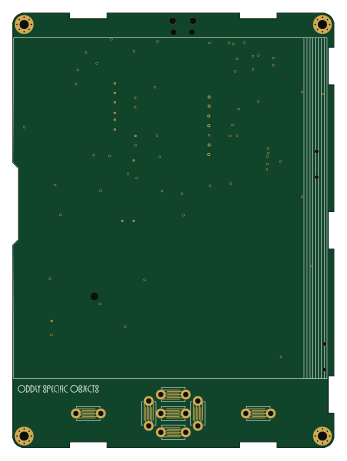 RP2040/RP2350
Open Book Abridged Edition
joeycastillo
85 × 115 mm29 parts2LCC-BY-SA-4.08.1k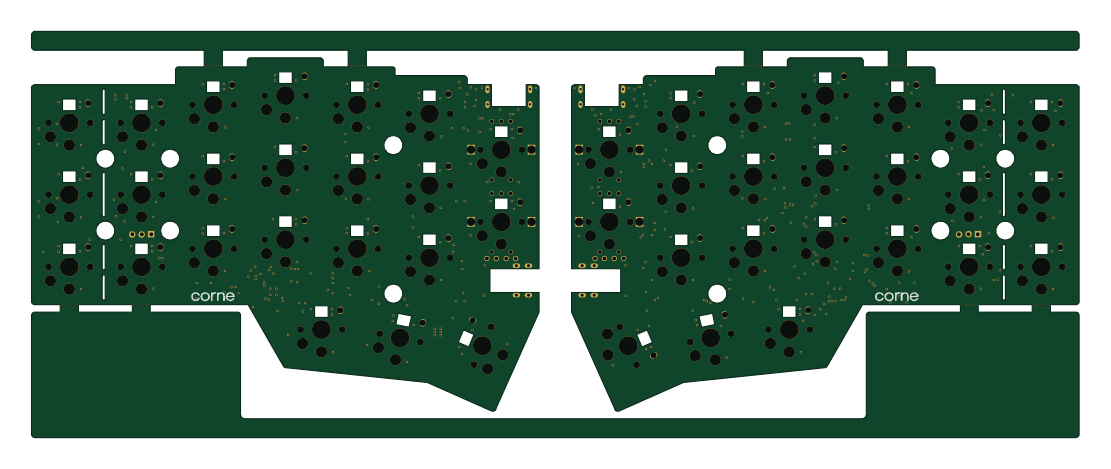 RP2040/RP2350
Corne
foostan
277.2 × 107.5 mm164 parts2LCC-BY-4.07.7k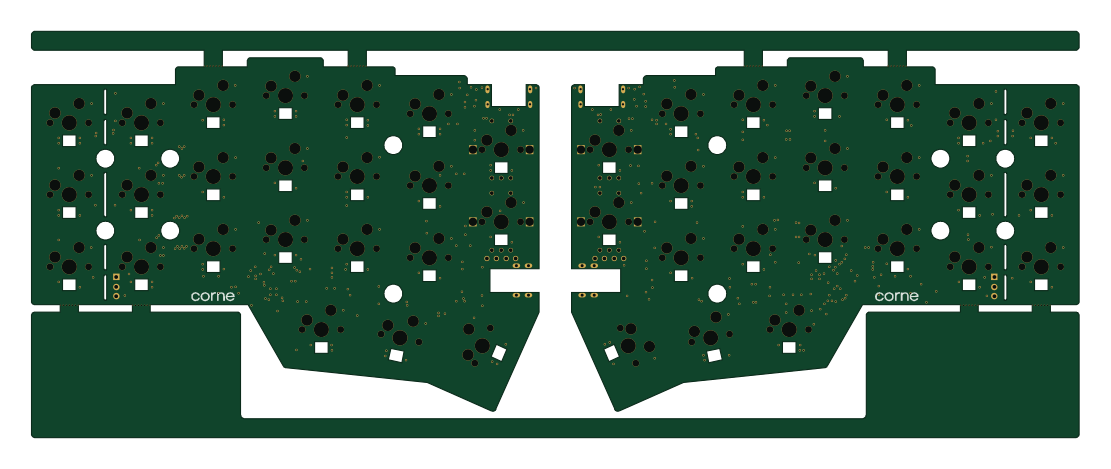 RP2040/RP2350
Corne
277.2 × 107.5 mm164 parts2LCC-BY-4.07.7k RP2040/RP2350
LogicAnalyzer
gusmanb
57 × 55.2 mm6 parts2LGPL-3.05.0k RP2040/RP2350
Jitx design
55.5 × 65 mm26 parts4LGPL-3.05.0k RP2040/RP2350
Pro V2
kata0510
290.1 × 130 mm270 parts2LMIT2.3k