
VIO MPF I

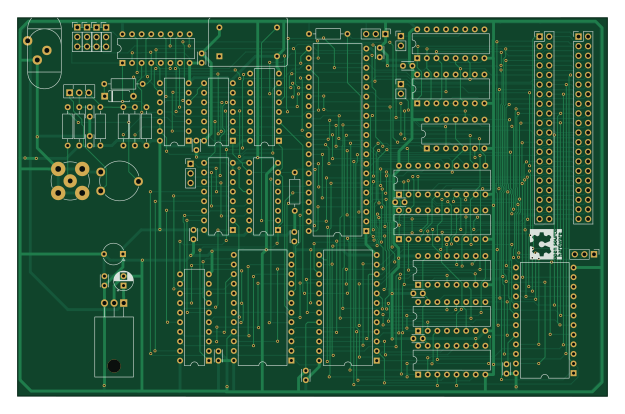
About the VIO MPF I PCB
VIO MPF I is an open source PCB design by electrickery, published on GitHub. It is a 2-layer board measuring 156 × 100.1 mm, with 63 components from 43 distinct parts.
Other key parts include the uA7805, 74LS85, 74LS138, 74LS273 and 74LS00. By type, the board carries 20 ICs, 17 capacitors, 12 connectors, 9 resistors, 1 transistor and 1 crystal.
From the project
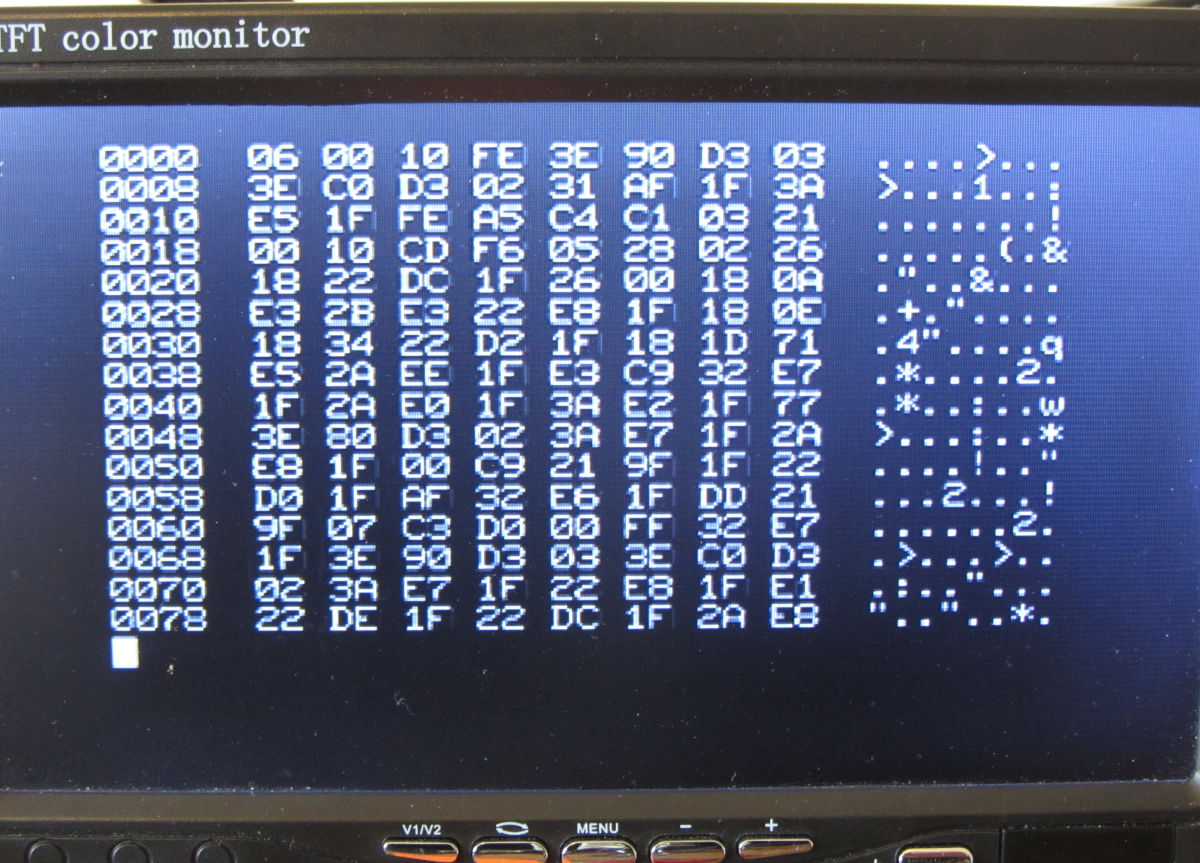
Extended firmware for the 6845 based video card for the Microprofessor MPF-I(b)
This repository contains the firmware versions for the Bardhele Electronic VIDEO-MPF-I card.
More info on my home page: https://www.electrickery.nl/comp/mpf1/index.html
VIO.zip are the hex dumps of the original ROMs that came with the card.
These are the most interesting entry addresses as of version 2.2:
* 0a004h: init 6845, clear screen, return from call
* 0a007h: init 6845, clear screen, jump to 0000h
Main components on the VIO MPF I
VIO MPF I bill of materials (BOM)
63 components, 43 distinct parts.
| Qty | Part | Footprint | Refs |
|---|---|---|---|
| 1 | uA7805 | TO-220-3_Horizontal_TabDown | U1 |
| 1 | 74LS85 | DIP-16_W7.62mm | U2 |
| 2 | 74LS138 | DIP-16_W7.62mm | U3, U20 |
| 1 | 74LS273 | DIP-20_W7.62mm | U4 |
| 1 | 74LS00 | DIP-14_W7.62mm | U5 |
| 1 | 74LS86 | DIP-14_W7.62mm | U6 |
| 1 | 74LS174 | DIP-16_W7.62mm | U7 |
| 1 | MC6845 | DIP-40_W15.24mm | U8 |
| 1 | 74LS151 | DIP-16_W7.62mm | U9 |
| 1 | 74LS161 | DIP-16_W7.62mm | U10 |
| 1 | 2716_alt | DIP-24_W15.24mm | U11 |
| 1 | 6116_alt | DIP-24_W15.24mm | U12 |
| 1 | 74LS32 | DIP-14_W7.62mm | U13 |
| 2 | 74LS245 | DIP-20_W7.62mm | U14, U15 |
| 3 | 74LS157 | DIP-16_W7.62mm | U16, U17, U18 |
| 1 | 2732_alt | DIP-24_W15.24mm | U19 |
| 1 | BF459 | TO-126-3_Vertical | Q1 |
| 1 | ACO-8.0MHz | Oscillator_DIP-14 | X1 |
| 2 | MPF-BUS | PinHeader_2x20_P2.54mm_Vertical_CW | J1, J2 |
| 1 | Barrel_Jack | Barrel_Jack_vertical_alt | J3 |
Show 23 more
| Qty | Part | Footprint | Refs |
|---|---|---|---|
| 1 | Conn_Coaxial | BNC_TEConnectivity_1478204_Vertical | J4 |
| 1 | A7 | PinHeader_1x03_P2.54mm_Vertical | J5 |
| 1 | A6 | PinHeader_1x03_P2.54mm_Vertical | J6 |
| 1 | A5 | PinHeader_1x03_P2.54mm_Vertical | J7 |
| 1 | A4 | PinHeader_1x03_P2.54mm_Vertical | J8 |
| 1 | HighAddr | PinHeader_1x02_P2.54mm_Vertical | J9 |
| 1 | LowAddr | PinHeader_1x02_P2.54mm_Vertical | J10 |
| 1 | 2716/2732 | PinHeader_1x03_P2.54mm_Vertical | J11 |
| 1 | Light Pen | PinHeader_1x03_P2.54mm_Vertical | J12 |
| 1 | WonB/BonW | PinHeader_1x03_P2.54mm_Vertical | JP1 |
| 1 | 220 | Potentiometer_Piher_PT-10-V10_Vertical | RV1 |
| 1 | 1N4148W | D_A-405_P7.62mm_Horizontal | D1 |
| 1 | 2.2uF | CP_Radial_D5.0mm_P2.50mm | C1 |
| 14 | 0.1uF | C_Disc_D3.0mm_W2.0mm_P2.50mm | C2, C4, C6, C7, C8, C9, C10, C11 +6 |
| 1 | 100uF | CP_Radial_Tantal_D5.5mm_P5.00mm | C3 |
| 1 | 22pF | C_Disc_D3.0mm_W2.0mm_P2.50mm | C5 |
| 3 | 3k3 | R_Axial_DIN0207_L6.3mm_D2.5mm_P10.16mm_Horizontal | R1, R7, R10 |
| 1 | 330 | R_Axial_DIN0207_L6.3mm_D2.5mm_P10.16mm_Horizontal | R2 |
| 1 | 390 | R_Axial_DIN0207_L6.3mm_D2.5mm_P10.16mm_Horizontal | R3 |
| 1 | 10 | R_Axial_DIN0207_L6.3mm_D2.5mm_P10.16mm_Horizontal | R5 |
| 1 | 27 | R_Axial_DIN0207_L6.3mm_D2.5mm_P10.16mm_Horizontal | R6 |
| 1 | 1k | R_Axial_DIN0207_L6.3mm_D2.5mm_P10.16mm_Horizontal | R8 |
| 1 | 120 | R_Axial_DIN0207_L6.3mm_D2.5mm_P10.16mm_Horizontal | R9 |
VIO MPF I design files
The KiCad project lives in the electrickery/VIO_MPF_I repository on GitHub; these links point at the commit this page was built from.
VIO MPF I: common questions
How big is the VIO MPF I PCB?
The VIO MPF I measures 156 × 100.1 mm, has 2 copper layers and is 1.6 mm thick.
How many components are on the VIO MPF I?
63 components, from 43 distinct parts. The full bill of materials is listed on this page.
Where can I download the VIO MPF I design files?
From the electrickery/VIO_MPF_I repository on GitHub, which has the KiCad layout; the links under Design files point to each one.
Can I use the VIO MPF I design in my own project?
The repository has no license, so all rights stay with electrickery. Use it as a reference, and ask the author before reusing the design.