
Pixeldust

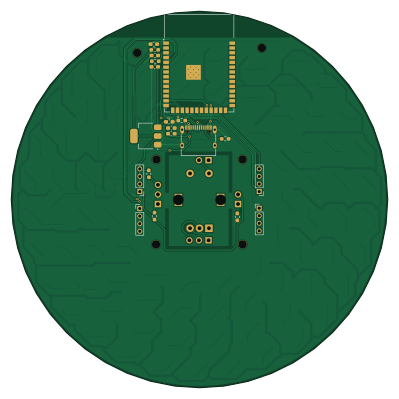
About the Pixeldust PCB
Pixeldust is an open source ESP32 PCB design by hackclub, published on GitHub. It is a 2-layer board measuring 99.6 × 99.6 mm, with 110 components from 15 distinct parts.
Its main chip is the ESP32-S3-WROOM-1, from the ESP32 family. Other key parts include the NCP1117-3.3_SOT223. By type, the board carries 85 diodes, 9 connectors, 7 resistors, 6 capacitors, 2 ICs and 1 switch.
It belongs with the displays & leds designs in this gallery, and the repository also holds 2 earlier revisions of it.
From the project
Wokwi link: https://wokwi.com/projects/428315472209826817
Wokwi link: https://wokwi.com/projects/428315472209826817
I have always been fascinated by thermostats, especially ones by NEST. I was wondering if I could make something similar, but for different information, with larger LEDs instead of a display.
I learned PCB design from hackpad/hackboard. I am super proud of the wiring on the back layer as well as the alignment of the rotary encoder.
Main components on the Pixeldust
Pixeldust bill of materials (BOM)
110 components, 15 distinct parts — part numbers from the project's BOM.
| Qty | Part | Footprint | Refs |
|---|---|---|---|
| 1 | ESP32-S3-WROOM-1 | ESP32-S3-WROOM-1 | U1 |
| 1 | NCP1117-3.3_SOT223 | SOT-223-3_TabPin2 | U2 |
| 1 | USB_C_RECEPTACLE_USB2.0_14P USB_C_Receptacle_USB2.0_14P | USB_C_Receptacle_XKB_U262-16XN-4BVC11 | J1 |
| 1 | CONN_01X03_SOCKET Conn_01x03_Socket | PinHeader_1x03_P2.54mm_Vertical | J2 |
| 1 | CONN_01X03_PIN Conn_01x03_Pin | PinHeader_1x03_P2.54mm_Vertical | J3 |
| 1 | CONN_01X02_PIN Conn_01x02_Pin | PinHeader_1x02_P2.54mm_Vertical | J4 |
| 1 | CONN_01X02_SOCKET Conn_01x02_Socket | PinHeader_1x02_P2.54mm_Vertical | J5 |
| 4 | CONN_01X04 Conn_01x04 | PinHeader_1x04_P2.00mm_Vertical | J6, J7, J8, J9 |
| 1 | RotaryEncoder_Switch | RotaryEncoder_Alps_EC11E-Switch_Vertical_H20mm | SW1 |
| 85 | WS2812B | LED_WS2812B_PLCC4_5.0x5.0mm_P3.2mm | D1, D2, D3, D4, D5, D6, D7, D8 +77 |
| 5 | 1u | C_0603_1608Metric_Pad1.08x0.95mm_HandSolder | C1, C2, C3, C4, C5 |
| 1 | 10U 10u | C_0603_1608Metric_Pad1.08x0.95mm_HandSolder | C6 |
| 5 | 5.1K | R_0603_1608Metric_Pad0.98x0.95mm_HandSolder | R1, R2, R5, R6, R7 |
| 1 | 100N 100n | R_0603_1608Metric_Pad0.98x0.95mm_HandSolder | R3 |
| 1 | 10K 10k | R_0603_1608Metric_Pad0.98x0.95mm_HandSolder | R4 |
Pixeldust design files
The KiCad project lives in the hackclub/pixeldust repository on GitHub; these links point at the commit this page was built from.
Pixeldust: common questions
What microcontroller does the Pixeldust use?
The Pixeldust is built around the ESP32-S3-WROOM-1, from the ESP32 family.
How big is the Pixeldust PCB?
The Pixeldust measures 99.6 × 99.6 mm, has 2 copper layers and is 1.6 mm thick.
How many components are on the Pixeldust?
110 components, from 15 distinct parts, with part numbers taken from the project's own BOM. The full bill of materials is listed on this page.
Where can I download the Pixeldust design files?
From the hackclub/pixeldust repository on GitHub, which has the KiCad layout, the schematic and the BOM; the links under Design files point to each one.
Can I use the Pixeldust design in my own project?
The repository has no license, so all rights stay with hackclub. Use it as a reference, and ask the author before reusing the design.
Can I test firmware for the Pixeldust without the hardware?
Yes. HardLabs builds a simulation of the board from its netlist and BOM, so you can run and debug ESP32 firmware against it before you order a PCB.
More boards in pixeldust
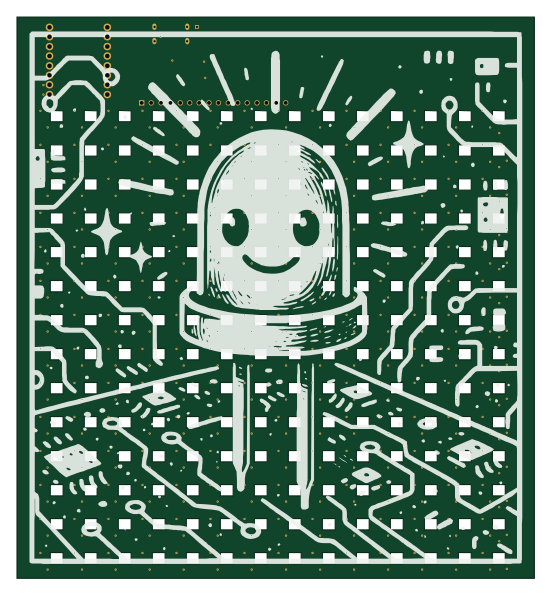 ESP32
ESP32Pixel Dust
136.9 × 148.5 mm402 parts2LNo license7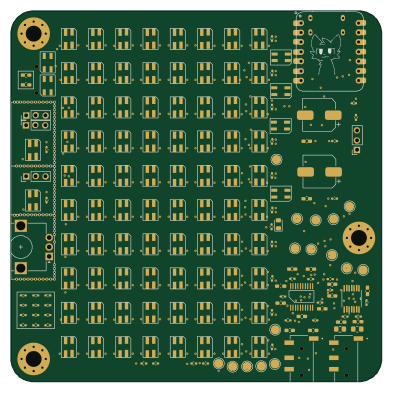 RP2040/RP2350
Irl raver
98 × 98 mm292 parts2LNo license7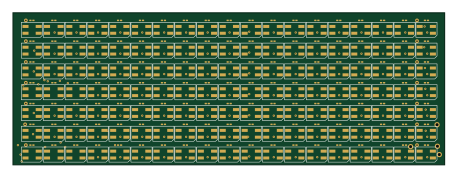 RP2040/RP2350
Pixeldustactual
114.3 × 40.3 mm268 parts2LNo license7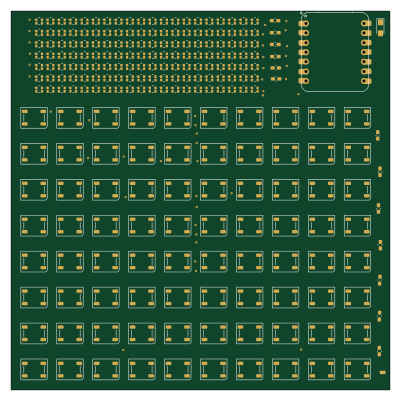 ESP32
ESP32Ledboard
100 × 100 mm235 parts2LNo license7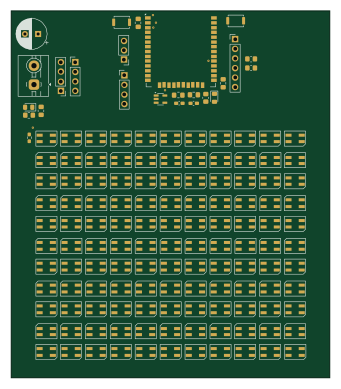 ESP32
ESP32Pixle LED
84.3 × 97.1 mm146 parts2LNo license7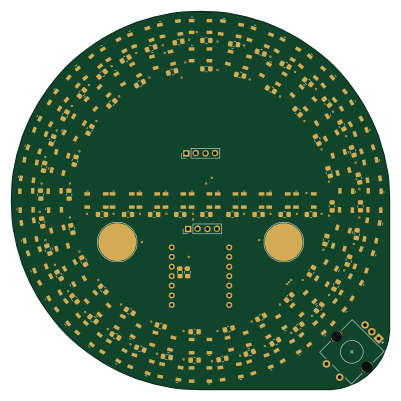 ESP32
ESP32WeatherRing
100 × 100 mm143 parts2LNo license7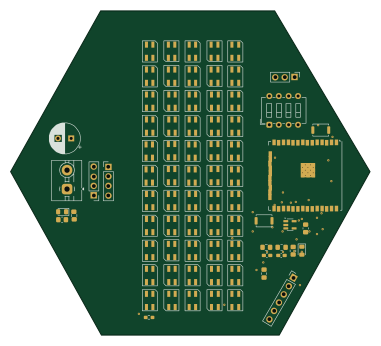 ESP32
ESP32Pixel
95 × 85.8 mm80 parts2LNo license7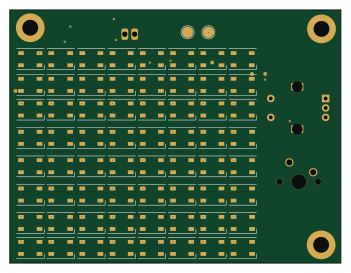 RP2040/RP2350
Lightbox
87.5 × 66.9 mm67 parts2LNo license7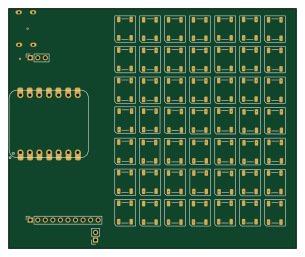 RP2040/RP2350
ProximityGradient
76.2 × 63.5 mm65 parts2LNo license7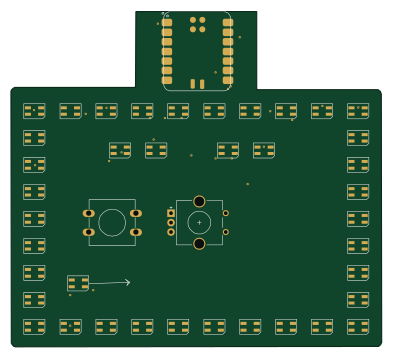 RP2040/RP2350
PixelDoro
98.2 × 88.8 mm40 parts2LNo license7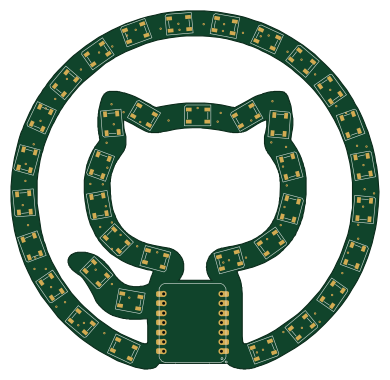 ESP32
ESP32SuperPixel
97.4 × 94.8 mm38 parts2LNo license7
Earlier revisions in the repo: Pixeldust, PixelDust
Similar boards
 ESP32
ESP32Open Book Abridged Edition
joeycastillo
85 × 115 mm65 parts2LCC-BY-SA-4.08.1k ESP32
ESP32Esp32 minimal
atopile
36.2 × 26.8 mm20 parts2LMIT4.0k ESP32
ESP32Badge
56.3 × 39 mm239 parts4LMIT4.0k ESP32
ESP32Controller
StuckAtPrototype
29 × 74 mm58 parts4LApache-2.03.8k ESP32
ESP32Racer
36 × 50.2 mm70 parts4LApache-2.03.8k ESP32
ESP32Bitaxe
skot
56.5 × 99.8 mm86 parts4LCERN-OHL-S-2.01.4k