
SensactUp4

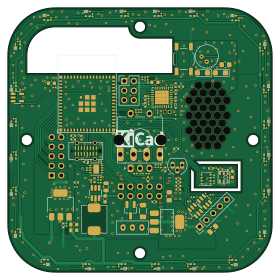
About the SensactUp4 PCB
SensactUp4 is an open source ESP32 PCB design by klaus-liebler, published on GitHub under the Apache-2.0 license. It is a 2-layer board measuring 70 × 70 mm, with 145 components from 69 distinct parts.
Its main chip is the ESP32-S3-MINI-1, from the ESP32 family. Other key parts include the TPS92200D2DDCR, NRF24L01_BREAKOUT_SMD, AMS1117-3.3, SN65HVD230 and DS18B20. By type, the board carries 60 capacitors, 34 resistors, 25 diodes, 10 ICs, 6 connectors and 3 switches.
It belongs with the iot & wireless designs in this gallery.
From the project
Es gibt vier Namespaces für Nachrichten "REQUEST" und "RESPONSE", "EVENT" und "ACKNOWLEDGE". Dies wird mit den beiden LSB des Versions-Namespace-Bytes erklärt (Somit bleiben 64 Versionierungsmöglichkeiten) Alle vier Namespaces haben ihren eigenen counter. Dieser beginnt bei 0x0 m
Es gibt vier Namespaces für Nachrichten "REQUEST" und "RESPONSE", "EVENT" und "ACKNOWLEDGE". Dies wird mit den beiden LSB des Versions-Namespace-Bytes erklärt (Somit bleiben 64 Versionierungsmöglichkeiten) Alle vier Namespaces haben ihren eigenen counter. Dieser beginnt bei 0x0 mit der ersten versendeten Nachricht und läuft nach 255 (0xFF) wieder auf 0. Die Ready-Nachricht wird immer mit counter=0x0 übertragen. Sie darf verwendet werden, um die Kommunikations-Session abzubrechen und die counter neu zu starten. Die counter representieren gemeinsames Wissen von Master und Slave REQEST (0b00)…
Main components on the SensactUp4
SensactUp4 bill of materials (BOM)
145 components, 69 distinct parts — part numbers from the project's BOM.
| Qty | Part | Footprint | Refs |
|---|---|---|---|
| 1 | TPS92200D2DDCR BME680 | Bosch_LGA-8_3x3mm_P0.8mm_ClockwisePinNumbering | U2 |
| 1 | TPS92200D2DDCR SIT3051TK | DFN-8-1EP_3x3mm_P0.65mm_EP1.55x2.4mm | U3 |
| 1 | NRF24L01_BREAKOUT_SMD AMS1117-3.3 | SOT-223-3_TabPin2 | U4 |
| 1 | AMS1117-3.3 74AHCT1G125 | SOT-23-5 | U5 |
| 1 | ESP32-S3-MINI-1 | ESP32-S3-MINI-1 | U6 |
| 1 | SN65HVD230 AMS1117-12 | SOT-223-3_TabPin2_HANDSOLDER | U7 |
| 1 | DS18B20 | TO-92L_HandSolder | U10 |
| 1 | NAU88C22YG NAU8822 Nuvoton Tech | QFN-32-1EP_5x5mm_P0.5mm_EP3.6x3.6mm_ThermalVias | U11 |
| 1 | AHT20 Aosong (Guangzhou) Elec | AHT21 | U12 |
| 1 | TPS54202DDCR TPS54202DDC Texas Instruments | SOT-23-6_Handsoldering | U27 |
| 2 | AO6800-HXY | SOT-23-6 | Q2, Q3 |
| 1 | IO | PinHeader_2x05_P2.54mm_Vertical | J2 |
| 1 | BaseConnector | IDC-Header_2x05_P2.54mm_Vertical | J3 |
| 1 | EXT_ROT | PhoenixContact_MCV_1,5_4-G-3.5_1x04_P3.50mm_Vertical | J5 |
| 1 | USB | GT-USB-7051A | J6 |
| 1 | EXT1 Conn_01x05 | PinHeader_1x05_P2.54mm_Vertical | J7 |
| 1 | PROG | PinHeader_2x03_P2.54mm_Vertical | J32 |
| 1 | Speaker_withoutTerminals | SPEAKER_2415 | LS1 |
| 1 | Speaker | PinHeader_1x02_P1.27mm_Vertical | LS2 |
| 1 | GMI6050P-64DB Mic INGHAi | Microphone_6mm | MK1 |
Show 49 more
| Qty | Part | Footprint | Refs |
|---|---|---|---|
| 1 | Rotary_Encoder_Switch_with_Mountingpoint | RotaryEncoder_Alps_EC11E-Switch_Vertical_H20mm | SW1 |
| 1 | TERM OFF | Switch_SS12D00 | SW3 |
| 1 | RESET | SW_SPST_TL3342_smaller_handsolder | SW4 |
| 12 | XL-1615RGBC | XL-1615 | D1, D5, D6, D11, D17, D18, D19, D20 +4 |
| 4 | SM4007PL XL-1615RGBC | XL-1615 | D2, D3, D4, D10 |
| 1 | INFO1 XL-1615RGBC | XL-1615 | D7 |
| 1 | NUP2105 XL-1615RGBC | XL-1615 | D8 |
| 1 | 1N5819WS XL-1615RGBC | XL-1615 | D9 |
| 5 | LED0 XL-1615RGBC | XL-1615 | D12, D13, D14, D15, D16 |
| 1 | NUP2105L NUP2105 TECH PUBLIC | SOT-23_Handsoldering | D25 |
| 1 | BLM18AG601SN1D 600R Murata Electronics | L_0603_1608Metric | FB1 |
| 1 | FXL0630-100-M 10uH cjiang (Changjiang Microelectronics Tech) | L_Abracon_ASPI-0630LR | L4 |
| 3 | 10n | C_0201_0603Metric | C6, C7, C42 |
| 1 | C49678 10u | C_0402_1005Metric | C9 |
| 7 | 10U u1 | C_0201_0603Metric | C10, C14, C21, C22, C24, C26, C31 |
| 9 | u1 | C_0201_0603Metric | C11, C29, C36, C37, C38, C39, C45, C46 +1 |
| 1 | 10U 10u | C_0402_1005Metric | C12 |
| 9 | C49678 u1 | C_0201_0603Metric | C13, C17, C18, C19, C25, C27, C28, C30 +1 |
| 1 | C1525 u1 | C_0201_0603Metric | C15 |
| 3 | 22U u1 | C_0201_0603Metric | C16, C34, C35 |
| 1 | C15008 u1 | C_0201_0603Metric | C20 |
| 1 | 22N/250V u1 | C_0201_0603Metric | C23 |
| 1 | 56P u1 | C_0201_0603Metric | C33 |
| 2 | TAJA105K016RNJ 1u Kyocera AVX | CP_EIA-3216-10_Kemet-I | C40, C41 |
| 6 | CL05A475MP5NRNC 4u7 Samsung Electro-Mechanics | C_0402_1005Metric | C43, C44, C49, C50, C51, C52 |
| 2 | 10u | C_0805_2012Metric_Pad1.18x1.45mm_HandSolder | C48, C55 |
| 2 | u1 | C_0805_2012Metric_Pad1.18x1.45mm_HandSolder | C53, C54 |
| 4 | CL10A226MP8NUNE 22u Samsung Electro-Mechanics | C_0603_1608Metric | C56, C83, C84, C85 |
| 3 | GRM033R61A104KE15D u1 Murata Electronics | C_0201_0603Metric | C57, C65, C66 |
| 1 | CC0603KRX7R9BB104 u1/35V YAGEO | C_0603_1608Metric | C79 |
| 1 | CGA0805X5R106K350MT 10u/35V HRE | C_0805_2012Metric | C80 |
| 1 | CC0603KRX7R9BB104 u1/16V YAGEO | C_0201_0603Metric | C81 |
| 1 | CC0402JRNPO9BN560 56p YAGEO | C_0201_0603Metric | C82 |
| 1 | 22K 10k | R_0201_0603Metric | R4 |
| 4 | 10k | R_0201_0603Metric | R5, R6, R7, R48 |
| 1 | 0402WGF2200TCE k22 UNI-ROYAL(Uniroyal Elec) | R_0402_1005Metric | R9 |
| 1 | 15K 10k | R_0201_0603Metric | R10 |
| 2 | 10K 10k | R_0201_0603Metric | R11, R47 |
| 1 | 1206W4F1200T5E K12 UNI-ROYAL(Uniroyal Elec) | R_1206_3216Metric_Pad1.30x1.75mm_HandSolder | R12 |
| 1 | 0R15 10k | R_0201_0603Metric | R13 |
| 1 | K47 5k1 | R_0402_1005Metric | R14 |
| 1 | 5k1 | R_0402_1005Metric | R15 |
| 1 | 3K3 5k1 | R_0402_1005Metric | R16 |
| 1 | 0805W8F0000T5E 0R UNI-ROYAL(Uniroyal Elec) | R_0805_2012Metric_Pad1.20x1.40mm_HandSolder | R23 |
| 1 | 0402WGF2201TCE 2k2 UNI-ROYAL(Uniroyal Elec) | R_0402_1005Metric | R24 |
| 2 | 0201WMF1002TEE 10k UNI-ROYAL(Uniroyal Elec) | R_0201_0603Metric | R26, R60 |
| 5 | 1k | R_0402_1005Metric | R46, R55, R56, R57, R58 |
| 6 | 0402WGF3301TCE 3k3 UNI-ROYAL(Uniroyal Elec) | R_0402_1005Metric | R49, R50, R51, R52, R53, R54 |
| 5 | 0201WMF1003TEE M1 UNI-ROYAL(Uniroyal Elec) | R_0201_0603Metric | R59, R61, R62, R63, R64 |
SensactUp4 design files
The KiCad project lives in the klaus-liebler/sensact repository on GitHub; these links point at the commit this page was built from.
SensactUp4: common questions
What microcontroller does the SensactUp4 use?
The SensactUp4 is built around the ESP32-S3-MINI-1, from the ESP32 family.
How big is the SensactUp4 PCB?
The SensactUp4 measures 70 × 70 mm, has 2 copper layers and is 1.6 mm thick.
How many components are on the SensactUp4?
145 components, from 69 distinct parts, with part numbers taken from the project's own BOM. The full bill of materials is listed on this page.
Where can I download the SensactUp4 design files?
From the klaus-liebler/sensact repository on GitHub, which has the KiCad layout, the schematic and the BOM; the links under Design files point to each one.
Can I use the SensactUp4 design in my own project?
Yes, under the terms of its Apache-2.0 license, which klaus-liebler chose for the repository.
Can I test firmware for the SensactUp4 without the hardware?
Yes. HardLabs builds a simulation of the board from its netlist and BOM, so you can run and debug ESP32 firmware against it before you order a PCB.
More boards in sensact
 ESP32
SensactHs
100 × 86.5 mm317 parts2LApache-2.04 ESP32
SensactHsIO5
90 × 67.5 mm213 parts2LApache-2.04 ESP32
SensactHsIO4
90 × 74.6 mm196 parts2LApache-2.04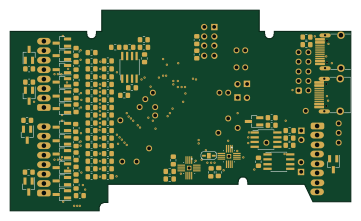 ESP32
SensactHsIO3
90 × 53 mm187 parts2LApache-2.04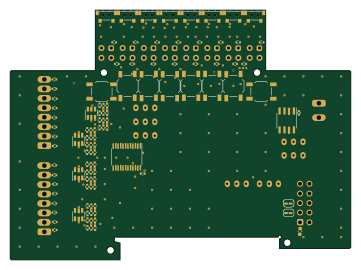
SensactInpExt2
90 × 66 mm139 parts2LApache-2.04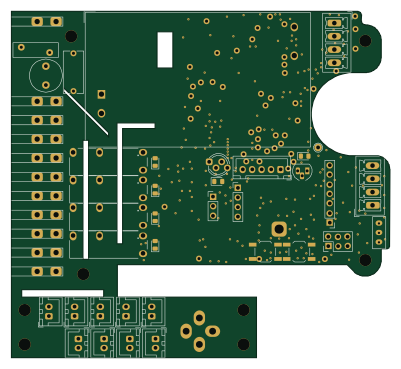 ESP32
SensactOutdoor
100 × 91.6 mm129 parts2LApache-2.04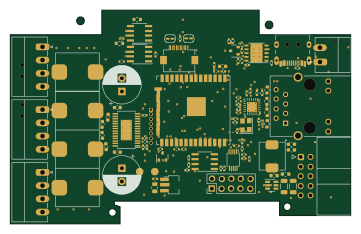 ESP32
SensactHsNano2
90 × 56.5 mm128 parts2LApache-2.04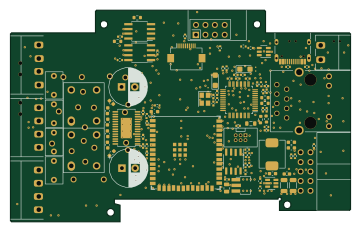 ESP32
SensactHsNano3
90 × 56 mm122 parts2LApache-2.04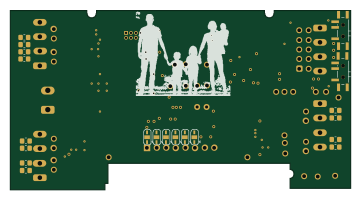 ESP32
SensactHsLed2 - Kopie
90 × 47.5 mm117 parts2LApache-2.04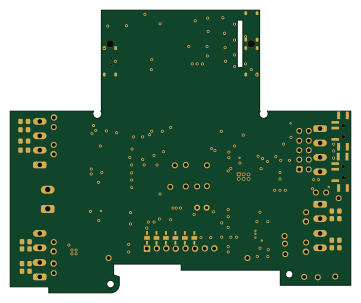 ESP32
SensactHsLed2
90 × 74.7 mm116 parts2LApache-2.04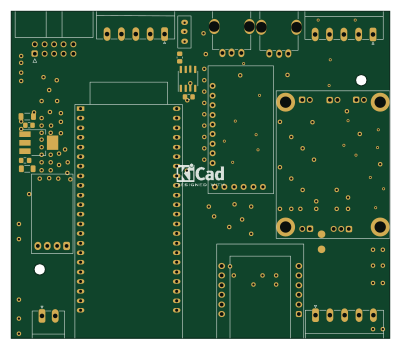 ESP32
SensactHs modular esp32
100 × 86.5 mm25 parts2LApache-2.04
Similar boards
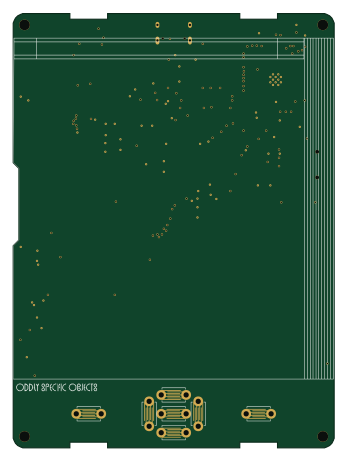 ESP32
OSO-BOOK-B1
joeycastillo
85 × 115 mm65 parts2LCC-BY-SA-4.08.1k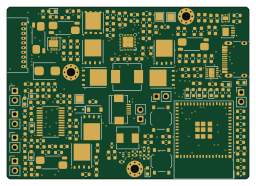 ESP32
Powertrain
byrantech
64 × 45.4 mm171 parts4LMIT4.3k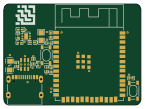 ESP32
Esp32 minimal
atopile
36.2 × 26.8 mm20 parts2LMIT4.0k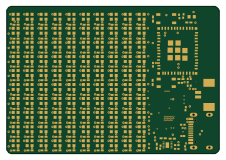 ESP32
Badge
56.3 × 39 mm239 parts4LMIT4.0k ESP32
Racer
StuckAtPrototype
36 × 50.2 mm70 parts4LApache-2.03.8k ESP32
Controller
29 × 74 mm58 parts4LApache-2.03.8k