
8 open source boards using the PCA9306DCTR
Real designs built with the PCA9306DCTR, from public GitHub projects: a quick way to see how others power, decouple and connect it. Each board comes with its KiCad files, full parts list and a render — and you can simulate its firmware on HardLabs.
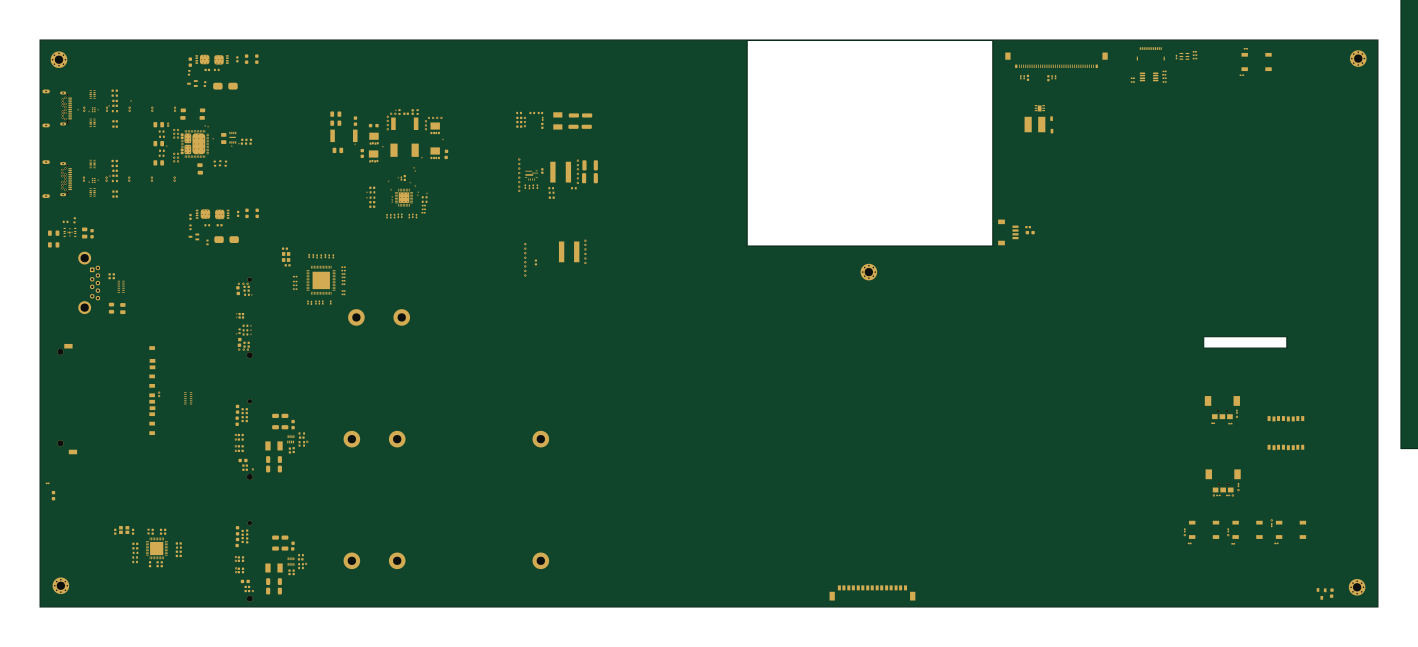 STM32
STM32Barebones
nzevh
354 × 150 mm1026 parts8LCERN-OHL-S-2.019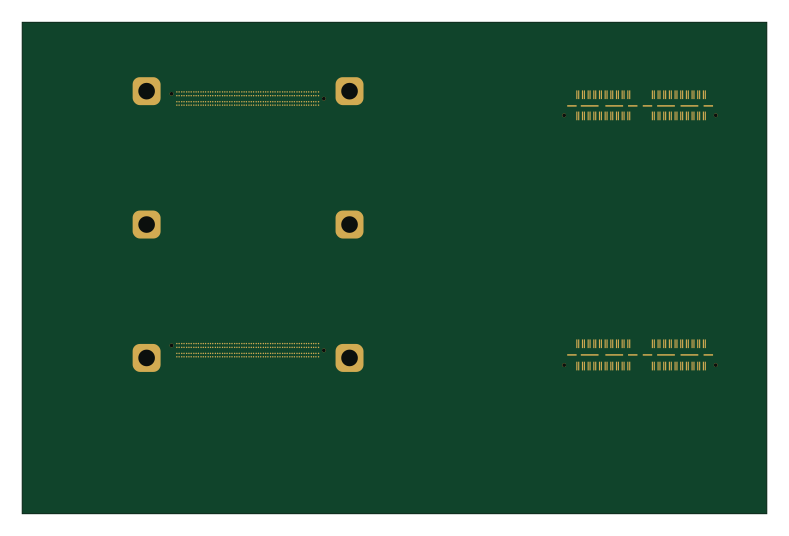
PSEC5 Ctrl Board
AhanDatta
197 × 130 mm518 parts10LNo license0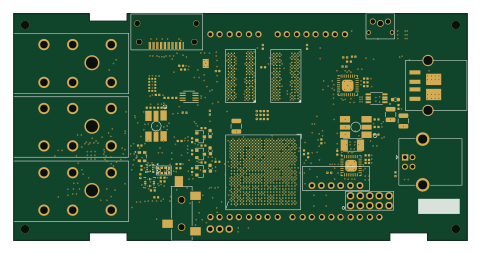 FPGA
FPGANeuraCore
NeuraCoreTech
120 × 60 mm295 parts8LNo license0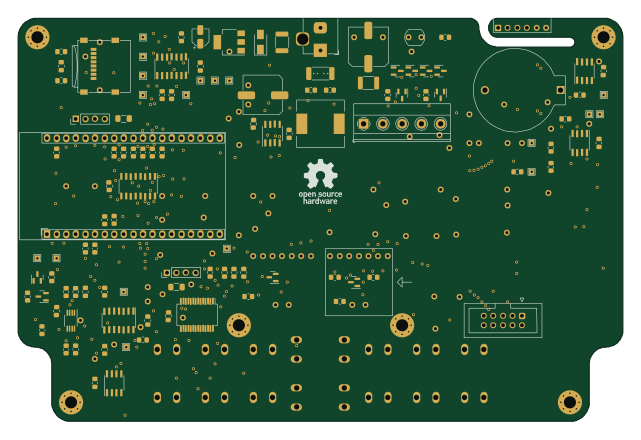 ESP32
ESP32Sunrise clock main board
atoomnetmarc
160 × 106.7 mm124 parts2LApache-2.00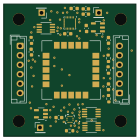
Flight module
FluYVy
35 × 35 mm27 parts2LNo license1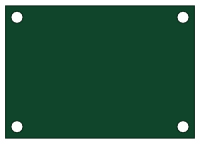
Hdmi ddc board
raffcorreia
50 × 35 mm23 parts2LMIT0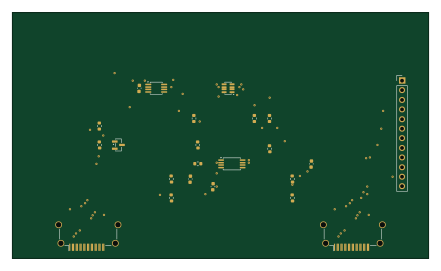
Hdmi ddc intermediary
110 × 65 mm23 parts4LMIT0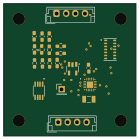
Herzfrequenzsensor
35 × 35 mm21 parts2LNo license1
The PCA9306DCTR in open source designs
The gallery holds 8 open source boards using the PCA9306DCTR from 6 GitHub repositories; a typical one measures about 115 × 62.5 mm and carries around 76 components.
50% are two-layer designs, the rest use four layers or more, and 50% carry an open source license.
The most starred is Barebones by nzevh.
What boards using the PCA9306DCTR are built for
PCA9306DCTR: common questions
Where can I find a PCA9306DCTR reference design?
Each of the 8 boards on this page is a real design using the PCA9306DCTR. Open one to see how it is wired up, with the full BOM, a render of the layout and links to its KiCad files.
Which microcontrollers do boards using the PCA9306DCTR use?
Most are built on ESP32 (1), FPGA (1) and STM32 (1).
How big is a typical board using the PCA9306DCTR?
The median is 115 × 62.5 mm, and 50% are two-layer designs.
What is the most popular open source board using the PCA9306DCTR?
By GitHub stars, Barebones by nzevh, with 19 stars.
Can I simulate one of these boards using the PCA9306DCTR before building it?
Yes. HardLabs turns a board's netlist and BOM into a working simulation, so you can boot and test firmware against it with no hardware on your desk.