
2 open source boards using the LM74700-Q1 (AEC-Q100 G1)
Real designs built with the LM74700-Q1 (AEC-Q100 G1), from public GitHub projects: a quick way to see how others power, decouple and connect it. Each board comes with its KiCad files, full parts list and a render — and you can simulate its firmware on HardLabs.
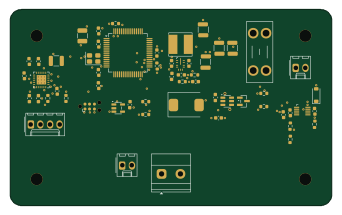
Thermo
jessiepullaro414
85.3 × 51.9 mm57 parts6LMIT0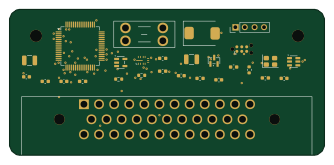
Manifold
83.4 × 38.7 mm27 parts4LMIT0
The LM74700-Q1 (AEC-Q100 G1) in open source designs
The gallery holds 2 open source boards using the LM74700-Q1 (AEC-Q100 G1) from 2 GitHub repositories; a typical one measures about 84.3 × 45.3 mm and carries around 42 components.
100% use four copper layers or more, and 100% carry an open source license.
The most starred is Thermo by jessiepullaro414.
Parts used alongside the LM74700-Q1 (AEC-Q100 G1)
What boards using the LM74700-Q1 (AEC-Q100 G1) are built for
LM74700-Q1 (AEC-Q100 G1): common questions
Where can I find a LM74700-Q1 (AEC-Q100 G1) reference design?
Each of the 2 boards on this page is a real design using the LM74700-Q1 (AEC-Q100 G1). Open one to see how it is wired up, with the full BOM, a render of the layout and links to its KiCad files.
How big is a typical board using the LM74700-Q1 (AEC-Q100 G1)?
The median is 84.3 × 45.3 mm, and 0% are two-layer designs.
What is the most popular open source board using the LM74700-Q1 (AEC-Q100 G1)?
By GitHub stars, Thermo by jessiepullaro414, with 0 stars.
Can I simulate one of these boards using the LM74700-Q1 (AEC-Q100 G1) before building it?
Yes. HardLabs turns a board's netlist and BOM into a working simulation, so you can boot and test firmware against it with no hardware on your desk.