
4 open source boards using the DRV8873HPWPR
Real designs built with the DRV8873HPWPR, from public GitHub projects: a quick way to see how others power, decouple and connect it. Each board comes with its KiCad files, full parts list and a render — and you can simulate its firmware on HardLabs.
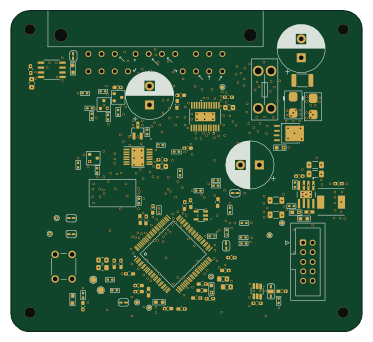
ThrottleECU
ThatguyCplus
93 × 85 mm108 parts4LNo license1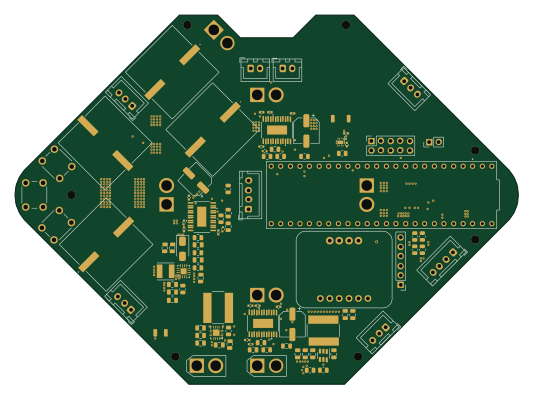
Main 4.3 old
hughminhphan
133.1 × 97.6 mm144 parts4LNo license0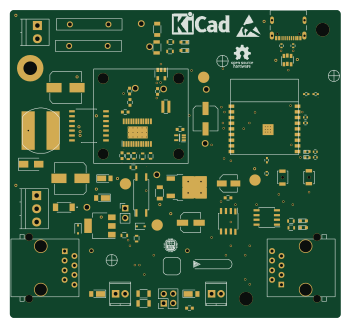 ESP32
ESP32-C3-Booster
RobertPHeller
87.6 × 81.5 mm80 parts2LCC-BY-4.00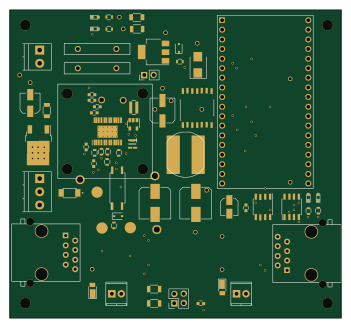
TTGO-T1-Booster
87.6 × 81.5 mm62 parts2LCC-BY-4.00
The DRV8873HPWPR in open source designs
The gallery holds 4 open source boards using the DRV8873HPWPR from 3 GitHub repositories; a typical one measures about 90.3 × 83.2 mm and carries around 94 components.
50% are two-layer designs, the rest use four layers or more, and 50% carry an open source license.
The most starred is ThrottleECU by ThatguyCplus.
Microcontrollers on boards using the DRV8873HPWPR
What boards using the DRV8873HPWPR are built for
DRV8873HPWPR: common questions
Where can I find a DRV8873HPWPR reference design?
Each of the 4 boards on this page is a real design using the DRV8873HPWPR. Open one to see how it is wired up, with the full BOM, a render of the layout and links to its KiCad files.
Which microcontrollers do boards using the DRV8873HPWPR use?
Most are built on ESP32 (1).
How big is a typical board using the DRV8873HPWPR?
The median is 90.3 × 83.2 mm, and 50% are two-layer designs.
What is the most popular open source board using the DRV8873HPWPR?
By GitHub stars, ThrottleECU by ThatguyCplus, with 1 stars.
Can I simulate one of these boards using the DRV8873HPWPR before building it?
Yes. HardLabs turns a board's netlist and BOM into a working simulation, so you can boot and test firmware against it with no hardware on your desk.