
4 open source boards using the LTC4151
Real designs built with the LTC4151, from public GitHub projects: a quick way to see how others power, decouple and connect it. Each board comes with its KiCad files, full parts list and a render — and you can simulate its firmware on HardLabs.
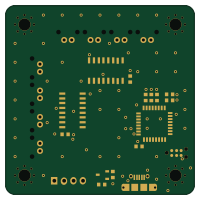 STM32
STM32R1 panel
cuspaceflight
50 × 50 mm176 parts2LNo license93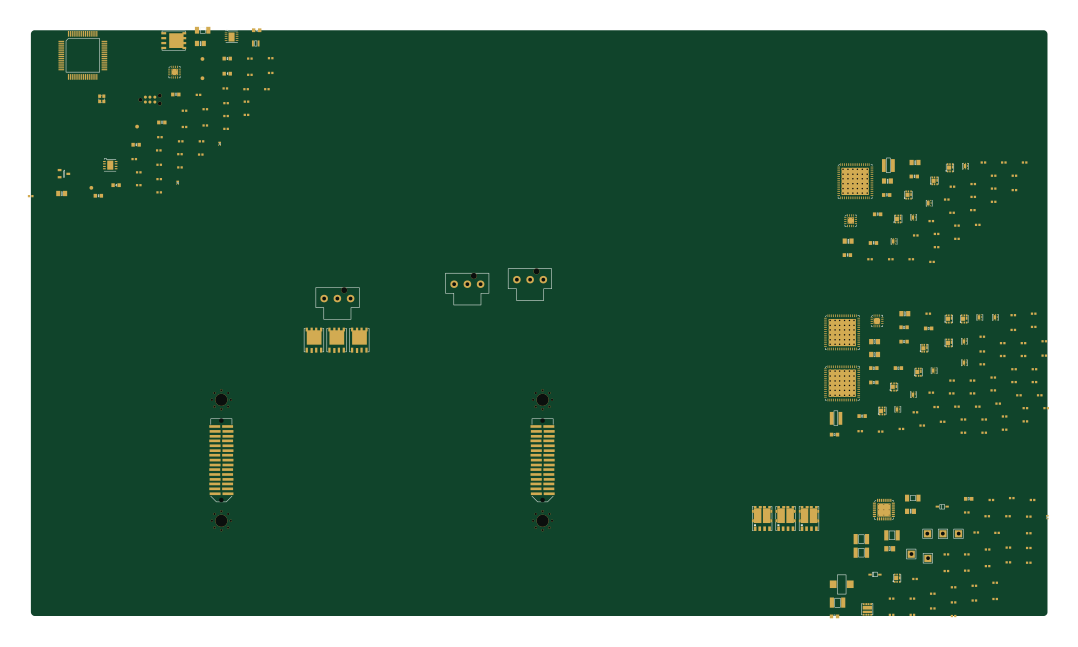 STM32
STM32M4psu
269 × 155 mm246 parts2LNo license8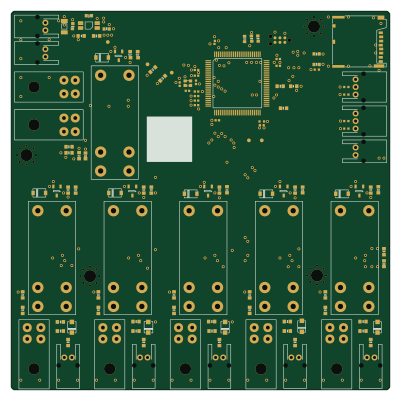 STM32
STM32Ignition
100 × 100 mm146 parts4LNo license1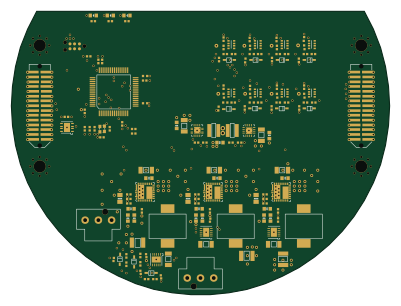 STM32
STM32M4pyro
100 × 74.9 mm165 parts2LNo license8
The LTC4151 in open source designs
The gallery holds 4 open source boards using the LTC4151 from 3 GitHub repositories; a typical one measures about 100 × 87.5 mm and carries around 171 components.
75% are two-layer designs, the rest use four layers or more, and 0% carry an open source license.
The most starred is R1 panel by cuspaceflight.
Parts used alongside the LTC4151
Microcontrollers on boards using the LTC4151
What boards using the LTC4151 are built for
LTC4151: common questions
Where can I find a LTC4151 reference design?
Each of the 4 boards on this page is a real design using the LTC4151. Open one to see how it is wired up, with the full BOM, a render of the layout and links to its KiCad files.
Which microcontrollers do boards using the LTC4151 use?
Most are built on STM32 (4).
How big is a typical board using the LTC4151?
The median is 100 × 87.5 mm, and 75% are two-layer designs.
What is the most popular open source board using the LTC4151?
By GitHub stars, R1 panel by cuspaceflight, with 93 stars.
Can I simulate one of these boards using the LTC4151 before building it?
Yes. HardLabs turns a board's netlist and BOM into a working simulation, so you can boot and test firmware against it with no hardware on your desk.