
8 open source boards using the TXB0304RUT
Real designs built with the TXB0304RUT, from public GitHub projects: a quick way to see how others power, decouple and connect it. Each board comes with its KiCad files, full parts list and a render — and you can simulate its firmware on HardLabs.
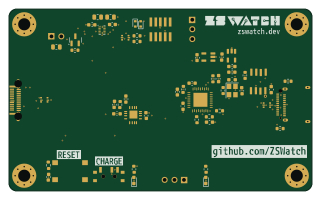
Dock-HW
ZSWatch
80 × 48 mm58 parts4LGPL-3.038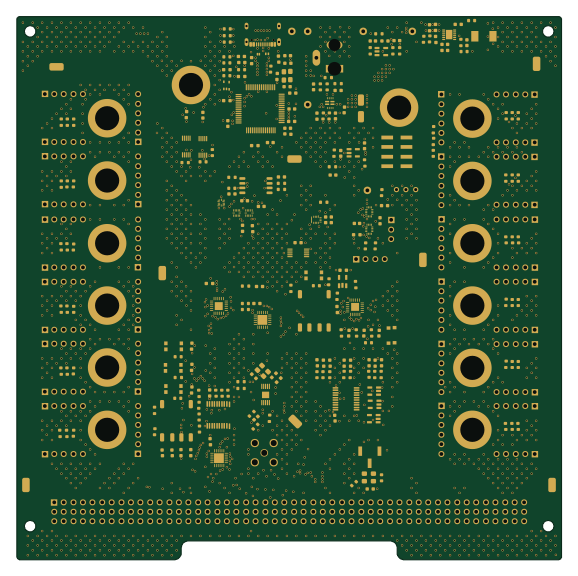
Main board
esl-epfl
144.3 × 143.8 mm253 parts4LNo license11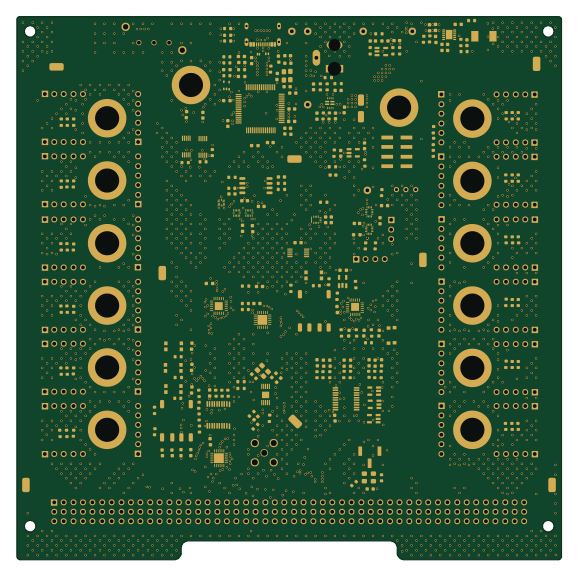
Main board
144.3 × 143.8 mm259 parts4LNo license2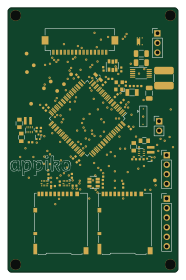 STM32
STM32SenseCam rev1
Appiko
45 × 70 mm62 parts2LCERN-OHL-1.22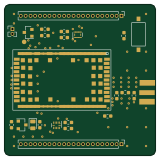
Sara r410m 02b module board
LanternD
40 × 40 mm25 parts2LApache-2.06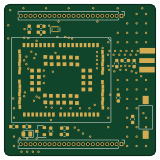
Bg96 module board
40 × 40 mm21 parts2LApache-2.06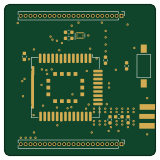
Bc26 bc66 module board
40 × 40 mm14 parts2LApache-2.06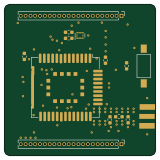
Bc26 module board
40 × 40 mm14 parts2LApache-2.06
The TXB0304RUT in open source designs
The gallery holds 8 open source boards using the TXB0304RUT from 5 GitHub repositories; a typical one measures about 42.5 × 44 mm and carries around 42 components.
63% are two-layer designs, the rest use four layers or more, and 75% carry an open source license.
The most starred is Dock-HW by ZSWatch.
Parts used alongside the TXB0304RUT
Microcontrollers on boards using the TXB0304RUT
What boards using the TXB0304RUT are built for
TXB0304RUT: common questions
Where can I find a TXB0304RUT reference design?
Each of the 8 boards on this page is a real design using the TXB0304RUT. Open one to see how it is wired up, with the full BOM, a render of the layout and links to its KiCad files.
What parts are used alongside the TXB0304RUT?
The 24AA02E-OT, 74AHC1G04, 74AHC244, 74AHCT1G08 and BIWIN_DTS04GE_SMD appear in the most repositories here.
Which microcontrollers do boards using the TXB0304RUT use?
Most are built on STM32 (1).
How big is a typical board using the TXB0304RUT?
The median is 42.5 × 44 mm, and 63% are two-layer designs.
What is the most popular open source board using the TXB0304RUT?
By GitHub stars, Dock-HW by ZSWatch, with 38 stars.
Can I simulate one of these boards using the TXB0304RUT before building it?
Yes. HardLabs turns a board's netlist and BOM into a working simulation, so you can boot and test firmware against it with no hardware on your desk.