
11 open source boards using the TCA9548ARGER
Real designs built with the TCA9548ARGER, from public GitHub projects: a quick way to see how others power, decouple and connect it. Each board comes with its KiCad files, full parts list and a render — and you can simulate its firmware on HardLabs.
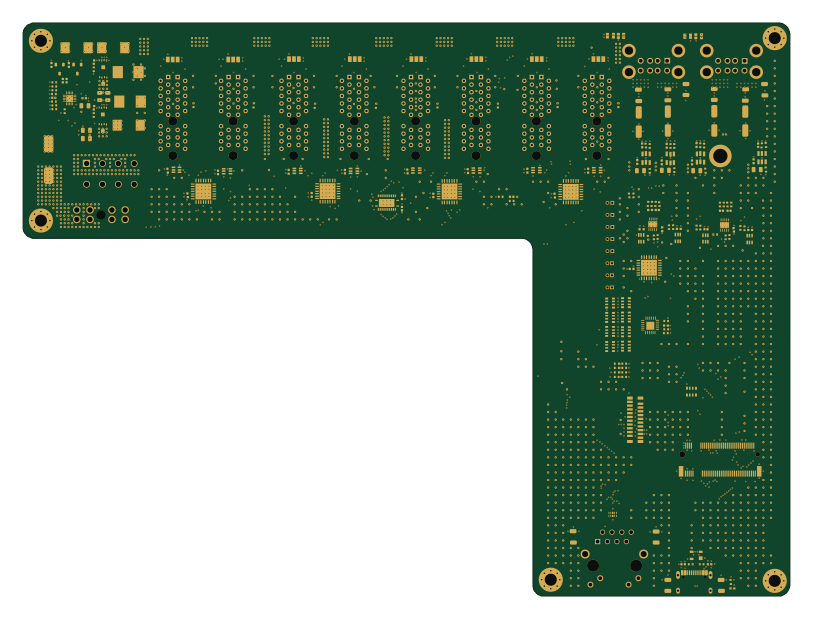
PDNode Baseboard
DvidMakesThings
203 × 151.8 mm208 parts6LAGPL-3.086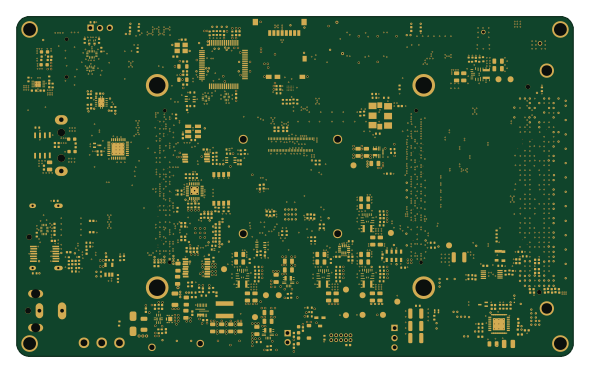 PIC
Aper-Oculus
ApotheoTech
147.4 × 90 mm557 parts16LGPL-3.032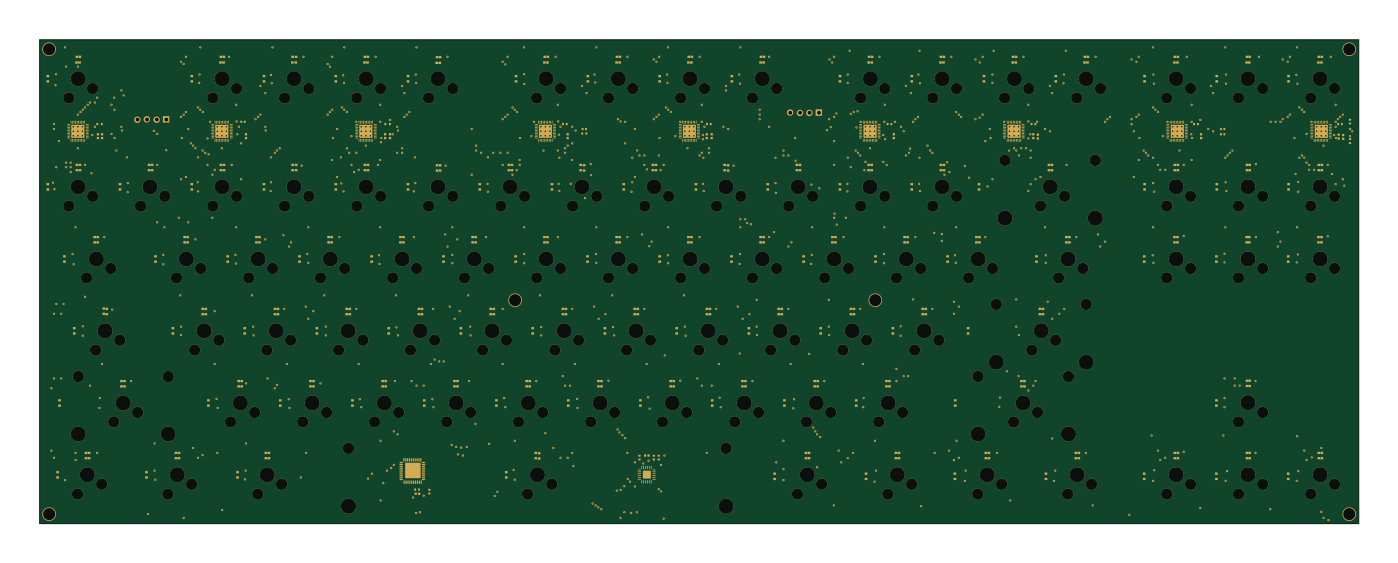
Vakeyboard
vladimir-aubrecht
349 × 128 mm310 parts2LCustom license24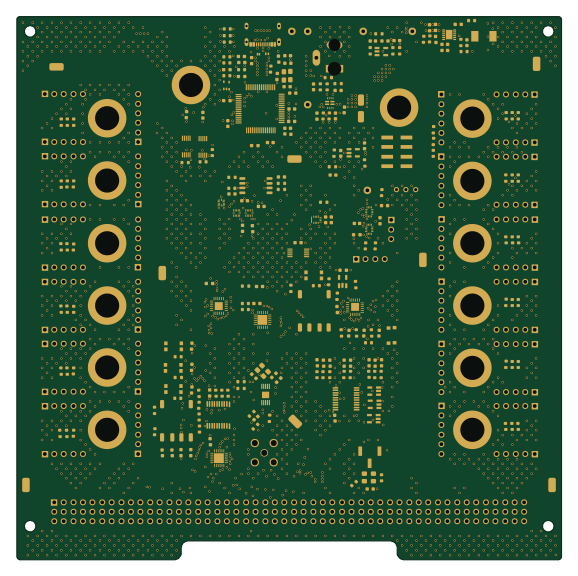
Main board
esl-epfl
144.3 × 143.8 mm253 parts4LNo license11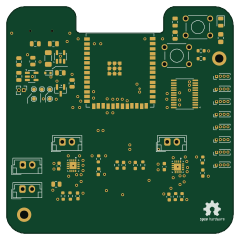 ESP32
RoboDojo
Amoskeag
60 × 60 mm63 parts4LBSD-2-Clause6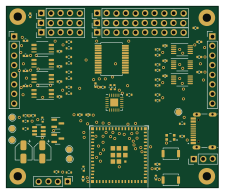 ESP32
ProtoBoard
ciborg971
56 × 48 mm84 parts4LMIT5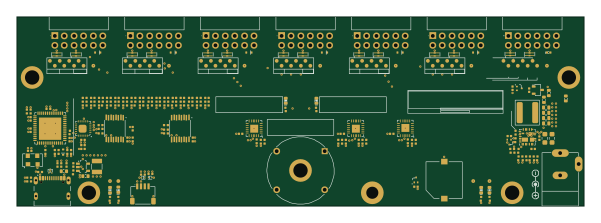
Ict baseboard
antmicro
150 × 50 mm203 parts4LApache-2.04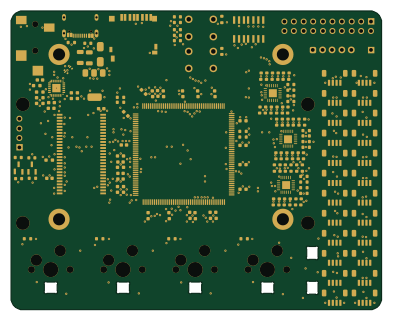 STM32
Mpe32board
udu3324
98 × 79 mm165 parts4LGPL-3.03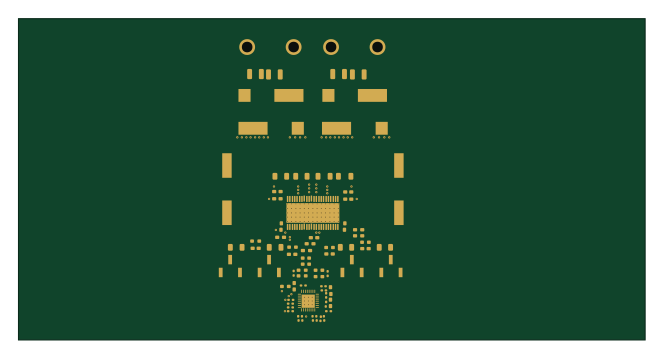 TI MSP430/CC
Projet Sound Bar DIY
HodearS
165.7 × 85 mm799 parts4LNo license2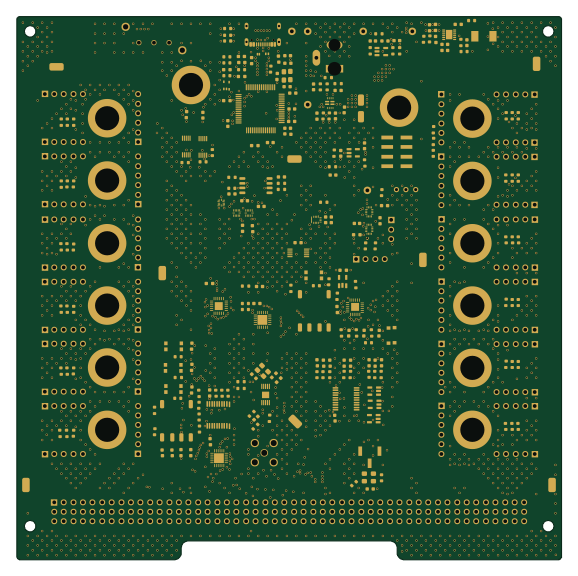
Main board
144.3 × 143.8 mm259 parts4LNo license2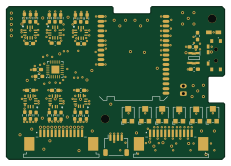
CollabJam
TactileVision
57.7 × 40.4 mm50 parts4LNo license0
How designs wire the TCA9548ARGER
Read from the KiCad layouts of 11 open source designs, one per repository: what each pin of the TCA9548ARGER connects to, and the resistors, capacitors and other passives placed on it.
- The A0 pin is tied to GND on 9 of 11 designs (a signal on 2).
- The VCC pin has a decoupling capacitor on 7 of 11 designs, most often 100 nF (then 1 µF).
- The A2 pin is tied to GND on 8 of 11 designs (a signal on 3).
- The A1 pin is tied to GND on 8 of 11 designs (a signal on 3).
| Pin | Connected to | Parts on the pin |
|---|---|---|
| SD0pin 1 | Connected to: A connector 27% |
|
| SC0pin 2 | Connected to: A connector 27% |
|
| SD1pin 3 | Connected to: A connector 27% |
|
| SC1pin 4 | Connected to: A connector 27% |
|
| SD2pin 5 | Connected to: A connector 27% |
|
| SC2pin 6 | Connected to: A connector 27% |
|
| SD3pin 7 | Connected to: Signal 82% · not connected 18% |
|
| SC3pin 8 | Connected to: Signal 82% · not connected 18% |
|
| GNDpin 9 | Connected to: GND 91% | — |
| SD4pin 10 | Connected to: A connector 36% · not connected 18% |
|
| SC4pin 11 | Connected to: A connector 36% · not connected 18% |
|
| SD5pin 12 | Connected to: A connector 36% · not connected 18% |
|
| SC5pin 13 | Connected to: A connector 36% · not connected 18% |
|
| SD6pin 14 | Connected to: A connector 27% · not connected 36% |
|
| SC6pin 15 | Connected to: A connector 27% · not connected 36% |
|
| SD7pin 16 | Connected to: Signal 64% · not connected 36% |
|
| SC7pin 17 | Connected to: Signal 64% · not connected 36% |
|
| A2pin 18 | Connected to: GND 73% · a signal 27% | — |
| SCLpin 19 | Connected to: A connector 45%, the microcontroller 36%, TCA9548ARGER 27% |
|
| SDApin 20 | Connected to: A connector 45%, the microcontroller 36%, TCA9548ARGER 27% |
|
| VCCpin 21 | Connected to: 3.3V 73% · a signal 27% |
|
| A0pin 22 | Connected to: GND 82% · a signal 18% | — |
| A1pin 23 | Connected to: GND 73% · a signal 27% | — |
| RESETpin 24 | Connected to: Signal 82% · 3.3V 18% |
|
| 1EPpin 25 | Connected to: Not connected 67% · GND 33% | — |
Connections count pins, parts count designs; values in brackets are how many parts had that value. Designs read include PDNode Baseboard by DvidMakesThings, Aper-Oculus by ApotheoTech, Vakeyboard by vladimir-aubrecht and Main board by esl-epfl.
The TCA9548ARGER in open source designs
The gallery holds 11 open source boards using the TCA9548ARGER from 11 GitHub repositories; a typical one measures about 144.3 × 85 mm and carries around 208 components.
91% use four copper layers or more, and 55% carry an open source license.
The most starred is PDNode Baseboard by DvidMakesThings.
Parts used alongside the TCA9548ARGER
Microcontrollers on boards using the TCA9548ARGER
What boards using the TCA9548ARGER are built for
TCA9548ARGER: common questions
Where can I find a TCA9548ARGER reference design?
Each of the 11 boards on this page is a real design using the TCA9548ARGER. Open one to see how it is wired up, with the full BOM, a render of the layout and links to its KiCad files.
How is the TCA9548ARGER A0 pin connected?
The A0 pin is tied to GND on 9 of 11 designs (a signal on 2). Counted from the KiCad layouts of 11 open source designs using the TCA9548ARGER.
What decoupling capacitors do designs use on the TCA9548ARGER VCC pin?
The VCC pin has a decoupling capacitor on 7 of 11 designs, most often 100 nF (then 1 µF). Counted from the KiCad layouts of 11 open source designs using the TCA9548ARGER.
How is the TCA9548ARGER A2 pin connected?
The A2 pin is tied to GND on 8 of 11 designs (a signal on 3). Counted from the KiCad layouts of 11 open source designs using the TCA9548ARGER.
What parts are used alongside the TCA9548ARGER?
The 24AA02E-OT, 74AHC1G04, 74AHC244, 74AHCT1G08 and BIWIN_DTS04GE_SMD appear in the most repositories here.
Which microcontrollers do boards using the TCA9548ARGER use?
Most are built on ESP32 (2), PIC (1), STM32 (1) and TI MSP430/CC (1).
How big is a typical board using the TCA9548ARGER?
The median is 144.3 × 85 mm, and 9% are two-layer designs.
What is the most popular open source board using the TCA9548ARGER?
By GitHub stars, PDNode Baseboard by DvidMakesThings, with 86 stars.
Can I simulate one of these boards using the TCA9548ARGER before building it?
Yes. HardLabs turns a board's netlist and BOM into a working simulation, so you can boot and test firmware against it with no hardware on your desk.