
6 open source boards using the 74HC4052D
Real designs built with the 74HC4052D, from public GitHub projects: a quick way to see how others power, decouple and connect it. Each board comes with its KiCad files, full parts list and a render — and you can simulate its firmware on HardLabs.
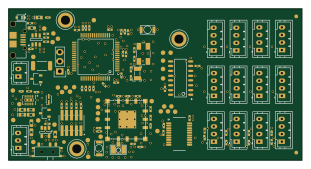 STM32
SunLeaf
HydroPWNics
77.5 × 40 mm155 parts4LNo license22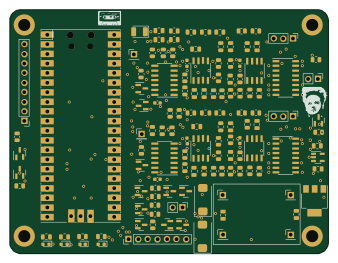 RP2040/RP2350
Tapeshnik proto
svofski
84.3 × 64.5 mm132 parts2LNo license14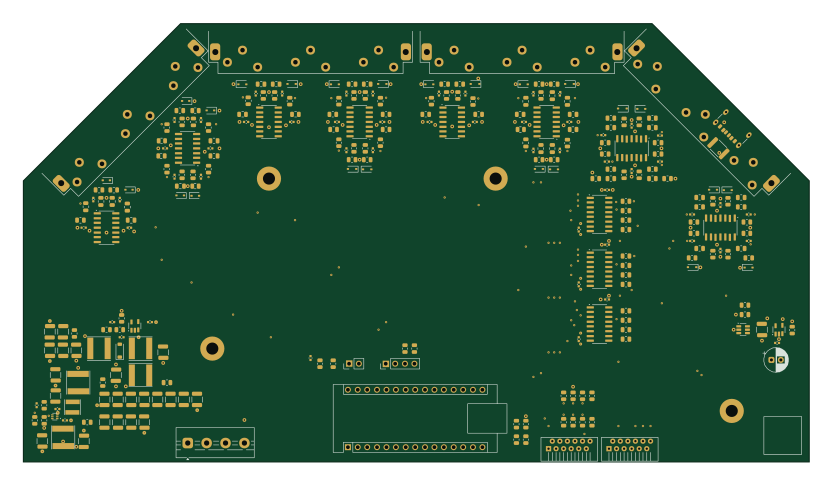 AVR/Arduino
Avswitch
mmcmaster-au
208 × 116 mm286 parts4LGPL-3.00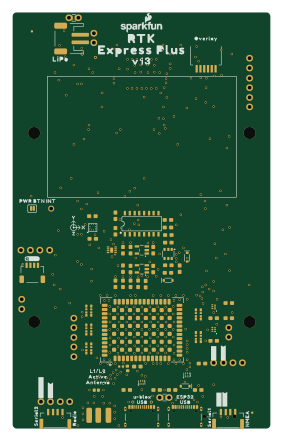 ESP32
Oomlout oomp documentation bot
oomlout
68.2 × 110.1 mm164 parts4LNo license0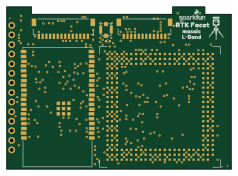 ESP32
SparkFun RTK Facet mosaic
sparkfun
59.5 × 43 mm129 parts4LMIT0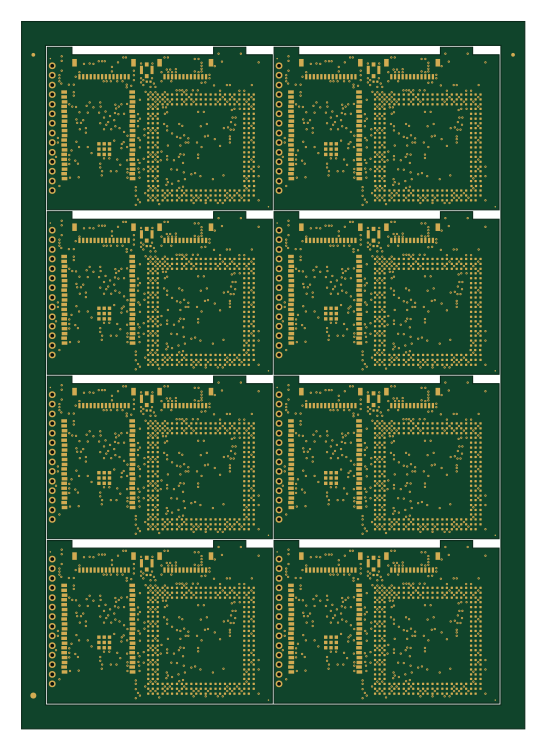 ESP32
SparkFun RTK Facet mosaic panelized
133.2 × 187.2 mm129 parts4LMIT0
How designs wire the 74HC4052D
Read from the KiCad layouts of 5 open source designs, one per repository: what each pin of the 74HC4052D connects to, and the resistors, capacitors and other passives placed on it.
- The VDD pin has a decoupling capacitor on 4 of 5 designs, most often 100 nF.
- The Y0 pin has a series resistor on 3 of 5 designs, most often 10 kΩ (then 75 Ω).
- The Y1 pin has a series resistor on 3 of 5 designs, most often 0 Ω (then 33 Ω).
- The X0 pin has a series resistor on 3 of 5 designs, most often 10 kΩ (then 75 Ω).
| Pin | Connected to | Parts on the pin |
|---|---|---|
| Y0pin 1 | Connected to: A connector 40% |
|
| Y2pin 2 | Connected to: A connector 40% · GND 20% |
|
| Y1pin 5 | Connected to: Signal 100% |
|
| INHpin 6 | Connected to: GND 60% · a signal 40% | — |
| VEEpin 7 | Connected to: GND 60% · 2.5V 20% · a signal 20% | — |
| VSSpin 8 | Connected to: GND 100% | — |
| Apin 10 | Connected to: The microcontroller 80% |
|
| X0pin 12 | Connected to: A connector 40% |
|
| X1pin 14 | Connected to: A connector 40% |
|
| X2pin 15 | Connected to: A connector 40% · GND 20% |
|
| VDDpin 16 | Connected to: 3.3V 100% |
|
5 more pins vary from design to design. Connections count pins, parts count designs; values in brackets are how many parts had that value. Designs read include SunLeaf by HydroPWNics, Tapeshnik proto by svofski, Avswitch by mmcmaster-au and Oomlout oomp documentation bot by oomlout.
The 74HC4052D in open source designs
The gallery holds 6 open source boards using the 74HC4052D from 5 GitHub repositories; a typical one measures about 80.9 × 87.3 mm and carries around 144 components.
83% use four copper layers or more, and 50% carry an open source license.
The most starred is SunLeaf by HydroPWNics.
Parts used alongside the 74HC4052D
Microcontrollers on boards using the 74HC4052D
What boards using the 74HC4052D are built for
74HC4052D: common questions
Where can I find a 74HC4052D reference design?
Each of the 6 boards on this page is a real design using the 74HC4052D. Open one to see how it is wired up, with the full BOM, a render of the layout and links to its KiCad files.
What decoupling capacitors do designs use on the 74HC4052D VDD pin?
The VDD pin has a decoupling capacitor on 4 of 5 designs, most often 100 nF. Counted from the KiCad layouts of 5 open source designs using the 74HC4052D.
What resistor goes on the 74HC4052D Y0 pin?
The Y0 pin has a series resistor on 3 of 5 designs, most often 10 kΩ (then 75 Ω). Counted from the KiCad layouts of 5 open source designs using the 74HC4052D.
What resistor goes on the 74HC4052D Y1 pin?
The Y1 pin has a series resistor on 3 of 5 designs, most often 0 Ω (then 33 Ω). Counted from the KiCad layouts of 5 open source designs using the 74HC4052D.
What parts are used alongside the 74HC4052D?
The AP2112K-3.3, CH340C and MAX17048 appear in the most repositories here.
Which microcontrollers do boards using the 74HC4052D use?
Most are built on ESP32 (3), AVR/Arduino (1), RP2040/RP2350 (1) and STM32 (1).
How big is a typical board using the 74HC4052D?
The median is 80.9 × 87.3 mm, and 17% are two-layer designs.
What is the most popular open source board using the 74HC4052D?
By GitHub stars, SunLeaf by HydroPWNics, with 22 stars.
Can I simulate one of these boards using the 74HC4052D before building it?
Yes. HardLabs turns a board's netlist and BOM into a working simulation, so you can boot and test firmware against it with no hardware on your desk.