
9 open source boards using the LMR16006XDDCR
Real designs built with the LMR16006XDDCR, from public GitHub projects: a quick way to see how others power, decouple and connect it. Each board comes with its KiCad files, full parts list and a render — and you can simulate its firmware on HardLabs.
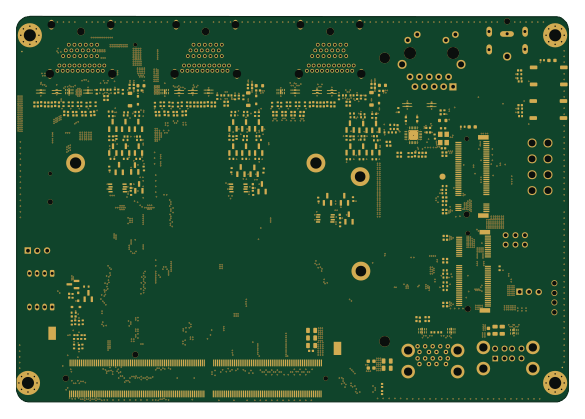
MXM GPU Card Carrier for LattePanda Mu
LattePandaTeam
146 × 102 mm425 parts8LMIT305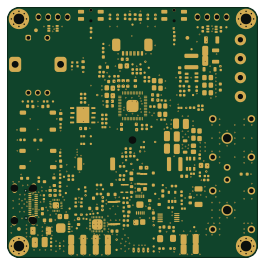 RP2040/RP2350
PD240W
theohg
66 × 66 mm213 parts6LCC-BY-NC-4.0125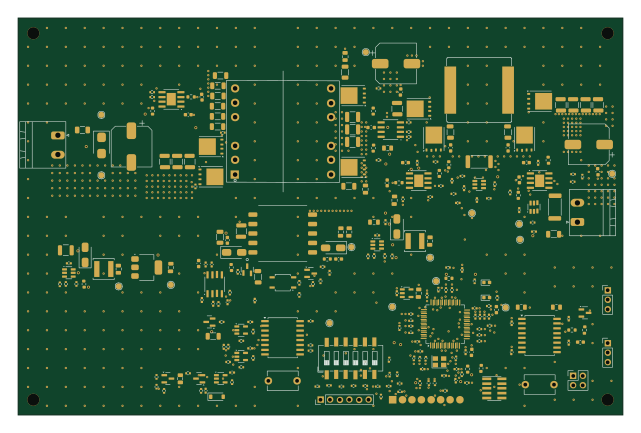 STM32
Dcdc converter
shousei01
160 × 105 mm260 parts4LNo license0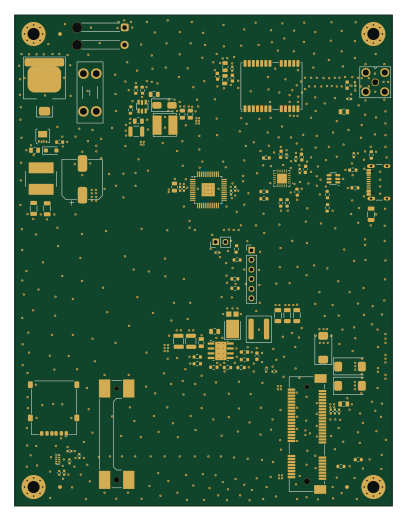 PIC
Farseer
jamesmarrs
100 × 130 mm106 parts4LNo license0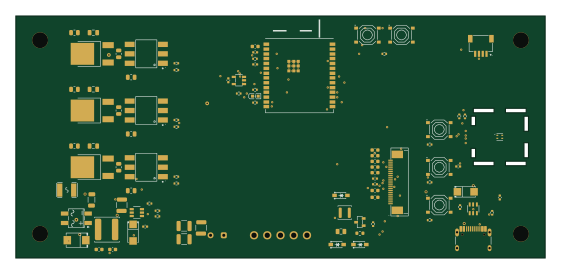 ESP32
Thermostat
Connicpu
140 × 64 mm92 parts2LMIT0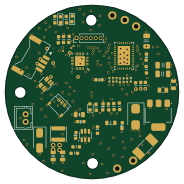 WCH CH32/CH55x
L103-drv8316c joint
bjthemost-hub
46 × 46 mm82 parts2LMIT0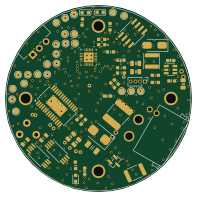 WCH CH32/CH55x
L103-drv8313-as5600
49.2 × 49.2 mm68 parts2LMIT0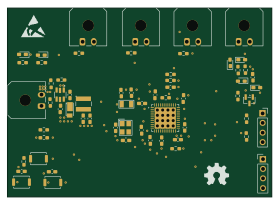 STM32
Engine monitoring unit
Harshavar8jdm
70 × 50 mm63 parts4LNo license0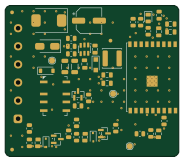 ESP32
Probe wink
dwzg
46 × 40 mm48 parts2LMIT0
How designs wire the LMR16006XDDCR
Read from the KiCad layouts of 9 open source designs, one per repository: what each pin of the LMR16006XDDCR connects to, and the resistors, capacitors and other passives placed on it.
- The VIN_5 pin has a decoupling capacitor on 9 of 9 designs, most often 100 nF (then 22 µF).
- The SW_6 pin has a inductor on 9 of 9 designs, most often 22 µH (then 6.8 µH).
- The CB_1 pin has a series capacitor on 8 of 9 designs, most often 100 nF.
- The FB_3 pin has a pull-up to 3.3V on 8 of 9 designs, most often 100 kΩ (then 33.2 kΩ).
| Pin | Connected to | Parts on the pin |
|---|---|---|
| CB_1pin 1 | Connected to: Signal 89% |
|
| GND_2pin 2 | Connected to: GND 100% | — |
| FB_3pin 3 | Connected to: Signal 89% |
|
| SHDN_4pin 4 | Connected to: Signal 89% |
|
| VIN_5pin 5 | Connected to: 12V 67% · a signal 33% |
|
| SW_6pin 6 | Connected to: Signal 89% |
|
Connections count pins, parts count designs; values in brackets are how many parts had that value. Designs read include MXM GPU Card Carrier for LattePanda Mu by LattePandaTeam, PD240W by theohg, L103-drv8313-as5600 by bjthemost-hub and L103-drv8316c joint by bjthemost-hub.
The LMR16006XDDCR in open source designs
The gallery holds 9 open source boards using the LMR16006XDDCR from 9 GitHub repositories; a typical one measures about 70 × 64 mm and carries around 92 components.
56% use four copper layers or more, and 56% carry an open source license.
The most starred is MXM GPU Card Carrier for LattePanda Mu by LattePandaTeam.
Parts used alongside the LMR16006XDDCR
Microcontrollers on boards using the LMR16006XDDCR
What boards using the LMR16006XDDCR are built for
LMR16006XDDCR: common questions
Where can I find a LMR16006XDDCR reference design?
Each of the 9 boards on this page is a real design using the LMR16006XDDCR. Open one to see how it is wired up, with the full BOM, a render of the layout and links to its KiCad files.
What decoupling capacitors do designs use on the LMR16006XDDCR VIN_5 pin?
The VIN_5 pin has a decoupling capacitor on 9 of 9 designs, most often 100 nF (then 22 µF). Counted from the KiCad layouts of 9 open source designs using the LMR16006XDDCR.
How is the LMR16006XDDCR SW_6 pin connected?
The SW_6 pin has a inductor on 9 of 9 designs, most often 22 µH (then 6.8 µH). Counted from the KiCad layouts of 9 open source designs using the LMR16006XDDCR.
How is the LMR16006XDDCR CB_1 pin connected?
The CB_1 pin has a series capacitor on 8 of 9 designs, most often 100 nF. Counted from the KiCad layouts of 9 open source designs using the LMR16006XDDCR.
Which microcontrollers do boards using the LMR16006XDDCR use?
Most are built on WCH CH32/CH55x (2), ESP32 (2), STM32 (2) and PIC (1).
How big is a typical board using the LMR16006XDDCR?
The median is 70 × 64 mm, and 44% are two-layer designs.
What is the most popular open source board using the LMR16006XDDCR?
By GitHub stars, MXM GPU Card Carrier for LattePanda Mu by LattePandaTeam, with 305 stars.
Can I simulate one of these boards using the LMR16006XDDCR before building it?
Yes. HardLabs turns a board's netlist and BOM into a working simulation, so you can boot and test firmware against it with no hardware on your desk.