
26 open source boards using the PT2399
Real designs built with the PT2399, from public GitHub projects: a quick way to see how others power, decouple and connect it. Each board comes with its KiCad files, full parts list and a render — and you can simulate its firmware on HardLabs.
 RP2040/RP2350
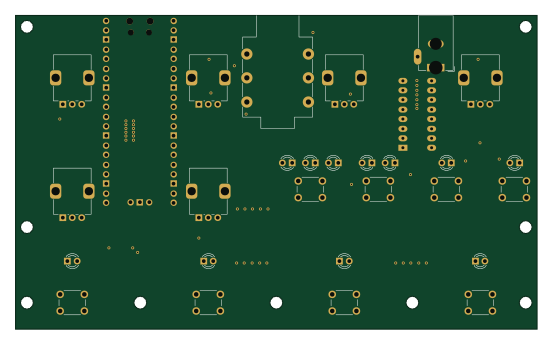
Dubsiren rp2040
sdrum01
138 × 83 mm81 parts2LNo license11- schematic only · 102 parts
Eurorack-PT2399-Delay
DIYSynthMNL
102 partsNo license10 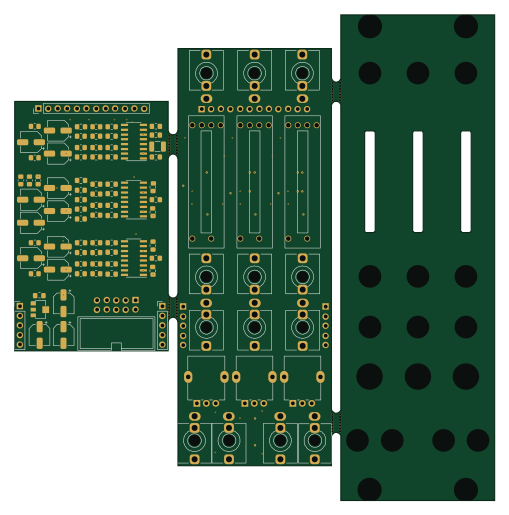
Dolphins
apaleslimghost
127 × 128.5 mm171 parts2LMIT5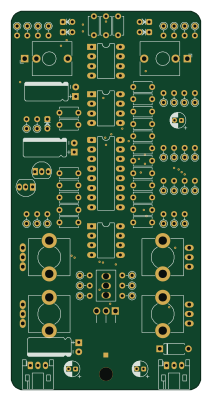
Dark Rabbit Chorus
PancakeLegend
50 × 100 mm84 parts2LGPL-3.02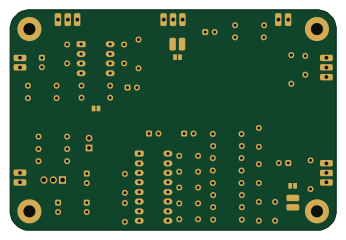
HackableDelay
benjiaomodular
86.4 × 58.4 mm58 parts2LCC-BY-4.02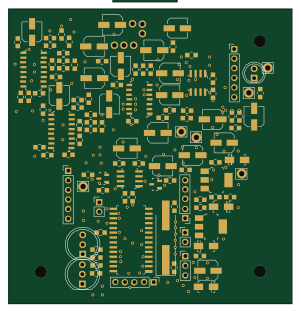 PIC
SimpleDigital
codeandrelax
75 × 78 mm127 parts2LMIT1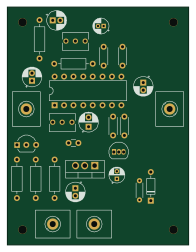
Block-PT2399
storskegg
48 × 63 mm29 parts2LApache-2.01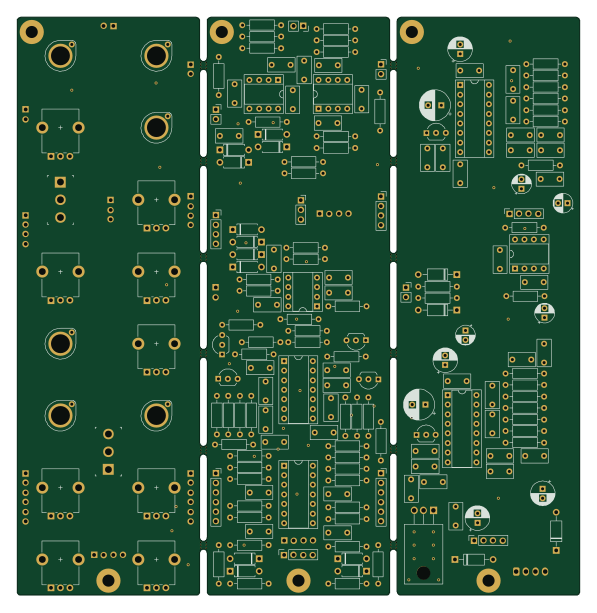
Dual PT2399 Digi Delay
ilya-n
148.8 × 152.9 mm202 parts2LNo license0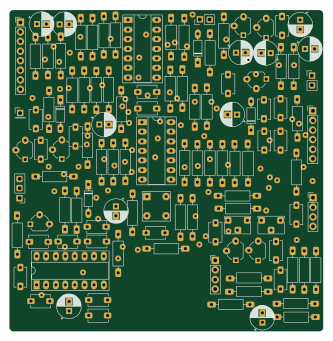
LongShot Delay
FandSonthesizer
83.1 × 85.1 mm115 parts2LGPL-3.00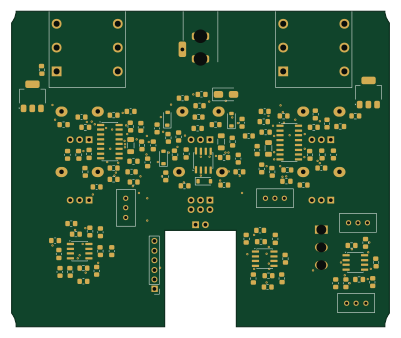
Dual-Delay
soggybag
100 × 83.5 mm105 parts2LNo license0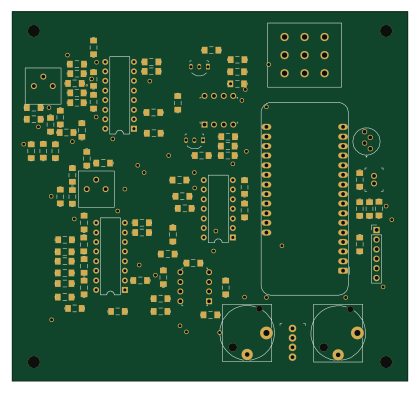
Effect pedal
Ahreo
104.8 × 97.8 mm85 parts2LNo license0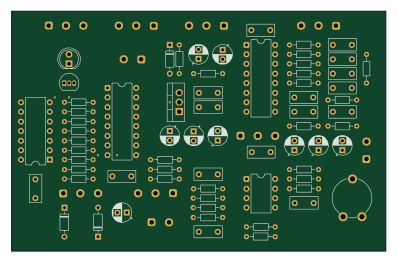
Lickshot dub siren
Orald-0
99.1 × 63.5 mm78 parts2LMIT0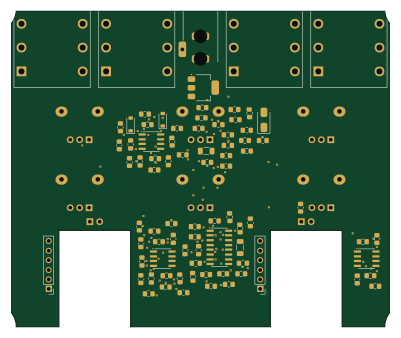
Loop-Echo
100 × 83.5 mm75 parts2LNo license0- schematic only · 116 parts
Guitar-Multi-FX-Pedal
MadAvidCoder
116 partsNo license0 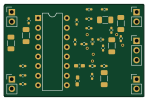
PT2399delay
kinoshita-lab
37 × 24.4 mm33 parts2LMIT3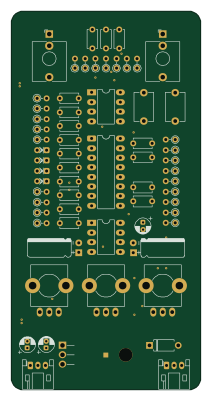
Delay
50 × 100 mm65 parts2LGPL-3.02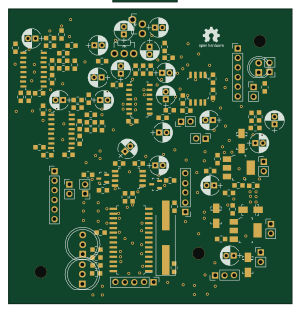 PIC
SimpleDigital THT electrolytes
75 × 78 mm118 parts2LMIT1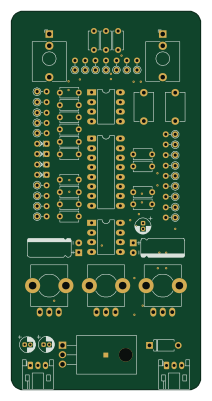
Delay (Old)
50 × 100 mm65 parts2LGPL-3.02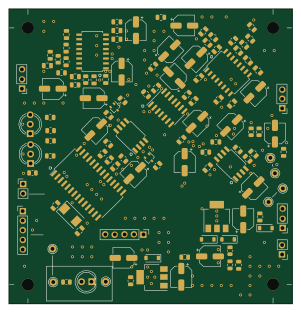 PIC
PT2399 basd Digital Effect Pedal (Time Manipulator)
75 × 78 mm113 parts4LMIT1 RISC-V
DropInTapPT2399
kanengomibako
10.1 × 20.3 mm25 parts4LUnlicense4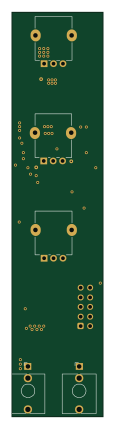
DelayOdesSmd
oficinadesonido
24.1 × 107.2 mm52 parts2LGPL-3.03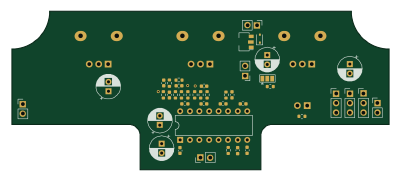
Delay reverb
adeboni
100 × 42 mm46 parts2LNo license0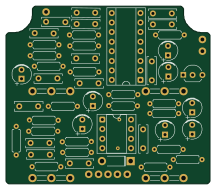
E6Delay
54 × 47 mm60 parts2LUnlicense11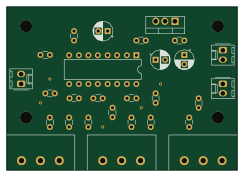
Pseudo reverb
jonronen
61 × 43.2 mm28 parts2LNo license1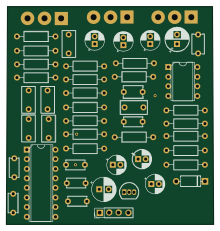
Deep blue delay
bubbajfett
54.9 × 57.7 mm49 parts2LCC0-1.014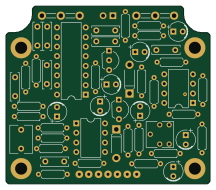
ReincarnationChorus RevB
54 × 47 mm58 parts2LUnlicense11
How designs wire the PT2399
Read from the KiCad layouts of 19 open source designs, one per repository: what each pin of the PT2399 connects to, and the resistors, capacitors and other passives placed on it.
- The LPF1-IN pin has a series resistor on 19 of 19 designs, most often 10 kΩ (then 4.7 kΩ).
- The CC1 pin has a capacitor to GND on 18 of 19 designs, most often 100 nF.
- The CC0 pin has a capacitor to GND on 18 of 19 designs, most often 100 nF.
- The OP1-OUT pin has a series capacitor on 18 of 19 designs, most often 100 nF (then 82 nF).
| Pin | Connected to | Parts on the pin |
|---|---|---|
| VCCpin 1 | Connected to: 5V 79% · a signal 21% |
|
| REFpin 2 | Connected to: Signal 95% |
|
| AGNDpin 3 | Connected to: GND 100% | — |
| DGNDpin 4 | Connected to: GND 89% | — |
| CLK_Opin 5 | Connected to: Not connected 95% | — |
| VCOpin 6 | Connected to: Signal 100% |
|
| CC1pin 7 | Connected to: Signal 100% |
|
| CC0pin 8 | Connected to: Signal 100% |
|
| OP1-OUTpin 9 | Connected to: Signal 100% |
|
| OP1-INpin 10 | Connected to: Signal 100% |
|
| OP2-INpin 11 | Connected to: Signal 100% |
|
| OP2-OUTpin 12 | Connected to: Signal 100% |
|
| LPF2-INpin 13 | Connected to: Signal 89% |
|
| LPF2-OUTpin 14 | Connected to: Signal 89% |
|
| LPF1-OUTpin 15 | Connected to: Signal 100% |
|
| LPF1-INpin 16 | Connected to: Signal 100% |
|
Connections count pins, parts count designs; values in brackets are how many parts had that value. Designs read include Deep blue delay by bubbajfett, E6Delay by kanengomibako, Dubsiren rp2040 by sdrum01 and Dolphins by apaleslimghost.
The PT2399 in open source designs
The gallery holds 26 open source boards using the PT2399 from 21 GitHub repositories; a typical one measures about 75 × 78 mm and carries around 77 components.
92% are two-layer designs, the rest use four layers or more, and 65% carry an open source license.
The most starred is Deep blue delay by bubbajfett.
Parts used alongside the PT2399
Microcontrollers on boards using the PT2399
What boards using the PT2399 are built for
PT2399: common questions
Where can I find a PT2399 reference design?
Each of the 26 boards on this page is a real design using the PT2399. Open one to see how it is wired up, with the full BOM, a render of the layout and links to its KiCad files.
What resistor goes on the PT2399 LPF1-IN pin?
The LPF1-IN pin has a series resistor on 19 of 19 designs, most often 10 kΩ (then 4.7 kΩ). Counted from the KiCad layouts of 19 open source designs using the PT2399.
How is the PT2399 CC1 pin connected?
The CC1 pin has a capacitor to GND on 18 of 19 designs, most often 100 nF. Counted from the KiCad layouts of 19 open source designs using the PT2399.
How is the PT2399 CC0 pin connected?
The CC0 pin has a capacitor to GND on 18 of 19 designs, most often 100 nF. Counted from the KiCad layouts of 19 open source designs using the PT2399.
What parts are used alongside the PT2399?
The TL072, L7805, TL074, AMS1117-5.0 and L78L05_SOT89 appear in the most repositories here.
Which microcontrollers do boards using the PT2399 use?
Most are built on PIC (3), RISC-V (1) and RP2040/RP2350 (1).
How big is a typical board using the PT2399?
The median is 75 × 78 mm, and 92% are two-layer designs.
What is the most popular open source board using the PT2399?
By GitHub stars, Deep blue delay by bubbajfett, with 14 stars.
Can I simulate one of these boards using the PT2399 before building it?
Yes. HardLabs turns a board's netlist and BOM into a working simulation, so you can boot and test firmware against it with no hardware on your desk.