
5 open source boards using the Pi Pico
Real designs built with the Pi Pico, from public GitHub projects: a quick way to see how others power, decouple and connect it. Each board comes with its KiCad files, full parts list and a render — and you can simulate its firmware on HardLabs.
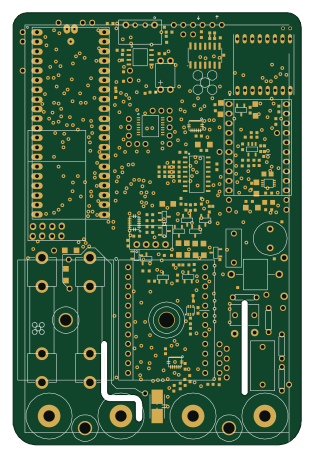 RP2040/RP2350
HydraMeter 0.4
jduffy105
76.2 × 114.3 mm288 parts2LCERN-OHL-S-2.0174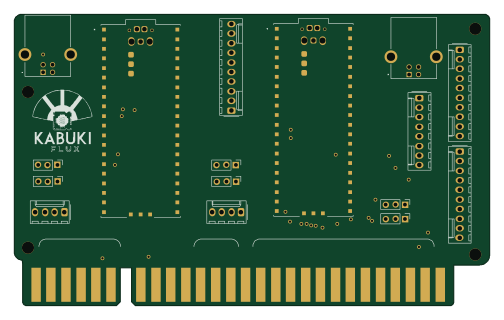 RP2040/RP2350
JAMMA 2player xbox360
KabukiFlux
125.7 × 77 mm17 parts2LMIT17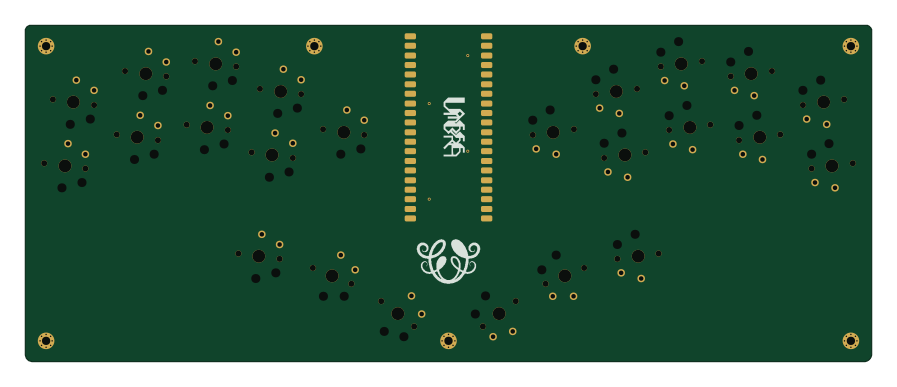 RP2040/RP2350
Umbra
skarrmann
224 × 89 mm32 parts2LMIT13 RP2040/RP2350
Vectorscope GuyFawkes
shabaz123
14 × 1 mm81 parts2LGPL-3.03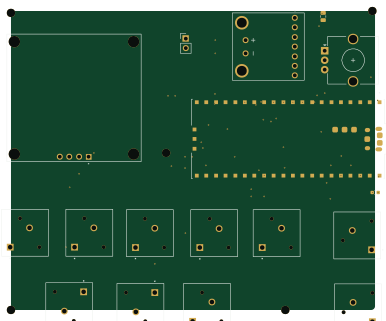 RP2040/RP2350
MiniMelody
ahmadjamal789
96.2 × 79 mm16 parts2LNo license0
How designs wire the Pi Pico
Read from the KiCad layouts of 5 open source designs, one per repository: what each pin of the Pi Pico connects to, and the resistors, capacitors and other passives placed on it.
- The ADC_VREF pin is left unconnected on 5 of 5 designs.
- The 3V3_EN pin is left unconnected on 5 of 5 designs.
- The RUN pin is left unconnected on 4 of 5 designs.
- The 3V3_OUT pin is tied to 3.3V on 3 of 5 designs.
| Pin | Connected to | Parts on the pin |
|---|---|---|
| GNDpin 3, 8, 13, 18, 23, 28, 38, D2 | Connected to: GND 81% · a signal 19% | — |
| RUNpin 30 | Connected to: Not connected 80% · a signal 20% | — |
| AGNDpin 33 | Connected to: GND 60% · not connected 20% · a signal 20% | — |
| ADC_VREFpin 35 | Connected to: Not connected 100% | — |
| 3V3_OUTpin 36 | Connected to: 3.3V 60% · not connected 20% · a signal 20% | — |
| 3V3_ENpin 37 | Connected to: Not connected 100% | — |
| VSYSpin 39 | Connected to: Not connected 60% · VSYS 20% · a signal 20% | — |
| VBUSpin 40 | Connected to: Signal 60% · not connected 20% · 5V 20% |
|
| SWCLKpin D1 | Connected to: Not connected 100% | — |
| SWDIOpin D3 | Connected to: Not connected 100% | — |
| TP1_GNDpin TP1 | Connected to: GND 100% | — |
| TP4_GPIO23/SMPS_PSpin TP4 | Connected to: Not connected 100% | — |
| TP5_GPIO25/LEDpin TP5 | Connected to: Not connected 100% | — |
| TP6_BOOTSELpin TP6 | Connected to: Not connected 100% | — |
29 more pins vary from design to design. Connections count pins, parts count designs; values in brackets are how many parts had that value. Designs read include HydraMeter 0.4 by jduffy105, JAMMA 2player xbox360 by KabukiFlux, Umbra by skarrmann and Vectorscope GuyFawkes by shabaz123.
The Pi Pico in open source designs
The gallery holds 5 open source boards using the Pi Pico from 5 GitHub repositories; a typical one measures about 96.2 × 79 mm and carries around 32 components.
100% are two-layer designs, the rest use four layers or more, and 80% carry an open source license.
The most starred is HydraMeter 0.4 by jduffy105.
Microcontrollers on boards using the Pi Pico
What boards using the Pi Pico are built for
Pi Pico: common questions
Where can I find a Pi Pico reference design?
Each of the 5 boards on this page is a real design using the Pi Pico. Open one to see how it is wired up, with the full BOM, a render of the layout and links to its KiCad files.
How is the Pi Pico ADC_VREF pin connected?
The ADC_VREF pin is left unconnected on 5 of 5 designs. Counted from the KiCad layouts of 5 open source designs using the Pi Pico.
How is the Pi Pico 3V3_EN pin connected?
The 3V3_EN pin is left unconnected on 5 of 5 designs. Counted from the KiCad layouts of 5 open source designs using the Pi Pico.
How is the Pi Pico RUN pin connected?
The RUN pin is left unconnected on 4 of 5 designs. Counted from the KiCad layouts of 5 open source designs using the Pi Pico.
Which microcontrollers do boards using the Pi Pico use?
Most are built on RP2040/RP2350 (5).
How big is a typical board using the Pi Pico?
The median is 96.2 × 79 mm, and 100% are two-layer designs.
What is the most popular open source board using the Pi Pico?
By GitHub stars, HydraMeter 0.4 by jduffy105, with 174 stars.
Can I simulate one of these boards using the Pi Pico before building it?
Yes. HardLabs turns a board's netlist and BOM into a working simulation, so you can boot and test firmware against it with no hardware on your desk.