
6 open source boards using the TPS62132RGTR
Real designs built with the TPS62132RGTR, from public GitHub projects: a quick way to see how others power, decouple and connect it. Each board comes with its KiCad files, full parts list and a render — and you can simulate its firmware on HardLabs.
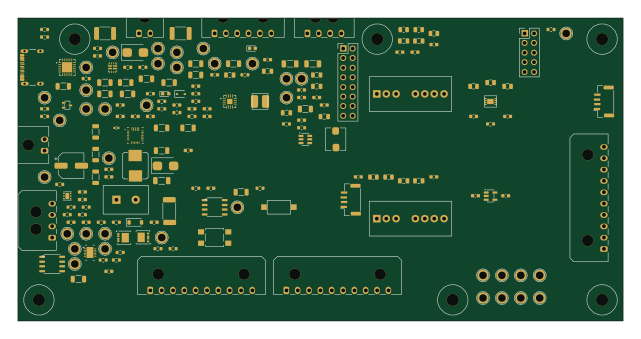
R3 power
druzvv-hash
160 × 80 mm156 parts4LNo license1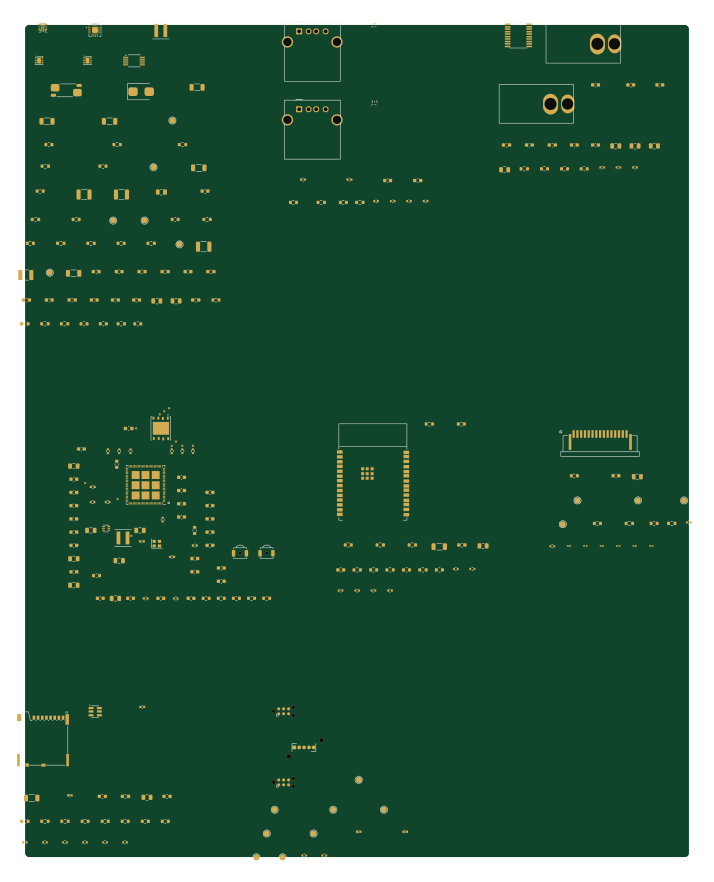 ESP32
Pajoniiir-M1
dvucinozd
175.6 × 220.1 mm223 parts4LNo license0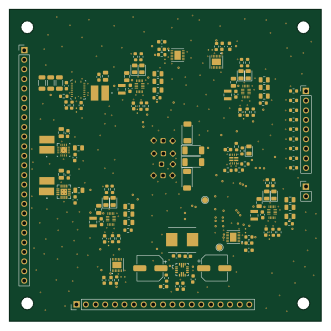
PVDX-EPS V1
BrownSpaceEngineering
82.5 × 82.5 mm185 parts2LNo license0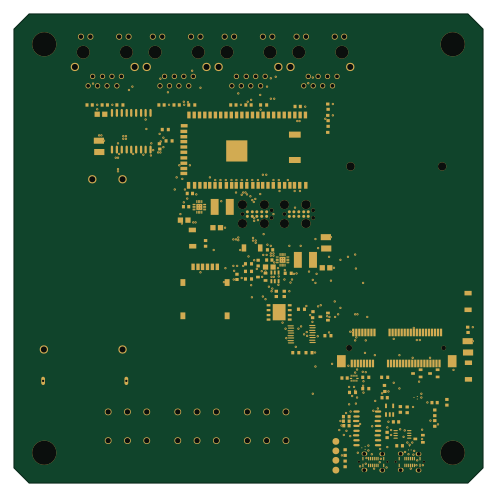
A-14329-RG-Atlantis-Modem
samd-atlantis
124 × 124 mm137 parts4LNo license0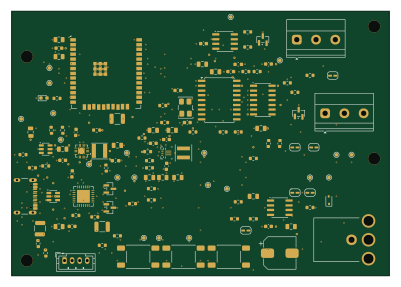 ESP32
A3-control center
Axsel
100 × 70 mm109 parts4LNo license0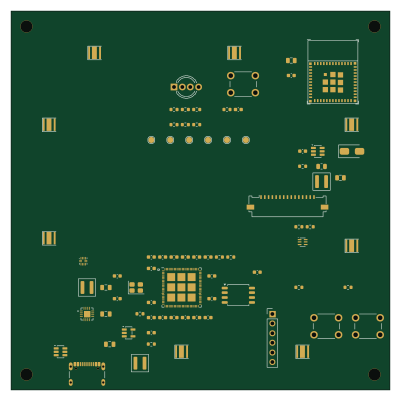 ESP32
Daily mirror
drewhirschi
100 × 100 mm74 parts4LNo license0
How designs wire the TPS62132RGTR
Read from the KiCad layouts of 5 open source designs, one per repository: what each pin of the TPS62132RGTR connects to, and the resistors, capacitors and other passives placed on it.
- The SS/TR_9 pin has a capacitor to GND on 5 of 5 designs, most often 3.3 nF.
- The FB_5 pin is tied to GND on 5 of 5 designs.
- The SW_1 pin has a inductor on 4 of 5 designs, most often 2.2 µH.
- The SW_2 pin has a inductor on 4 of 5 designs, most often 2.2 µH.
| Pin | Connected to | Parts on the pin |
|---|---|---|
| SW_1pin 1 | Connected to: Signal 100% |
|
| SW_2pin 2 | Connected to: Signal 100% |
|
| SW_3pin 3 | Connected to: Signal 100% |
|
| PG_4pin 4 | Connected to: Signal 40% · not connected 20% · GND 20% · 3.3V 20% |
|
| FB_5pin 5 | Connected to: GND 100% | — |
| GND_6pin 6 | Connected to: GND 100% | — |
| FSW_7pin 7 | Connected to: GND 80% · a signal 20% | — |
| DEF_8pin 8 | Connected to: GND 80% · a signal 20% | — |
| SS/TR_9pin 9 | Connected to: Signal 100% |
|
| VIN_10pin 10 | Connected to: 5V 80% · a signal 20% |
|
| VIN_11pin 11 | Connected to: 5V 80% · a signal 20% |
|
| VIN_12pin 12 | Connected to: 5V 80% · a signal 20% |
|
| EN_13pin 13 | Connected to: 5V 60% · a signal 40% | — |
| VOS_14pin 14 | Connected to: 3.3V 100% |
|
| GND_15pin 15 | Connected to: GND 100% | — |
| GND_16pin 16 | Connected to: GND 100% | — |
| GND_17pin 17 | Connected to: GND 100% | — |
Connections count pins, parts count designs; values in brackets are how many parts had that value. Designs read include R3 power by druzvv-hash, A3-control center pcb by Axsel, PVDX-EPS V1 by BrownSpaceEngineering and Pajoniiir-M1 by dvucinozd.
The TPS62132RGTR in open source designs
The gallery holds 6 open source boards using the TPS62132RGTR from 6 GitHub repositories; a typical one measures about 112 × 91.3 mm and carries around 147 components.
83% use four copper layers or more, and 0% carry an open source license.
The most starred is R3 power by druzvv-hash.
Parts used alongside the TPS62132RGTR
Microcontrollers on boards using the TPS62132RGTR
What boards using the TPS62132RGTR are built for
TPS62132RGTR: common questions
Where can I find a TPS62132RGTR reference design?
Each of the 6 boards on this page is a real design using the TPS62132RGTR. Open one to see how it is wired up, with the full BOM, a render of the layout and links to its KiCad files.
How is the TPS62132RGTR SS/TR_9 pin connected?
The SS/TR_9 pin has a capacitor to GND on 5 of 5 designs, most often 3.3 nF. Counted from the KiCad layouts of 5 open source designs using the TPS62132RGTR.
How is the TPS62132RGTR FB_5 pin connected?
The FB_5 pin is tied to GND on 5 of 5 designs. Counted from the KiCad layouts of 5 open source designs using the TPS62132RGTR.
How is the TPS62132RGTR SW_1 pin connected?
The SW_1 pin has a inductor on 4 of 5 designs, most often 2.2 µH. Counted from the KiCad layouts of 5 open source designs using the TPS62132RGTR.
What parts are used alongside the TPS62132RGTR?
The ESP32-P4NRW32X, TPS2121RUXR and USBLC6-2SC6 appear in the most repositories here.
Which microcontrollers do boards using the TPS62132RGTR use?
Most are built on ESP32 (3).
How big is a typical board using the TPS62132RGTR?
The median is 112 × 91.3 mm, and 17% are two-layer designs.
What is the most popular open source board using the TPS62132RGTR?
By GitHub stars, R3 power by druzvv-hash, with 1 stars.
Can I simulate one of these boards using the TPS62132RGTR before building it?
Yes. HardLabs turns a board's netlist and BOM into a working simulation, so you can boot and test firmware against it with no hardware on your desk.