
14 open source boards using the MC34063AP
Real designs built with the MC34063AP, from public GitHub projects: a quick way to see how others power, decouple and connect it. Each board comes with its KiCad files, full parts list and a render — and you can simulate its firmware on HardLabs.
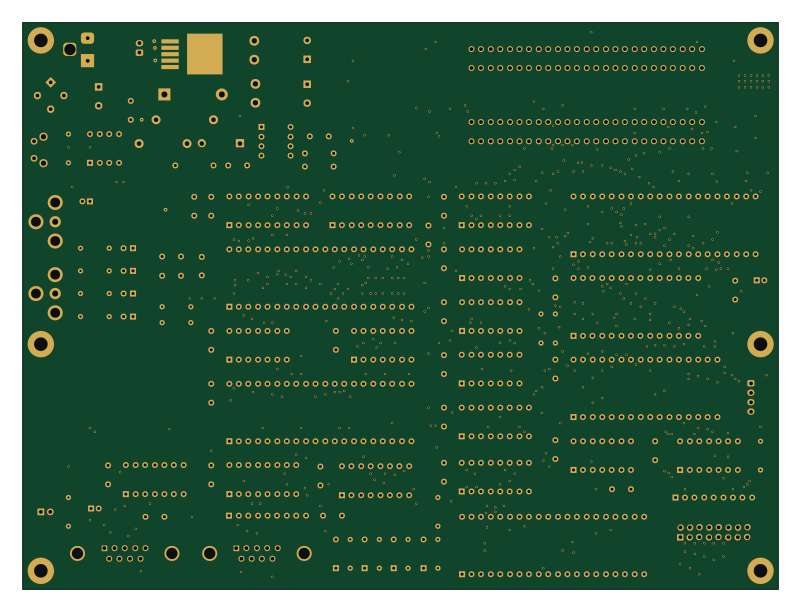
MSX ONE
jdgabbard
200 × 150 mm107 parts2LGPL-3.028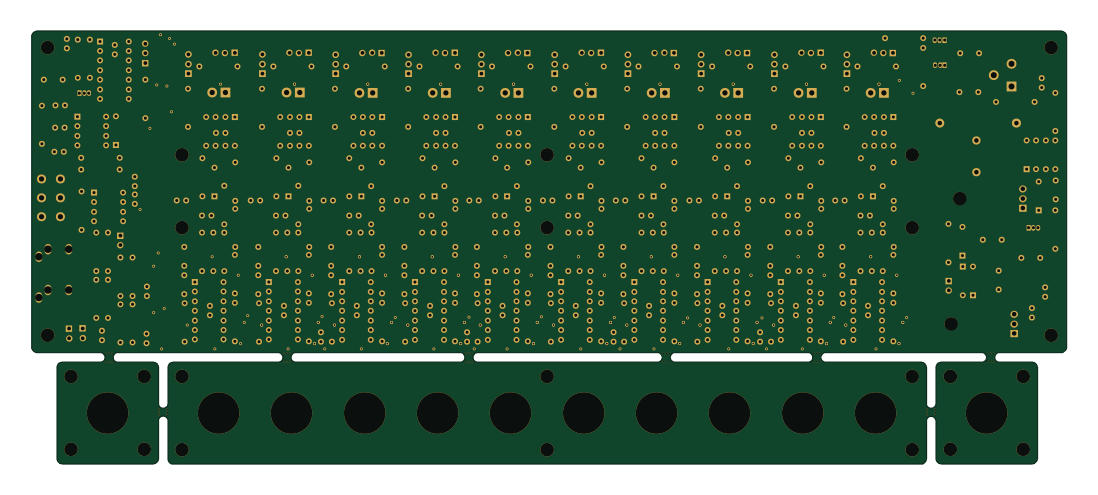
10band nixie
davemuscle
274.1 × 114.7 mm312 parts2LNo license7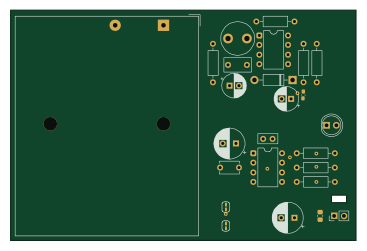
GettingToBlinky
arildj78
91.5 × 61 mm22 parts2LMIT2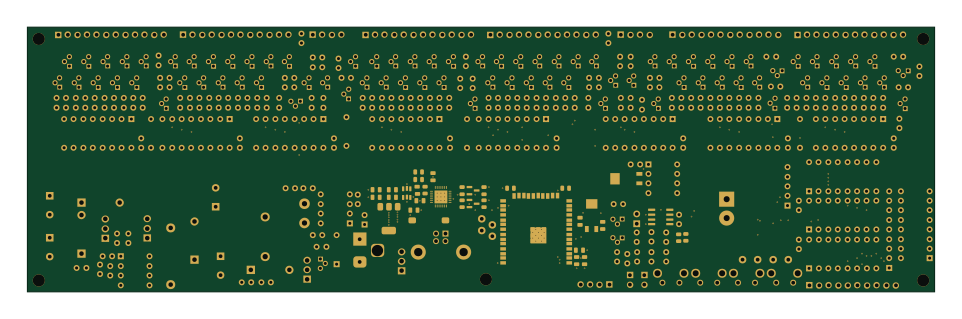 ESP32
Nixie
Synthron
240 × 70 mm311 parts4LNo license1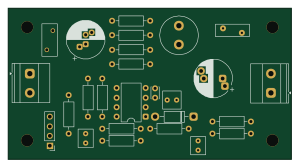
Boost converter
fabianmink
75 × 40 mm26 parts2LBSD-2-Clause1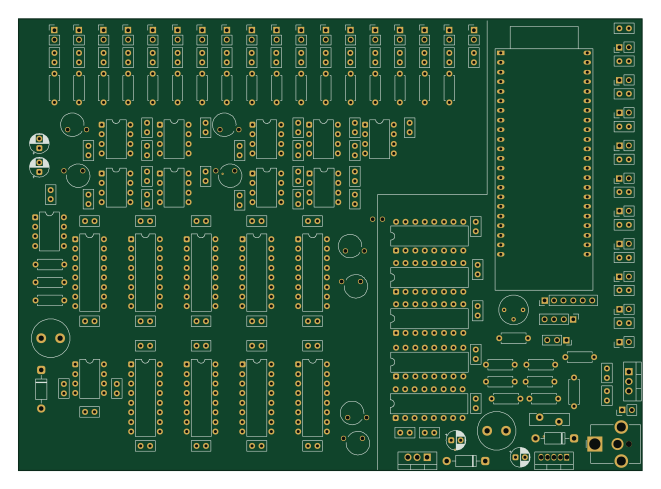 ESP32
Esp32 patch bay circuit
james-l-key
165 × 119.5 mm187 parts4LMIT0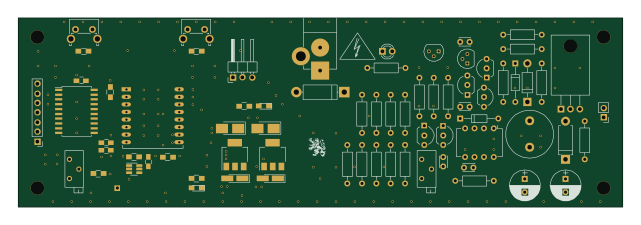 ESP8266
Nixie-Clock Baseboard
FordPrfkt
160 × 50 mm72 parts2LMIT0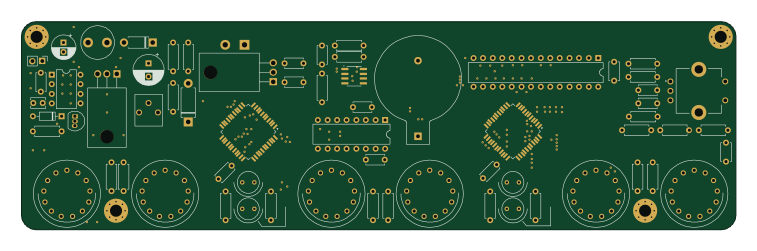 AVR/Arduino
Nixie clock
pimborman
189 × 55 mm66 parts4LNo license0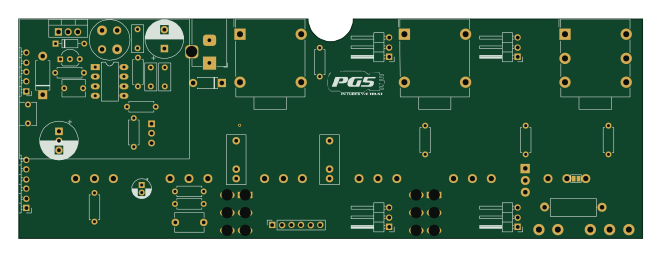
Pream G5 with Pistortion System
McColson
165 × 58 mm50 parts2LCustom license0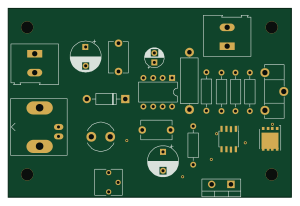
Led driver
eulerlab
75 × 50 mm22 parts2LMIT21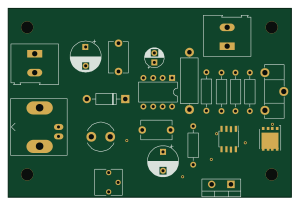
Led driver
BadenLab
75 × 50 mm22 parts2LMIT3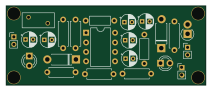
5V to 48V DC converter circuit
AbhishekGM23
53 × 21 mm24 parts2LNo license0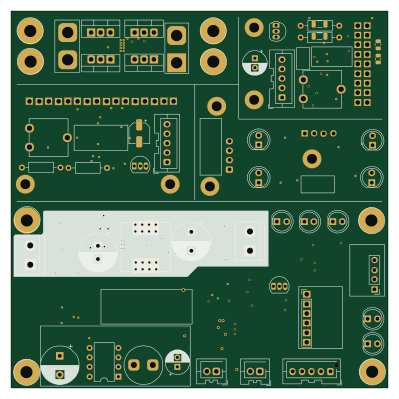 PIC
Misc
kwiecinski
99.5 × 99.5 mm152 parts2LMIT3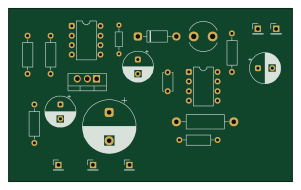
PWM to V PSU
owenpmorgan
75.2 × 45.7 mm18 parts2LNo license0
How designs wire the MC34063AP
Read from the KiCad layouts of 14 open source designs, one per repository: what each pin of the MC34063AP connects to, and the resistors, capacitors and other passives placed on it.
- The TC pin has a capacitor to GND on 12 of 14 designs, most often 470 pF (then 680 pF).
- The IPK pin has a pull-up to 12V on 11 of 14 designs, most often 220 mΩ (then 1.37 Ω).
- The VFB pin has a resistor to GND on 10 of 14 designs, most often 1 kΩ (then 8.2 kΩ).
- The SWC pin has a inductor on 8 of 14 designs, most often 220 µH (then 15 µH).
| Pin | Connected to | Parts on the pin |
|---|---|---|
| SWCpin 1 | Connected to: Signal 86% |
|
| SWEpin 2 | Connected to: Signal 64% · GND 36% |
|
| TCpin 3 | Connected to: Signal 100% |
|
| GNDpin 4 | Connected to: GND 93% | — |
| VFBpin 5 | Connected to: Signal 100% |
|
| VINpin 6 | Connected to: 12V 86% | — |
| IPKpin 7 | Connected to: Signal 93% |
|
| DCpin 8 | Connected to: Signal 86% |
|
Connections count pins, parts count designs; values in brackets are how many parts had that value. Designs read include MSX ONE by jdgabbard, Led driver by eulerlab, 10band nixie by davemuscle and Led driver by BadenLab.
The MC34063AP in open source designs
The gallery holds 14 open source boards using the MC34063AP from 14 GitHub repositories; a typical one measures about 129.8 × 56.5 mm and carries around 58 components.
79% are two-layer designs, the rest use four layers or more, and 57% carry an open source license.
The most starred is MSX ONE by jdgabbard.
Parts used alongside the MC34063AP
Microcontrollers on boards using the MC34063AP
What boards using the MC34063AP are built for
MC34063AP: common questions
Where can I find a MC34063AP reference design?
Each of the 14 boards on this page is a real design using the MC34063AP. Open one to see how it is wired up, with the full BOM, a render of the layout and links to its KiCad files.
How is the MC34063AP TC pin connected?
The TC pin has a capacitor to GND on 12 of 14 designs, most often 470 pF (then 680 pF). Counted from the KiCad layouts of 14 open source designs using the MC34063AP.
What pull-up resistor is used on the MC34063AP IPK pin?
The IPK pin has a pull-up to 12V on 11 of 14 designs, most often 220 mΩ (then 1.37 Ω). Counted from the KiCad layouts of 14 open source designs using the MC34063AP.
What resistor goes on the MC34063AP VFB pin?
The VFB pin has a resistor to GND on 10 of 14 designs, most often 1 kΩ (then 8.2 kΩ). Counted from the KiCad layouts of 14 open source designs using the MC34063AP.
Which microcontrollers do boards using the MC34063AP use?
Most are built on ESP32 (2), AVR/Arduino (1), ESP8266 (1) and PIC (1).
How big is a typical board using the MC34063AP?
The median is 129.8 × 56.5 mm, and 79% are two-layer designs.
What is the most popular open source board using the MC34063AP?
By GitHub stars, MSX ONE by jdgabbard, with 28 stars.
Can I simulate one of these boards using the MC34063AP before building it?
Yes. HardLabs turns a board's netlist and BOM into a working simulation, so you can boot and test firmware against it with no hardware on your desk.