
15 open source boards using the ISM330DHCXTR
Real designs built with the ISM330DHCXTR, from public GitHub projects: a quick way to see how others power, decouple and connect it. Each board comes with its KiCad files, full parts list and a render — and you can simulate its firmware on HardLabs.
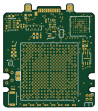 STM32
ExAce Expansion Card Accelerator
cdg66
24 × 27.3 mm180 parts8LCC-BY-4.037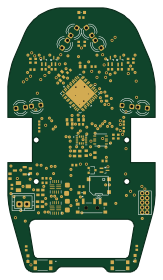 STM32
HM Nightfall mini-2e v1
xfa273
39 × 70 mm86 parts2LNo license5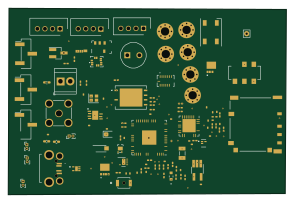 Microchip SAM
Mini rocket flight controller
AmitBarman99
73.7 × 49.3 mm108 parts4LNo license2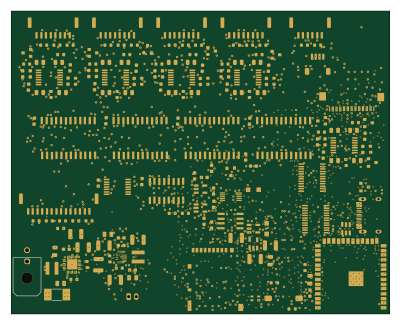 ESP32
Glove v4-routing candidate
latintzar
100 × 80 mm561 parts8LMIT0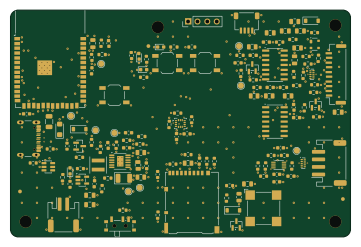 ESP32
Ataxia-Monitor
Sajeevanveeriah
90 × 60 mm138 parts4LUnlicense0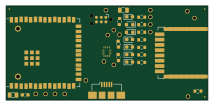 ESP32
Esp positioning
oursland
53.4 × 24.9 mm27 parts2LNo license0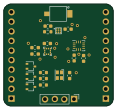
DotBot-LH2-Shield
DotBots
29 × 27 mm23 parts4LBSD-3-Clause4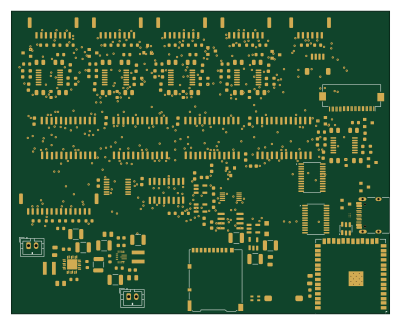 ESP32
Glove v4-placement
100 × 80 mm560 parts6LMIT0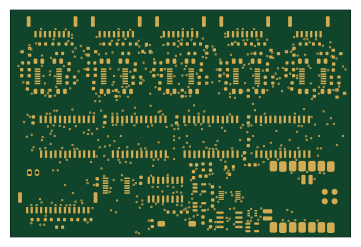 Nordic nRF
Glove v3-routed
90 × 60 mm356 parts4LMIT0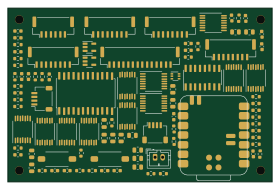 Nordic nRF
Glove v3-floorplan
70 × 46 mm333 parts4LMIT0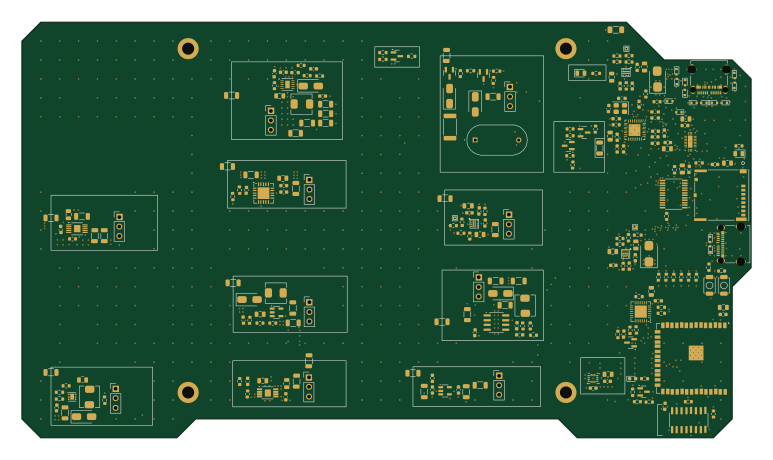 ESP32
Digital test board
Benjamin-girard-1
193 × 110 mm254 parts4LNo license0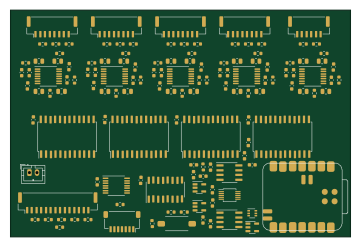 Nordic nRF
Glove v3-grouped
90 × 60 mm330 parts4LMIT0
Hand tile routed
16 × 16 mm7 parts2LMIT0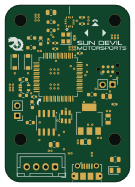 STM32
SDM25 IMU STM32
sundevilmotorsports
32.9 × 46.7 mm39 parts4LNo license2
Hand tile unrouted
16 × 16 mm7 parts2LMIT0
How designs wire the ISM330DHCXTR
Read from the KiCad layouts of 9 open source designs, one per repository: what each pin of the ISM330DHCXTR connects to, and the resistors, capacitors and other passives placed on it.
- The VDDIO pin has a decoupling capacitor on 7 of 9 designs, most often 100 nF (then 10 nF).
- The VDD pin has a decoupling capacitor on 7 of 8 designs, most often 100 nF (then 10 nF).
- The OCS_AUX pin is left unconnected on 8 of 8 designs.
- The SDO_AUX pin is left unconnected on 8 of 8 designs.
| Pin | Connected to | Parts on the pin |
|---|---|---|
| SDXpin 2 | Connected to: GND 67% · not connected 22% | — |
| VDDIOpin 5 | Connected to: 3.3V 100% |
|
| GNDpin 6, 7 | Connected to: GND 88% | — |
| VDDpin 8 | Connected to: 3.3V 100% |
|
| INT2pin 9 | Connected to: Not connected 63% · a signal 38% | — |
| OCS_AUXpin 10 | Connected to: Not connected 100% | — |
| SDO_AUXpin 11 | Connected to: Not connected 100% | — |
| CSpin 12 | Connected to: 3.3V 63% · a signal 38% | — |
| SCLpin 13 | Connected to: The microcontroller 63%, a connector 38% |
|
| SDApin 14 | Connected to: The microcontroller 63%, a connector 38% |
|
3 more pins vary from design to design. Connections count pins, parts count designs; values in brackets are how many parts had that value. Designs read include ExAce Expansion Card Accelerator by cdg66, HM Nightfall mini-2e v1 by xfa273, DotBot-LH2-Shield by DotBots and Mini rocket flight controller by AmitBarman99.
The ISM330DHCXTR in open source designs
The gallery holds 15 open source boards using the ISM330DHCXTR from 9 GitHub repositories; a typical one measures about 70 × 49.3 mm and carries around 138 components.
73% use four copper layers or more, and 67% carry an open source license.
The most starred is ExAce Expansion Card Accelerator by cdg66.
Parts used alongside the ISM330DHCXTR
Microcontrollers on boards using the ISM330DHCXTR
What boards using the ISM330DHCXTR are built for
ISM330DHCXTR: common questions
Where can I find a ISM330DHCXTR reference design?
Each of the 15 boards on this page is a real design using the ISM330DHCXTR. Open one to see how it is wired up, with the full BOM, a render of the layout and links to its KiCad files.
What decoupling capacitors do designs use on the ISM330DHCXTR VDDIO pin?
The VDDIO pin has a decoupling capacitor on 7 of 9 designs, most often 100 nF (then 10 nF). Counted from the KiCad layouts of 9 open source designs using the ISM330DHCXTR.
What decoupling capacitors do designs use on the ISM330DHCXTR VDD pin?
The VDD pin has a decoupling capacitor on 7 of 8 designs, most often 100 nF (then 10 nF). Counted from the KiCad layouts of 9 open source designs using the ISM330DHCXTR.
How is the ISM330DHCXTR OCS_AUX pin connected?
The OCS_AUX pin is left unconnected on 8 of 8 designs. Counted from the KiCad layouts of 9 open source designs using the ISM330DHCXTR.
Which microcontrollers do boards using the ISM330DHCXTR use?
Most are built on ESP32 (5), Nordic nRF (3), STM32 (3) and Microchip SAM (1).
How big is a typical board using the ISM330DHCXTR?
The median is 70 × 49.3 mm, and 27% are two-layer designs.
What is the most popular open source board using the ISM330DHCXTR?
By GitHub stars, ExAce Expansion Card Accelerator by cdg66, with 37 stars.
Can I simulate one of these boards using the ISM330DHCXTR before building it?
Yes. HardLabs turns a board's netlist and BOM into a working simulation, so you can boot and test firmware against it with no hardware on your desk.