
17 open source boards using the SSI2130
Real designs built with the SSI2130, from public GitHub projects: a quick way to see how others power, decouple and connect it. Each board comes with its KiCad files, full parts list and a render — and you can simulate its firmware on HardLabs.
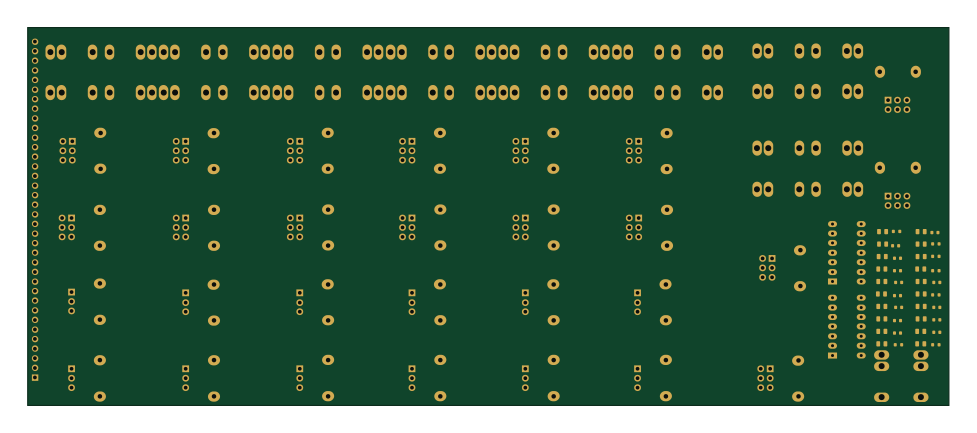
Panning Mixer
powsplatboom
243.8 × 100 mm633 parts4LNo license11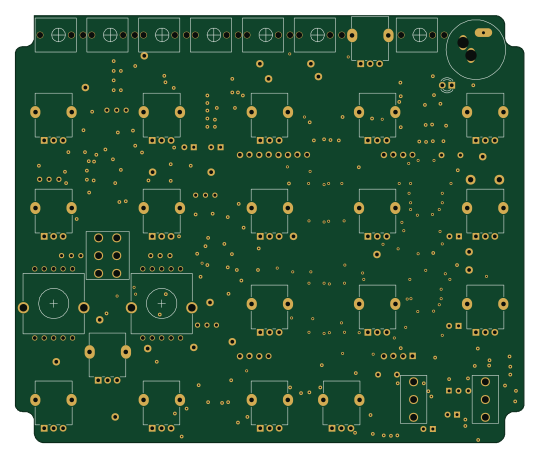
Micro-Pico Tiny Monosynth
JordanAceto
134.6 × 113 mm282 parts4LCC-BY-4.011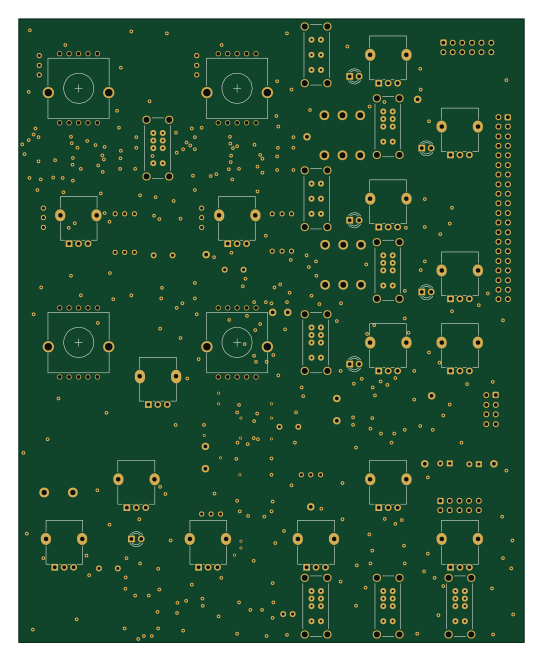
MICRO-OX Main VCO board
133.9 × 165.1 mm280 parts4LCC-BY-4.08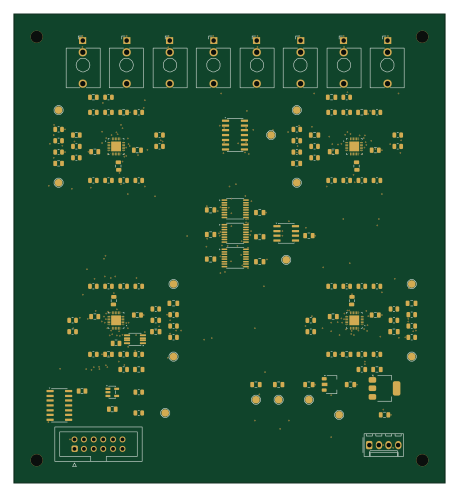
Sam17-vco
sssamuelll
114 × 124 mm129 parts4LCERN-OHL-S-2.02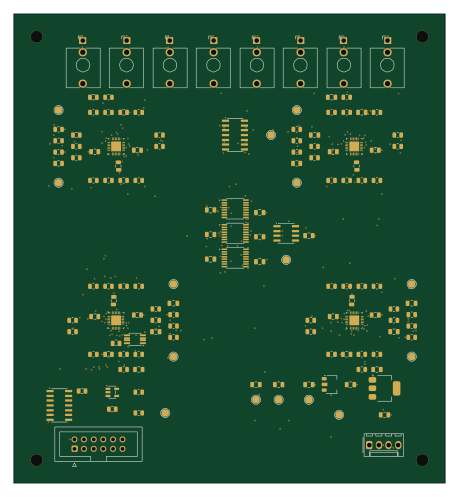
Sam17-vco
114 × 124 mm129 parts4LCERN-OHL-S-2.01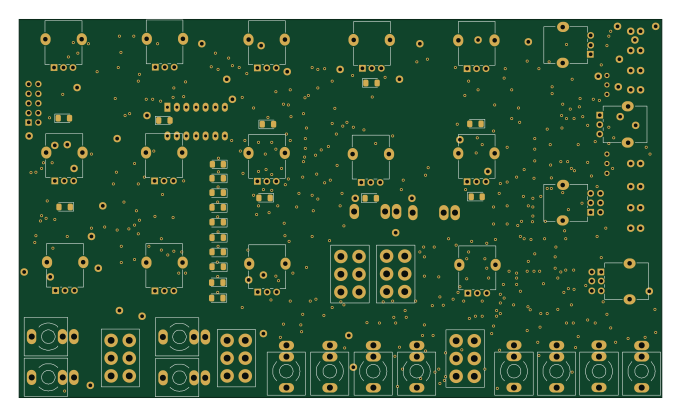
Spring Reverb
170 × 100 mm313 parts4LNo license11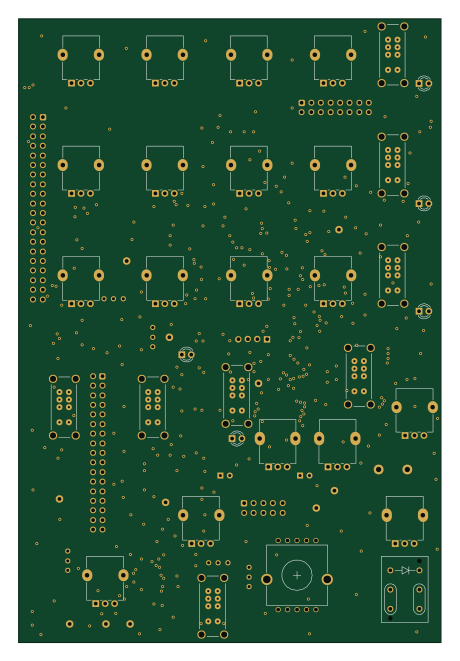 STM32
Modulation board
111.8 × 165.1 mm231 parts4LCC-BY-4.08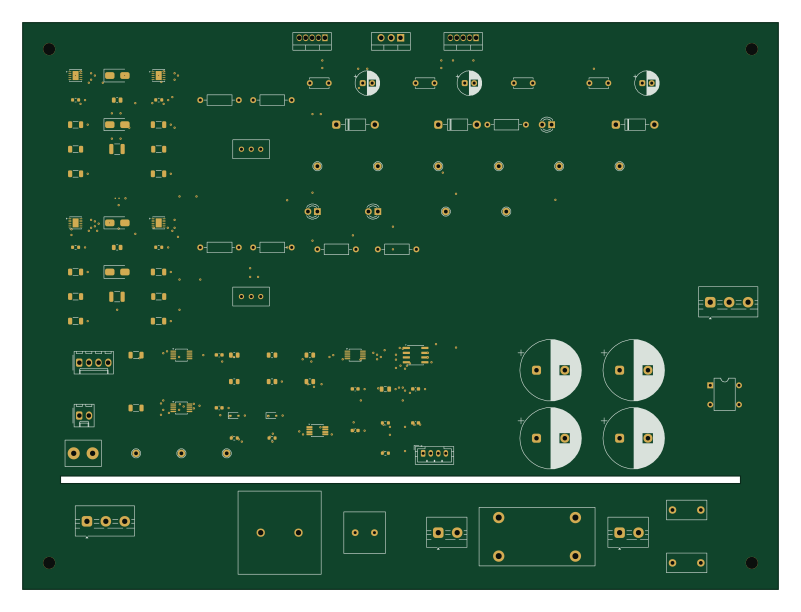
Sam17-power v3
200 × 150 mm97 parts2LCERN-OHL-S-2.02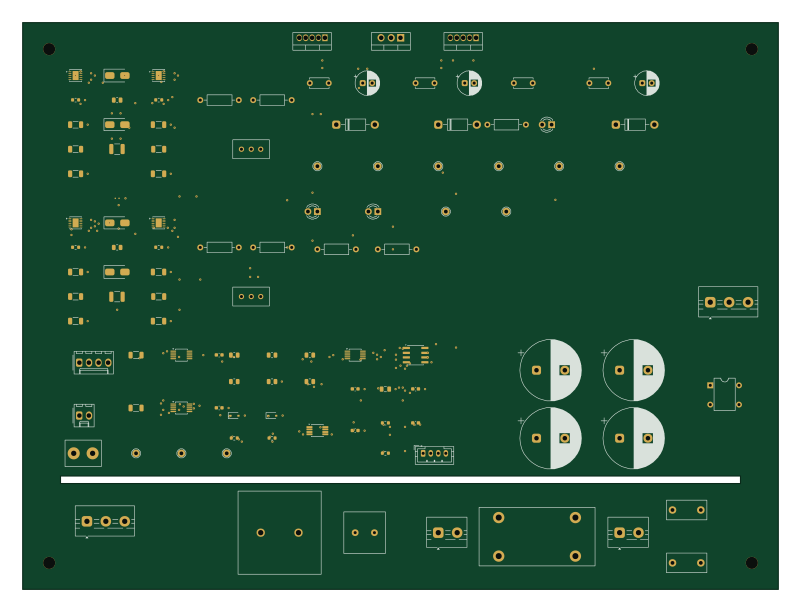
Sam17-power v3
200 × 150 mm97 parts2LCERN-OHL-S-2.01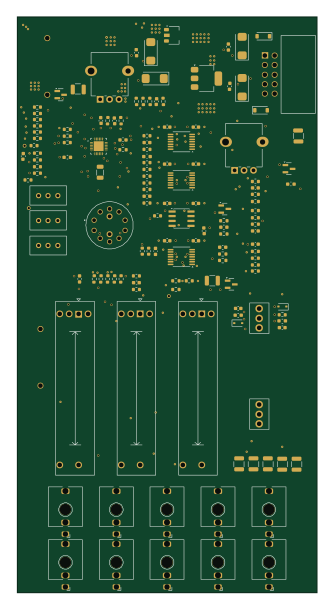
401 SERIES VCO
sgreene30
79.3 × 152.4 mm144 parts4LNo license0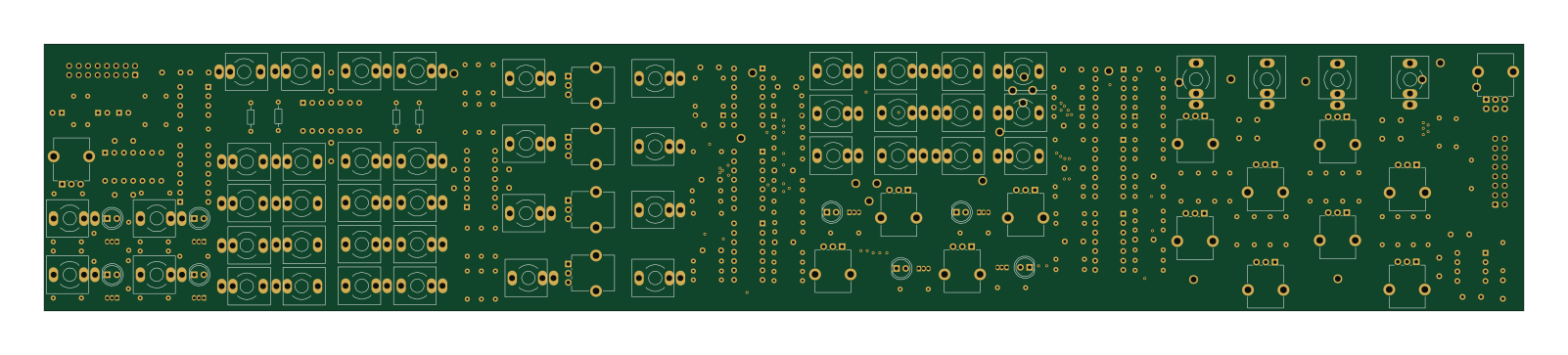
Utility board
399.8 × 72 mm242 parts2LNo license11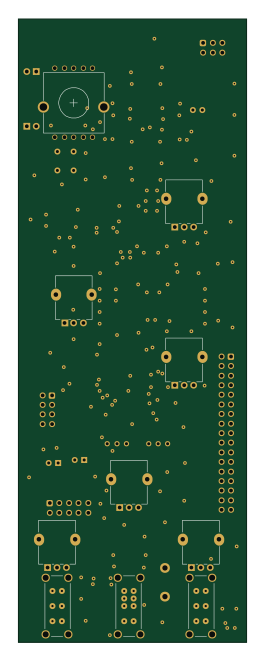
MICRO-OX VCF/VCA board
60.3 × 165.1 mm132 parts2LCC-BY-4.08- schematic only · 78 parts
SSI2130 VCO Core
Ryokutya1025
78 parts2LNo license0 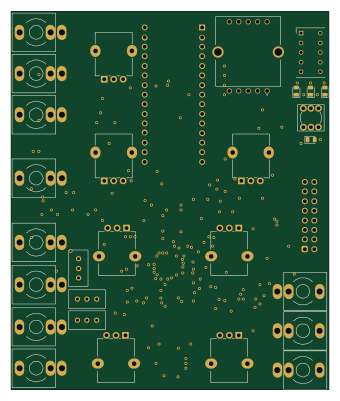 AVR/Arduino
SSI2130 Oscillator
84 × 100 mm185 parts4LNo license11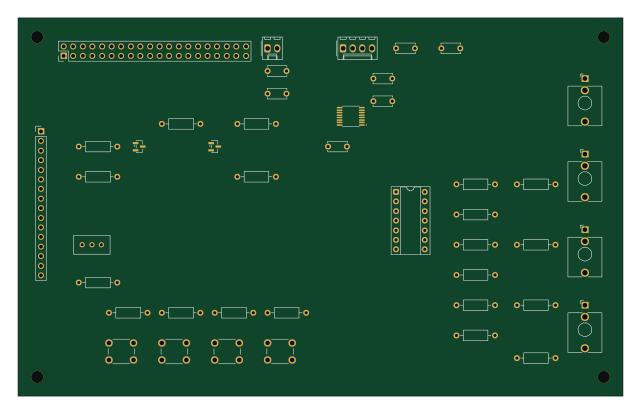
Sam17-midicv
160 × 100 mm44 parts2LCERN-OHL-S-2.02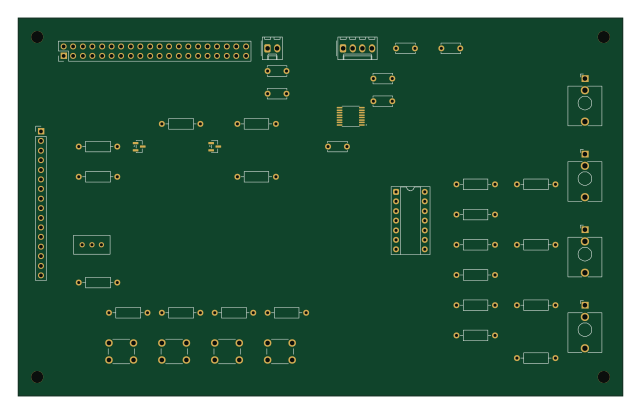
Sam17-midicv
160 × 100 mm44 parts2LCERN-OHL-S-2.01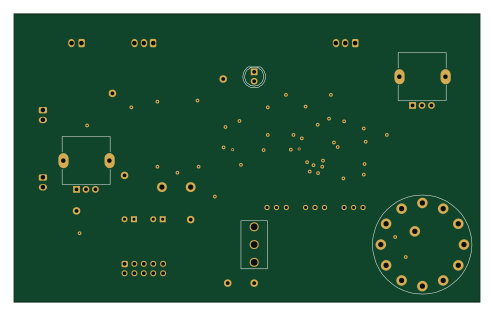
Josh Ox Ribbon Synth Mod Osc board
123.2 × 76.2 mm68 parts2LCC-BY-4.01
How designs wire the SSI2130
Read from the KiCad layouts of 7 open source designs, one per repository: what each pin of the SSI2130 connects to, and the resistors, capacitors and other passives placed on it.
- The TRI_OUT pin has a series resistor on 5 of 7 designs, most often 3.9 kΩ (then 20 kΩ).
- The SINE_IN_+ pin has a series resistor on 5 of 7 designs, most often 3.9 kΩ (then 20 kΩ).
- The EXPO_FREQ pin has a series resistor on 5 of 7 designs, most often 100 kΩ (then 270 kΩ).
- The SINE_IN_+ pin has a resistor to GND on 4 of 7 designs, most often 4.7 kΩ.
| Pin | Connected to | Parts on the pin |
|---|---|---|
| TRI_OUTpin 1 | Connected to: Signal 71% · VREF 29% |
|
| SINE_IN_+pin 2 | Connected to: SSI2130 29% |
|
| SINE_IN_-pin 3 | Connected to: SSI2130 29% |
|
| EXPO_FREQpin 7 | Connected to: Signal 71% · not connected 29% |
|
| V-pin 8 | Connected to: -5V 57% · not connected 29% |
|
| TCAPpin 14 | Connected to: A connector 29% |
|
| DGNDpin 15 | Connected to: GND 67% · a signal 33% | — |
| AGNDpin 16 | Connected to: GND 100% | — |
| HARD_SYNCpin 17 | Connected to: Signal 100% |
|
| TIME_REVpin 18 | Connected to: Signal 75% · not connected 25% |
|
| SOFT_SYNCpin 19 | Connected to: Signal 75% · not connected 25% |
|
| HFT_BASEpin 20 | Connected to: GND 100% | — |
| LIN_FREQpin 21 | Connected to: Signal 100% |
|
| EXPO_SCALEpin 22 | Connected to: Signal 100% |
|
| VREFpin 23 | Connected to: 2.5V 50% · a signal 50% |
|
| SINE_OUTpin 24 | Connected to: Not connected 75% · a signal 25% | — |
| MIX_OUTpin 25 | Connected to: Signal 100% |
|
| BW_COMPpin 26 | Connected to: Signal 100% |
|
| V+pin 27 | Connected to: 5V 100% |
|
| SQUARE_OUTpin 28 | Connected to: Not connected 50% · a signal 50% |
|
| SAW_OUTpin 29 | Connected to: Signal 75% · not connected 25% |
|
| PWM_IN_-pin 31 | Connected to: Signal 100% |
|
| PWM_IN_+pin 32 | Connected to: SSI2130 50% |
|
9 more pins vary from design to design. Connections count pins, parts count designs; values in brackets are how many parts had that value. Designs read include Micro-Pico Tiny Monosynth by JordanAceto, Panning Mixer by powsplatboom, MICRO-OX Main VCO board by JordanAceto and Sam17-midicv by sssamuelll.
The SSI2130 in open source designs
The gallery holds 17 open source boards using the SSI2130 from 8 GitHub repositories; a typical one measures about 134.2 × 118.5 mm and carries around 132 components.
53% use four copper layers or more, and 65% carry an open source license.
The most starred is Panning Mixer by powsplatboom.
Parts used alongside the SSI2130
Microcontrollers on boards using the SSI2130
What boards using the SSI2130 are built for
SSI2130: common questions
Where can I find a SSI2130 reference design?
Each of the 17 boards on this page is a real design using the SSI2130. Open one to see how it is wired up, with the full BOM, a render of the layout and links to its KiCad files.
What resistor goes on the SSI2130 TRI_OUT pin?
The TRI_OUT pin has a series resistor on 5 of 7 designs, most often 3.9 kΩ (then 20 kΩ). Counted from the KiCad layouts of 7 open source designs using the SSI2130.
What resistor goes on the SSI2130 SINE_IN_+ pin?
The SINE_IN_+ pin has a series resistor on 5 of 7 designs, most often 3.9 kΩ (then 20 kΩ). Counted from the KiCad layouts of 7 open source designs using the SSI2130.
What resistor goes on the SSI2130 EXPO_FREQ pin?
The EXPO_FREQ pin has a series resistor on 5 of 7 designs, most often 100 kΩ (then 270 kΩ). Counted from the KiCad layouts of 7 open source designs using the SSI2130.
What parts are used alongside the SSI2130?
The TL072, L78L05_SOT89, LM4040C-2.5, 24AA02E48 and 74HC14 appear in the most repositories here.
Which microcontrollers do boards using the SSI2130 use?
Most are built on AVR/Arduino (1) and STM32 (1).
How big is a typical board using the SSI2130?
The median is 134.2 × 118.5 mm, and 47% are two-layer designs.
What is the most popular open source board using the SSI2130?
By GitHub stars, Panning Mixer by powsplatboom, with 11 stars.
Can I simulate one of these boards using the SSI2130 before building it?
Yes. HardLabs turns a board's netlist and BOM into a working simulation, so you can boot and test firmware against it with no hardware on your desk.