
22 open source boards using the STM32F407VGT6
Real designs built with the STM32F407VGT6, from public GitHub projects: a quick way to see how others power, decouple and connect it. Each board comes with its KiCad files, full parts list and a render — and you can simulate its firmware on HardLabs.
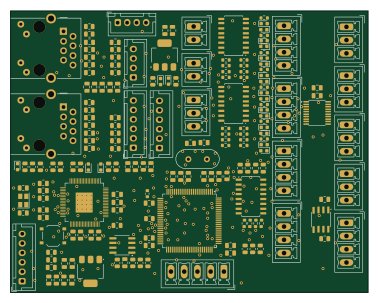 STM32
Ax58100-stm32-ethercat
MetalMusings
94.5 × 74.5 mm184 parts2LNo license93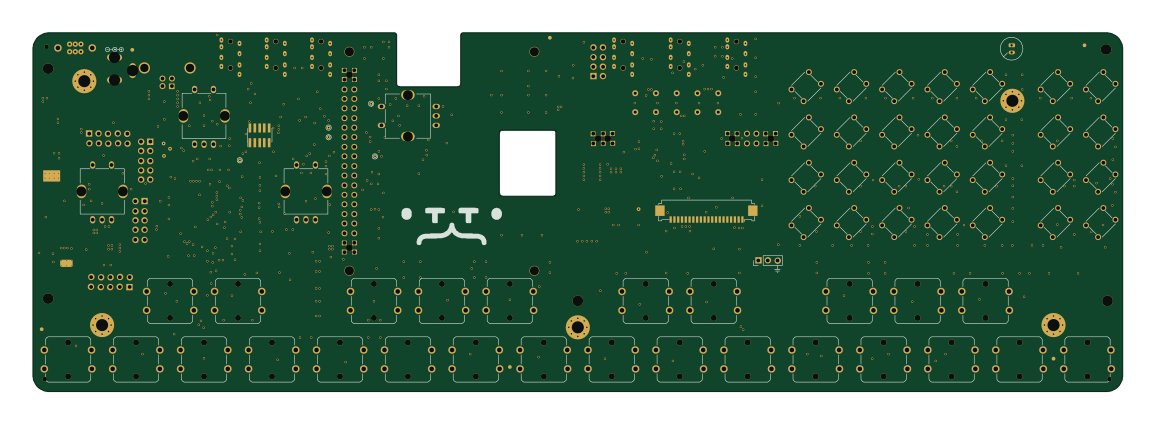 STM32
OTTO-Beta-Main
bitfieldaudio
288.5 × 95 mm303 parts4LCC-BY-NC-4.037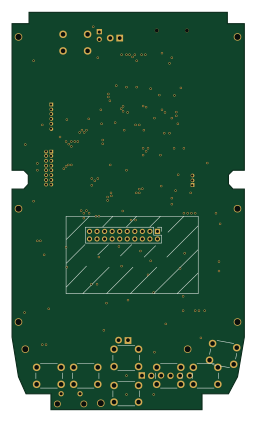 STM32
SDA-Wonder System Board
stanislavbrtna
61.5 × 105.3 mm86 parts2LNo license8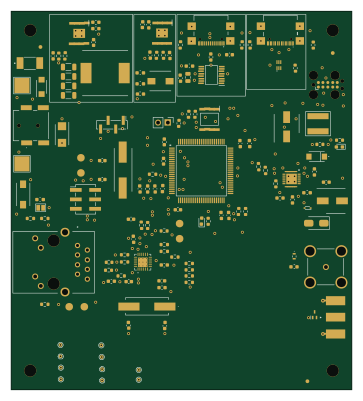 STM32
Diseqc cntrl
getpwnam
90 × 100 mm121 parts4LMIT3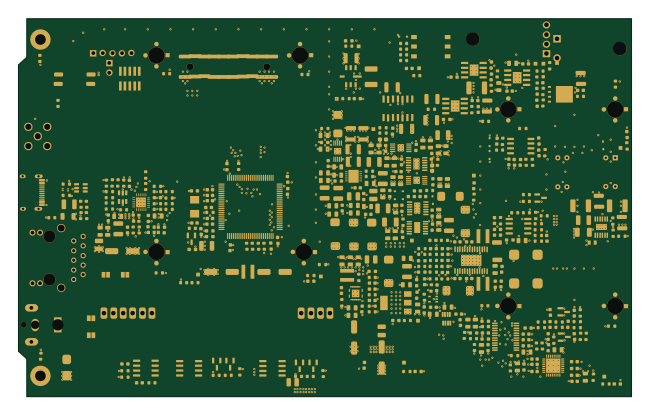 STM32
Kirdy
sinara-hw
162.3 × 100 mm494 parts4LNo license1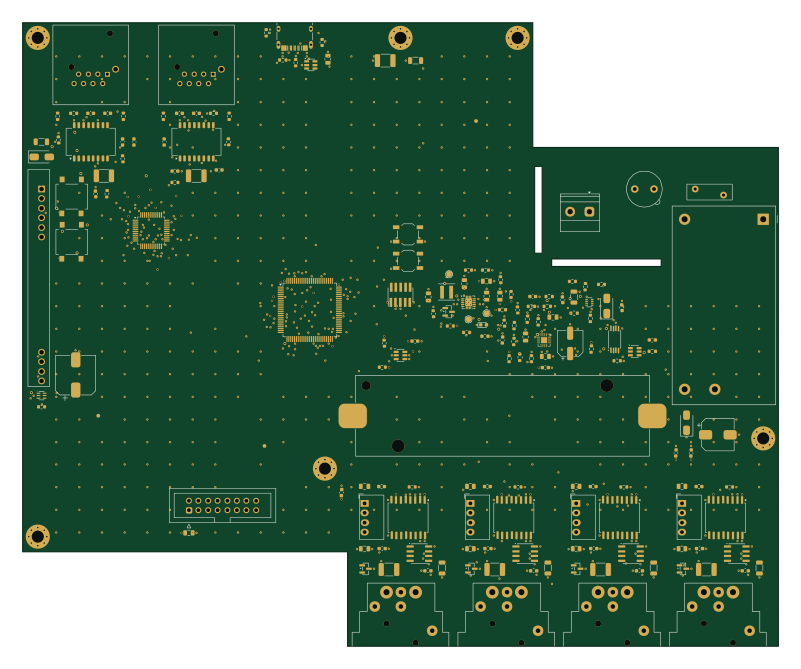 STM32
ArtNetNode Full
vili111111p
200 × 165 mm218 parts4LNo license1 STM32
Forest surveillance rover
lakshya-asu
100 × 80 mm1 parts4LMIT1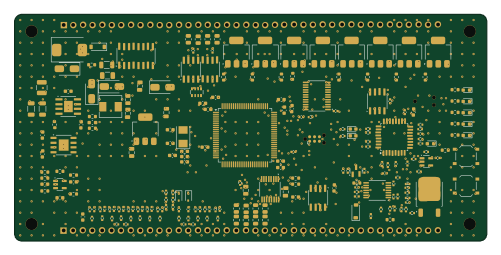 STM32
Miata ecu daughter
v3ai
125 × 60 mm226 parts4LMIT0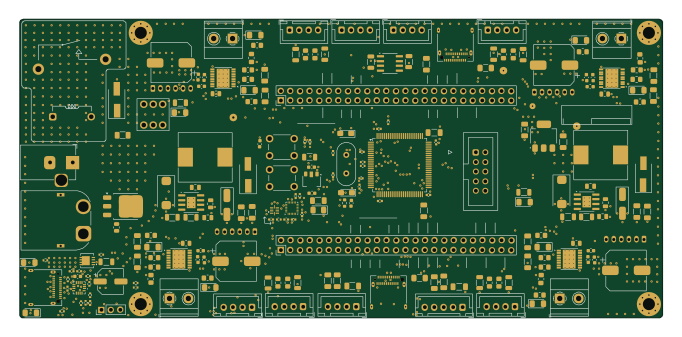 STM32
Int brain stm32
eccentricOrange
170.2 × 79 mm213 parts4LNo license0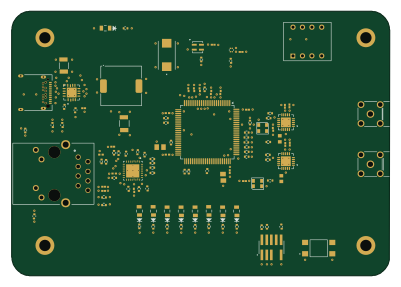 STM32
Radio Puck
thomas-montano
100 × 70 mm154 parts8LNo license0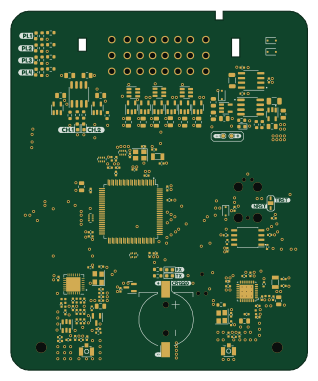 ESP32
ConeRGB2
ConnorRigby
78.5 × 95 mm152 parts4LApache-2.00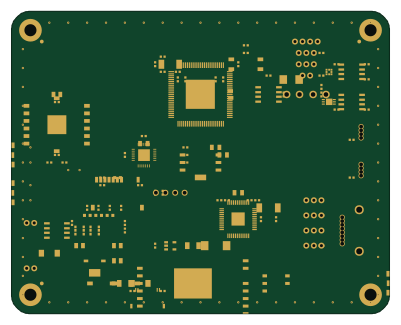 STM32
WeatherStation mfg
ppusapati
100 × 80 mm117 parts4LNo license0- schematic only · 35 partsSTM32
Kirpi-STM32-BLE-MPU6050-Board
usarrahim
35 parts2LNo license0 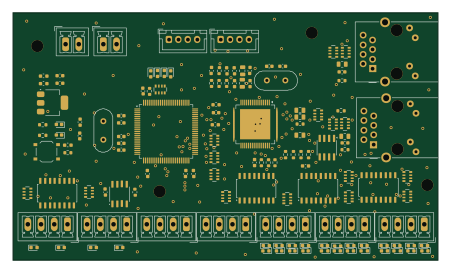 STM32
THCAD-reader+Digital-IO
112.5 × 65.6 mm135 parts2LNo license93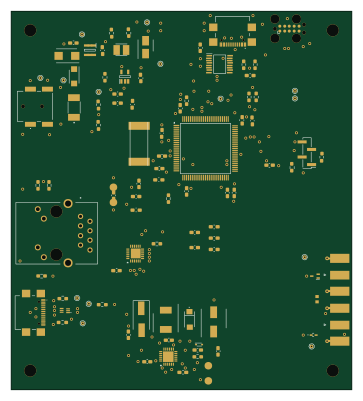 STM32
Diseqc cntrl bak
90 × 100 mm107 parts4LMIT3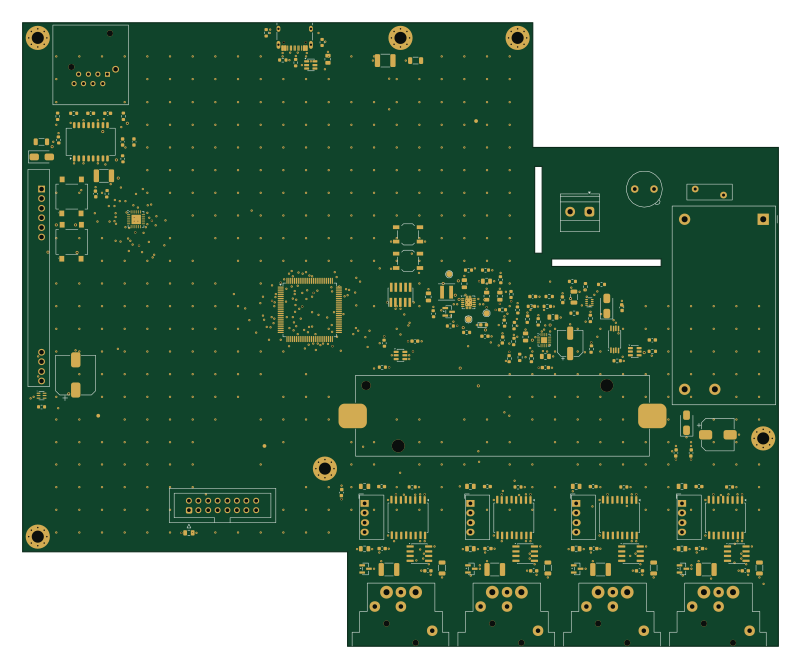 STM32
ArtNetNode Lite
200 × 165 mm201 parts4LNo license1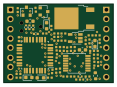 STM32
FOME Open Source Wideband O2 Module
29 × 20.9 mm59 parts4LMIT0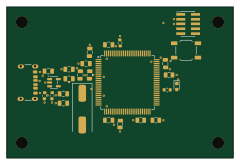 STM32
Test4
pginfinitylab-ai
60 × 40 mm27 parts2LNo license0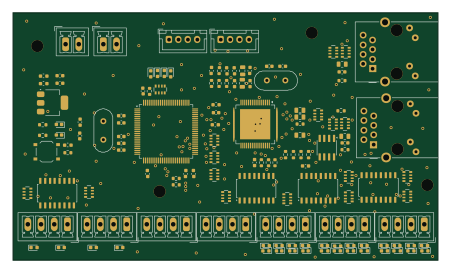 STM32
EaserCAT-7000
112.5 × 65.6 mm134 parts2LNo license93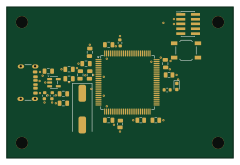 STM32
Test4.routed
60 × 40 mm27 parts2LNo license0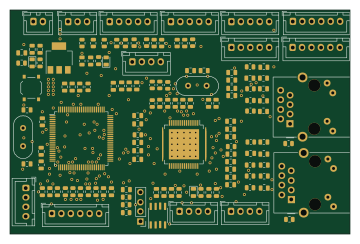 STM32
Ethercat stm32
89.9 × 59.2 mm134 parts4LNo license93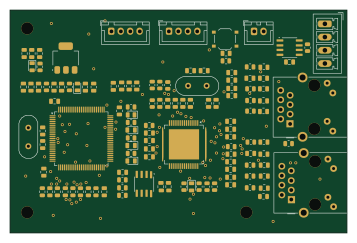 STM32
THCAD-reader
89.2 × 58.9 mm123 parts2LNo license93
How designs wire the STM32F407VGT6
Read from the KiCad layouts of 12 open source designs, one per repository: what each pin of the STM32F407VGT6 connects to, and the resistors, capacitors and other passives placed on it.
- The VDD pins have a decoupling capacitor on 11 of 12 designs, most often 100 nF (then 4.7 µF).
- The VCAP_1 pin has a capacitor to GND on 11 of 12 designs, most often 2.2 µF.
- The VCAP_2 pin has a capacitor to GND on 11 of 12 designs, most often 2.2 µF.
- The VBAT pin has a decoupling capacitor on 10 of 12 designs, most often 100 nF (then 4.7 µF).
| Pin | Connected to | Parts on the pin |
|---|---|---|
| VBATpin 6 | Connected to: 3.3V 92% |
|
| VSSpin 10, 27, 74, 99 | Connected to: GND 92% | — |
| VDDpin 11, 19, 28, 50, 75, 100 | Connected to: 3.3V 92% |
|
| PH0pin 12 | Connected to: Signal 92% |
|
| PH1pin 13 | Connected to: Signal 83% · not connected 17% |
|
| NRSTpin 14 | Connected to: A connector 58% · not connected 17% |
|
| VSSApin 20 | Connected to: GND 92% | — |
| VREF+pin 21 | Connected to: 3.3V 92% |
|
| VDDApin 22 | Connected to: 3.3V 92% |
|
| PA1pin 24 | Connected to: Signal 83% · not connected 17% |
|
| PA2pin 25 | Connected to: Signal 83% |
|
| PA3pin 26 | Connected to: A connector 25% · not connected 25% |
|
| PA4pin 29 | Connected to: A connector 42% · not connected 17% |
|
| PA7pin 32 | Connected to: A connector 33% |
|
| PC4pin 33 | Connected to: A connector 33% · not connected 17% |
|
| PC5pin 34 | Connected to: A connector 42% |
|
| PB1pin 36 | Connected to: A connector 25% · not connected 25% |
|
| PB2pin 37 | Connected to: Signal 58% · not connected 42% |
|
| VCAP_1pin 49 | Connected to: Signal 92% |
|
| PB15pin 54 | Connected to: Not connected 67% · a signal 33% | — |
| PC6pin 63 | Connected to: A connector 33% · not connected 25% |
|
| PC8pin 65 | Connected to: A connector 33% · not connected 25% |
|
| PC9pin 66 | Connected to: A connector 33% · not connected 33% |
|
| PA10pin 69 | Connected to: Not connected 67% · a signal 33% | — |
| VCAP_2pin 73 | Connected to: Signal 92% |
|
| BOOT0pin 94 | Connected to: Signal 92% |
|
66 more pins vary from design to design. Connections count pins, parts count designs; values in brackets are how many parts had that value. Designs read include Ax58100-stm32-ethercat by MetalMusings, OTTO-Beta-Main by bitfieldaudio, SDA-Wonder System Board by stanislavbrtna and Diseqc cntrl by getpwnam.
The STM32F407VGT6 in open source designs
The gallery holds 22 open source boards using the STM32F407VGT6 from 14 GitHub repositories; a typical one measures about 100 × 79 mm and carries around 134 components.
64% use four copper layers or more, and 27% carry an open source license.
The most starred is Ax58100-stm32-ethercat by MetalMusings.
Parts used alongside the STM32F407VGT6
What boards using the STM32F407VGT6 are built for
STM32F407VGT6: common questions
Where can I find a STM32F407VGT6 reference design?
Each of the 22 boards on this page is a real design using the STM32F407VGT6. Open one to see how it is wired up, with the full BOM, a render of the layout and links to its KiCad files.
What decoupling capacitors do designs use on the STM32F407VGT6 VDD pin?
The VDD pins have a decoupling capacitor on 11 of 12 designs, most often 100 nF (then 4.7 µF). Counted from the KiCad layouts of 12 open source designs using the STM32F407VGT6.
How is the STM32F407VGT6 VCAP_1 pin connected?
The VCAP_1 pin has a capacitor to GND on 11 of 12 designs, most often 2.2 µF. Counted from the KiCad layouts of 12 open source designs using the STM32F407VGT6.
How is the STM32F407VGT6 VCAP_2 pin connected?
The VCAP_2 pin has a capacitor to GND on 11 of 12 designs, most often 2.2 µF. Counted from the KiCad layouts of 12 open source designs using the STM32F407VGT6.
What parts are used alongside the STM32F407VGT6?
The AMS1117-3.3, AP2112K-3.3TRG1 and DW01A appear in the most repositories here.
Which microcontrollers do boards using the STM32F407VGT6 use?
Most are built on STM32 (21) and ESP32 (1).
How big is a typical board using the STM32F407VGT6?
The median is 100 × 79 mm, and 36% are two-layer designs.
What is the most popular open source board using the STM32F407VGT6?
By GitHub stars, Ax58100-stm32-ethercat by MetalMusings, with 93 stars.
Can I simulate one of these boards using the STM32F407VGT6 before building it?
Yes. HardLabs turns a board's netlist and BOM into a working simulation, so you can boot and test firmware against it with no hardware on your desk.