
29 open source boards using the BMI270
Real designs built with the BMI270, from public GitHub projects: a quick way to see how others power, decouple and connect it. Each board comes with its KiCad files, full parts list and a render — and you can simulate its firmware on HardLabs.
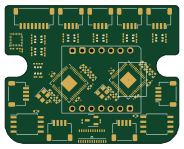 RP2040/RP2350
TundraIOExpansion
ras-marques
46 × 36.5 mm89 parts4LMIT29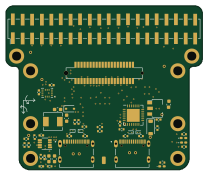
Expansion
kuku-199
52 × 43.4 mm52 parts2LNo license14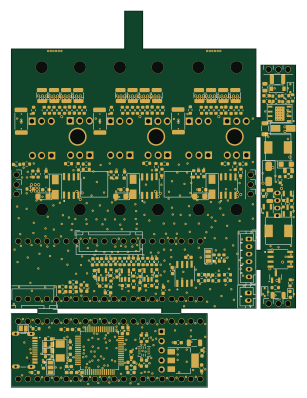 STM32
STM32FOC KING
b264
75.2 × 99.5 mm238 parts4LNo license3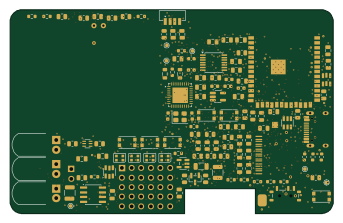 ESP32
ESP32PocketLab Card V1
Jebroa774
85.6 × 54 mm250 parts4LNo license2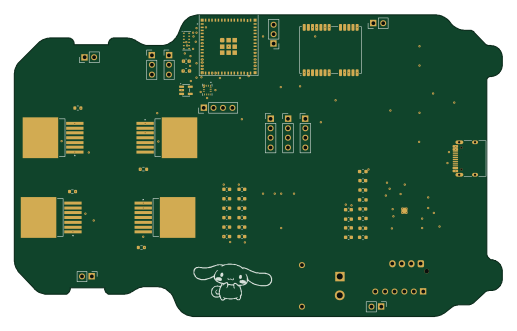 ESP32
ESP32Rc car
alaotach
129 × 79.8 mm85 parts4LNo license2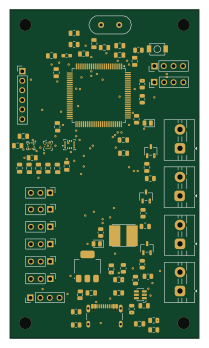 STM32
STM32UltraHawk
InSynchronous
50 × 87 mm76 parts2LMIT2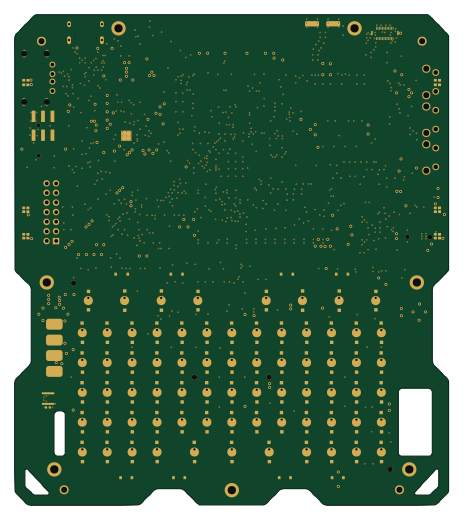 ESP32
ESP32Why2025
ranzbak
114.9 × 129.9 mm327 parts4LNo license1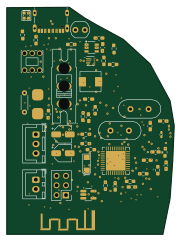 AVR/Arduino
VoidLens-DIY-VR-Headset-V2
scattercat-123
44.4 × 60.3 mm79 parts2LNo license1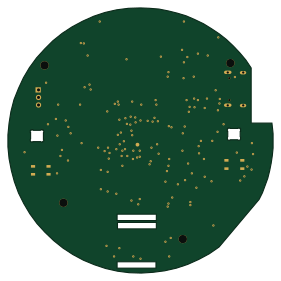 ESP32
ESP32Mood-Display
Axe-1st
70.2 × 70.2 mm54 parts2LNo license1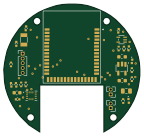
OpenBand
chancehowarth33
36 × 33.9 mm32 parts2LMIT1 Nordic nRF
Smartbag core
claudiofin
196 × 20 mm107 parts6LMIT0 Nordic nRF
Smartcube revA
manhoosbilli1
17.1 × 17.1 mm36 parts6LNo license0
BMI160-and-QMC5883L Second Bone
6.7 × 13.4 mm14 parts4LMIT29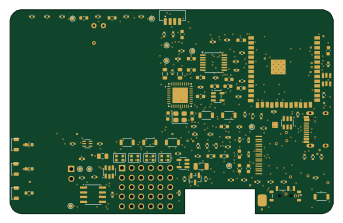 ESP32
ESP32PocketLab Card V1
85.6 × 54 mm246 parts4LNo license2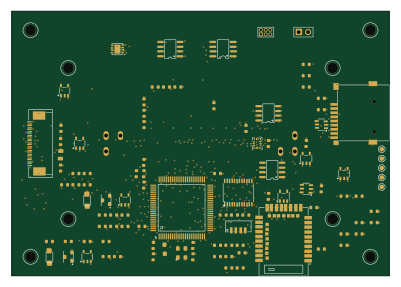 STM32
STM32LB-100
avlyubimov
100 × 70 mm99 parts6LCustom license1 Nordic nRF
Smartcube revA PCB A
17.1 × 17.1 mm28 parts6LNo license0
ICM-20948 First Bone
7 × 10.1 mm14 parts4LMIT29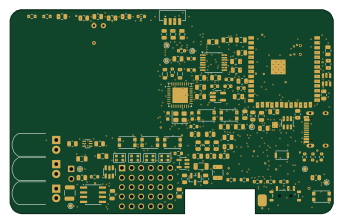 ESP32
ESP32PocketLab Card V1
85.6 × 54 mm243 parts4LNo license2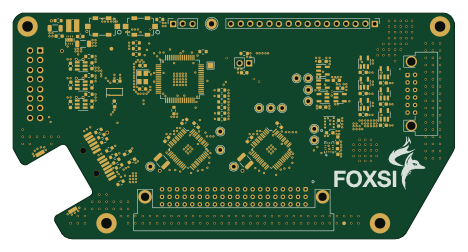 PIC
PICFOXSI-4 Formatter/Plenum board
foxsi
116.8 × 59.7 mm133 parts4LNo license1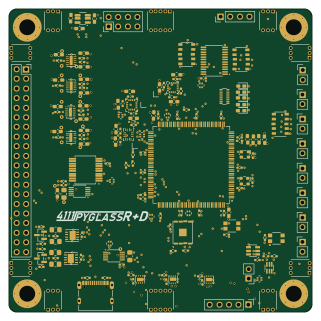 STM32
STM32AVIONICS BOARD
MatthiasGeorgImhof
80 × 80 mm178 parts4LCC-BY-NC-4.00
Smartcube revA CLEAN PCB A
15.5 × 15 mm27 parts6LNo license0
BMI270-and-QMC5883L
5 × 8.1 mm12 parts2LMIT29
BNO085 0x4A Board
8.1 × 8.8 mm12 parts4LMIT29
BNO085 0x4B Board
8.1 × 8.8 mm12 parts4LMIT29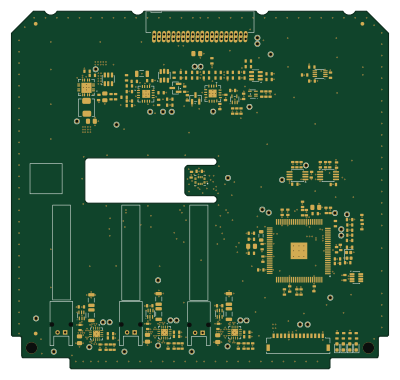
OreSat Mag Card
oresat
99.8 × 94.6 mm175 parts4LGPL-2.019 Nordic nRF
Edge io ring
gunnchOS3k
19 × 19 mm8 parts2LMIT0
Multi imu
7.4 × 12.7 mm8 parts4LMIT29 Nordic nRF
Edge io ring fusion
40 × 18 mm6 parts4LMIT0
ICM-20948 I2C 1V8 levels
4.4 × 6.6 mm7 parts4LMIT29
The BMI270 in open source designs
The gallery holds 29 open source boards using the BMI270 from 17 GitHub repositories; a typical one measures about 46 × 36.5 mm and carries around 54 components.
76% use four copper layers or more, and 48% carry an open source license.
The most starred is TundraIOExpansion by ras-marques.
Parts used alongside the BMI270
Microcontrollers on boards using the BMI270
What boards using the BMI270 are built for
BMI270: common questions
Where can I find a BMI270 reference design?
Each of the 29 boards on this page is a real design using the BMI270. Open one to see how it is wired up, with the full BOM, a render of the layout and links to its KiCad files.
Which microcontrollers do boards using the BMI270 use?
Most are built on ESP32 (6), Nordic nRF (5), STM32 (4) and AVR/Arduino (1).
How big is a typical board using the BMI270?
The median is 46 × 36.5 mm, and 24% are two-layer designs.
What is the most popular open source board using the BMI270?
By GitHub stars, TundraIOExpansion by ras-marques, with 29 stars.
Can I simulate one of these boards using the BMI270 before building it?
Yes. HardLabs turns a board's netlist and BOM into a working simulation, so you can boot and test firmware against it with no hardware on your desk.