
17 open source boards using the DEV-16771
Real designs built with the DEV-16771, from public GitHub projects: a quick way to see how others power, decouple and connect it. Each board comes with its KiCad files, full parts list and a render — and you can simulate its firmware on HardLabs.
 NXP
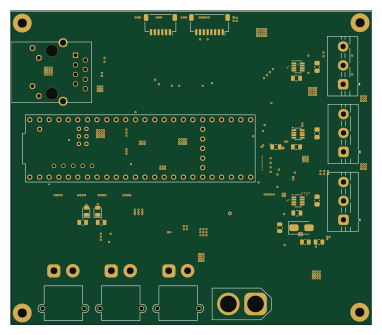
Open mabel
robotmabel
95.5 × 83 mm73 parts2LApache-2.041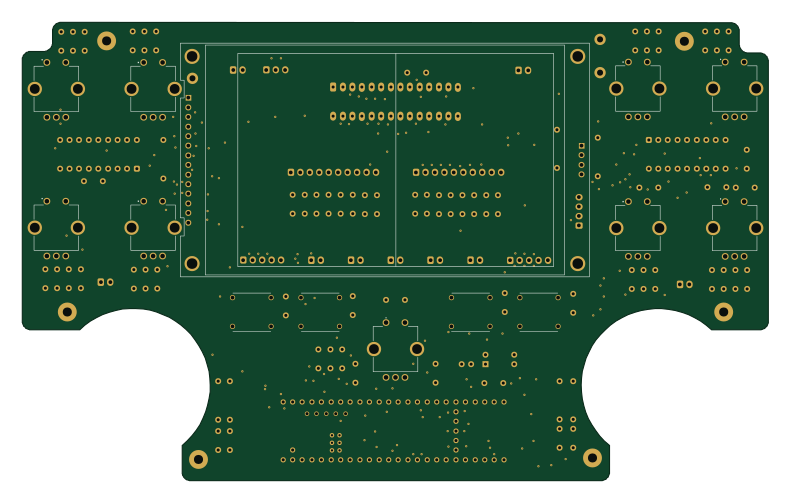
TeensyMaestro Main
rimuadmin
197.3 × 121.2 mm100 parts2LCERN-OHL-P-2.013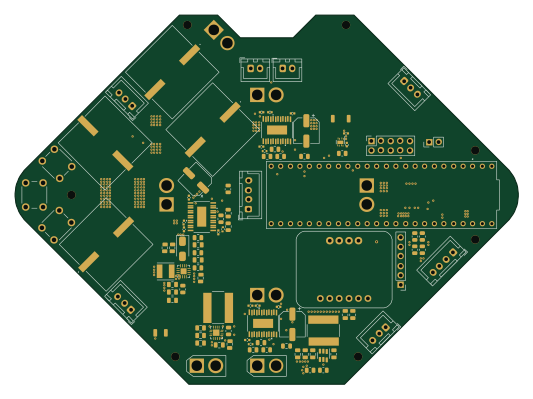
Main 4.3 old
hughminhphan
133.1 × 97.6 mm144 parts4LNo license0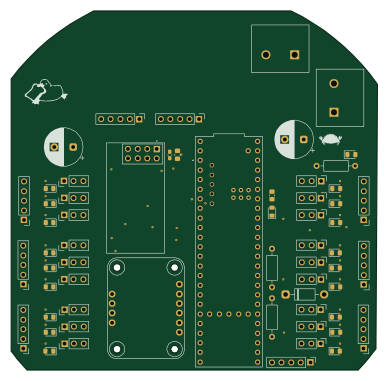
Pathfinder-Mark-IV
MagicalPotato715
97 × 95 mm92 parts4LNo license0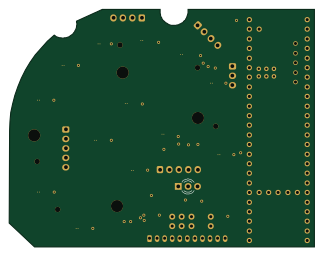
TeensyWheel
sdalimon
80.7 × 62.9 mm39 parts4LNo license0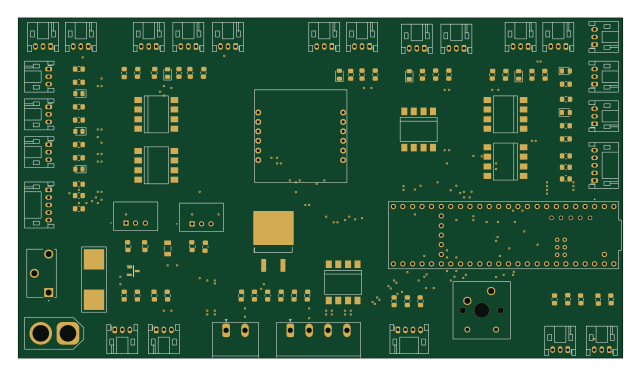
FewawiOwO
RoboJackets
160 × 90 mm106 parts2LMIT9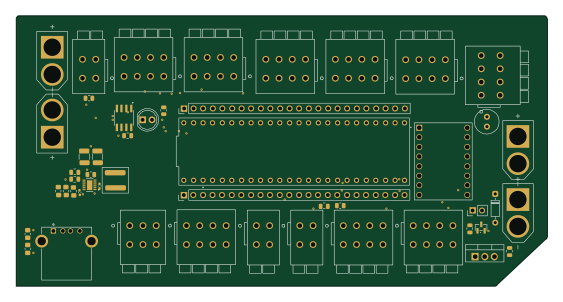 NXP
FINAL CONTROL BOARD
nyu-rdt
140.5 × 71.5 mm50 parts2LNo license3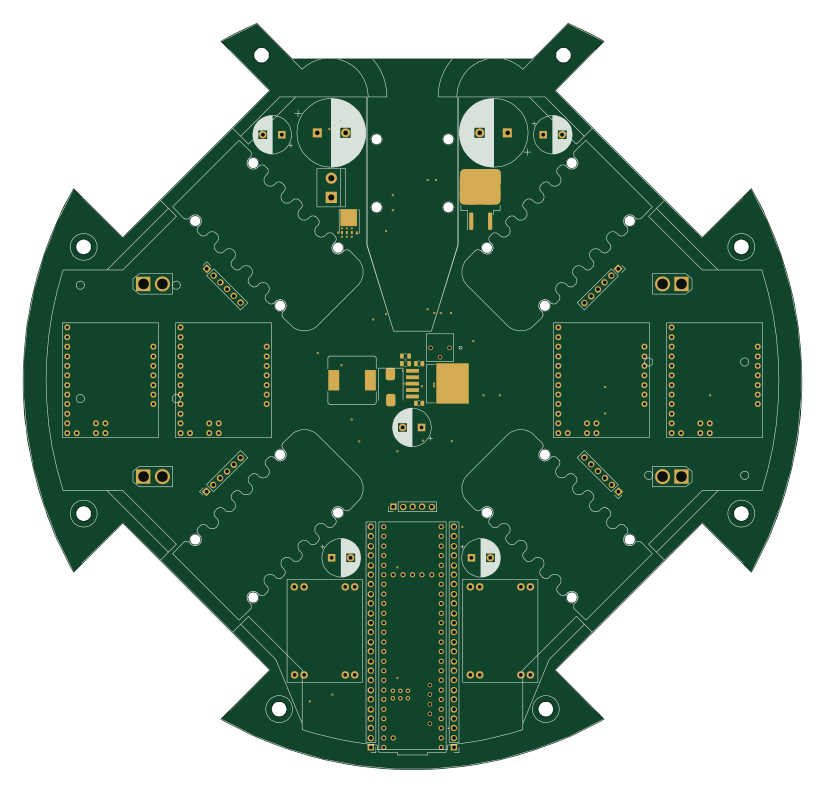
Line 3.0
eesakiii
206 × 197.4 mm100 parts2LNo license0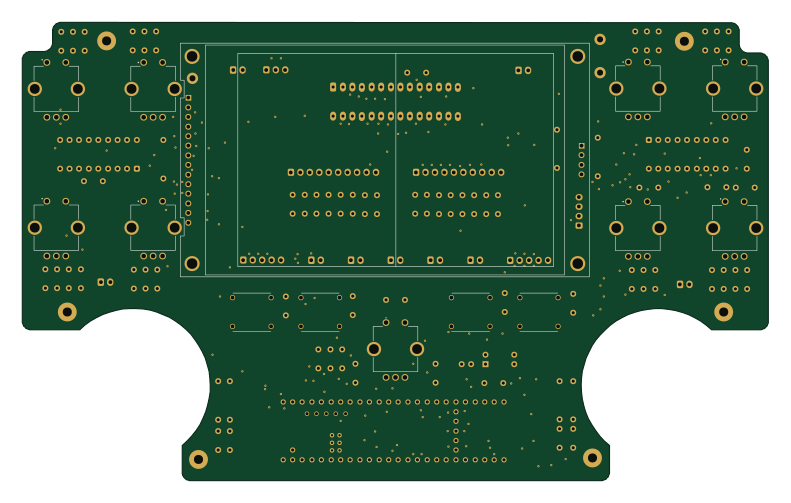
TeensyMaestro Main
DRWJSCHMIDT
197.3 × 121.2 mm107 parts2LNo license18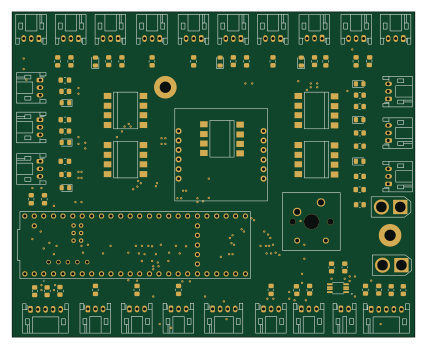
FewawiControlBoard
106.5 × 86 mm88 parts2LMIT9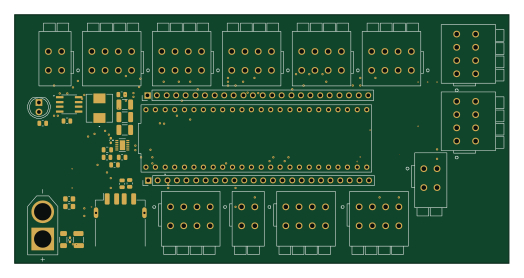 NXP
Microcontroller organized
130.7 × 65.7 mm40 parts2LNo license3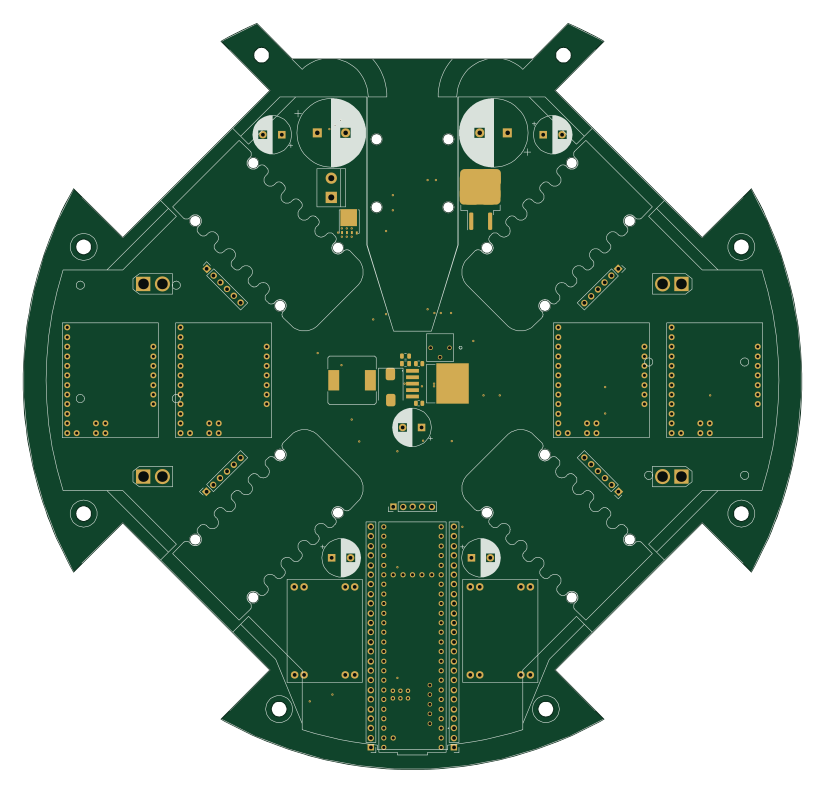
Line 3.0
206 × 197.4 mm100 parts2LNo license0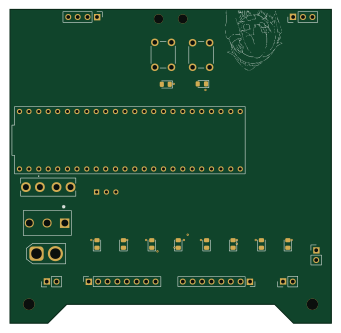
Ferrarii
85 × 83 mm53 parts2LMIT9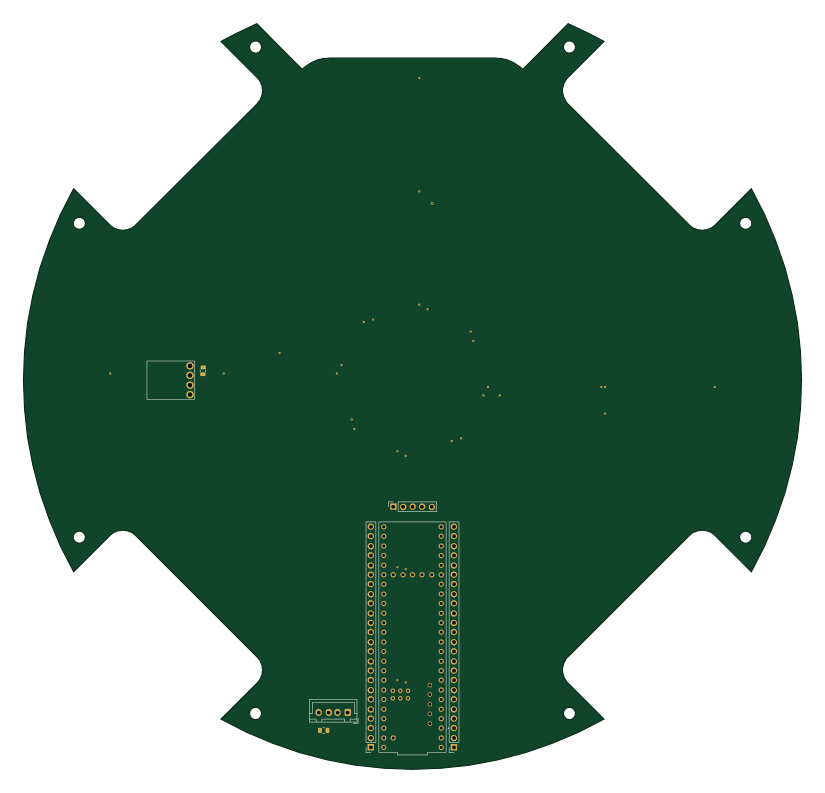
Line 3.1
206 × 197.4 mm72 parts2LNo license0 AVR/Arduino
Main 3.1
3.2 × 3.2 mm65 parts2LNo license0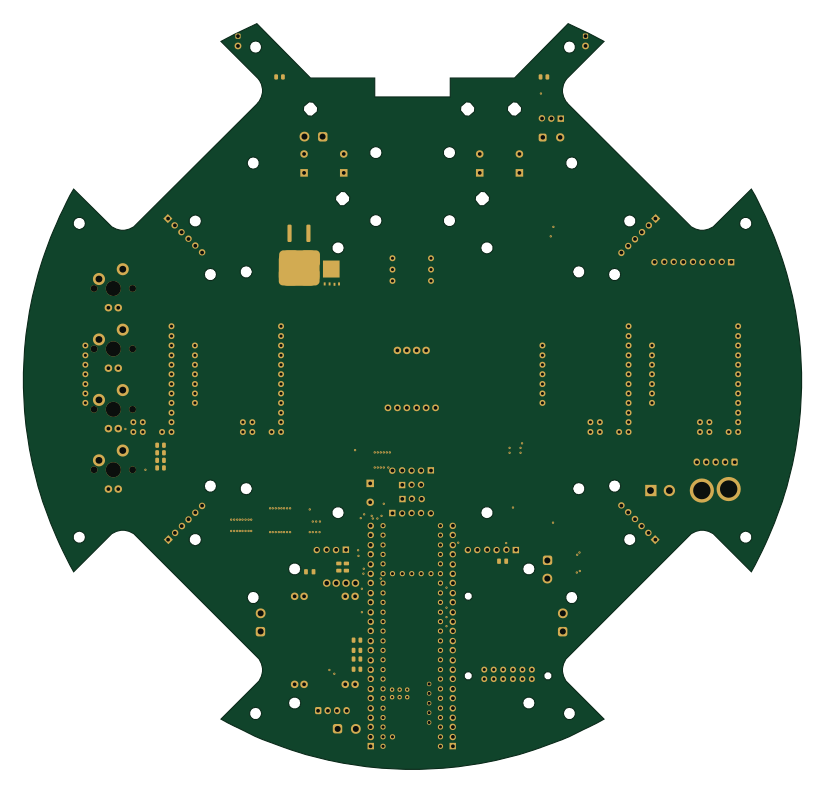 AVR/Arduino
Main 3.1
206 × 197.4 mm65 parts2LNo license0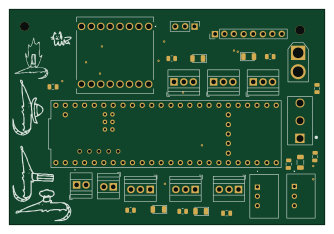 NXP
Schematic
83.5 × 57 mm30 parts2LMIT9
How designs wire the DEV-16771
Read from the KiCad layouts of 9 open source designs, one per repository: what each pin of the DEV-16771 connects to, and the resistors, capacitors and other passives placed on it.
- The 3.3V__1 pin is tied to 3.3V on 7 of 9 designs (not connected on 2).
- The VBAT pin is left unconnected on 7 of 7 designs.
- The D+ pin is left unconnected on 6 of 7 designs.
- The D- pin is left unconnected on 6 of 7 designs.
| Pin | Connected to | Parts on the pin |
|---|---|---|
| 3.3V__1pin 3.3V_2 | Connected to: 3.3V 78% · not connected 22% | — |
| A3pin 17 | Connected to: A connector 44%, ALS-PT19-315C/L177/TR8 22% |
|
| A7pin 21 | Connected to: A connector 56%, ALS-PT19-315C/L177/TR8 22% |
|
| A10pin 24 | Connected to: A connector 44%, ALS-PT19-315C/L177/TR8 22% |
|
| A11pin 25 | Connected to: A connector 44%, ALS-PT19-315C/L177/TR8 22% |
|
| A12pin 26 | Connected to: A connector 56%, ALS-PT19-315C/L177/TR8 22% |
|
| A13pin 27 | Connected to: A connector 56%, ALS-PT19-315C/L177/TR8 22% |
|
| MCLK2pin 33 | Connected to: A connector 56% |
|
| A16pin 40 | Connected to: A connector 33%, ALS-PT19-315C/L177/TR8 22% · not connected 22% |
|
| A17pin 41 | Connected to: A connector 44%, ALS-PT19-315C/L177/TR8 22% · not connected 22% |
|
| D+pin D+ | Connected to: Not connected 86% | — |
| D-pin D- | Connected to: Not connected 86% | — |
| GNDpin GND1 | Connected to: GND 100% | — |
| GND__1pin GND2 | Connected to: GND 100% | — |
| GND__2pin GND3 | Connected to: GND 100% | — |
| GND__3pin GND4 | Connected to: GND 100% | — |
| GND__4pin GND5 | Connected to: GND 100% | — |
| LEDpin LED | Connected to: Not connected 71% · a signal 29% | — |
| R+pin R+ | Connected to: Not connected 86% | — |
| R-pin R- | Connected to: Not connected 86% | — |
| T+pin T+ | Connected to: Not connected 86% | — |
| T-pin T- | Connected to: Not connected 86% | — |
| USB_GNDpin USB_GND1 | Connected to: GND 71% · not connected 29% | — |
| USB_GND__1pin USB_GND2 | Connected to: GND 71% · not connected 29% | — |
| VBATpin VBAT | Connected to: Not connected 100% | — |
| VINpin VIN | Connected to: 5V 67% · not connected 22% | — |
| VUSBpin VUSB | Connected to: Not connected 71% · 5V 29% | — |
38 more pins vary from design to design. Connections count pins, parts count designs; values in brackets are how many parts had that value. Designs read include Open mabel by robotmabel, TeensyMaestro Main by DRWJSCHMIDT, TeensyMaestro Main by rimuadmin and Ferrarii by RoboJackets.
The DEV-16771 in open source designs
The gallery holds 17 open source boards using the DEV-16771 from 9 GitHub repositories; a typical one measures about 133.1 × 90 mm and carries around 73 components.
82% are two-layer designs, the rest use four layers or more, and 35% carry an open source license.
The most starred is Open mabel by robotmabel.
Parts used alongside the DEV-16771
Microcontrollers on boards using the DEV-16771
What boards using the DEV-16771 are built for
DEV-16771: common questions
Where can I find a DEV-16771 reference design?
Each of the 17 boards on this page is a real design using the DEV-16771. Open one to see how it is wired up, with the full BOM, a render of the layout and links to its KiCad files.
How is the DEV-16771 3.3V__1 pin connected?
The 3.3V__1 pin is tied to 3.3V on 7 of 9 designs (not connected on 2). Counted from the KiCad layouts of 9 open source designs using the DEV-16771.
How is the DEV-16771 VBAT pin connected?
The VBAT pin is left unconnected on 7 of 7 designs. Counted from the KiCad layouts of 9 open source designs using the DEV-16771.
How is the DEV-16771 D+ pin connected?
The D+ pin is left unconnected on 6 of 7 designs. Counted from the KiCad layouts of 9 open source designs using the DEV-16771.
What parts are used alongside the DEV-16771?
The Adafruit_BNO055_STEMMA_QT, ALS-PT19-315C/L177/TR8, Bluetooth_Module_(HC-05), Bluetooth_Module_(HC-06) and LM2587S-ADJ appear in the most repositories here.
Which microcontrollers do boards using the DEV-16771 use?
Most are built on NXP (4) and AVR/Arduino (2).
How big is a typical board using the DEV-16771?
The median is 133.1 × 90 mm, and 82% are two-layer designs.
What is the most popular open source board using the DEV-16771?
By GitHub stars, Open mabel by robotmabel, with 41 stars.
Can I simulate one of these boards using the DEV-16771 before building it?
Yes. HardLabs turns a board's netlist and BOM into a working simulation, so you can boot and test firmware against it with no hardware on your desk.