
9 open source boards using the ISO1540DR
Real designs built with the ISO1540DR, from public GitHub projects: a quick way to see how others power, decouple and connect it. Each board comes with its KiCad files, full parts list and a render — and you can simulate its firmware on HardLabs.
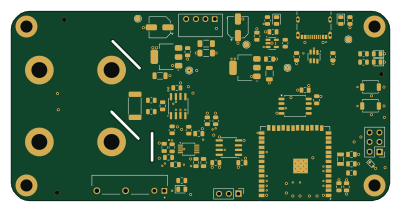 ESP32
Psu ext hardware
PSU-Ext-Org
100 × 50 mm110 parts4LCERN-OHL-S-2.07- schematic only · 67 partsESP32
Prosthetic
SoumyadeepXD
67 partsNo license1 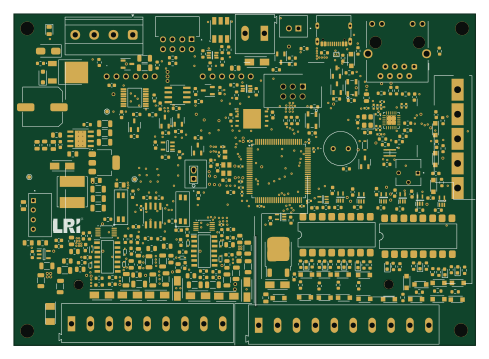 STM32
AEM-60DC8 V1.2
akhemka-cmd
122 × 87.6 mm350 parts2LNo license0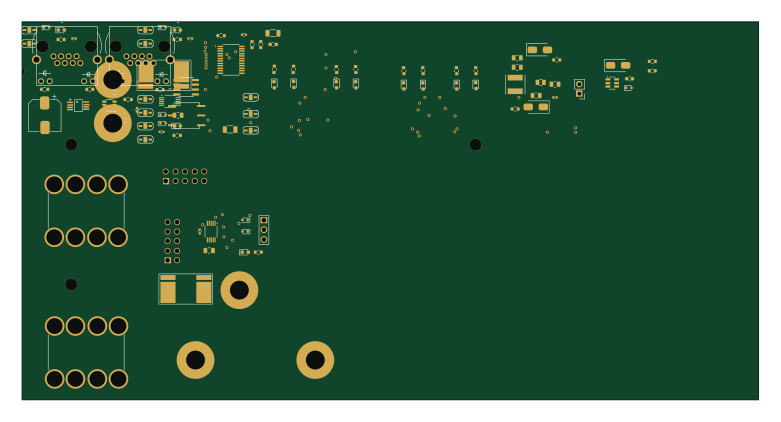
BMU v2
KomplexKapharnaum
194.9 × 100 mm125 parts4LGPL-3.00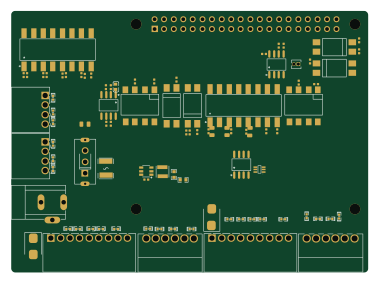
DishyPi1
jrseti
94.6 × 69.3 mm102 parts4LMIT0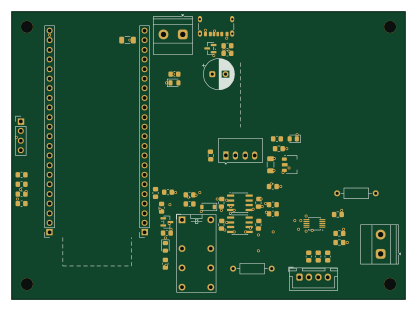
Sdc ntc emulator
bl1ndc4m3l
104 × 76 mm54 parts2LCustom license0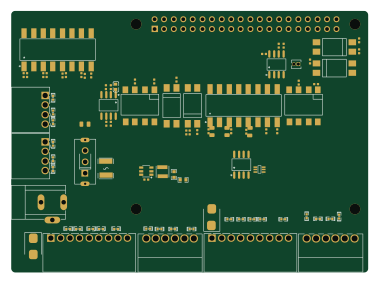
DishyPi1
94.6 × 69.3 mm102 parts4LMIT0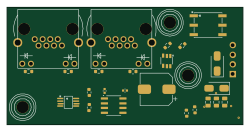
I2C repeter
62.5 × 31 mm25 parts2LGPL-3.00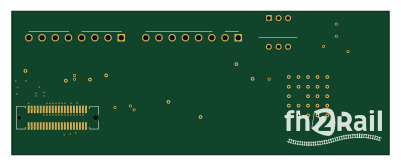
Busmodul
LeoWatti99
100 × 38 mm32 parts2LGPL-3.00
How designs wire the ISO1540DR
Read from the KiCad layouts of 7 open source designs, one per repository: what each pin of the ISO1540DR connects to, and the resistors, capacitors and other passives placed on it.
- The SDA1 pin has a pull-up to 3.3V on 6 of 7 designs, most often 4.7 kΩ (then 2.7 kΩ).
- The SCL1 pin has a pull-up to 3.3V on 6 of 7 designs, most often 4.7 kΩ (then 2.7 kΩ).
- The SCL2 pin has a pull-up to 3.3V on 6 of 7 designs, most often 4.7 kΩ (then 1 kΩ).
- The SDA2 pin has a pull-up to 3.3V on 6 of 7 designs, most often 4.7 kΩ (then 1 kΩ).
| Pin | Connected to | Parts on the pin |
|---|---|---|
| VCC1pin 1 | Connected to: 3.3V 86% |
|
| SDA1pin 2 | Connected to: A connector 71% |
|
| SCL1pin 3 | Connected to: A connector 71% |
|
| GND1pin 4 | Connected to: GND 100% | — |
| GND2pin 5 | Connected to: GND 100% | — |
| SCL2pin 6 | Connected to: A connector 43%, LM75BIMX-5/NOPB 29%, LTC4311ISC6#TRPBF 29% |
|
| SDA2pin 7 | Connected to: A connector 43%, LM75BIMX-5/NOPB 29%, LTC4311ISC6#TRPBF 29% |
|
| VCC2pin 8 | Connected to: 3.3V 86% |
|
Connections count pins, parts count designs; values in brackets are how many parts had that value. Designs read include Psu ext hardware by PSU-Ext-Org, AEM-60DC8 V1.2 by akhemka-cmd, Sdc ntc emulator by bl1ndc4m3l and DishyPi1 by jrseti.
The ISO1540DR in open source designs
The gallery holds 9 open source boards using the ISO1540DR from 8 GitHub repositories; a typical one measures about 100 × 69.3 mm and carries around 102 components.
50% are two-layer designs, the rest use four layers or more, and 67% carry an open source license.
The most starred is Psu ext hardware by PSU-Ext-Org.
Parts used alongside the ISO1540DR
What boards using the ISO1540DR are built for
ISO1540DR: common questions
Where can I find a ISO1540DR reference design?
Each of the 9 boards on this page is a real design using the ISO1540DR. Open one to see how it is wired up, with the full BOM, a render of the layout and links to its KiCad files.
What pull-up resistor is used on the ISO1540DR SDA1 pin?
The SDA1 pin has a pull-up to 3.3V on 6 of 7 designs, most often 4.7 kΩ (then 2.7 kΩ). Counted from the KiCad layouts of 7 open source designs using the ISO1540DR.
What pull-up resistor is used on the ISO1540DR SCL1 pin?
The SCL1 pin has a pull-up to 3.3V on 6 of 7 designs, most often 4.7 kΩ (then 2.7 kΩ). Counted from the KiCad layouts of 7 open source designs using the ISO1540DR.
What pull-up resistor is used on the ISO1540DR SCL2 pin?
The SCL2 pin has a pull-up to 3.3V on 6 of 7 designs, most often 4.7 kΩ (then 1 kΩ). Counted from the KiCad layouts of 7 open source designs using the ISO1540DR.
What parts are used alongside the ISO1540DR?
The LTV-847S, AP2112K-3.3TRG1, CAT24C256WI-GT3, LM75BIMX-5/NOPB and LTC4311ISC6#TRPBF appear in the most repositories here.
Which microcontrollers do boards using the ISO1540DR use?
Most are built on ESP32 (2) and STM32 (1).
How big is a typical board using the ISO1540DR?
The median is 100 × 69.3 mm, and 50% are two-layer designs.
What is the most popular open source board using the ISO1540DR?
By GitHub stars, Psu ext hardware by PSU-Ext-Org, with 7 stars.
Can I simulate one of these boards using the ISO1540DR before building it?
Yes. HardLabs turns a board's netlist and BOM into a working simulation, so you can boot and test firmware against it with no hardware on your desk.