
11 open source boards using the TPD4E001DRLR
Real designs built with the TPD4E001DRLR, from public GitHub projects: a quick way to see how others power, decouple and connect it. Each board comes with its KiCad files, full parts list and a render — and you can simulate its firmware on HardLabs.
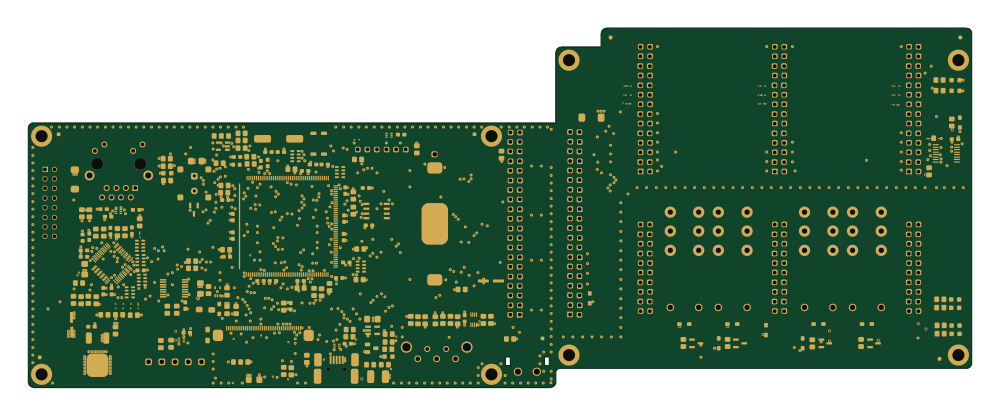 STM32
EEZ BB3 CM4 R1B0
intergalaktik
249.5 × 95 mm240 parts4LCustom license35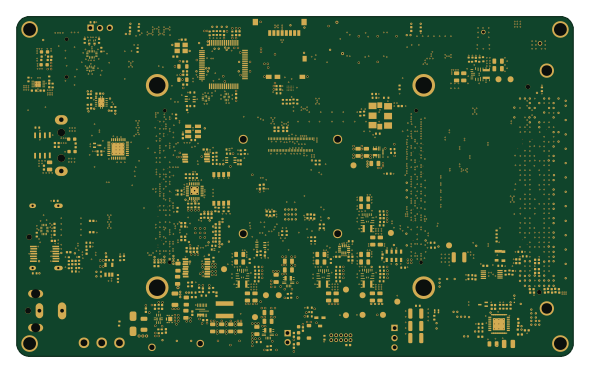 PIC
Aper-Oculus
ApotheoTech
147.4 × 90 mm557 parts16LGPL-3.032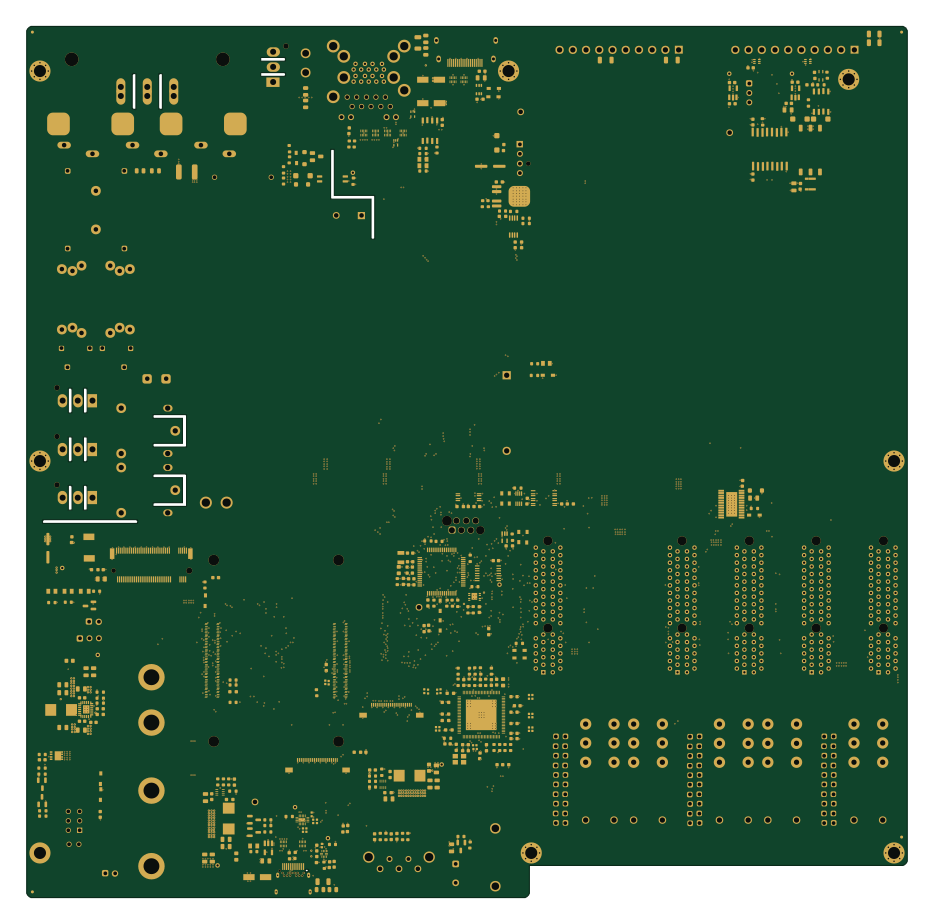 STM32
BB3plus mainboard
eez-open
233 × 230.5 mm353 parts4LTAPR-OHL-1.012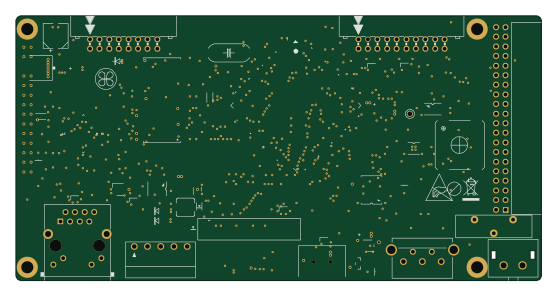 STM32
EEZ DIB MCU r1B2
goran-mahovlic
139 × 70 mm191 partsNo license5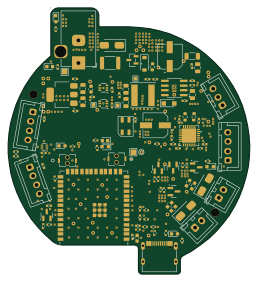 ESP32
Homectrl v2
jeevan9s
64 × 70.5 mm127 parts4LNo license2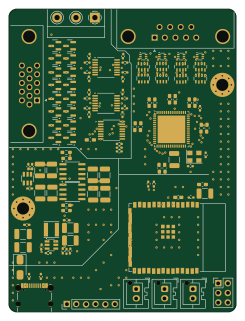 ESP32
EEG EMT 32
Raigetix
60 × 80 mm115 parts2LNo license0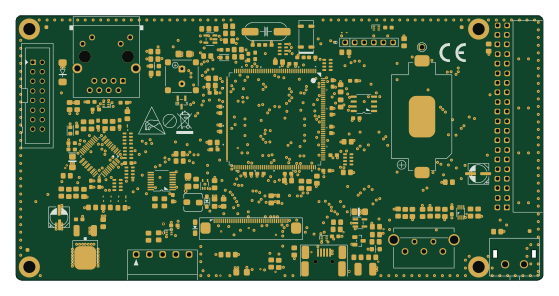 STM32
EEZ DIB MCU r3B4
139.5 × 70 mm192 parts4LCustom license35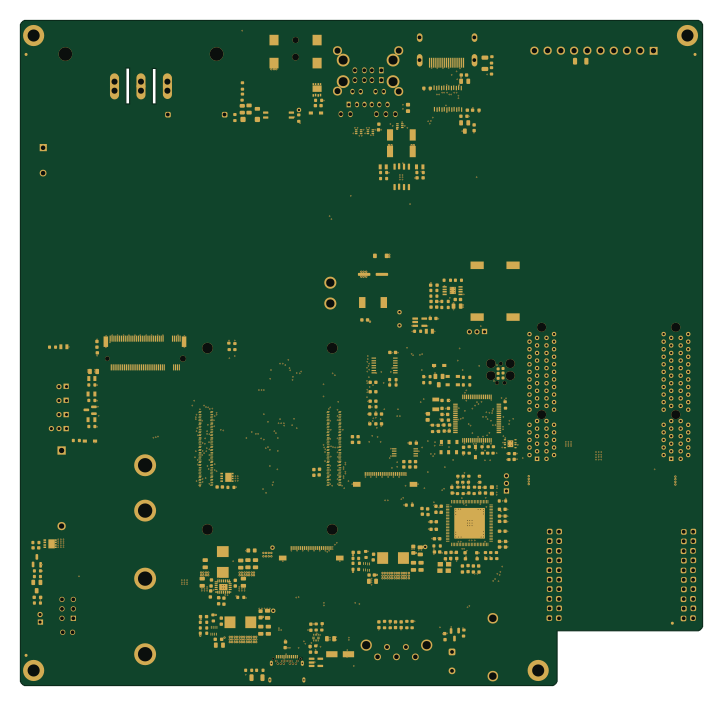 STM32
BB3plus test mainboard
180.5 × 176 mm262 parts4LTAPR-OHL-1.012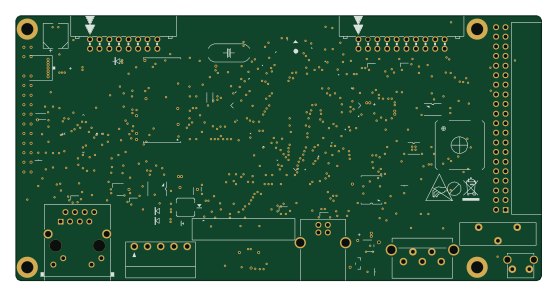 STM32
EEZ DIB MCU r1B1
139 × 70 mm190 partsNo license5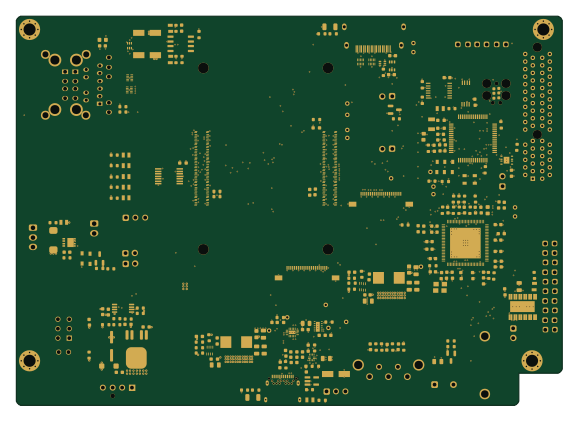 STM32
BB3plus USB hub test
144.5 × 103 mm223 parts4LTAPR-OHL-1.012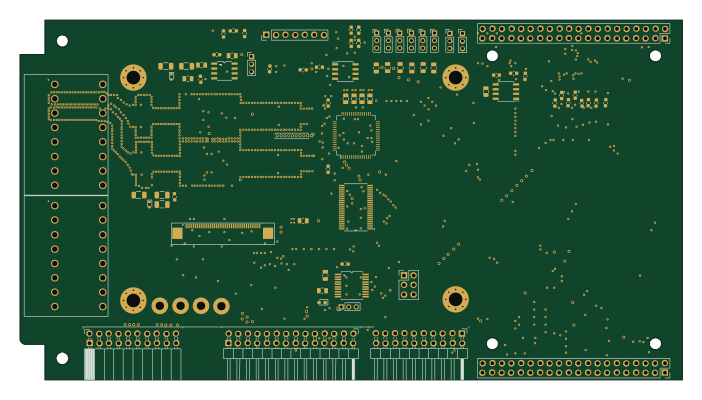
LCD PMOD
175.3 × 95.3 mm166 parts2LNo license5
How designs wire the TPD4E001DRLR
Read from the KiCad layouts of 6 open source designs, one per repository: what each pin of the TPD4E001DRLR connects to, and the resistors, capacitors and other passives placed on it.
- The IO1 pin has a series resistor on 5 of 6 designs, most often 4.7 kΩ (then 100 Ω).
- The IO2 pin has a series resistor on 4 of 6 designs, most often 2.2 kΩ (then 4.7 kΩ).
- The VCC pin has a decoupling capacitor on 4 of 6 designs, most often 100 nF.
| Pin | Connected to | Parts on the pin |
|---|---|---|
| IO1pin 1 | Connected to: A connector 50% |
|
| IO2pin 2 | Connected to: A connector 50% · GND 17% |
|
| GNDpin 3 | Connected to: GND 83% · a signal 17% | — |
| IO3pin 4 | Connected to: A connector 50% |
|
| IO4pin 5 | Connected to: A connector 50% · 3.3V 17% |
|
| VCCpin 6 | Connected to: 5V 50% · not connected 17% · a signal 33% |
|
Connections count pins, parts count designs; values in brackets are how many parts had that value. Designs read include EEZ BB3 CM4 R1B0 by intergalaktik, Aper-Oculus by ApotheoTech, BB3plus mainboard by eez-open and EEZ DIB MCU r1B1 by goran-mahovlic.
The TPD4E001DRLR in open source designs
The gallery holds 11 open source boards using the TPD4E001DRLR from 6 GitHub repositories; a typical one measures about 144.5 × 90 mm and carries around 192 components.
78% use four copper layers or more, and 36% carry an open source license.
The most starred is EEZ BB3 CM4 R1B0 by intergalaktik.
Parts used alongside the TPD4E001DRLR
What boards using the TPD4E001DRLR are built for
TPD4E001DRLR: common questions
Where can I find a TPD4E001DRLR reference design?
Each of the 11 boards on this page is a real design using the TPD4E001DRLR. Open one to see how it is wired up, with the full BOM, a render of the layout and links to its KiCad files.
What resistor goes on the TPD4E001DRLR IO1 pin?
The IO1 pin has a series resistor on 5 of 6 designs, most often 4.7 kΩ (then 100 Ω). Counted from the KiCad layouts of 6 open source designs using the TPD4E001DRLR.
What resistor goes on the TPD4E001DRLR IO2 pin?
The IO2 pin has a series resistor on 4 of 6 designs, most often 2.2 kΩ (then 4.7 kΩ). Counted from the KiCad layouts of 6 open source designs using the TPD4E001DRLR.
What decoupling capacitors do designs use on the TPD4E001DRLR VCC pin?
The VCC pin has a decoupling capacitor on 4 of 6 designs, most often 100 nF. Counted from the KiCad layouts of 6 open source designs using the TPD4E001DRLR.
What parts are used alongside the TPD4E001DRLR?
The DP83848CVV_NOPB, ESP32-S3-WROOM-1, IS42S16400J, LD1117ADT33TR and TPA6205A1DGN appear in the most repositories here.
Which microcontrollers do boards using the TPD4E001DRLR use?
Most are built on STM32 (7), ESP32 (2) and PIC (1).
How big is a typical board using the TPD4E001DRLR?
The median is 144.5 × 90 mm, and 22% are two-layer designs.
What is the most popular open source board using the TPD4E001DRLR?
By GitHub stars, EEZ BB3 CM4 R1B0 by intergalaktik, with 35 stars.
Can I simulate one of these boards using the TPD4E001DRLR before building it?
Yes. HardLabs turns a board's netlist and BOM into a working simulation, so you can boot and test firmware against it with no hardware on your desk.