
Open source PCB designs you can simulate
23,833 boards
Every public KiCad project we can find on GitHub, with its processor, full parts list and a render of the board. Any of them can be brought up in simulation: open one and run firmware on it before you order a single PCB.
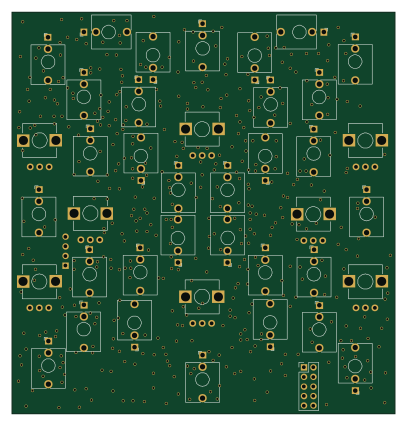 STM32
STM32Allcolours
microresearch
101.3 × 106.2 mm246 partsNo license15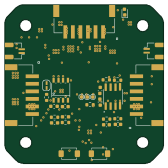 STM32
STM32Motor42
zhbi98
42 × 42 mm82 parts4LMIT8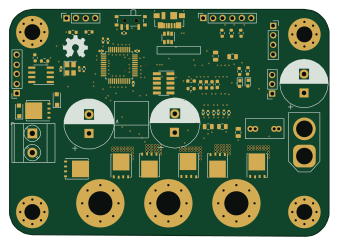 STM32
STM32Spel bldc esc
koson
84.5 × 60 mm91 parts4LNo license4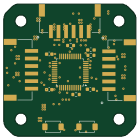 STM32
STM32Motor35
35 × 35 mm71 parts4LMIT2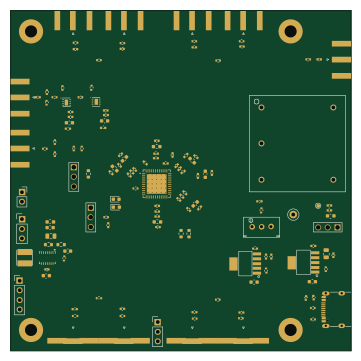 STM32
STM32CLOCK
Han-ZenX
90 × 90 mm157 parts4LCustom license1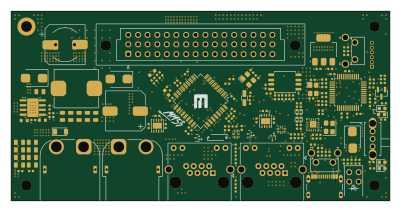 STM32
STM32MMS3
ArthorH
100 × 50 mm156 parts4LNo license1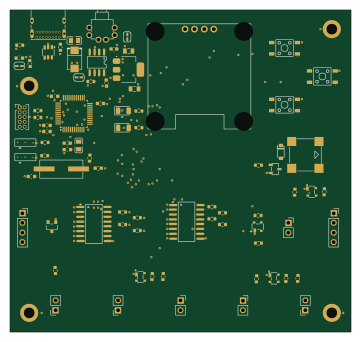 STM32
STM32MultiBench
M-Mrk
90 × 85 mm78 parts2LNo license1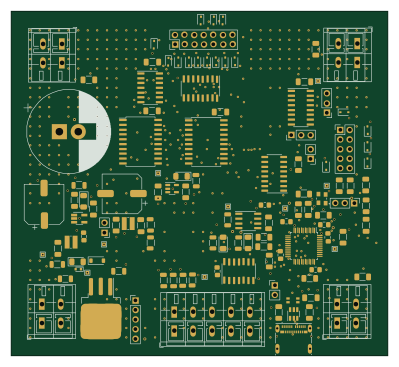 STM32
STM32Menelaos rev-4
acastles91
99.5 × 91 mm124 parts4LNo license0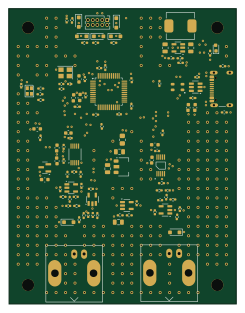 STM32
STM32Mixed-Signal STM32
cipher8-0
60.1 × 78 mm110 parts4LNo license0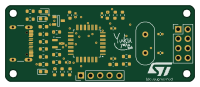 STM32
STM32ST-LINK-V2 1
zukki4123
50 × 20 mm36 parts2LMIT0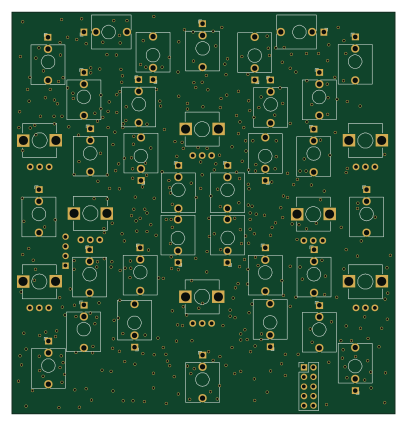 STM32
STM32Allcolours fixed21102020
101.3 × 106.2 mm246 partsNo license15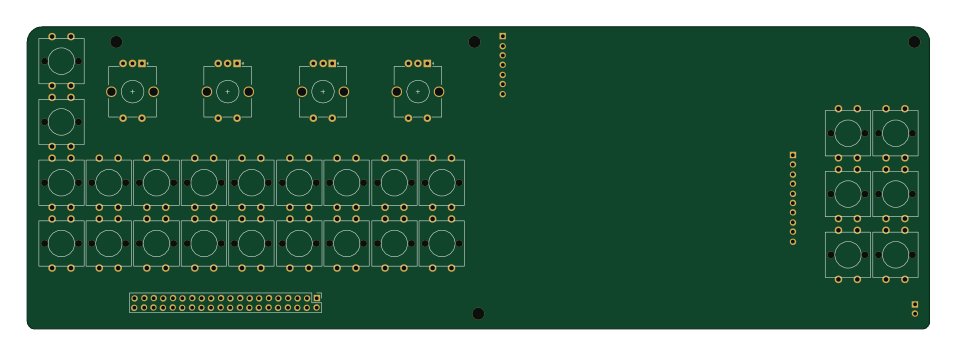 STM32
STM32OTTO-main
cester-ino
239 × 80 mm100 parts2LGPL-3.02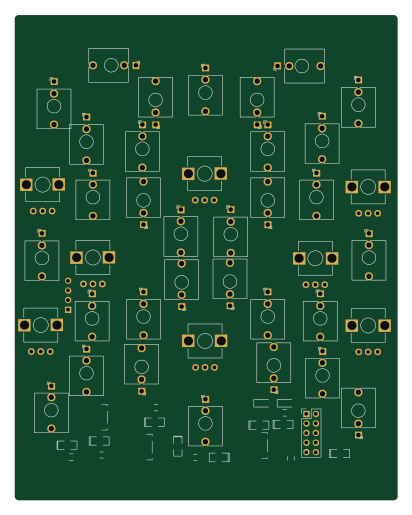 STM32
STM32Allcolours back01
101.4 × 128.5 mm243 partsNo license15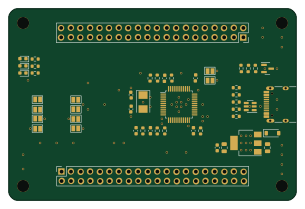 STM32
STM32${TITLE}
STM32World
76.2 × 50.8 mm51 parts2LCustom license6 STM32
STM32NOGPROG
berkeleyauv
33 × 13 mm33 parts2LGPL-3.03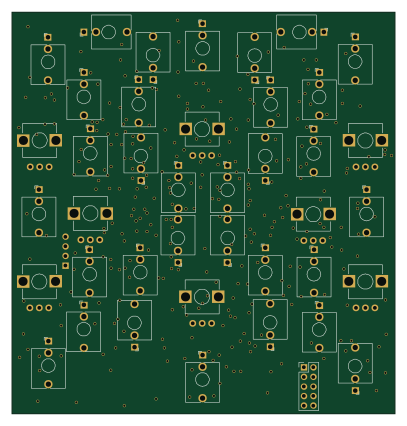 STM32
STM32Allcolours prelastchanges
101.3 × 106.2 mm237 partsNo license15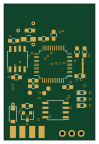 STM32
STM32LoRaModem
wangyeee
24 × 36 mm48 parts2LBSD-3-Clause9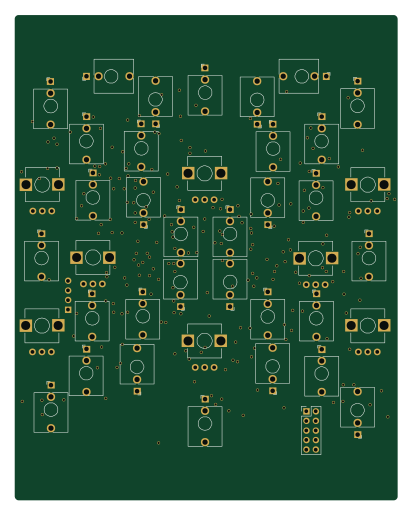 STM32
STM32Allcolours theone
101.4 × 128.5 mm237 parts2LNo license15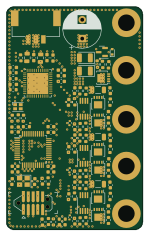 STM32
STM32Stm32 esc
dragonlock2
36 × 59 mm106 parts2LApache-2.013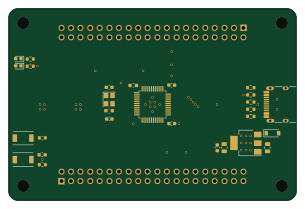 STM32
STM32MCUSTM32F405
76.2 × 50.8 mm29 parts2LCustom license6
About these open source PCB designs
Every board here is a published hardware project: a public GitHub repository with KiCad design files and a bill of materials. HardLabs reads those files directly — the board outline for its size, the copper layers, every footprint for the parts list — and draws the render from the layout itself, so what you see is the design as committed rather than a product photo.
Boards are indexed by the microcontroller they are built around, by what they are for, and by every IC and module on them. That makes the gallery a quick way to find a reference design: look up a part number to see how other engineers power, decouple and connect it.
Using an open source board as a reference design
- Find boards built on your chip or with the part you are designing around.
- Compare their size, layer count and bill of materials, and open the KiCad files on GitHub.
- Check the license before reusing any of the design.
- Simulate the firmware on HardLabs to test your changes before you order a PCB.
Open source PCB designs: common questions
What is an open source PCB?
A printed circuit board whose design files — schematic, layout and bill of materials — are published for anyone to study and, depending on the license, to modify and manufacture.
Are these PCB designs free to use?
It depends on each project's license. Open hardware licenses such as CERN-OHL and CC BY-SA, and software licenses such as MIT, allow reuse on their terms; a repository with no license keeps all rights with its author. Every board page shows its license.
What design files do the boards come with?
They are KiCad projects: the .kicad_pcb layout and the schematic (or a netlist from older KiCad versions), plus a bill of materials, usually a CSV. Each board page links to those files in the original GitHub repository.
How do I find boards that use a specific part?
Search for the part number, or open the part's page from the list of parts. It shows every board built with that part and the parts most often used alongside it.
How many boards are there, and how often is the list updated?
23,833 boards from 12,066 repositories today. New projects are found and added every night.
Can I test a board's firmware before ordering the PCB?
Yes. HardLabs builds a simulation of a board from its netlist and BOM, so you can boot and debug firmware against it with no hardware on your desk.